
Investing in the stock market can seem complex, but understanding the basics of a company like Tesla (TSLA) stock is a fundamental step for any aspiring investor. The question “how much is a share of Tesla stock?” is often the entry point for many, yet the answer is far more dynamic and nuanced than a simple number. It encapsulates market forces, company performance, investor sentiment, and strategic considerations that all contribute to its daily valuation. This article delves into the intricacies of investing in Tesla, providing a comprehensive guide for those looking to understand its value, how to acquire it, and the broader financial landscape it operates within.
Understanding Tesla Stock: Beyond the Daily Price
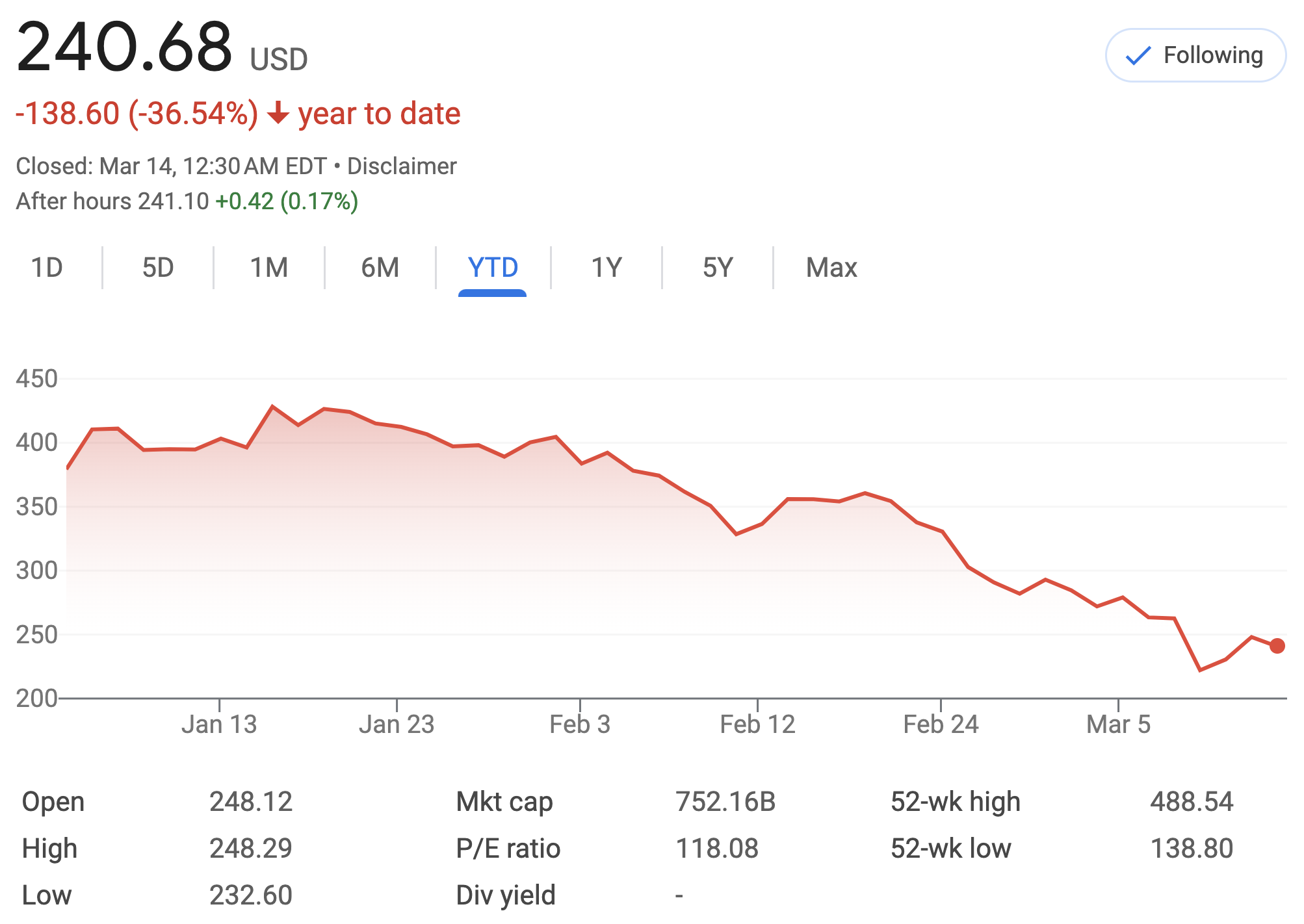
The price of a single share of Tesla stock, like any publicly traded company, is a reflection of constant supply and demand in the market. It fluctuates second by second during trading hours, making a static answer impossible and somewhat irrelevant without context. Understanding these dynamics is crucial for any investor.
The Dynamic Nature of Stock Prices
Stock prices are not arbitrary figures; they are the result of millions of buy and sell orders executed by investors worldwide. When there are more buyers than sellers, the price tends to rise. Conversely, when sellers outnumber buyers, the price tends to fall. This constant interplay determines the real-time value you see quoted on financial platforms. For a high-profile, volatile stock like Tesla, these fluctuations can be significant, even within a single trading day. Factors such as breaking news, earnings reports, analyst ratings, and broader market trends can all trigger rapid price movements.
What Exactly is a Share?
Before diving into price, it’s essential to grasp what a “share” represents. A share of stock signifies partial ownership in a company. When you buy a share of Tesla, you become a fractional owner of the company, with certain rights such as voting on corporate matters (though for individual investors with small holdings, this impact is minimal) and a claim on a portion of the company’s earnings and assets. The total value of a company is its “market capitalization,” calculated by multiplying the current share price by the total number of outstanding shares.
Finding the Current TSLA Price (and Why It Changes)
To find the most current price of Tesla stock, you would typically check a reputable financial news website, a stock brokerage platform, or a dedicated stock tracking app. These platforms provide real-time or near real-time quotes. It’s important to remember that the price you see at one moment could be different just seconds later.
The price changes due to a multitude of factors, including:
- Company News: Announcements about new products, production milestones, recalls, or executive changes.
- Earnings Reports: Quarterly and annual reports detailing revenue, profits, and future guidance.
- Economic Indicators: Inflation rates, interest rate decisions, employment figures, and GDP growth can all sway investor sentiment across the entire market.
- Industry Trends: Shifts in the electric vehicle (EV) market, battery technology advancements, or regulatory changes affecting the automotive or energy sectors.
- Geopolitical Events: International conflicts, trade wars, or global crises can create market uncertainty.
Historical Performance and Stock Splits
Tesla has a history of significant growth and volatility, marked by multiple stock splits. A stock split is when a company increases the number of its outstanding shares by dividing existing shares into multiple new shares. For example, a 3-for-1 split means that for every one share an investor owned, they now own three. While the number of shares increases, the price per share decreases proportionally, so the total value of an investor’s holding remains the same immediately after the split. Tesla has performed several splits, notably a 5-for-1 split in August 2020 and a 3-for-1 split in August 2022. These splits make shares more accessible to a wider range of investors by lowering the per-share price, potentially increasing liquidity and broader market participation. Understanding these events is crucial when looking at historical price charts, as they adjust for these changes.
How to Invest in Tesla (and Other Stocks)
For individuals looking to buy a share of Tesla, the process is straightforward, but requires a few key steps and considerations to ensure you’re making informed financial decisions.
Choosing a Brokerage Account
The first step to investing in any stock, including Tesla, is to open a brokerage account. This is a specialized account offered by financial institutions that allows you to buy and sell securities. Reputable online brokerages often provide user-friendly platforms, competitive fees, and a wealth of research tools. When choosing a brokerage, consider factors such as:
- Fees and Commissions: Look for brokerages with low or zero commissions on stock trades.
- Minimum Deposit: Some brokerages require a minimum amount to open an account, though many now have no minimums.
- Available Investments: Ensure the brokerage offers access to the stocks and other financial products you’re interested in.
- Research Tools and Educational Resources: Access to robust research and learning materials can be invaluable for new investors.
- Customer Service: Responsive and helpful customer support is important, especially if you encounter issues.
Placing Your First Order: Market vs. Limit Orders
Once your account is funded, you can place an order to buy Tesla stock. There are typically two main types of orders:
- Market Order: This instructs your brokerage to buy or sell shares immediately at the best available price in the market. While it guarantees execution, it doesn’t guarantee a specific price, which can be problematic in fast-moving markets.
- Limit Order: This allows you to set a specific price at which you are willing to buy or sell. Your order will only be executed if the stock reaches that price or better. This offers more control over the price but doesn’t guarantee that your order will be filled.
For most individual investors, especially when buying into a volatile stock like Tesla, a limit order can offer better price control.
Fractional Shares: Making Investing Accessible
Historically, buying a stock meant purchasing full shares. For high-priced stocks, this could put them out of reach for investors with smaller budgets. However, many brokerages now offer “fractional shares,” allowing you to buy a portion of a share. This means you can invest a specific dollar amount (e.g., $50 or $100) into Tesla stock, even if that amount is less than the price of a single full share. Fractional shares have democratized investing, making it easier for individuals to build diversified portfolios with smaller capital.
Diversification: The Golden Rule
While investing in a single stock like Tesla can be tempting due to its potential for high returns, it also carries significant risk. The “golden rule” of investing is diversification – spreading your investments across various asset classes, industries, and companies to reduce risk. Instead of putting all your capital into Tesla, consider allocating funds to other individual stocks, exchange-traded funds (ETFs) that track broader market indices, mutual funds, or even bonds. Diversification helps protect your portfolio from the extreme volatility or poor performance of any single investment.
Factors Influencing Tesla’s Stock Value
Tesla’s stock price is a complex interplay of internal company performance, external market forces, and unique leadership dynamics. Understanding these factors is key to grasping why TSLA moves as it does.
Company Performance and Innovation

At its core, a company’s stock value is tied to its financial health and future prospects. For Tesla, this includes:
- Vehicle Deliveries and Production: Quarterly delivery numbers are closely watched as a primary indicator of demand and manufacturing efficiency.
- Profitability and Margins: Investors analyze gross and net profit margins to understand how efficiently Tesla is converting revenue into earnings.
- Technological Advancements: Innovations in battery technology, autonomous driving capabilities (Full Self-Driving), and AI are crucial for maintaining a competitive edge.
- New Products and Services: The introduction of new vehicle models (e.g., Cybertruck, next-gen compact car), expansion into new energy solutions (Powerwall, Megapack), and charging infrastructure (Supercharger network) can drive future growth.
Market Sentiment and Macroeconomic Trends
Beyond internal factors, broader market sentiment and macroeconomic conditions play a significant role:
- Interest Rates: Higher interest rates can make borrowing more expensive for companies and consumers, potentially slowing sales and innovation, and making bonds more attractive than stocks.
- Inflation: Rising inflation can increase costs for raw materials and labor, impacting profitability, and also erodes purchasing power.
- Economic Growth: A strong economy generally correlates with higher consumer spending and corporate profits, boosting investor confidence.
- Risk Appetite: During periods of economic uncertainty, investors tend to shy away from high-growth, high-volatility stocks like Tesla in favor of safer assets.
Regulatory Landscape and Competition
The automotive and energy sectors are heavily regulated, and changes can significantly impact Tesla:
- Environmental Regulations: Policies promoting EVs or renewable energy can benefit Tesla, while stricter emissions standards for traditional vehicles could also push consumers towards EVs.
- Subsidies and Tax Credits: Government incentives for EV purchases can directly boost demand for Tesla vehicles.
- Competition: The EV market is becoming increasingly crowded with established automakers (e.g., Ford, GM, Volkswagen) and new entrants (e.g., Rivian, Lucid) launching competitive products. Tesla’s ability to maintain its market share and innovation lead is critical.
The ‘Musk Premium’ and Leadership Impact
Elon Musk, Tesla’s CEO, is a unique figure whose public persona and actions often have a direct, outsized impact on the company’s stock price. This phenomenon is sometimes referred to as the “Musk Premium.” His visionary leadership, ambitious goals, and direct communication (often via social media) can inspire strong investor confidence and enthusiasm. However, his controversial statements, distractions with other ventures (like SpaceX or X), and regulatory scrutiny can also introduce volatility and risk. Investors in Tesla often factor in Musk’s influence as a significant variable.
Weighing the Risks and Rewards of TSLA
Investing in Tesla has historically offered substantial rewards but also comes with considerable risks. A balanced perspective is essential for making informed investment decisions.
The Potential for High Growth
Tesla has been a pioneer in the electric vehicle industry and continues to innovate in battery technology, AI, and renewable energy. Its potential rewards stem from:
- Market Leadership: Dominance in the rapidly expanding EV market, with a strong brand and established charging infrastructure.
- Technological Edge: Continuous advancements in battery efficiency, autonomous driving, and manufacturing processes.
- Diversified Business Model: Expansion into energy storage solutions (Powerwall, Megapack) and solar, offering multiple avenues for revenue growth.
- Global Expansion: Untapped potential in new and emerging markets worldwide.
Volatility and Market Fluctuations
Tesla is known for its high stock price volatility. This means its price can swing dramatically in short periods, offering opportunities for quick gains but also posing significant risks of rapid losses. Factors contributing to this volatility include:
- High Valuation: Often, Tesla’s valuation has traded at a premium compared to traditional automakers, reflecting future growth expectations that are susceptible to market corrections if those expectations aren’t met.
- Sentiment-Driven Trading: A significant portion of Tesla’s trading can be driven by news, social media trends, and emotional reactions rather than fundamental analysis.
- Macroeconomic Headwinds: Tesla, as a growth stock, can be particularly sensitive to economic downturns, rising interest rates, or increased investor caution.
Competitive Pressures and Execution Risks
While a leader, Tesla faces intense competition and operational challenges:
- Increasing Competition: Every major automaker is now investing heavily in EVs, and new startups are emerging, putting pressure on Tesla’s market share and pricing.
- Production Challenges: Scaling up manufacturing for new models and managing global supply chains can be complex and prone to delays or cost overruns.
- Regulatory Scrutiny: Issues related to autonomous driving safety, environmental impact, or labor practices could lead to fines, recalls, or reputational damage.
Long-Term Vision vs. Short-Term Speculation
For many, Tesla represents a long-term investment in the future of sustainable transportation and energy. These investors believe in the company’s mission and technological roadmap. However, due to its volatility, Tesla also attracts short-term traders and speculators looking to profit from rapid price movements. It’s crucial for individual investors to define their own investment horizon and risk tolerance. Long-term investors may be able to ride out short-term fluctuations, while short-term traders need to be highly agile and aware of market risks.
Strategic Considerations for Tesla Investors
Successfully navigating the investment landscape, particularly with a dynamic stock like Tesla, requires a well-thought-out strategy. It’s not just about buying shares, but about how you manage that investment within your broader financial plan.
Define Your Investment Goals
Before investing, clearly articulate your financial goals. Are you saving for retirement, a down payment on a house, or simply looking to grow your wealth over time? Your goals will dictate your investment horizon, risk tolerance, and the amount you’re comfortable investing. Investing in Tesla for a short-term gain carries different risks and strategies than investing for decades. Understanding your objectives helps you make decisions aligned with your personal financial situation.
Conduct Thorough Due Diligence
Never invest based on hype or a tip. Do your own research. This means delving into Tesla’s financial reports, understanding its business model, assessing its competitive landscape, and staying informed about industry trends. Look beyond headlines and delve into the company’s fundamentals, management team, and long-term strategy. Consider analysts’ opinions from various sources but form your own conclusions. A well-informed investor is a confident investor.
Automate and Dollar-Cost Average
One effective strategy, particularly for volatile stocks, is dollar-cost averaging. This involves investing a fixed amount of money at regular intervals (e.g., $100 every month) regardless of the stock price. When the price is high, your fixed amount buys fewer shares; when the price is low, it buys more. Over time, this strategy helps average out your purchase price and reduces the risk associated with trying to “time the market.” Many brokerages allow you to automate these regular investments, making it a disciplined and hands-off approach.

Rebalance and Review Regularly
Your investment portfolio should not be a “set it and forget it” endeavor, especially with individual stocks. Periodically review your Tesla investment and your overall portfolio. Has the company’s outlook changed? Have your financial goals or risk tolerance evolved? Rebalancing involves adjusting your portfolio back to your desired asset allocation. For example, if Tesla’s value has grown significantly and now represents too large a percentage of your portfolio, you might consider selling some shares to reallocate funds to other investments, thereby locking in some gains and reducing concentration risk. Regular reviews ensure your investments remain aligned with your long-term financial strategy.
In conclusion, understanding “how much is a share of Tesla stock” involves more than just checking a ticker. It’s about grasping market dynamics, the specifics of equity ownership, the process of investing, the myriad factors influencing its value, and the strategic approach required for a volatile, high-growth asset. By approaching investing with knowledge, discipline, and a long-term perspective, you can navigate the complexities of the stock market more effectively.
aViewFromTheCave is a participant in the Amazon Services LLC Associates Program, an affiliate advertising program designed to provide a means for sites to earn advertising fees by advertising and linking to Amazon.com. Amazon, the Amazon logo, AmazonSupply, and the AmazonSupply logo are trademarks of Amazon.com, Inc. or its affiliates. As an Amazon Associate we earn affiliate commissions from qualifying purchases.