
Determining the value of a single share of Amazon (NASDAQ: AMZN) is more than just looking at a flashing ticker on a screen. For retail investors and seasoned professionals alike, the price of an Amazon share represents a fractional ownership in one of the most complex and successful conglomerates in corporate history. Whether you are looking to start your investment journey or diversify your existing portfolio, understanding the financial mechanics behind Amazon’s stock price is essential for making informed decisions.
The Evolution of Amazon’s Share Price and the Impact of Stock Splits
To understand how much a share of Amazon is worth today, one must first look at the company’s history of stock splits. For many years, Amazon was known for having a “high-barrier” share price, often trading well above $3,000 per share. This made it difficult for individual investors with limited capital to purchase a single whole share without utilizing fractional share platforms.
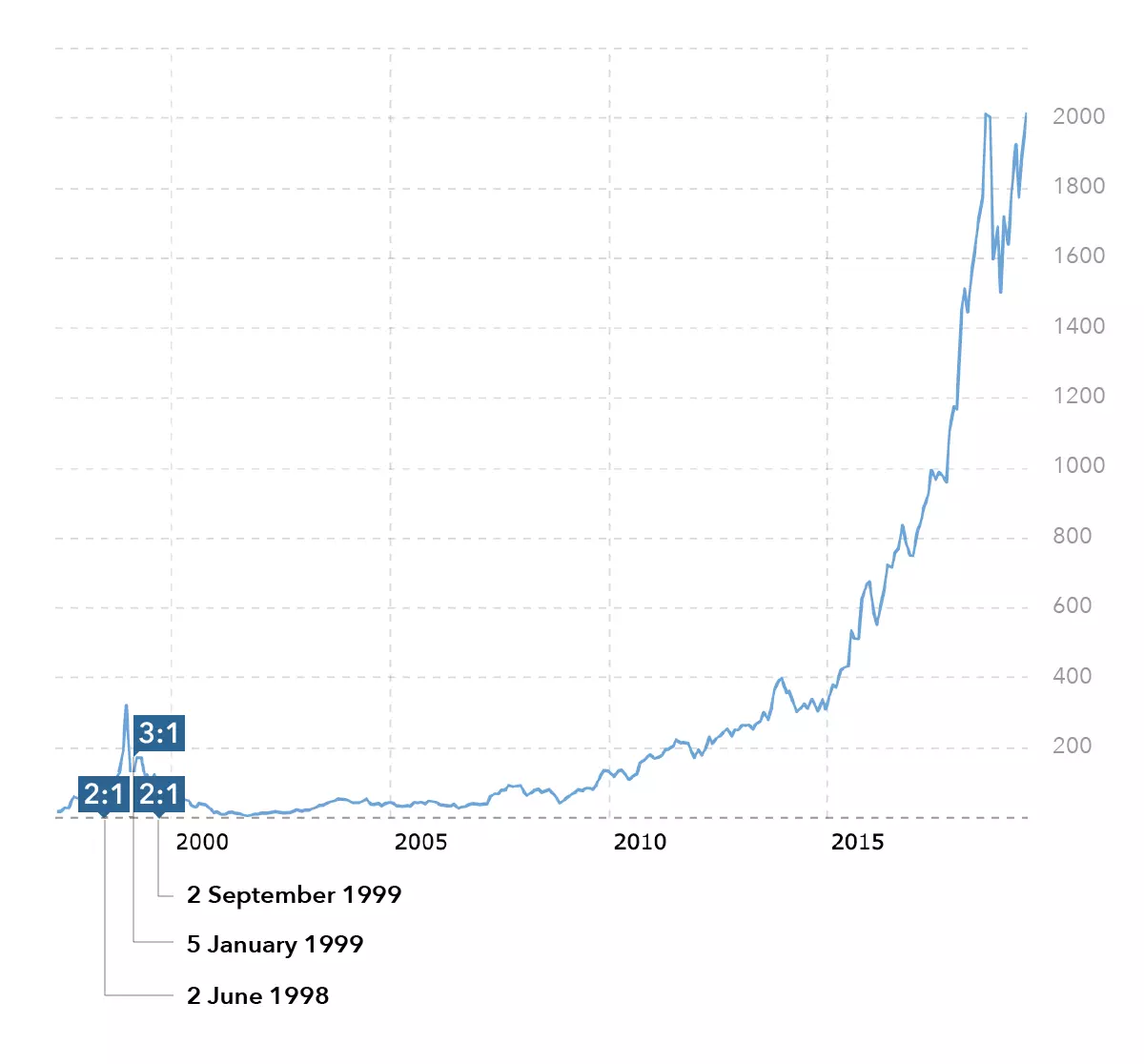
Decoding the 20-for-1 Stock Split
In June 2022, Amazon executed a massive 20-for-1 stock split. This was a pivotal moment for the company’s accessibility in the public markets. In a stock split, the company increases the number of shares outstanding while proportionally lowering the price of each share. It is important to note that a split does not change the intrinsic value or the market capitalization of the company; it simply cuts the “economic pie” into smaller pieces. For investors, this meant that a share previously valued at $2,000 became 20 shares valued at $100 each.
Market Capitalization vs. Nominal Share Price
When asking “how much” a share is, investors must distinguish between the nominal price (the dollar amount required to buy one share) and the market capitalization (the total value of all shares combined). Amazon consistently ranks as a trillion-dollar company. The share price is influenced by market sentiment, quarterly earnings, and macroeconomic trends, but the market cap tells the real story of the company’s scale. Monitoring the share price in isolation can be misleading; instead, investors should look at the enterprise value to understand if the current price reflects the company’s actual earning potential.
Financial Drivers: What Determines the Price of an Amazon Share?
The price of an Amazon share is not arbitrary; it is a reflection of the company’s diverse revenue streams. Unlike a traditional retailer, Amazon operates across multiple sectors, each contributing differently to the stock’s valuation.
The Profit Engine: Amazon Web Services (AWS)
While most consumers know Amazon for its orange-arrowed boxes, the investment community views Amazon largely through the lens of AWS. As a leader in cloud computing, AWS provides the infrastructure for a significant portion of the internet. From a financial perspective, AWS carries much higher profit margins than the retail division. When AWS reports strong growth in cloud spending or new enterprise contracts, the share price often reacts positively, as this segment generates the lion’s share of the company’s operating income.
E-commerce Margins and Logistics Infrastructure
The core retail business—Amazon.com—operates on thinner margins but massive volume. The valuation of a share is heavily tied to the efficiency of Amazon’s fulfillment network. Investors closely watch “shipping and fulfillment costs” as a percentage of revenue. If Amazon can leverage its massive logistics network to lower these costs, the resulting “margin expansion” typically drives the share price higher. Conversely, rising fuel costs or labor shortages can put downward pressure on the stock.
High-Margin Advertising Growth
A relatively new but powerful driver of Amazon’s share price is its advertising business. By selling sponsored listings and display ads to third-party sellers on its platform, Amazon has created a multibillion-dollar revenue stream that requires very little overhead compared to physical shipping. As Amazon captures more of the digital advertising market share from competitors like Google and Meta, the “multiplier effect” on its stock price becomes more pronounced.
Analyzing Amazon as a Growth Stock: Key Financial Metrics
To determine if the current share price represents a “fair” value, investors use several quantitative tools. Amazon has historically been a difficult company to value using traditional metrics because it reinvests almost all of its profits back into the business.

Navigating the P/E Ratio and Cash Flow
The Price-to-Earnings (P/E) ratio is the most common metric used to value stocks, but for Amazon, it can often look alarmingly high. This is because Amazon’s net income is frequently suppressed by heavy capital expenditures (CapEx) in data centers and warehouses. Experienced investors often prefer looking at Operating Cash Flow (OCF) or Free Cash Flow (FCF). If Amazon is generating billions in cash but spending it on future growth, a high P/E ratio may be justified. A share of Amazon is essentially a bet that the company’s massive current spending will result in dominant future profits.
Revenue Diversification and Stability
A major factor in Amazon’s share price stability is its revenue diversification. Because the company generates income from subscriptions (Amazon Prime), third-party seller services, physical stores (Whole Foods), and digital services, it is less vulnerable to a downturn in a single sector. When one area of the economy slows down, another often compensates. This “ecosystem” effect provides a valuation floor that many single-sector companies lack.
Strategic Approaches to Investing in Amazon
Once an investor understands the value of a share, the next step is determining the best method for acquisition. The “how much” question extends to how much of one’s portfolio should be dedicated to a single tech giant.
The Role of Fractional Shares
For those who find the nominal share price still too high for their budget, many modern brokerages offer fractional shares. This allows an investor to buy $10 or $50 worth of Amazon stock rather than committing to a full share. This has democratized access to Amazon, allowing “micro-investors” to participate in the company’s growth alongside institutional hedge funds.
Dollar-Cost Averaging (DCA)
Given the volatility of the tech sector, many financial advisors recommend Dollar-Cost Averaging when buying Amazon. Instead of trying to “time the market” to get the lowest possible share price, an investor commits to buying a fixed dollar amount of the stock at regular intervals (e.g., $200 every month). This strategy reduces the risk of buying at a temporary peak and lowers the average cost per share over the long term.
Investing via ETFs and Mutual Funds
For investors who want exposure to Amazon without the risk of holding an individual stock, Amazon is a top holding in many Exchange-Traded Funds (ETFs). Funds that track the S&P 500 or the Nasdaq-100 (like SPY or QQQ) carry significant weightings of Amazon. This allows for diversified growth, where the investor benefits from Amazon’s success while being protected by the performance of hundreds of other companies.
Long-term Outlook: Risks and Opportunities
The price of an Amazon share today is a reflection of the market’s expectation for the next five to ten years. To sustain its valuation, Amazon must navigate several high-stakes challenges.
Regulatory and Antitrust Scrutiny
One of the primary risks to Amazon’s share price is government intervention. Regulators in the U.S. and Europe have frequently investigated Amazon for potential antitrust violations regarding its treatment of third-party sellers and its dominance in the cloud market. Any legal mandate to “break up” the company—such as spinning off AWS into a separate entity—would fundamentally change the value and structure of an Amazon share.
The Artificial Intelligence (AI) Frontier
Amazon is currently in a “tech arms race” regarding Generative AI. The value of its shares in the coming decade will likely depend on how effectively it integrates AI into AWS and its retail recommendation engines. If Amazon can provide the primary infrastructure for the world’s AI applications through its “Bedrock” service, the stock could see a new era of exponential growth.

Competitive Pressure and Market Saturation
Finally, investors must consider the threat of competition. In the retail space, players like Walmart have aggressively scaled their e-commerce capabilities, while international platforms like Temu and TikTok Shop are vying for consumer attention. In the cloud space, Microsoft Azure and Google Cloud are formidable rivals. The current share price assumes that Amazon will maintain its “moat”—the competitive advantage that keeps customers locked into its ecosystem.
In conclusion, “how much” an Amazon share is worth is a question answered by a combination of current market price, historical splits, and the company’s massive internal engines of AWS and advertising. By looking beyond the daily ticker and analyzing the underlying financial health and strategic positioning of the company, investors can better understand whether Amazon fits into their long-term financial goals.
aViewFromTheCave is a participant in the Amazon Services LLC Associates Program, an affiliate advertising program designed to provide a means for sites to earn advertising fees by advertising and linking to Amazon.com. Amazon, the Amazon logo, AmazonSupply, and the AmazonSupply logo are trademarks of Amazon.com, Inc. or its affiliates. As an Amazon Associate we earn affiliate commissions from qualifying purchases.