
Florida, the Sunshine State, beckons with its theme parks, pristine beaches, vibrant cities, and lush natural landscapes. For millions, a trip to Florida is a cherished dream or a regular escape. However, before you can dip your toes in the warm Gulf waters or stroll through a magical kingdom, there’s a crucial financial question to answer: “How much is a flight to Florida?”
Unlike a fixed-price item, the cost of airfare to Florida is a highly dynamic variable, influenced by a multitude of factors that can cause prices to swing wildly from one day to the next. Understanding these underlying mechanics is the first step towards securing your ideal trip without breaking the bank. This article will delve into the intricate financial landscape of flight pricing, equip you with savvy strategies to find the best deals, and help you budget effectively for your Floridian adventure, all from a personal finance perspective. We’ll explore how seasonality, booking habits, choice of airport, and even the day of the week can impact your wallet, ensuring you approach your travel planning with financial intelligence and confidence.

The Dynamic Factors Influencing Flight Prices to Florida
The price you pay for a plane ticket to Florida is rarely arbitrary. Instead, it’s a complex interplay of economic principles, algorithmic pricing, and consumer behavior. Deconstructing these factors is essential for any financially astute traveler aiming to optimize their travel budget.
Seasonality and Demand Cycles
The most significant driver of flight costs is demand, which is heavily dictated by the time of year. Peak travel seasons — such as spring break, summer holidays (June-August), Thanksgiving, Christmas, and New Year’s — see a dramatic surge in prices as airlines capitalize on increased demand. During these periods, families are off from school, and many people have vacation time, making travel more convenient. Conversely, the shoulder seasons (late April to May, early September to October) and the deep off-season (late January to February, excluding President’s Day) often present more affordable fares. Traveling during these periods requires flexibility but can yield substantial savings. For example, a flight from New York to Orlando in July could easily be double the price of the same flight in late September.
Departure and Arrival Airports
Your chosen departure city and, crucially, your arrival airport within Florida can profoundly affect ticket prices. Major hubs like Orlando International Airport (MCO), Miami International Airport (MIA), and Fort Lauderdale-Hollywood International Airport (FLL) often have more flights and competition, which can sometimes lead to lower prices due to volume. However, smaller airports like Tampa International Airport (TPA), Jacksonville International Airport (JAX), or Southwest Florida International Airport (RSW) near Fort Myers might offer competitive rates, especially if they are served by budget carriers. Flying into a less popular airport and driving a short distance to your final destination could be a smart financial maneuver. For instance, sometimes flying into Fort Lauderdale and driving to Miami is cheaper than flying directly into Miami.
Advance Booking vs. Last-Minute Deals
There’s a widely held belief that booking flights well in advance always guarantees the best price. While often true, the optimal booking window can vary. For domestic flights, including those to Florida, experts generally suggest booking between one to three months out. During this “sweet spot,” airlines have refined their pricing algorithms, and seats are neither too scarce (driving prices up) nor too plentiful (leading to last-minute fire sales, which are increasingly rare). Booking too early might mean missing out on sales, while waiting too long often results in significantly higher fares as seats fill up and demand increases for the remaining inventory. The days of consistent cheap last-minute deals are largely a relic of the past, as airlines are adept at dynamic pricing to maximize revenue.
Airline Business Models
The airline you choose plays a direct role in the initial ticket price. Legacy carriers like Delta, American, and United often offer a more inclusive fare that might cover a checked bag or seat selection, though this is changing rapidly with “Basic Economy” fares. Budget airlines such as Southwest, Spirit, Frontier, and Allegiant, on the other hand, typically advertise very low base fares. However, these often come with significant ancillary fees for everything from carry-on bags and checked luggage to seat assignments, printing boarding passes at the airport, and even water. A careful financial comparison, factoring in all potential fees, is crucial when considering a budget carrier. A $50 base fare can quickly escalate to $150 or more per person once all add-ons are included.
Day of the Week and Time of Day
Believe it or not, the specific day you fly and even the time of day can influence your ticket cost. Mid-week flights (Tuesday, Wednesday, Thursday) are typically cheaper than weekend flights (Friday, Saturday, Sunday) due to lower business and leisure demand. Early morning or late-night flights often carry a lower price tag because they are less convenient for most travelers. For example, a Tuesday morning flight departing at 6 AM might be significantly cheaper than a Friday evening flight at 5 PM on the same route. This flexibility, if your schedule allows, can lead to noticeable savings in your travel budget.
Strategies for Finding the Best Flight Deals to Florida
With a firm grasp of what influences flight prices, the next step is to arm yourself with actionable strategies to find the most financially advantageous options for your Florida trip. Smart financial planning extends beyond just knowing the factors; it involves actively employing tools and tactics to your benefit.
Leverage Flight Comparison Websites and Tools
The digital age has blessed us with powerful aggregators that scour hundreds of airlines and online travel agencies (OTAs) to present you with a comprehensive overview of flight options. Google Flights is often lauded for its intuitive interface, calendar view showing price variations, and robust filtering options. Skyscanner, Kayak, and Momondo are other excellent platforms that allow you to compare prices across various providers. These tools are indispensable for quickly identifying the cheapest routes, dates, and airlines. Always check a few different sites, as their results can sometimes vary slightly, and be mindful that some budget airlines might not appear on all aggregators.
Be Flexible with Dates and Destinations (within Florida)
Flexibility is perhaps the most powerful financial lever you have when booking flights. If your travel dates are somewhat pliable, use the “flexible dates” or “month view” features on comparison sites to see when prices are lowest. Sometimes shifting your departure or return by just a day or two can save hundreds of dollars. Similarly, consider flying into a different Florida airport than your primary target. As mentioned before, if your goal is Miami Beach, but Fort Lauderdale (FLL) offers significantly cheaper flights, the short drive might be a worthwhile trade-off for the financial savings. Always cross-reference the cost of ground transportation from the alternative airport to ensure it doesn’t negate your flight savings.
Set Price Alerts and Track Fares
You don’t need to constantly check flight prices yourself. Most comparison websites and even some airline apps offer price alert features. By setting up an alert for your desired route and dates, you’ll receive email notifications when the fare drops or increases significantly. This automation saves you time and ensures you don’t miss out on a sudden sale or price dip. Tools like Hopper also use predictive analytics to advise you on whether to buy now or wait, leveraging historical data to project future price movements. These financial tools can be incredibly valuable in a volatile market.
Consider Budget Airlines and Their Nuances
Budget airlines like Spirit, Frontier, and Allegiant can offer incredibly low base fares, making them very attractive at first glance. However, it’s crucial to understand their business model. Their low base fare is often offset by a myriad of add-on fees. Before booking, meticulously calculate the total cost, including carry-on baggage, checked baggage, seat selection, and any other services you might need. If you can travel extremely light with just a personal item that fits under the seat, and you don’t care where you sit, these airlines can be a significant money-saver. Otherwise, a legacy carrier’s “Basic Economy” or even “Main Cabin” fare might end up being cheaper or comparable when all is said and done.
Explore Alternative Airports
Don’t limit your search to just one departure or arrival airport. If you live near multiple airports, check flights from all of them. For instance, if you’re flying from the New York area, compare prices from JFK, LaGuardia, Newark (EWR), and even smaller regional airports if feasible. The same applies to your Florida destination – look at options like MCO, SFB (Sanford, near Orlando), MIA, FLL, PBI (West Palm Beach), TPA, PIE (St. Pete/Clearwater), and RSW. Sometimes a slightly longer drive on either end can lead to substantial financial savings on the airfare itself.
Incognito Browsing and Clearing Cookies
While its effectiveness is debated, some travelers swear by searching for flights in an incognito or private browsing window, or by clearing their browser’s cookies after each search session. The theory is that airlines and OTAs track your search history and may incrementally raise prices if they see you repeatedly searching for the same route, indicating high interest. While there’s no definitive proof this tactic works universally, it costs nothing to try and may offer peace of mind.
Beyond the Ticket Price: Hidden Costs and Budgeting Considerations
A common financial pitfall in travel planning is focusing solely on the flight ticket price. However, a truly savvy traveler understands that the true cost of a flight to Florida extends well beyond the initial fare. A comprehensive financial budget must account for all potential ancillary expenses.
Baggage Fees
This is perhaps the most common and often surprising hidden cost. Many airlines, especially budget carriers and for “Basic Economy” fares on legacy airlines, charge for both carry-on and checked luggage. These fees can range from $30-$70 per bag, per direction. If you’re traveling with multiple people or for an extended period, these fees can quickly add hundreds of dollars to your overall travel cost. Always check the airline’s baggage policy before booking and factor these costs into your budget. Sometimes, paying a slightly higher base fare with an airline that includes a checked bag can be cheaper than a low-fare option with hefty baggage fees.
Seat Selection and Upgrades
Want to guarantee you sit next to your travel companion, or prefer an aisle seat? Many airlines now charge for advanced seat selection, particularly on their most basic fares. These fees can range from $5 to $50 or more per seat, per flight segment. Furthermore, enticing upgrades to extra legroom seats, exit rows, or premium economy can significantly increase your cost. Decide if these amenities are worth the extra financial outlay for your comfort versus the potential savings.
In-Flight Amenities and Services
While less common on shorter domestic flights to Florida, some airlines charge for in-flight meals, snacks, beverages (beyond water), blankets, pillows, and even entertainment on seat-back screens. Budget airlines are notorious for nickel-and-diming for these items. Packing your own snacks and a refillable water bottle after clearing security can be a small but effective financial saving. Downloading movies or shows to your device beforehand negates the need for paid entertainment.
Transportation to/from Airports
Don’t forget the costs associated with getting to your departure airport and from your arrival airport in Florida. This could include parking fees if you drive and leave your car, taxi fares, ride-share services (Uber/Lyft), or public transportation costs. Research these expenses in advance and factor them into your overall travel budget. A cheap flight from a distant airport might be offset by expensive ground transportation. For example, a week’s parking at some major airports can easily exceed $100.
Accommodation and Ground Transportation in Florida
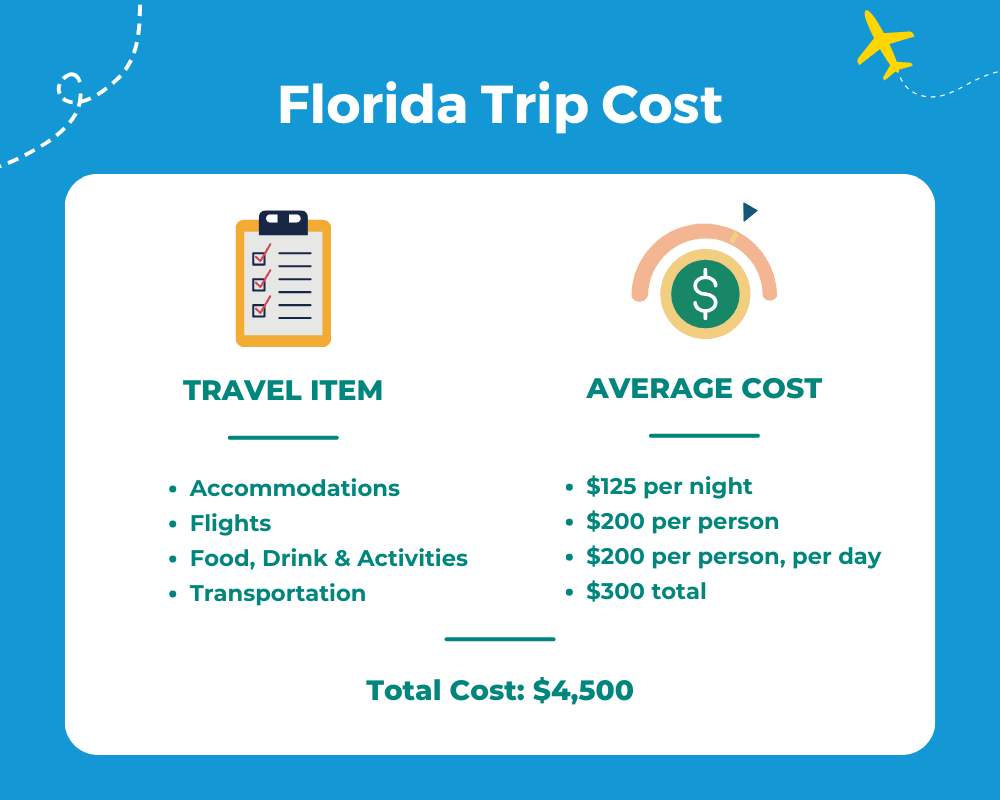
While not directly part of the flight cost, a holistic financial plan for your Florida trip must consider these significant expenses. The cost of hotels, vacation rentals, rental cars, or public transport once you arrive will likely be the largest portion of your overall budget after airfare. Researching these costs before booking your flight ensures you have a realistic picture of your total financial commitment and helps avoid post-booking sticker shock. Using financial tools like budgeting apps can help track these combined costs.
Travel Insurance
Though an optional expense, travel insurance can be a wise financial investment, especially for significant trips or those with non-refundable elements. It can protect you financially against unforeseen events like flight cancellations, lost luggage, medical emergencies, or trip interruptions. The cost is typically a small percentage of your total trip cost, but it provides a critical safety net, potentially saving you thousands in a worst-case scenario. When calculating the “true cost” of your flight, considering this protective measure is a financially prudent step.
Financial Tools and Smart Habits for Savvy Travelers
Beyond the tactics for finding deals, adopting certain financial habits and leveraging specific tools can further enhance your ability to minimize flight costs and manage your travel budget effectively. These are long-term strategies that empower you as a financially intelligent traveler.
Credit Card Rewards and Airline Miles
For many frequent travelers, credit card rewards programs and airline loyalty programs are invaluable financial tools. By strategically using travel-focused credit cards, you can accumulate points or miles that can be redeemed for free or heavily discounted flights, seat upgrades, or even baggage fee waivers. Look for cards with generous sign-up bonuses, strong earning rates on travel or everyday spending, and benefits like free checked bags or airport lounge access. It requires discipline to manage credit responsibly, but for those who do, these programs offer a significant return on spending.
Budgeting Apps and Spreadsheets
To maintain financial control over your Florida trip, a dedicated budget is non-negotiable. Whether you prefer a simple spreadsheet or a sophisticated budgeting app (like Mint, YNAB, or Rocket Money), tracking your expenses before, during, and after your trip is crucial. Allocate specific amounts for airfare, accommodation, food, activities, and miscellaneous expenses. Regularly reviewing your actual spending against your budget helps identify areas where you might be overspending and allows for adjustments, ensuring your trip remains financially viable.
Price Prediction Tools
Some sophisticated platforms now offer price prediction technology. Tools like Hopper’s “buy or wait” recommendations use vast historical data and machine learning to forecast whether flight prices are likely to rise or fall. While not infallible, these tools can provide valuable insights, helping you decide if it’s the right financial moment to purchase your ticket or hold out for a better deal. Integrating these insights into your booking strategy can lead to significant savings.
Subscription Services for Flight Deals
For travelers with ultimate flexibility, subscription services like Scott’s Cheap Flights (now Going) or Dollar Flight Club can be excellent financial investments. These services scour the internet for “mistake fares” or exceptionally low prices and alert their subscribers. While not every deal will be for Florida, the occasional gem can easily pay for the annual subscription fee many times over. These are best suited for those who can drop everything and travel on short notice or adjust their plans significantly to seize an incredible deal.

Conclusion
Determining “how much is a flight to Florida” is far from a straightforward calculation; it’s a dynamic puzzle with many pieces. However, by adopting a financially savvy approach, understanding the myriad factors that influence pricing, and diligently employing smart search and budgeting strategies, you can significantly reduce the cost of your Sunshine State adventure. From leveraging comparison sites and being flexible with your travel dates to meticulously accounting for hidden fees and utilizing financial tools like price alerts and rewards programs, every informed decision contributes to a more affordable and enjoyable trip.
Remember, the goal isn’t just to find the cheapest ticket, but the best financial value for your specific travel needs and preferences. With careful planning, a bit of flexibility, and the right financial tools at your disposal, your dream flight to Florida can become a reality without putting an undue strain on your personal finances. Happy travels, and may your budget lead you straight to the sun-drenched shores of Florida!
aViewFromTheCave is a participant in the Amazon Services LLC Associates Program, an affiliate advertising program designed to provide a means for sites to earn advertising fees by advertising and linking to Amazon.com. Amazon, the Amazon logo, AmazonSupply, and the AmazonSupply logo are trademarks of Amazon.com, Inc. or its affiliates. As an Amazon Associate we earn affiliate commissions from qualifying purchases.