
For the modern consumer, the annual decision to renew or initiate a warehouse club membership is more than just a shopping preference; it is a calculated financial move. When asking “how much is a Costco card,” the answer involves two primary price points, but the true cost—and the potential for profit—lies in the underlying math of personal finance. As of September 2024, Costco adjusted its membership fees for the first time in seven years, making it more critical than ever to understand the tiered system and how to leverage it for maximum household savings.
Understanding the Membership Tiers: The Direct Costs
The price of a Costco card is divided into two main categories for individual consumers and a specific category for business owners. These fees represent the “entry cost” to access a deflationary retail environment where markups are strictly capped, usually at no more than 14-15%.
Gold Star Membership: The Entry Point
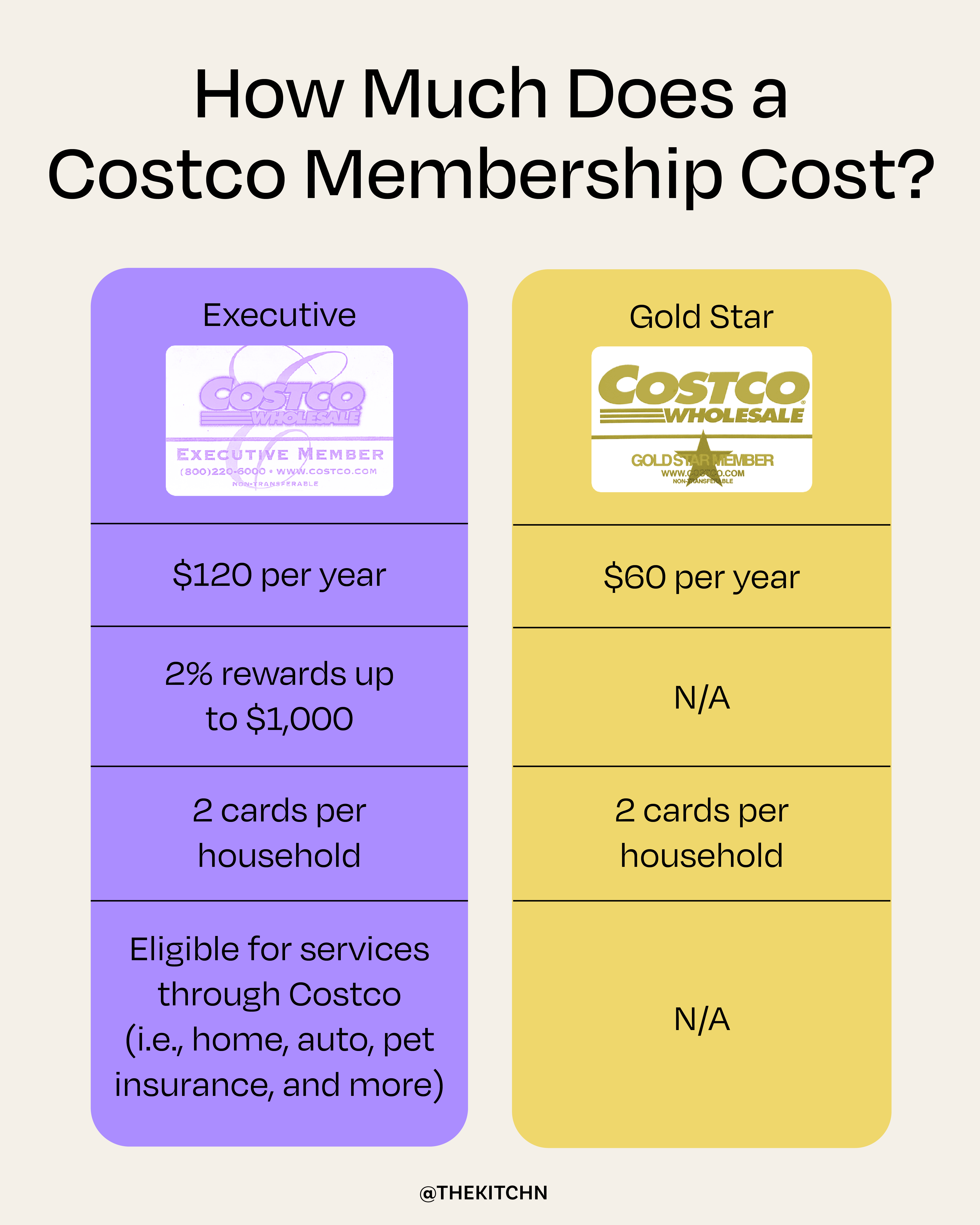
The standard individual membership, known as the Gold Star Membership, currently costs $65 per year. This is a $5 increase from the previous $60 fee. For this annual price, members receive two cards (one for the primary holder and one for another person in the same household). This tier is designed for the casual shopper who wants access to the warehouse prices, Kirkland Signature products, and Costco’s auxiliary services like the pharmacy and optical center. From a personal finance perspective, a $65 annual fee breaks down to approximately $5.42 per month. To justify this cost, a shopper must save at least that much compared to traditional grocery store prices through bulk discounts or lower unit costs.
Executive Membership: The Premium Cashback Tier
The Executive Membership represents the highest tier for individual consumers, now priced at $130 per year (up from $120). While the $130 price tag may seem steep, it is arguably the most “productive” financial tool Costco offers. The primary benefit of the Executive tier is the 2% annual reward on qualified Costco purchases. For households with significant monthly expenditures, the Executive card effectively pays for itself.
Business Membership
For entrepreneurs and small business owners, the Business Membership is also $65 annually. This tier allows for the purchase of goods for resale and provides the ability to add additional “add-on” members for a fee. For those running a side hustle or a small company, this membership is often a tax-deductible business expense, changing the financial calculus entirely compared to a personal Gold Star card.
The Return on Investment (ROI) Calculation
To determine if a Costco card is a sound financial investment, one must look past the sticker price of the membership and analyze the “break-even” point. This is the moment where the savings generated by the membership exceed the annual fee.
The Math of the 2% Reward
The 2% reward on the Executive Membership is capped at $1,000 annually. To recoup the $65 difference between a Gold Star and an Executive membership, a member needs to spend $3,250 a year at Costco (roughly $271 per month). However, to recoup the entire $130 fee, a member needs to spend $6,500 annually (about $542 per month). For large families or those who purchase big-ticket items like electronics, furniture, or tires at Costco, hitting these targets is relatively simple. If your spending exceeds these thresholds, the membership isn’t just “free”—it becomes a source of passive income in the form of an annual rebate check.
Unit Pricing vs. Bulk Total
The psychological trap of warehouse shopping is the high “per-trip” cost. A single cart can easily exceed $300. However, the financial benefit is found in the unit price. Personal finance experts emphasize looking at the price per ounce, gallon, or sheet. By purchasing shelf-stable goods (detergent, paper products, canned goods) at a lower unit price, consumers reduce their “cost of living” over a 12-month cycle. The initial membership fee is essentially an “arbitrage fee” that grants access to these lower unit costs.
Indirect Financial Gains: Gas and Services
For many, the $65 or $130 fee is recovered solely at the gas pump. Costco Gasoline is frequently priced 10 to 30 cents lower per gallon than neighboring stations. For a driver who fills up a 15-gallon tank once a week, a 20-cent savings per gallon results in $156 in annual savings—more than covering even the Executive Membership fee. Furthermore, Costco’s financial services, including discounted insurance rates, mortgage services, and travel packages, often provide hundreds of dollars in “hidden” ROI that are not reflected in the grocery receipt.
Financial Considerations for Different Household Budgets
A Costco card is not a one-size-fits-all financial solution. Its value fluctuates based on household size, storage capacity, and spending discipline.
Single Professionals and Small Households
For individuals living alone or couples in small apartments, the $65 Gold Star fee requires more scrutiny. Without the volume of a large family, the risk of “bulk waste”—where food spoils before it can be consumed—can negate any savings. In these cases, the membership’s value is often found in non-perishables, toiletries, and high-value items like the $4.99 rotisserie chicken or cheap food court meals. Financially, a single person might find that a membership only makes sense if they utilize Costco for gas or high-cost electronics.
Families and High-Volume Consumers
For households with three or more people, the Costco card is almost always a net positive for the budget. The ability to buy meat in bulk for freezing, large quantities of dairy, and snacks for school lunches creates a predictable, lower-cost monthly food budget. For these users, the Executive Membership is almost mandatory, as the 2% back will likely cover the majority of the membership cost, effectively allowing the household to access warehouse pricing for “free” or a very low net cost.
The “Costco Trap” and Spending Discipline
From a behavioral finance perspective, one must account for “impulse spend.” Costco’s layout is designed to encourage “treasure hunting.” If a shopper goes in for milk and eggs but leaves with a $200 air fryer and a set of new towels, the “savings” from the milk are lost. To maintain the financial integrity of the membership, consumers must stick to a strict list. If the membership fee leads to an increase in unnecessary discretionary spending, the card becomes a liability rather than an asset.
Maximizing Your Financial Perks Beyond the Warehouse
To truly optimize the cost of a Costco card, savvy members integrate it into a broader financial strategy that includes credit card rewards and lifestyle services.
The Costco Anywhere Visa® Card by Citi
For those looking to stack their rewards, the Costco Anywhere Visa is a powerful tool. It offers 4% back on gas (up to $7,000 per year), 3% on restaurants and travel, 2% on all Costco purchases, and 1% on everything else. When paired with an Executive Membership, a member receives a total of 4% back on most Costco purchases. This “double-dipping” strategy is one of the most effective ways to lower the effective cost of a membership to zero and generate a significant annual cash surplus.
Costco Travel: The Budget Traveler’s Secret
Costco Travel is often cited as one of the best-kept secrets in personal finance. By negotiating bulk rates for rental cars, cruises, and vacation packages, Costco often provides prices that cannot be matched by third-party booking sites. For a family booking a $3,000 vacation, the savings via Costco Travel can often exceed $500—instantly justifying the cost of a membership for several years. Furthermore, Executive members receive additional perks and upgrades on many of these packages.
High-Value Services: Optical, Pharmacy, and Tires
The financial benefits of a Costco card extend to healthcare and automotive maintenance. The pharmacy often has some of the lowest prices for generic prescriptions, sometimes even beating insurance co-pays. Similarly, the tire center offers free lifetime maintenance (rotations and flat repairs) on tires purchased there. These are “hard savings” that reduce the total cost of ownership for a vehicle and the out-of-pocket costs for health maintenance.
Strategic Shopping: How to Recoup Your Annual Fee Quickly
If you are on the fence about whether a Costco card is worth the investment, there are specific strategies to ensure you see a return in the first few months of ownership.
Identifying High-Margin Savings Categories
Certain items at Costco have a much higher “savings-to-price” ratio than others. For example, Kirkland Signature coffee, olive oil, maple syrup, and spices are often 40-50% cheaper than their name-brand equivalents at traditional supermarkets. By identifying 10-15 “staple” items that your household consumes regularly and switching to the Costco version, the $65 or $130 fee can be recouped through these items alone within a few shopping trips.
Seasonal Spending and Membership Timing
Timing your membership and your purchases can also impact your financial outcome. Major holiday sales, particularly for electronics and kitchen appliances, offer deep discounts. If you know you need to replace a television or a laptop, purchasing it at Costco during a sale—combined with the extended warranty and the 2% Executive reward—can save you hundreds of dollars in a single transaction. This single purchase can effectively pay for a decade of membership fees.

The Refund Policy as a Financial Safety Net
Finally, one must consider Costco’s “Risk-Free 100% Satisfaction Guarantee.” Unlike many other subscription services, Costco will refund your membership fee in full at any time if you are dissatisfied. This eliminates the financial risk of “trying it out.” From a cash-flow perspective, the membership fee is an asset you can liquidate if you find that the warehouse model does not fit your shopping habits or financial goals.
In conclusion, the question of “how much is a Costco card” is answered not just by the $65 or $130 price tag, but by the lifestyle and spending habits of the cardholder. For the disciplined consumer who treats the membership as a gateway to lower unit costs and high-value services, the Costco card is a premier financial tool that pays for itself many times over.
aViewFromTheCave is a participant in the Amazon Services LLC Associates Program, an affiliate advertising program designed to provide a means for sites to earn advertising fees by advertising and linking to Amazon.com. Amazon, the Amazon logo, AmazonSupply, and the AmazonSupply logo are trademarks of Amazon.com, Inc. or its affiliates. As an Amazon Associate we earn affiliate commissions from qualifying purchases.