
Navigating the landscape of financial transactions requires a clear understanding of costs, processes, and security. Among the various payment methods available, the cashier’s check holds a unique position, offering a high level of security dueating its guaranteed funds status. For individuals and businesses banking with Chase, understanding the specifics of obtaining a cashier’s check, particularly its associated cost, is a fundamental aspect of effective financial management.
Understanding the Cost: Chase’s Cashier’s Check Fees
The immediate question for many contemplating a cashier’s check at Chase Bank is, “What’s the fee?” While the core function of a cashier’s check remains consistent across financial institutions – a check drawn by the bank itself on its own funds, rather than on a depositor’s account – the fees associated with obtaining one can vary. Chase, like most major banks, has a structured fee schedule, which can often be influenced by your relationship with the bank.
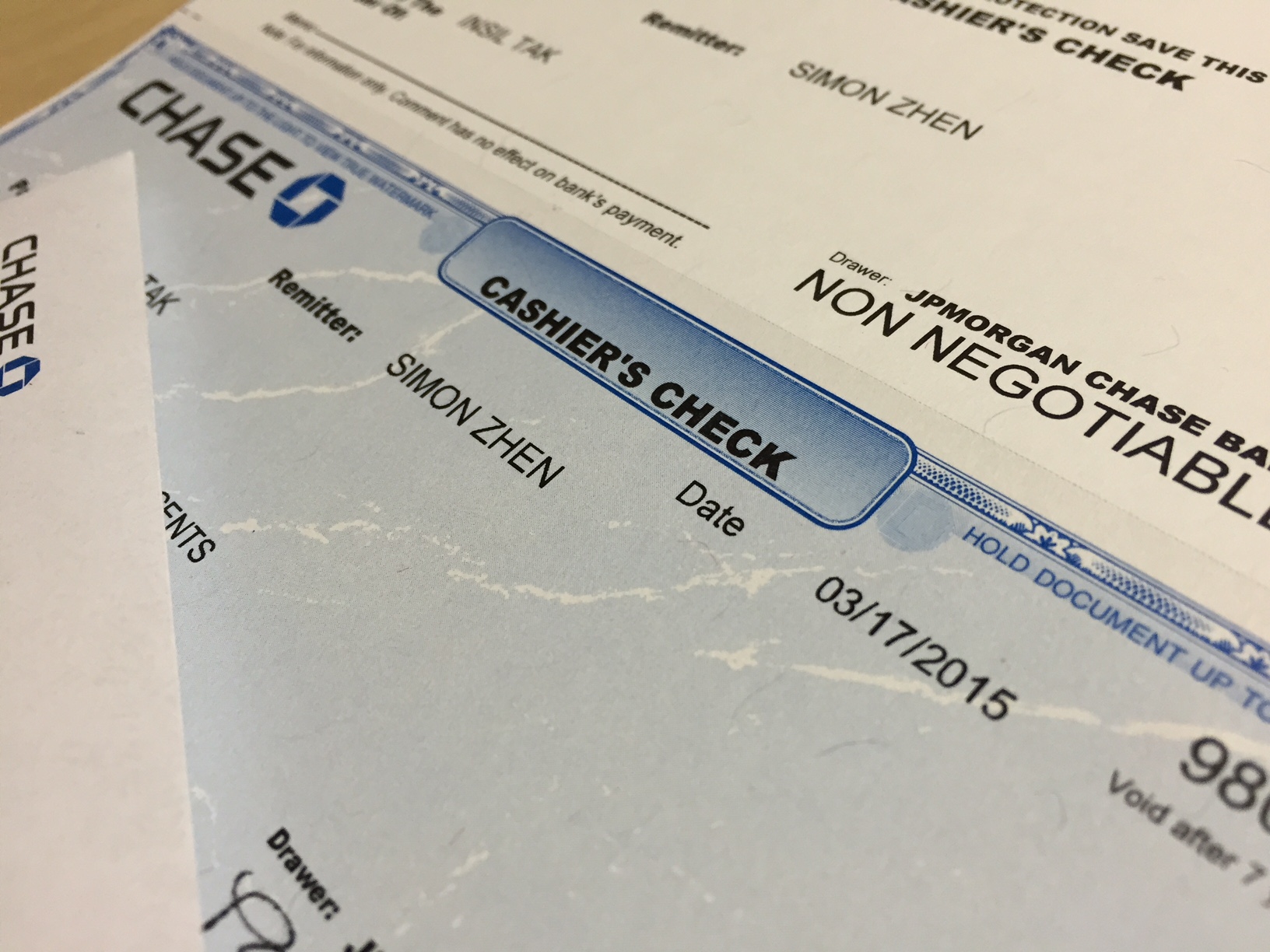
Standard Fees for Non-Account Holders
For individuals who do not hold an account with Chase Bank, obtaining a cashier’s check is typically not an option. Most financial institutions, including Chase, require you to be an existing customer to issue a cashier’s check. This policy is primarily in place for security reasons and to mitigate risks associated with transactions involving non-customers. If you are not a Chase account holder, you would generally need to open an account or seek a cashier’s check from your own bank where you have an established relationship.
Fee Waivers for Eligible Chase Account Holders
For existing Chase customers, the fee for a cashier’s check is generally straightforward. As of recent policies, Chase typically charges a nominal fee for issuing a cashier’s check. This fee, however, is frequently waived for customers who maintain specific types of checking accounts or meet certain relationship criteria. For instance:
-
Chase Private Client and Sapphire Banking customers: These premium accounts often come with a host of benefits, including waived fees for services like cashier’s checks, wire transfers, and stop payments. This is a significant perk that enhances the value proposition of these high-tier banking relationships.
-
Other Checking Accounts: Depending on the specific Chase checking account you hold (e.g., Chase Total Checking, Chase Premier Plus Checking), the fee might be waived if you maintain a certain minimum daily balance, receive qualifying direct deposits, or have combined balances across multiple Chase accounts. It’s crucial for account holders to review their specific account’s terms and conditions, or consult with a Chase representative, to understand their eligibility for fee waivers.
It’s important to note that bank fees, including those for cashier’s checks, are subject to change. Therefore, always confirm the current fee schedule with a Chase branch or through their official website before proceeding with your request. A quick call to customer service or a visit to your local branch can provide the most up-to-date and accurate information tailored to your specific account.
Potential Hidden Costs or Exceptions
While direct fees are transparent, it’s rare to encounter “hidden” costs specifically for issuing a cashier’s check at Chase. However, other scenarios might indirectly affect the overall financial outlay:
-
Expedited Services: If you require a check outside of standard branch hours or for specific complex transactions, though less common for cashier’s checks, some specialized banking services can incur additional charges.
-
Stop Payment Fees: In the unfortunate event that a cashier’s check is lost, stolen, or needs to be canceled, initiating a stop payment will almost certainly incur a separate fee. This fee can be substantial and highlights the importance of safeguarding your check.
-
Insufficient Funds (for funding source): While a cashier’s check itself is guaranteed, the funds used to purchase it must be available in your account. If you attempt to purchase a cashier’s check with insufficient funds, it could lead to an overdraft fee on your account, even if the cashier’s check transaction itself isn’t processed.
Understanding these potential ancillary costs is part of a comprehensive approach to managing your personal finance and ensuring smooth transactions.
Why Opt for a Cashier’s Check? The Security and Benefits
Beyond the cost, the inherent value of a cashier’s check lies in its unparalleled security, making it a preferred payment method for significant transactions. This security stems from its unique characteristic: the funds are guaranteed by the issuing bank itself, not by the account holder.
Guaranteed Funds: The Assurance Factor
When a cashier’s check is issued, the funds are immediately drawn from the customer’s account and placed into the bank’s own account. This means the bank assumes responsibility for the payment. For the recipient, this provides a critical layer of assurance that the check will not bounce, unlike a personal check where the availability of funds depends solely on the drawer’s account balance. This guarantee makes cashier’s checks particularly attractive for high-value transactions where trust and certainty are paramount.
Common Scenarios Requiring a Cashier’s Check
Several common financial scenarios frequently necessitate the use of a cashier’s check:
-
Real Estate Transactions: Purchasing a home often involves large sums for down payments, closing costs, or earnest money deposits. Sellers and real estate agencies typically require guaranteed funds to minimize risk.
-
Vehicle Purchases: When buying a car, especially from a private seller, a cashier’s check provides assurance to the seller that the funds are legitimate and available, facilitating a swift and secure transaction.
-
Large Rent Deposits or Security Deposits: Some landlords, especially for high-value rental properties, may request a cashier’s check for security deposits or first and last month’s rent.
-
Certain Business Transactions: For significant B2B payments, or when dealing with unfamiliar parties, a cashier’s check offers a layer of protection for both payer and payee.
-
Legal Settlements: Funds dispensed through legal settlements or court-ordered payments often require the unimpeachable security of a cashier’s check.
In these situations, the marginal cost of a cashier’s check is a small price to pay for the peace of mind and transactional security it provides.
Comparison with Other Payment Methods
While robust, a cashier’s check isn’t the only secure payment option. Understanding its advantages and disadvantages relative to others is key to smart financial decision-making:
-
Personal Checks: Less secure due to risk of insufficient funds and delayed clearing. Not suitable for high-value or time-sensitive transactions.
-
Money Orders: Generally limited to smaller amounts (typically under $1,000). Easier to obtain, but less robust for very large transactions.
-
Wire Transfers: Offer instant, guaranteed transfer of funds directly from one bank account to another. Often incur higher fees than cashier’s checks, but are ideal for urgent, high-value international or domestic transfers. They don’t require physical handling of a check.
-
Digital Payment Apps (Zelle, Venmo, PayPal): Convenient for everyday transactions, but often have lower transaction limits and may lack the same legal protections or traceability for very large sums. Risk of scams can be higher if sender/recipient isn’t verified.
A cashier’s check strikes a balance, offering robust security for substantial amounts at a relatively moderate cost, without the immediate finality or higher fees often associated with wire transfers.
The Process of Obtaining a Cashier’s Check at Chase
Acquiring a cashier’s check from Chase Bank is a relatively straightforward process, provided you are an account holder and have the necessary information ready.
Required Documentation and Information
To ensure a smooth transaction, be prepared with the following:
-
Chase Account Information: Your account number from which the funds will be drawn.
-
Valid Photo Identification: A government-issued ID (driver’s license, passport) is essential for identity verification.
-
Payee Information: The full and accurate legal name of the person or entity you are paying. Double-check spelling and ensure it matches the recipient’s legal documentation.
-
Exact Amount: The precise dollar amount of the check.
-
Purpose of the Check (Optional but Recommended): While not always explicitly required by the bank, knowing the purpose can help in case of inquiries and is good financial practice.
Steps at the Branch

You must visit a physical Chase bank branch to obtain a cashier’s check. The process typically involves:
-
Approach a Teller: Inform them you wish to obtain a cashier’s check.
-
Provide Information: Present your ID, account details, payee’s name, and the exact amount.
-
Confirm Funds: The teller will verify that sufficient funds are available in your designated Chase account to cover the check amount plus any applicable fees.
-
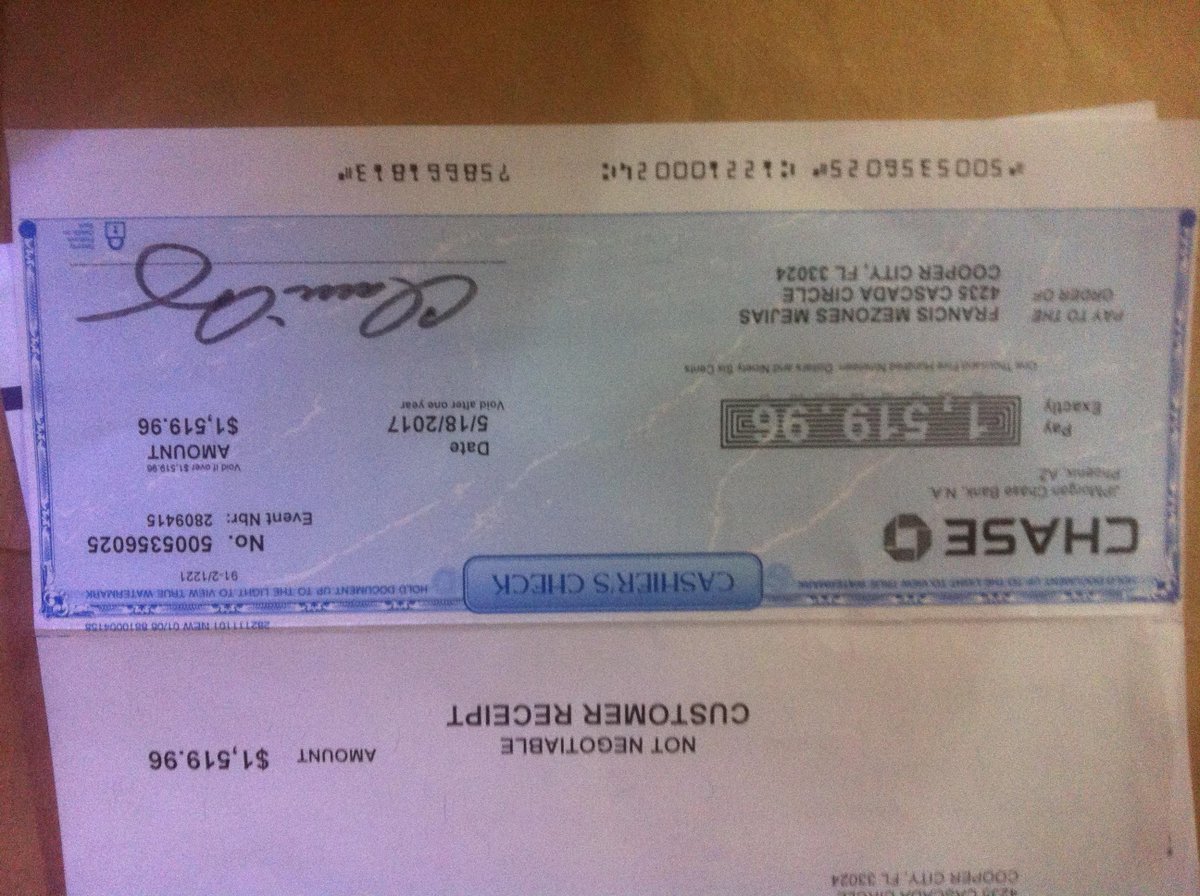
Review and Sign: Once the check is printed, carefully review all details (payee name, amount, date) to ensure accuracy. You may be asked to sign a request form.
-
Receive Check and Receipt: You will be given the cashier’s check and a receipt for the transaction, which typically includes the check number and amount.
What to Do After Receiving Your Check
Upon receiving your cashier’s check, treat it with the same care as cash:
-
Photocopy or Scan: Make a copy of the front and back of the check for your records. This is crucial for tracking and for potential issues like loss or theft.
-
Record Details: Note the check number, amount, date, and payee in your personal financial records or ledger.
-
Secure Delivery: If mailing, use a secure and trackable delivery method, especially for high-value checks. Avoid sending it through standard mail without tracking.
-
Promptly Deliver: Hand over or mail the check to the payee as soon as reasonably possible.
Best Practices for Using and Safeguarding Cashier’s Checks
While cashier’s checks are inherently secure, their utility and safety depend heavily on how they are handled and used. Awareness of best practices can protect you from potential pitfalls.
Verifying Authenticity and Avoiding Scams
Scammers unfortunately target cashier’s checks due to their perceived security. Be vigilant:
-
Never Accept Overpayment: A common scam involves a buyer sending a cashier’s check for more than the agreed-upon amount and asking for the difference back. The initial check is often fraudulent, leaving the victim out of pocket for the “refunded” amount.
-
Verify the Source: If you are the recipient, always be cautious if the check seems too good to be true or comes from an unfamiliar source with unusual requests.
-
Bank Verification: If you have any doubt about a cashier’s check you’ve received, take it to your bank and ask them to verify its authenticity before depositing or cashing it. Do not rely on calls to the issuing bank if provided by the sender; look up the official bank number yourself.
-
Clearing Time: Even a legitimate-looking cashier’s check can take several business days to fully clear your account. Do not spend the money until your bank confirms the funds are truly available.
Record Keeping and Tracking
Meticulous record-keeping is paramount for any financial transaction, especially with cashier’s checks:
-
Maintain Copies: Always keep a copy of both sides of the cashier’s check you issue or receive.
-
Transaction Log: Record the check number, amount, date, and payee in your financial ledger or banking software.
-
Proof of Delivery: If mailing, retain tracking information. If delivering in person, consider a simple signed receipt from the payee.
These records are invaluable for dispute resolution, tax purposes, or simply tracking your financial movements.
What if a Cashier’s Check is Lost or Stolen?
Losing a cashier’s check can be a stressful event, but there is a process to mitigate the risk:
-
Contact Chase Immediately: Report the loss or theft to Chase Bank as soon as you realize it.
-
Stop Payment: The bank will initiate a stop payment on the lost check. Be aware that this process can be complex.
-
Indemnity Agreement: You will likely be required to sign an “Indemnity Agreement.” This legally binding document stipulates that if the original check is ever cashed (e.g., by a finder), you agree to reimburse the bank.
-
Waiting Period: Due to the “guaranteed funds” nature, banks often impose a waiting period (e.g., 90 days) before they can issue a replacement check or refund your money, to allow time for the original check to surface or expire. This waiting period protects the bank from having to pay out twice if the original check is eventually presented.
This process underscores the importance of safeguarding the check from the moment it’s issued.
Broader Financial Implications and Alternatives
The decision to use a cashier’s check should be part of a broader financial strategy, considering efficiency, cost, and suitability for the transaction at hand.
When Is a Wire Transfer a Better Option?
Wire transfers, while often more expensive, offer distinct advantages that might make them a superior choice in certain circumstances:
-
Urgency: Wire transfers are nearly instantaneous, making them ideal for time-critical transactions where funds need to be available immediately.
-
International Transactions: For sending money across borders, wire transfers are generally the most efficient and reliable method.
-
Remote Transactions: If both parties are not in a position to physically exchange a check, a wire transfer offers a seamless electronic solution.
For high-value, time-sensitive, or international payments, the added cost of a wire transfer might be justified by its speed and directness.
Exploring Digital Payment Solutions
The rise of digital payment solutions has transformed how money is exchanged, offering convenience and often lower costs for everyday transactions:
-
Peer-to-Peer (P2P) Apps: Services like Zelle (integrated into Chase’s banking app), Venmo, and PayPal enable quick transfers between individuals. They are excellent for splitting bills, sending small gifts, or paying for casual services.
-
Online Bill Pay: Chase’s online bill pay service allows you to schedule and send payments directly from your account, often electronically or via physical check (issued by Chase). This is efficient for recurring bills.
-
ACH Transfers: Automated Clearing House transfers are electronic fund transfers between banks, suitable for recurring payments like direct deposits, payroll, and subscriptions. They are generally free but take a few business days to process.
While these digital options often lack the guaranteed fund status of a cashier’s check for large, one-time payments, they represent efficient and cost-effective alternatives for a vast array of other financial needs.
Building a Relationship with Your Bank
The varying fees and waivers for cashier’s checks at Chase highlight the financial benefits of maintaining a robust banking relationship. Customers with higher-tier accounts or who meet specific financial thresholds often enjoy reduced or waived fees for premium services. This incentive encourages customers to consolidate their financial activities with one institution, leading to:
-
Cost Savings: Lower fees on a range of services.
-
Enhanced Services: Access to dedicated financial advisors, preferred rates, and exclusive products.
-
Convenience: All financial needs managed under one roof.
Understanding the structure of your banking relationship and leveraging its benefits is a cornerstone of intelligent personal finance, making the process of obtaining a cashier’s check—and many other financial services—more economical and streamlined.
aViewFromTheCave is a participant in the Amazon Services LLC Associates Program, an affiliate advertising program designed to provide a means for sites to earn advertising fees by advertising and linking to Amazon.com. Amazon, the Amazon logo, AmazonSupply, and the AmazonSupply logo are trademarks of Amazon.com, Inc. or its affiliates. As an Amazon Associate we earn affiliate commissions from qualifying purchases.