
At first glance, “5 percent” might seem like a simple mathematical concept, a tiny fraction of a whole. However, in the realm of personal finance, investing, and business, understanding how much 5 percent truly is – and its myriad implications – can be the difference between financial stagnation and exponential growth. It’s a figure that permeates our daily lives, from the discounts we receive to the interest we pay, the returns we earn, and the taxes we owe. Far more than just a number, 5 percent is a powerful financial lever, a key indicator, and a critical component of informed decision-making. This article will delve into the multifaceted nature of 5 percent, exploring its presence across various financial landscapes and equipping you with the insights to harness its power effectively.

The Fundamentals: Grasping 5 Percent in Everyday Finance
Before we explore its deeper financial implications, let’s solidify our understanding of what 5 percent fundamentally represents and how it manifests in common financial transactions. Grasping this basic arithmetic is the cornerstone of all advanced financial literacy.
Basic Calculation: What 5% Really Means
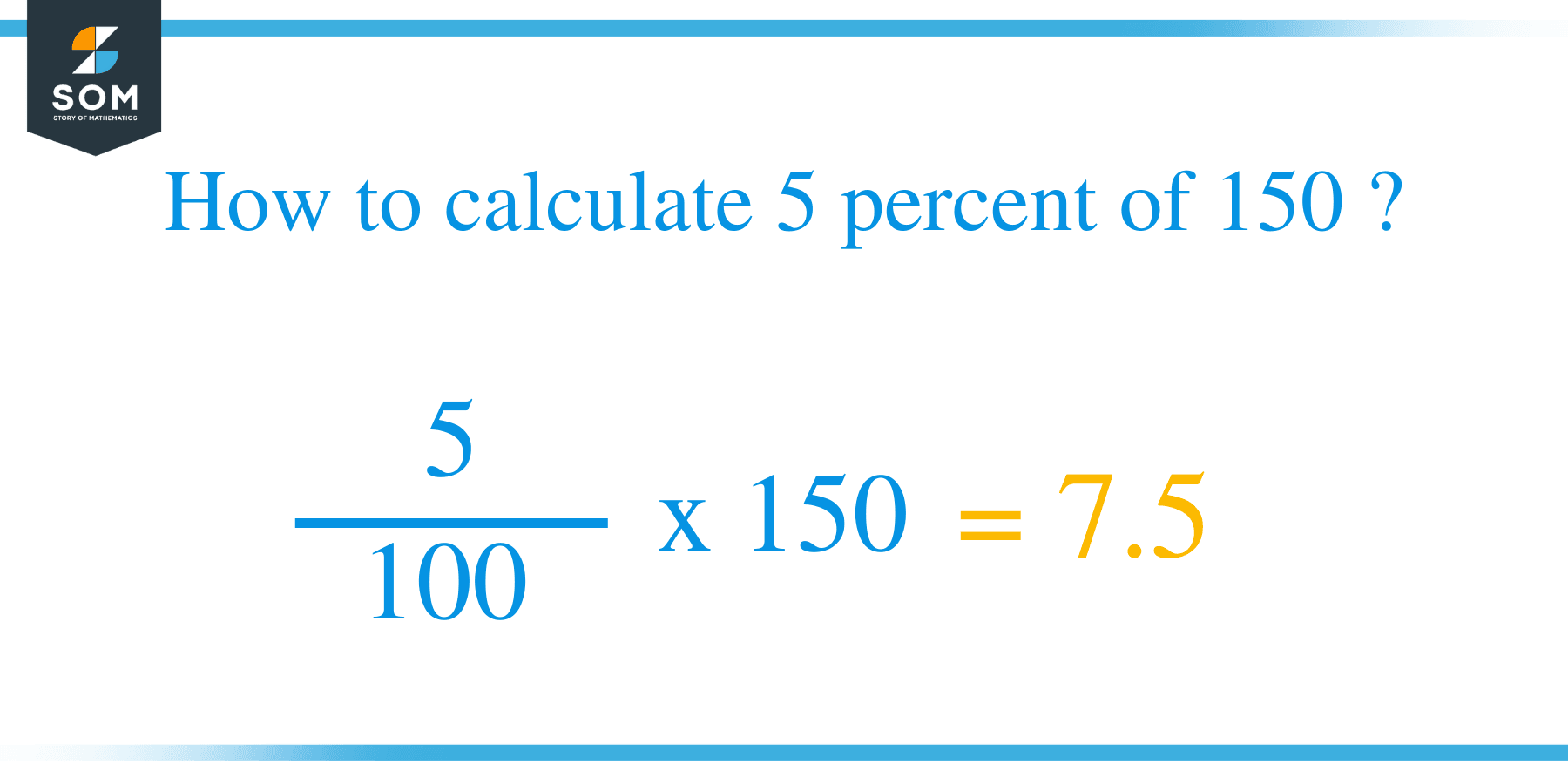
At its core, 5 percent means “5 out of every 100” or “5 per hundred.” As a decimal, it’s 0.05 (since 5 divided by 100 is 0.05). To calculate 5% of any number, you simply multiply that number by 0.05. For example, 5% of $100 is $100 * 0.05 = $5. Five percent of $500 is $500 * 0.05 = $25. This simple calculation underpins countless financial scenarios. Whether you’re calculating a tip, a discount, or an interest payment, this fundamental operation remains constant. The ease of calculating 5% in your head (e.g., finding 10% and halving it) also makes it a practical mental shortcut for quick financial estimations.
Common Scenarios: Discounts, Sales Tax, Tips
Percentages are ubiquitous in our daily transactions. A 5% discount on an item reduces its price by a small but often noticeable amount. For a $200 purchase, a 5% discount saves you $10, making the final price $190. Conversely, sales tax often adds a percentage to your purchase. If a state has a 5% sales tax, a $50 item will cost you $50 * 1.05 = $52.50. Tipping culture also heavily relies on percentages; a standard tip often falls in the 15-20% range, but if you’re tipping for exceptional service, or are simply calculating a small token, 5% might be considered as a base. Understanding how these small percentages accumulate or deduct from your total is crucial for accurate budgeting and spending. These aren’t abstract figures; they directly impact the dollars leaving or entering your wallet.
Understanding Growth vs. Reduction: How 5% Can Increase or Decrease Value
The beauty and complexity of 5 percent lie in its dual nature: it can represent both an increase and a decrease. A 5% growth rate on an investment is something to celebrate, while a 5% reduction in your paycheck due to a new tax is a cause for concern. When an amount increases by 5%, you add 5% of the original value to the original value (e.g., $100 + 5% = $100 + $5 = $105). When an amount decreases by 5%, you subtract 5% of the original value (e.g., $100 – 5% = $100 – $5 = $95). This seemingly simple distinction is vital in financial planning, as it helps you correctly interpret the impact of interest rates, inflation, market fluctuations, and price changes on your overall financial health.
5 Percent in Your Personal Finances: Budgeting, Savings, and Debt
In the realm of personal finance, 5 percent takes on various critical roles, influencing how you manage your money, grow your wealth, and navigate debt. It’s a key figure in strategic financial planning.
The 5% Rule in Budgeting: Allocating for Specific Goals
While budgeting rules like the “50/30/20” ratio are popular, the concept of allocating 5% of your income towards specific goals can be incredibly powerful. For instance, dedicating 5% of your net income to a specific savings goal (like a down payment, vacation, or emergency fund) provides a tangible, achievable target that consistently builds over time. Alternatively, you might allocate an extra 5% of your income to accelerate debt repayment, which can significantly reduce the total interest paid and shorten the repayment period. Even dedicating 5% for “fun money” ensures you enjoy your earnings without derailing larger financial goals. The “5% rule” in budgeting isn’t rigid; it’s a flexible framework that empowers you to prioritize and make consistent progress towards diverse financial objectives. The small, consistent contribution fosters discipline and demonstrates the power of incremental gains.
Savings & Investments: The Power of 5% Annual Returns
When it comes to savings and investments, a 5% annual return is often considered a healthy, realistic benchmark for certain asset classes, especially over the long term and after factoring in inflation for conservative investments. The magic truly happens through compound interest. Imagine you invest $10,000 at a 5% annual return.
-
Year 1: $10,000 * 1.05 = $10,500 (gain of $500)
-
Year 2: $10,500 * 1.05 = $11,025 (gain of $525)
-
Year 3: $11,025 * 1.05 = $11,576.25 (gain of $551.25)
Notice how the annual gain increases each year because you’re earning 5% not just on your initial principal, but also on the accumulated interest. Over decades, this seemingly modest 5% can transform a small initial investment into a substantial nest egg. Understanding this concept motivates long-term saving and demonstrates the incredible potential of consistent, compounding returns. It underscores why starting early and consistently contributing, even small amounts, can have a profound impact.
Debt Management: Interest Rates and Minimum Payments
On the flip side, 5 percent can represent a significant burden when it comes to debt. A 5% interest rate on a loan means that for every $100 you owe, you’re paying $5 annually in interest. While a 5% interest rate on a mortgage might be considered favorable, a 5% rate on a personal loan or credit card is less so. Understanding how interest accrues is crucial. If you only make minimum payments on a loan with a 5% rate, a significant portion of your payment might go towards interest, barely touching the principal. Conversely, paying just 5% extra on your mortgage payment each month can shave years off your loan term and save you tens of thousands in interest. This demonstrates the critical importance of understanding debt percentages and actively seeking ways to reduce their impact through accelerated payments or refinancing.
Business and Income: Leveraging 5 Percent for Growth and Profit
In the commercial world, 5 percent is a frequently utilized figure, influencing pricing strategies, compensation structures, and operational efficiency. Entrepreneurs and business owners keenly analyze these percentages to drive growth and maximize profitability.
Sales & Marketing: 5% Discounts and Promotions
For businesses, offering a 5% discount might seem small, but it can be a powerful marketing tool. Psychologically, even a modest discount can tip the scales for a customer deciding whether to make a purchase. A “5% off your next order” or “save 5% on bulk purchases” promotion can incentivize sales, encourage customer loyalty, and clear inventory. While the immediate profit margin on a discounted item is lower, the increase in sales volume and customer acquisition can significantly outweigh this reduction. Strategic application of 5% discounts requires understanding customer behavior and the elasticity of demand for a product or service. It’s not about giving away profit, but about using a small concession to achieve larger business objectives.

Commissions and Royalties: Earning 5% of Sales
Many income streams are structured around percentages. Sales professionals, real estate agents, and independent contractors often earn a commission, which could be 5% of the sales they generate. For artists, authors, or inventors, royalties might be structured as a 5% cut of every unit sold or revenue generated. This model aligns compensation directly with performance and success, motivating individuals to drive sales. For a salesperson selling $100,000 worth of goods, a 5% commission translates to a $5,000 income. Understanding this percentage-based income model is crucial for anyone working on commission, as it directly links effort to financial reward and encourages strategic selling.
Profit Margins and Cost Savings: Identifying 5% Improvements
For any business, optimizing profit margins is paramount. A 5% profit margin means that for every dollar of revenue, five cents is pure profit. Businesses constantly seek ways to improve this. Identifying an opportunity to cut costs by just 5% across an entire operation can lead to substantial savings. For a company with $10 million in annual expenses, a 5% reduction frees up $500,000 that can be reinvested, boost profit, or reduce prices. This could involve negotiating better supplier deals, improving energy efficiency, or streamlining operational processes. Similarly, increasing prices by a modest 5% (if the market allows) can have a dramatic positive impact on the bottom line, assuming sales volume isn’t significantly affected. These small percentage adjustments, whether in cost reduction or revenue enhancement, are often the focus of rigorous financial analysis and strategic planning in businesses of all sizes.
The Broader Economic Impact of 5 Percent
Beyond individual finances and business operations, 5 percent also plays a crucial role in understanding macroeconomic trends and government policies, affecting entire economies and populations.
Inflation and Purchasing Power: A 5% Inflation Rate
When the inflation rate reaches 5%, it signals a significant erosion of purchasing power. This means that goods and services that cost $100 a year ago now cost $105. For individuals, a 5% inflation rate effectively means that your savings are losing 5% of their value each year if they’re not invested to earn at least that much. For retirees on fixed incomes, a 5% inflation rate can be particularly devastating, as their fixed pension or social security benefits buy less and less over time. Central banks and governments closely monitor inflation rates, and a sustained 5% rate often prompts aggressive monetary policy responses, such as interest rate hikes, to bring prices back under control. Understanding this impact is vital for protecting your wealth against the silent tax of inflation.
Economic Growth and Policy: Target Rates
Economic indicators, such as Gross Domestic Product (GDP) growth, unemployment rates, and interest rates, are often discussed in terms of percentages. While a sustained 5% GDP growth rate would be considered phenomenal for a developed economy, indicating robust expansion, a 5% unemployment rate might be viewed as a healthy “natural” rate in some economies, indicating full employment with some transitional joblessness. Central banks, when setting benchmark interest rates, often consider changes in percentage points. For instance, if the central bank raises its key interest rate by 0.5% (half a percent), this impacts borrowing costs across the economy. While 5% might not be a specific target for every economic metric, the concept of incremental percentage changes is central to economic policy and forecasting. Understanding these percentage shifts helps interpret the health and direction of national and global economies.
Global Financial Markets: Yields and Returns
In global financial markets, 5 percent is a common benchmark for various investments. A bond might offer a 5% yield, indicating the annual return an investor can expect. Investment funds often highlight their average annual returns, and 5% can represent a solid, consistent performance over long periods, especially in lower-risk asset classes. Currencies can fluctuate by 5% against each other, significantly impacting international trade and investments. For example, if the Euro strengthens by 5% against the Dollar, European goods become 5% more expensive for American buyers. Investors and traders constantly analyze these percentage changes to make informed decisions about asset allocation, risk management, and market timing. A difference of even a fraction of a percent in yields or returns can translate into millions over time for large institutional investors.
Strategic Thinking with 5 Percent: Maximizing Your Financial Potential
Beyond the calculations and definitions, strategically applying the concept of 5 percent can empower you to make more astute financial decisions and achieve your goals more efficiently.
Goal Setting: Breaking Down Large Goals into 5% Increments
Facing a large financial goal, like saving $50,000 for a down payment or paying off $20,000 in debt, can feel overwhelming. By breaking it down into smaller, manageable percentages, you create actionable steps. For example, if your goal is to save $50,000, aiming to save 5% ($2,500) each year makes the process feel more achievable. Once you hit that first 5%, you can then focus on the next 5%. This incremental approach leverages the psychological power of small wins, building momentum and making daunting financial objectives seem less intimidating. It shifts the focus from the colossal final figure to consistent, measurable progress.
Risk Assessment: Understanding 5% Volatility
In investing, volatility refers to the degree of variation of a trading price series over time. Understanding that an asset could fluctuate by 5% in a day, week, or month is crucial for risk assessment. If your investment portfolio has historically shown 5% daily swings, you need to be psychologically prepared for such movements and ensure your risk tolerance aligns with this potential volatility. For business ventures, understanding the probability of a 5% decline in sales or a 5% increase in costs can help you build contingencies into your financial models. This foresight allows for more robust planning and reduces the likelihood of being caught off guard by market or operational shifts.
Identifying Opportunities: Where a 5% Edge Matters
Finding a 5% edge in any financial endeavor can lead to significant long-term benefits. This could be:
-
Negotiating a better deal: Getting a 5% lower interest rate on a loan can save thousands.
-
Finding a more efficient process: A business process that saves 5% in operational costs directly boosts profits.
-
Optimizing investments: Shifting a portion of your portfolio to an investment with a slightly higher (e.g., 0.5% or 1%) but still reasonable expected return might seem small, but compounded over decades, it can add substantial value.
-
Tax planning: Identifying deductions or credits that reduce your taxable income by 5% can result in meaningful savings.
The ability to identify and capitalize on these seemingly small percentage advantages is a hallmark of shrewd financial management, demonstrating that even minor adjustments can lead to substantial gains over time.
Conclusion
“How much is 5 percent?” is a question whose answer transcends simple arithmetic. It’s a foundational concept that underpins countless financial decisions, from the individual budget to global economic policies. Whether it’s the potential for exponential growth through compounding interest, the strategic advantage of a well-placed discount, the burden of an interest rate, or the subtle erosion of purchasing power due to inflation, 5 percent constantly shapes our financial reality. By truly grasping its implications across budgeting, investing, debt management, business operations, and economic trends, you gain a powerful tool for analysis and decision-making. Actively seeking out and understanding percentages in your financial life is not just about crunching numbers; it’s about making informed choices, mitigating risks, identifying opportunities, and ultimately, maximizing your financial potential. Embrace the power of 5 percent, and you’ll find yourself better equipped to navigate the complex world of money.
aViewFromTheCave is a participant in the Amazon Services LLC Associates Program, an affiliate advertising program designed to provide a means for sites to earn advertising fees by advertising and linking to Amazon.com. Amazon, the Amazon logo, AmazonSupply, and the AmazonSupply logo are trademarks of Amazon.com, Inc. or its affiliates. As an Amazon Associate we earn affiliate commissions from qualifying purchases.