
The question “how much is $100 in Bitcoins?” is far more than a simple currency conversion. It’s a fundamental inquiry into the world of digital assets, reflecting a growing curiosity about personal finance, investing, and the potential of a decentralized financial system. While the immediate answer fluctuates by the second, delving into this question unravels the complex dynamics of Bitcoin’s value, the practicalities of acquiring it, and the strategic considerations for treating it as an investment. For many, $100 represents an accessible entry point into an asset class that has captivated global markets and reshaped financial narratives. This article will navigate the intricacies of converting fiat currency into Bitcoin, exploring its volatile nature, the steps involved in ownership, and the broader financial implications of such an investment.

The Ever-Fluctuating Value of Bitcoin
Unlike traditional currencies whose values are managed by central banks and typically exhibit more predictable movements, Bitcoin’s price is a relentless dance between supply, demand, and sentiment, making the exact “worth” of $100 a moving target. Understanding this volatility is paramount for anyone considering an investment, no matter how small.
Decoding Bitcoin’s Price Mechanics
Bitcoin’s price is determined by a multitude of factors, creating a complex ecosystem that can lead to rapid and significant price swings. At its core, like any asset, it’s driven by supply and demand. The supply of new Bitcoins is algorithmically controlled and finite, capped at 21 million coins, which introduces scarcity. New Bitcoins are released through a process called “mining,” and the reward for miners halves approximately every four years (a “halving event”), further constricting supply growth.
Demand, on the other hand, is influenced by a broader array of variables:
-
Market Sentiment: News, social media trends, and general investor psychology can trigger significant buying or selling pressure. Positive developments, like institutional adoption or regulatory clarity, can spur rallies, while negative news, such as exchange hacks or government crackdowns, can lead to sharp declines.
-
Macroeconomic Factors: Global economic conditions, inflation rates, interest rate decisions by central banks, and geopolitical events can all impact Bitcoin’s appeal as a “safe haven” asset or a hedge against traditional financial instability.
-
Technological Developments: While less direct, improvements in Bitcoin’s underlying technology, network security, or scalability solutions can bolster confidence and attract more users and investors.
-
Liquidity and Trading Volume: The ease with which Bitcoin can be bought and sold on various exchanges, and the total volume of trades, also play a role in price stability and movement. Higher liquidity generally leads to more stable prices.
The Real-Time $100 Conversion
To determine precisely how much Bitcoin $100 buys at any given moment, you simply need to divide your desired fiat amount by the current market price of one Bitcoin.
For example:
-
If 1 Bitcoin (BTC) is trading at $50,000, then $100 would buy you $100 / $50,000 = 0.002 BTC.
-
If 1 Bitcoin (BTC) is trading at $25,000, then $100 would buy you $100 / $25,000 = 0.004 BTC.
This calculation is dynamic. Cryptocurrency exchanges, financial news websites, and dedicated crypto price trackers (like CoinMarketCap or CoinGecko) provide real-time pricing data. It’s crucial to check these sources immediately before making a purchase to get the most accurate conversion. It’s also important to remember that transaction fees on exchanges might slightly reduce the actual amount of Bitcoin you receive.
A Historical Lens: $100’s Past and Present Buying Power
Examining Bitcoin’s history offers a stark illustration of its volatile yet potentially rewarding nature.
-
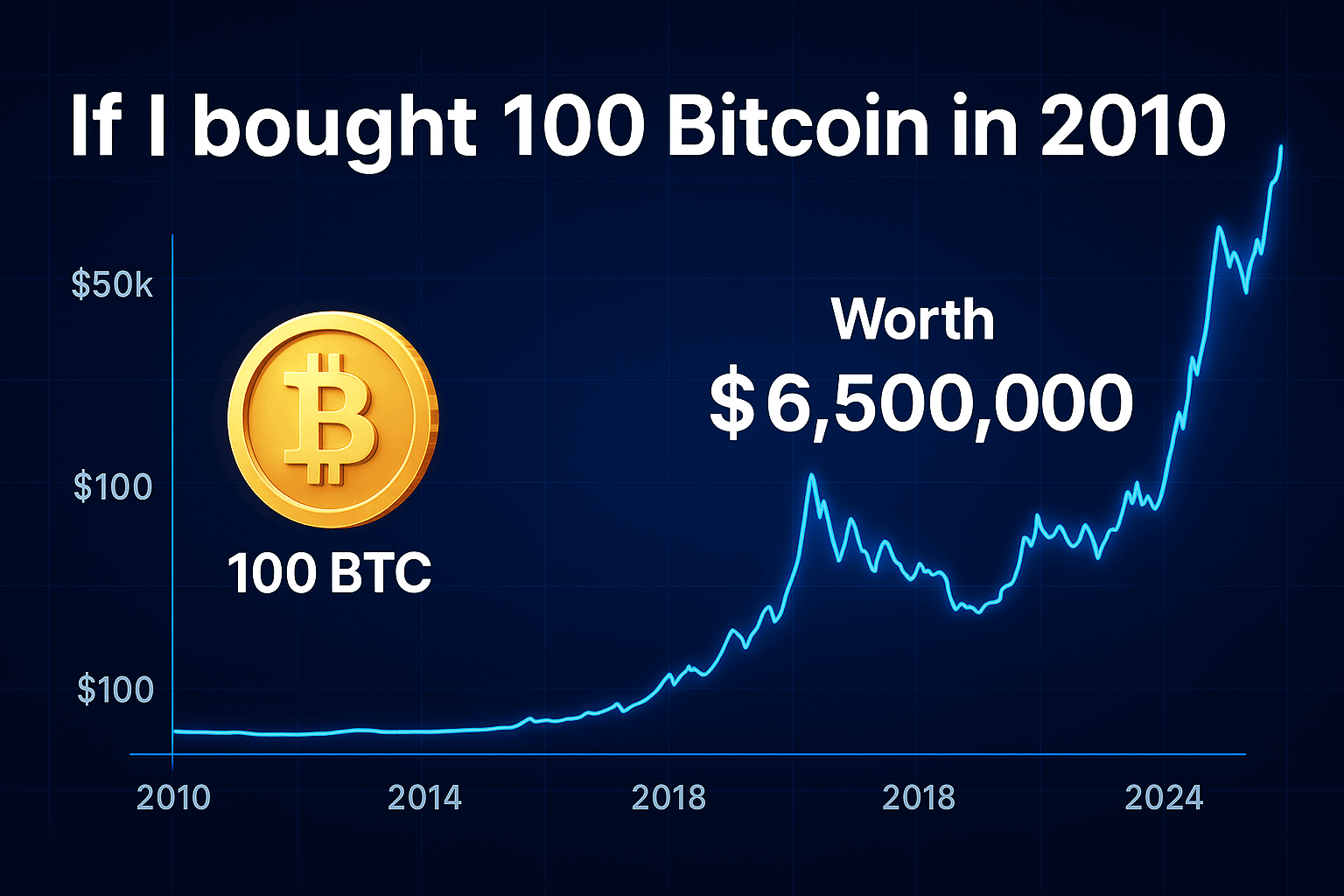
Early Days: In 2010, $100 could have bought you thousands of Bitcoins, as the price was often mere cents. Had you held onto such an investment, its value today would be astronomical. This period is often cited as a testament to Bitcoin’s unprecedented growth.
-
Rollercoaster Rides: Over the years, $100 has witnessed incredible swings. During bull markets, its Bitcoin equivalent would have surged in value, sometimes doubling or tripling in a matter of months. Conversely, during bear markets, the value of that $100 worth of Bitcoin could have plummeted significantly, potentially losing half or more of its value.
-
The Current Landscape: Today, $100 buys a relatively small fraction of a Bitcoin, but still represents a meaningful entry point into an asset that continues to evolve and gain mainstream acceptance.
This historical perspective underscores that while $100 is a modest sum, its potential for growth or depreciation in the Bitcoin market can be substantial, making it both an exciting and inherently risky investment.
Your First Step: Acquiring $100 Worth of Bitcoin
For a novice investor, the process of buying cryptocurrency can seem daunting. However, acquiring $100 worth of Bitcoin has become significantly more accessible and straightforward thanks to the proliferation of user-friendly platforms and improved regulatory frameworks. The key is to approach the process systematically, prioritizing security and understanding the financial implications.
Selecting the Right Cryptocurrency Exchange
Choosing a reputable and secure cryptocurrency exchange is the cornerstone of a safe investment. These platforms act as intermediaries, facilitating the buying and selling of digital assets. Key factors to consider include:
-
Regulation and Compliance: Opt for exchanges that comply with local financial regulations (e.g., KYC/AML procedures). This often indicates a higher level of trustworthiness and security.
-
Fees: Exchanges charge various fees for transactions, deposits, and withdrawals. Compare these carefully, as they can eat into your $100 investment. Common fees include trading fees (percentage of transaction), spread fees (difference between buy/sell price), and withdrawal fees.
-
Ease of Use (User Interface): For beginners, a simple, intuitive interface is crucial. Look for platforms with clear navigation and straightforward buying processes.
-
Security Features: Non-negotiable features include two-factor authentication (2FA), cold storage for a significant portion of assets, and insurance policies for custodial funds (though not all exchanges offer this).
-
Customer Support: Responsive and helpful customer service can be invaluable, especially if you encounter issues during your first purchase.
-
Supported Payment Methods: Ensure the exchange supports your preferred method for depositing funds (bank transfer, debit/credit card, etc.).
Popular and generally well-regarded exchanges include Coinbase, Binance, Kraken, and Gemini, among others. Each has its own strengths and weaknesses, so research is essential.
Navigating the Purchase Process
Once you’ve selected an exchange, the acquisition process typically follows these steps:
-
Account Creation and Verification (KYC/AML): You’ll need to sign up with an email address and password. Due to anti-money laundering (AML) and know-your-customer (KYC) regulations, you’ll be required to verify your identity. This usually involves providing government-issued identification (driver’s license, passport) and sometimes a selfie or proof of address. This step can take anywhere from a few minutes to a few days.
-
Linking a Payment Method: After verification, you’ll connect a funding source to your account. Common options include:
-
Bank Transfer (ACH/SEPA): Often the cheapest option, but can take several business days for funds to clear.
-
Debit Card/Credit Card: Funds are usually available instantly, but often come with higher transaction fees (e.g., 2-4%). For a $100 purchase, these fees can represent a significant percentage.
-
PayPal/Other E-Wallets: Some exchanges support these, offering a balance between speed and fees.
-
-
Depositing Funds: Transfer $100 (or more, if you wish to account for fees) into your exchange account using your chosen payment method.
-
Placing Your Order:
-
Navigate to the “Buy Crypto” or “Trade” section of the exchange.
-
Select “Bitcoin” (BTC) as the cryptocurrency you wish to purchase.
-
Enter “$100” as the amount you want to spend. The exchange will show you the equivalent amount of BTC you will receive after factoring in its current price and any applicable fees.
-
Review the order details carefully, including the amount of BTC, the price, and the total cost.
-
Confirm your purchase. Your $100 worth of Bitcoin will then be credited to your exchange wallet.
-
Essential Storage and Security Practices
While your newly acquired Bitcoin is technically in your exchange account, leaving significant amounts on an exchange is generally not recommended for long-term storage due to potential security risks (exchange hacks). For $100, the risk might seem low, but it’s an excellent opportunity to learn about secure storage practices.
-
Hot Wallets: These are online wallets (web-based, mobile apps, or desktop applications) that are connected to the internet. Exchange wallets are a form of hot wallet. They offer convenience for frequent trading but are more susceptible to hacking.
-
Cold Wallets (Hardware Wallets): These are physical devices (like a USB stick) that store your Bitcoin offline, making them highly secure against online threats. For larger investments, a hardware wallet (e.g., Ledger, Trezor) is strongly recommended. For $100, it might be an overkill in terms of cost vs. value, but it establishes good habits.
-
Paper Wallets: Generating a Bitcoin address and private key offline and printing them. Less user-friendly and can be easily lost or damaged.
Regardless of your chosen storage method, always:
-
Enable 2FA on your exchange and any wallet apps.
-
Use strong, unique passwords.
-
Be wary of phishing attempts.
-
Never share your private keys or seed phrase with anyone.
-
Understand that if you lose your private key or seed phrase, your Bitcoin is irrecoverable.
Is $100 a Meaningful Investment in Bitcoin?
The idea of investing just $100 might seem insignificant in the grand scheme of financial markets, particularly when a single Bitcoin costs tens of thousands of dollars. However, in the context of cryptocurrency, $100 can be a surprisingly meaningful entry point, offering both educational value and genuine investment potential, especially when approached with a strategic mindset.
The Power of Fractional Ownership
One of the most appealing aspects of Bitcoin is its divisibility. Unlike a share of stock that you must typically buy in whole units, Bitcoin can be divided into eight decimal places. The smallest unit is called a “Satoshi,” named after Bitcoin’s pseudonymous creator, which is 0.00000001 BTC. This means you don’t need to buy a whole Bitcoin to own it; you can purchase any fraction.
A $100 investment, therefore, allows you to own a tangible piece of Bitcoin, no matter how small. This fractional ownership democratizes access to the asset, making it available to individuals with varying budget sizes. It bypasses the psychological barrier of “I can’t afford a whole Bitcoin,” enabling participation and exposure to its market movements.
Strategy for Small Investments: Dollar-Cost Averaging (DCA)
For small, consistent investments like $100, Dollar-Cost Averaging (DCA) is an invaluable strategy. DCA involves investing a fixed amount of money at regular intervals (e.g., $100 every month or every week), regardless of the asset’s price.
The benefits of DCA, particularly with a volatile asset like Bitcoin, are manifold:
-
Mitigates Volatility Risk: By spreading your purchases over time, you reduce the risk of buying all your assets at an unfavorable price peak. When prices are low, your fixed $100 buys more Bitcoin; when prices are high, it buys less. Over time, this averages out your purchase price.
-
Reduces Emotional Investing: DCA enforces discipline, removing the temptation to time the market, which is notoriously difficult even for seasoned professionals. It automates your investment strategy, fostering a long-term perspective.
-
Accessible Starting Point: $100 is an ideal amount to begin a DCA strategy. You could commit to investing $100 monthly, allowing you to gradually build your Bitcoin holdings without straining your immediate finances.
This methodical approach transforms $100 from a one-off speculative gamble into a structured, long-term investment strategy that can yield significant returns over extended periods.
Weighing Risk and Potential Returns
It’s crucial to acknowledge that investing in Bitcoin, even $100, comes with significant risks. Cryptocurrency markets are highly volatile, and prices can experience dramatic fluctuations, including sharp downturns. There is no guarantee that your $100 investment will increase in value; it could potentially lose all its value.
However, Bitcoin also offers substantial potential for returns that often outpace traditional investments. Its historical performance has shown periods of exponential growth, driven by increasing adoption, technological advancements, and its perceived role as a digital store of value.
For a $100 investment, the risk profile is unique:
-
Affordable Loss: While losing $100 is never pleasant, for most people, it’s an “affordable” loss compared to larger sums. This allows investors to gain exposure and experience in the crypto market without betting their life savings.
-
High Leverage on Potential Gains: If Bitcoin continues its long-term upward trend, even a small initial investment of $100 could grow into a substantially larger sum, demonstrating the power of compounding and early entry into a high-growth asset.
The key is to invest only what you can comfortably afford to lose and to approach it with a clear understanding of both the substantial risks and the intriguing opportunities. For many, $100 serves as a pragmatic and low-stakes way to dip their toes into the potentially lucrative, albeit tumultuous, waters of cryptocurrency investment.
Shaping the Future of Your $100 Bitcoin Investment
Once you’ve acquired your $100 worth of Bitcoin, the journey of understanding and managing your investment truly begins. Its future value will be shaped not just by market forces but also by broader economic, regulatory, and technological currents. Staying informed and proactive is essential for any investor in this rapidly evolving space.
Key Drivers of Bitcoin’s Price Evolution
The value of your $100 Bitcoin investment isn’t static; it’s constantly influenced by a confluence of powerful forces:
-
Macroeconomic Conditions: Bitcoin is increasingly seen as a global macro asset. High inflation in traditional economies, central bank interest rate policies, or concerns about government debt can push investors towards Bitcoin as a potential hedge or “digital gold.” Conversely, periods of economic stability or aggressive monetary tightening might divert capital away from riskier assets like crypto. Global events, such as geopolitical conflicts or pandemics, can also trigger flight-to-safety narratives for Bitcoin or, conversely, create liquidity crunches that impact its price.
-
Regulatory Landscape: Government attitudes and regulations play a pivotal role. Clear, favorable regulations can foster institutional adoption and expand Bitcoin’s usability, driving up demand. Conversely, stringent bans or ambiguous legal frameworks can create uncertainty and suppress prices. The emergence of Central Bank Digital Currencies (CBDCs) also introduces a new dynamic, potentially competing with or complementing decentralized cryptocurrencies.
-
Technological Advancements and Adoption: While Bitcoin’s core protocol is relatively stable, ongoing developments within its ecosystem and broader crypto space matter. Network upgrades (like Taproot), improvements in scaling solutions (e.g., Lightning Network), and increased utility of Bitcoin as a payment rail can enhance its value proposition. More importantly, the rate of institutional and retail adoption – how many individuals and businesses are using or holding Bitcoin – directly influences its long-term viability and price trajectory. Halving events, which reduce the supply of new Bitcoins, are also pre-programmed technological drivers that historically precede significant price rallies.
-
Market Sentiment and Hype Cycles: The cryptocurrency market is notoriously susceptible to sentiment-driven cycles. Periods of intense “fear of missing out” (FOMO) can lead to speculative bubbles, while widespread “fear, uncertainty, and doubt” (FUD) can trigger panic selling. Understanding these psychological cycles, which are often amplified by social media, is crucial for maintaining a rational investment approach.
Monitoring and Managing Your Crypto Portfolio
Even with a modest $100 investment, diligent monitoring and management are vital.
-
Portfolio Trackers: Utilize free or paid portfolio tracking apps or websites (e.g., CoinStats, Koinly, Delta) that allow you to input your Bitcoin purchase details. These tools provide real-time updates on your investment’s current value, profit/loss, and overall portfolio performance.
-
Stay Informed: Regularly consume news from reputable cryptocurrency and financial media outlets. Follow credible analysts and thought leaders. Avoid relying solely on social media for information, as it can be prone to misinformation and hype.
-
Understand Market Cycles: Learn about Bitcoin’s historical bull and bear cycles. This helps in setting realistic expectations and preparing for potential downturns, rather than reacting emotionally to every price swing.
-
Rebalance (Optional): For larger portfolios, investors might periodically “rebalance” to maintain a desired asset allocation. For a $100 Bitcoin investment, this might mean deciding if you want to add more, or if it significantly grows, perhaps taking a small profit.
The Tax Implications of Cryptocurrency
One of the most overlooked aspects of cryptocurrency investment is tax compliance. While regulations vary significantly by jurisdiction, most tax authorities around the world consider Bitcoin and other cryptocurrencies as property, not currency. This has several key implications for your $100 investment:
-
Capital Gains/Losses: If your $100 worth of Bitcoin increases in value and you sell it for more than you bought it for, you will likely incur a capital gain, which is taxable. Conversely, if you sell it for less, you may incur a capital loss, which can sometimes be used to offset other gains or income.
-
Record-Keeping: You are responsible for keeping meticulous records of all your cryptocurrency transactions, including:
-
Date of purchase/sale
-
Amount of Bitcoin bought/sold
-
Price at the time of transaction
-
Fees paid
-
The fiat cost basis
-
-
Taxable Events: Selling Bitcoin for fiat currency, trading Bitcoin for another cryptocurrency, or using Bitcoin to buy goods or services can all be considered taxable events. Simply holding Bitcoin, even if its value increases, is generally not a taxable event until it is “disposed of.”
-
Seeking Professional Advice: Given the complexity and evolving nature of crypto tax laws, it is highly recommended to consult with a tax professional specializing in cryptocurrency in your jurisdiction. They can help you understand your specific obligations and ensure compliance, preventing potential legal issues down the line.
Even with a $100 investment, understanding these tax implications is crucial for establishing good financial habits and avoiding future surprises.

Conclusion
The question “how much is $100 in Bitcoins?” opens a fascinating window into the dynamic and often volatile world of cryptocurrency investment. While the immediate numerical answer constantly shifts, the broader implications for personal finance and strategic investing are profound. A $100 investment, though modest, offers an accessible entry point into an asset class characterized by both significant risk and considerable potential reward.
From understanding the intricate dance of supply and demand that dictates Bitcoin’s price to navigating the practical steps of acquiring and securely storing your digital assets, every aspect of this journey is an education in a new financial frontier. Strategies like Dollar-Cost Averaging can transform a small, one-time purchase into a disciplined, long-term approach, mitigating volatility and harnessing the power of fractional ownership. Moreover, staying abreast of macroeconomic trends, regulatory developments, and market sentiment, coupled with diligent record-keeping for tax purposes, forms the bedrock of responsible crypto investment.
Ultimately, investing $100 in Bitcoin is more than just buying a fraction of a digital currency; it’s an opportunity to engage with a groundbreaking technology, to understand a new paradigm of wealth, and to potentially participate in a financial revolution. Approach it with curiosity, caution, continuous learning, and a clear understanding that while the returns can be substantial, so too are the risks. For those ready to explore, $100 can be the first, insightful step into the captivating world of Bitcoin.
aViewFromTheCave is a participant in the Amazon Services LLC Associates Program, an affiliate advertising program designed to provide a means for sites to earn advertising fees by advertising and linking to Amazon.com. Amazon, the Amazon logo, AmazonSupply, and the AmazonSupply logo are trademarks of Amazon.com, Inc. or its affiliates. As an Amazon Associate we earn affiliate commissions from qualifying purchases.