
The question “how much is 1 share in Amazon?” is often the first step for many individuals contemplating their entry into the stock market. It’s a seemingly simple query that, upon closer examination, unravels a complex tapestry of market dynamics, investment strategies, and financial considerations. While the immediate answer might be a fluctuating dollar figure, understanding what that price signifies, how it’s determined, and what it means for an investor is far more crucial than the number itself. This article delves into the financial intricacies of investing in Amazon (AMZN), providing a professional, insightful, and engaging guide for aspiring and current investors alike.
Understanding Amazon Stock: More Than Just a Price Tag
Amazon.com, Inc. (AMZN) is one of the most recognized and influential companies globally, synonymous with e-commerce, cloud computing, digital streaming, and artificial intelligence. Its stock performance often reflects broader market sentiment and technological trends. However, the price of a single share isn’t just a static number; it’s a dynamic reflection of numerous economic and company-specific factors.
The Dynamic Nature of Stock Prices
Stock prices, including Amazon’s, are in a constant state of flux, changing minute by minute during market hours. This dynamism is driven by the fundamental principle of supply and demand. If more investors want to buy AMZN shares than sell them, the price tends to rise. Conversely, if selling pressure outweighs buying interest, the price typically falls. This interplay is influenced by a myriad of factors, making the market an ever-evolving ecosystem. Therefore, providing a single, definitive price for an Amazon share is impossible outside of a real-time quote; any figure mentioned here would be illustrative and immediately outdated. Investors must always check real-time market data from a reliable brokerage or financial news source for the most current price.
Factors Influencing AMZN’s Value
The price an investor pays for an Amazon share is a culmination of various influences:
- Company Earnings and Financial Performance: Amazon’s quarterly and annual reports detailing revenue, profit, growth rates (especially for Amazon Web Services – AWS), and future projections heavily impact investor sentiment. Strong performance typically bolsters confidence and pushes prices up.
- Macroeconomic Indicators: Broader economic health, interest rates set by central banks, inflation rates, and consumer spending patterns significantly affect how investors value a growth-oriented company like Amazon.
- Industry Trends and Competition: Developments in e-commerce, cloud computing, and digital advertising, along with the performance of competitors (e.g., Microsoft, Google, Walmart), can influence Amazon’s market position and, consequently, its stock price.
- Market Sentiment and Investor Psychology: Fear and greed are powerful forces in the stock market. Bullish (optimistic) or bearish (pessimistic) market trends, news cycles, and analyst ratings can lead to significant price swings, sometimes irrespective of fundamental value.
- Geopolitical Events and Regulatory Environment: Global events, trade policies, and potential antitrust regulations or government interventions can create uncertainty, impacting investor confidence and Amazon’s operational outlook.
- Technological Innovation and Product Launches: Amazon’s continuous innovation in areas like AI, logistics, and new product offerings (e.g., Alexa devices, Prime Video content) can signal future growth potential, positively affecting its stock.
Understanding these factors is crucial for investors looking beyond just the current price and seeking to make informed decisions about Amazon’s long-term prospects.
Getting Started: How to Buy a Share of Amazon
For those convinced that Amazon holds a promising spot in their investment portfolio, the next logical step is understanding the practicalities of acquiring a share. The process has become remarkably accessible, thanks to technological advancements in financial services.
Choosing a Brokerage Account
The first and most fundamental step is to open a brokerage account. A brokerage firm acts as an intermediary, facilitating the buying and selling of stocks on behalf of investors. There are numerous reputable online brokerage platforms today, each offering different features, fee structures, and tools. Popular choices include Charles Schwab, Fidelity, Vanguard, E*TRADE, Robinhood, and Interactive Brokers, among others. When selecting a broker, consider:
- Fees and Commissions: Many brokers now offer commission-free trading for stocks and ETFs, significantly reducing the cost of entry.
- Minimum Deposit: Some brokers require a minimum initial deposit, while others allow you to start with any amount.
- Tools and Research: Look for platforms that offer robust research tools, educational resources, and user-friendly interfaces suitable for your experience level.
- Customer Service: Accessible and responsive customer support can be invaluable, especially for new investors.
- Fractional Share Availability: This is particularly important for high-priced stocks like Amazon.
The Role of Fractional Shares
Given that a single share of Amazon can command a significant price, the concept of “fractional shares” has revolutionized access for smaller investors. Traditionally, you had to buy whole shares. If an Amazon share cost, for example, $150, you’d need at least $150 to buy one. With fractional shares, many brokers allow you to invest a specific dollar amount (e.g., $50) into a stock, buying a fraction of a share proportional to that amount. This democratizes investing, enabling individuals with limited capital to own a piece of high-value companies without needing to save up for a full share. It’s a game-changer for building diversified portfolios with smaller sums.
Placing Your First Order
Once your brokerage account is open and funded, and you’ve decided on your investment amount (whether for a whole or fractional share), placing an order is straightforward:
- Search for AMZN: Use the ticker symbol “AMZN” to find Amazon’s stock on your brokerage platform.
- Select “Buy”: Indicate your intention to purchase shares.
- Choose Order Type:
- Market Order: Buys shares immediately at the current market price. This offers speed but no price guarantee.
- Limit Order: Allows you to specify the maximum price you’re willing to pay per share. Your order will only execute if the stock hits or falls below that price. This offers price control but no guarantee of execution.
- Enter Quantity (or Amount for Fractional Shares): Specify how many shares you want to buy, or the dollar amount you wish to invest if buying fractional shares.
- Review and Confirm: Double-check all details before confirming your order.
After execution, the shares will appear in your brokerage account, marking your official entry as an Amazon shareholder.
The Financial Landscape of Investing in AMZN
Beyond the initial purchase, understanding the broader financial context of Amazon stock is vital for any serious investor. This includes appreciating concepts like market capitalization, the impact of stock splits, and the company’s dividend policy.
Beyond the Share Price: Market Cap and Valuation
While the price of a single share is what you pay, the market capitalization (market cap) provides a more comprehensive view of the company’s total value. Market cap is calculated by multiplying the current share price by the total number of outstanding shares. It tells you how much the entire company is worth in the market. A high share price doesn’t necessarily mean a high market cap if there are few shares outstanding, and vice-versa. Amazon typically holds one of the highest market caps globally, reflecting its massive scale and influence.
Valuation, however, goes deeper than just market cap. Investors use various metrics (like Price-to-Earnings (P/E) ratio, Price-to-Sales (P/S) ratio, PEG ratio, and discounted cash flow models) to determine if a company’s stock is “overvalued,” “undervalued,” or “fairly valued” relative to its earnings, growth prospects, and industry peers. Given Amazon’s focus on reinvesting profits for growth, its P/E ratio can sometimes appear high, requiring investors to consider its future growth potential rather than just current earnings.
Stock Splits: A Historical Perspective for Amazon
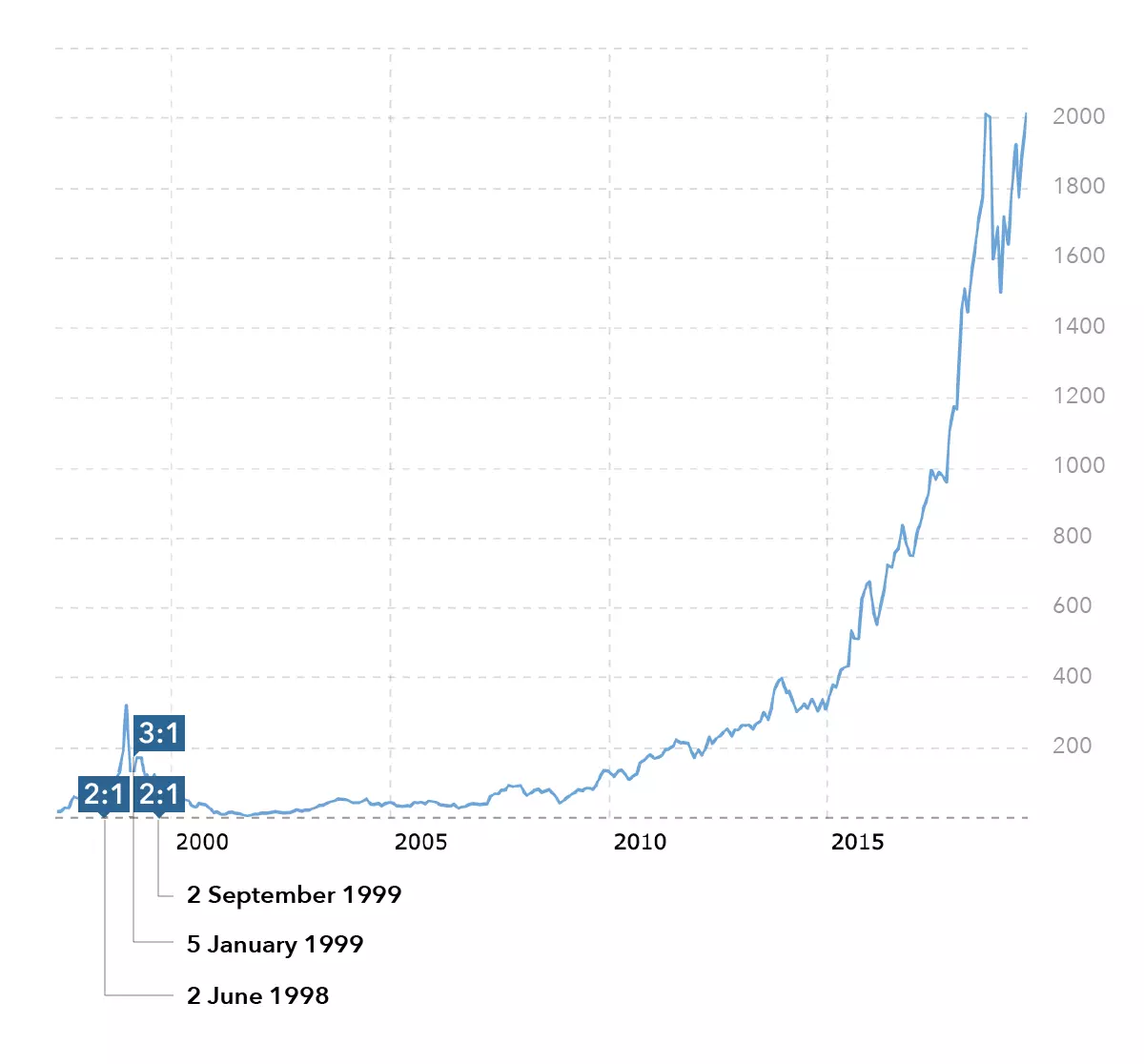
Stock splits are corporate actions where a company increases the number of its outstanding shares by dividing each existing share into multiple shares. For example, a 20-for-1 stock split means each original share becomes 20 new shares. While the number of shares you own increases, the price per share decreases proportionally, so the total value of your investment remains the same immediately after the split.
Amazon has historically executed stock splits to make its shares more accessible to a broader range of investors and to increase trading liquidity. For instance, Amazon executed a 20-for-1 stock split in mid-2022. Prior to this, a single Amazon share traded for thousands of dollars, making it difficult for many retail investors to buy even one share. The split lowered the per-share price significantly, making it more affordable and psychologically appealing, especially for those who prefer buying whole shares over fractional ones. While a split doesn’t change the underlying value of the company, it can attract new investors and potentially boost trading volume.
Dividends: What to Expect (or Not Expect) from AMZN

A dividend is a distribution of a portion of a company’s earnings, decided by the board of directors, to its shareholders. Companies that pay dividends are often mature, established entities with consistent profits and less need to reinvest all their earnings back into the business for growth.
Amazon, historically, has not paid dividends to its shareholders. The company has a long-standing strategy of reinvesting nearly all its profits back into the business to fuel aggressive growth initiatives, expand into new markets, and innovate new technologies. This approach has been highly successful in propelling Amazon to its current market leadership position across various sectors. For growth-oriented investors, the capital appreciation from a rising stock price is typically the primary focus, rather than regular dividend income. While this strategy could change in the distant future as Amazon further matures, current investors should not expect dividend payments from AMZN.
Strategic Considerations for Amazon Investors
Investing in Amazon, like any stock, requires a strategic approach that aligns with one’s financial goals and risk tolerance. It’s not merely about buying a share; it’s about making an informed decision within the context of a broader investment plan.
Long-Term vs. Short-Term Investment Horizons
One of the most critical decisions for an investor is defining their investment horizon:
- Long-Term Investing: This approach involves holding stocks for several years, often with the expectation that the company’s underlying business will grow over time, leading to an increase in share price. For a company like Amazon, with its strong market position, diversified revenue streams, and consistent innovation, a long-term strategy allows investors to ride out short-term market fluctuations and benefit from compounding growth. Most financial advisors recommend a long-term approach for equity investments.
- Short-Term Investing (Trading): This involves buying and selling stocks frequently, sometimes within hours or days, to profit from small price movements. This strategy is highly speculative, requires significant time, research, and expertise, and carries substantially higher risk. Given the volatility inherent in short-term trading, it is generally not recommended for novice investors. For Amazon, short-term trading can be appealing due to its liquidity and frequent news cycles, but it’s a high-stakes game.
Diversification: The Golden Rule of Investing
Putting all your eggs in one basket, even if that basket is as robust as Amazon, is a risky strategy. Diversification is the practice of spreading your investments across various assets, industries, and geographies to reduce overall risk. If one investment underperforms, others might compensate.
For an investor interested in Amazon, this means not letting AMZN constitute an overly large percentage of their total portfolio. A well-diversified portfolio might include:
- Stocks from different sectors: Technology, healthcare, finance, consumer staples, energy, etc.
- Bonds: To provide stability and income.
- Real Estate: Through REITs (Real Estate Investment Trusts) or direct ownership.
- International Investments: To gain exposure to global markets.
- Exchange-Traded Funds (ETFs) or Mutual Funds: These funds hold a basket of assets, offering built-in diversification.
Even within a technology-heavy portfolio, owning Amazon alongside other tech giants, mid-cap tech firms, and smaller innovative companies provides better risk management than solely relying on one stock.
Risk vs. Reward: Evaluating AMZN’s Potential
Every investment carries risk, and Amazon is no exception. While Amazon has demonstrated impressive growth and resilience, potential risks include:
- Intense Competition: From retailers, cloud providers, and digital advertisers.
- Regulatory Scrutiny: Antitrust concerns and potential government regulations could impact its business model.
- Economic Downturns: Recessions could reduce consumer spending and demand for AWS.
- Operational Challenges: Supply chain disruptions, labor issues, or cybersecurity threats.
- Valuation Concerns: Some analysts might argue that Amazon’s stock is overvalued based on traditional metrics, relying heavily on future growth expectations.
However, the potential rewards are also significant. Amazon’s continued innovation, expansion into new lucrative markets, global reach, and strong brand loyalty provide substantial upside potential. Investors must weigh these risks against the potential for capital appreciation and decide if Amazon fits their personal risk tolerance. Understanding that stock market investments can lose value, and past performance is not indicative of future results, is paramount.
Beyond the Basics: Advanced Insights for Aspiring Amazon Shareholders
For investors looking to deepen their understanding and make more sophisticated decisions regarding Amazon, a dive into financial analysis and continuous monitoring is essential.
Analyzing Amazon’s Financial Performance (Revenue, Profit, Growth)
A thorough understanding of Amazon’s financial statements is critical. Investors should regularly review:
- Revenue Growth: Is Amazon continuing to expand its top line, and where is that growth coming from (e.g., e-commerce, AWS, advertising)? AWS, in particular, is often a focus due to its high-margin nature.
- Profitability: Looking beyond revenue, how are Amazon’s net income and operating margins evolving? Are they improving, stable, or facing pressure?
- Cash Flow: A company’s cash flow statement reveals how much cash it generates from its operations, investments, and financing activities. Strong free cash flow (cash from operations minus capital expenditures) is a key indicator of financial health and ability to reinvest or return value to shareholders.
- Balance Sheet: Examining assets, liabilities, and equity provides insight into the company’s financial stability and leverage.
These metrics, when compared quarter-over-quarter and year-over-year, and against industry peers, paint a clearer picture of Amazon’s operational efficiency and financial health.
The Impact of Macroeconomic Factors
Amazon, being a bellwether for consumer spending and technology, is particularly sensitive to macroeconomic shifts. Investors should pay attention to:
- Interest Rates: Higher rates can make borrowing more expensive for Amazon and can make future earnings less valuable when discounted back to the present, impacting stock valuations, especially for growth stocks.
- Inflation: Inflation can increase Amazon’s operating costs (labor, shipping, raw materials) and erode consumer purchasing power.
- Consumer Confidence: As a major retailer, Amazon’s performance is closely tied to how confident consumers feel about their financial future, which influences their spending habits.
- GDP Growth: Strong economic growth generally translates to higher corporate earnings and a more robust stock market.
Understanding these broader economic currents helps in anticipating potential tailwinds or headwinds for Amazon’s stock performance.

Staying Informed: Research and Due Diligence
Investing successfully in a company like Amazon is an ongoing process of learning and adaptation. Key strategies for staying informed include:
- Reading Financial Reports: Delve into Amazon’s 10-K (annual) and 10-Q (quarterly) filings with the SEC for detailed financial data and management discussions.
- Following News and Analyst Reports: Reputable financial news outlets (e.g., Wall Street Journal, Bloomberg, Reuters) and analyses from investment banks provide expert opinions and up-to-date information.
- Monitoring Competitors: Keep an eye on the performance and strategic moves of Amazon’s main rivals across its various business segments.
- Understanding Industry Trends: Stay abreast of technological advancements, consumer behavior shifts, and regulatory changes that could impact Amazon’s long-term outlook.
In conclusion, “how much is 1 share in Amazon?” is merely the starting point of an engaging financial journey. The true value lies not just in the price itself, but in comprehending the underlying financial principles, market forces, and strategic considerations that shape Amazon’s formidable presence in the investment world. With diligent research, a strategic mindset, and a commitment to continuous learning, investing in Amazon can be a rewarding component of a well-structured financial portfolio. However, always remember to consult with a qualified financial advisor before making any investment decisions.
aViewFromTheCave is a participant in the Amazon Services LLC Associates Program, an affiliate advertising program designed to provide a means for sites to earn advertising fees by advertising and linking to Amazon.com. Amazon, the Amazon logo, AmazonSupply, and the AmazonSupply logo are trademarks of Amazon.com, Inc. or its affiliates. As an Amazon Associate we earn affiliate commissions from qualifying purchases.