
The question “how much is 1 million Bitcoin worth?” immediately conjures images of unimaginable wealth, a sum so vast it transcends the typical scales of personal or even corporate finance. While the precise answer is a moving target, fluctuating with every tick of the global cryptocurrency markets, the hypothetical exercise of valuing such an immense holding provides a compelling lens through which to examine the fundamentals of Bitcoin, market dynamics, and the very nature of wealth in the digital age. This article delves into the staggering implications of owning one million Bitcoin, exploring not just its dynamic monetary value but also the profound economic, logistical, and social challenges associated with such a colossal digital fortune.

The Astonishing Valuation of 1 Million Bitcoin
To quantify the worth of 1 million Bitcoin, one must first anchor it to a specific point in time, as Bitcoin’s value is notoriously volatile. However, even with this caveat, the numbers involved are consistently breathtaking, placing such a holding squarely in the realm of global financial superpowers.
A Dynamic Calculation: Current Market Price vs. Hypothetical Scenarios
At any given moment, the value of 1 million Bitcoin can be calculated simply by multiplying one million by the current market price of a single Bitcoin. For instance, if Bitcoin is trading at $60,000, then 1 million Bitcoin would be worth $60 billion. Should the price surge to $100,000, that fortune would balloon to $100 billion. Conversely, a dip to $30,000 would still leave the holder with a staggering $30 billion.
This calculation, while straightforward, simplifies a complex reality. In a truly liquid market, buying or selling such a vast quantity of Bitcoin would not happen at the prevailing spot price without significant market impact. A single entity attempting to acquire 1 million Bitcoin would almost certainly drive the price up dramatically due to immense demand outstripping available supply. Similarly, an attempt to sell such a large sum would likely crash the market, making the average realized price per Bitcoin significantly lower than the initial spot price. Therefore, the “worth” is not merely a static multiplication but a dynamic interplay with market depth and liquidity.
Contextualizing Such a Staggering Sum
To put $60 billion (or even $30 billion) into perspective:
-
It would exceed the Gross Domestic Product (GDP) of many small to medium-sized countries.
-
It would place an individual or entity among the top echelons of global wealth, rivaling or surpassing the fortunes of many well-known billionaires.
-
It represents a significant fraction of Bitcoin’s total market capitalization, which itself fluctuates but has often hovered between $1 trillion and $2 trillion at various peaks. A holder of 1 million Bitcoin would, therefore, control a non-trivial percentage of the entire Bitcoin network’s value, bestowing immense influence.
Such a fortune isn’t just a number; it’s a potential lever for geopolitical, technological, and economic power, capable of funding massive ventures, influencing markets, and shaping industries.
The Unlikelihood of Holding 1 Million Bitcoin
While the hypothetical valuation is intriguing, the practical reality of any single entity acquiring and holding 1 million Bitcoin is exceedingly complex, bordering on improbable, especially for individuals. This is due to a confluence of market mechanics, distribution patterns, and the very design of the Bitcoin network.
Market Depth and Liquidity Challenges
The Bitcoin market, despite its multi-trillion-dollar valuation at peak times, does not possess infinite liquidity at any given price point. Daily trading volumes, while substantial, are typically in the tens of billions of dollars, not trillions. Attempting to accumulate 1 million Bitcoin would necessitate buying up a significant portion of the available supply on exchanges, which would quickly deplete sell orders and trigger massive price spikes. Each subsequent purchase would be at a higher price, making the average acquisition cost astronomical. Conversely, attempting to sell 1 million Bitcoin would flood the market with supply, causing an unprecedented price collapse and making it impossible to realize the “spot price” for the entire sum. This phenomenon is often referred to as “slippage” for large orders.
The Whale Effect: Impact on Market Dynamics
An entity holding 1 million Bitcoin would be the ultimate “whale.” Such a massive concentration of wealth would inherently make the holder a market mover, their every transaction potentially sending ripples throughout the entire crypto ecosystem. The knowledge of such a holding, even if undisclosed, would create speculation, and any verified activity (buying, selling, or even moving funds between wallets) could trigger significant market reactions. This level of influence could be seen as both a power and a burden, attracting scrutiny from regulators, governments, and the broader financial community.
Distribution of Bitcoin Holdings
The distribution of Bitcoin is relatively decentralized, though “whales” do exist. Early miners, long-term holders, and institutional investors have accumulated significant amounts. However, no single known individual or entity, outside of Satoshi Nakamoto (Bitcoin’s anonymous creator, whose estimated 1 million+ BTC has never moved), is confirmed to hold 1 million Bitcoin. Exchanges and institutional custodians hold large aggregated amounts on behalf of their clients, but these are not single-entity holdings. The vast majority of Bitcoin addresses hold relatively small amounts, and while there are addresses with thousands or tens of thousands of BTC, a million is an order of magnitude beyond what is typically observed for active wallets. This widespread distribution, while not perfectly even, makes the idea of a single, active wallet controlling 1 million BTC a statistical anomaly.
Factors Influencing Bitcoin’s Value
Understanding the worth of any amount of Bitcoin necessitates a grasp of the forces that drive its price. Bitcoin’s value is not arbitrary; it’s a complex interplay of economic, technological, and psychological factors.
Supply and Demand Dynamics
At its core, Bitcoin’s price, like any asset, is dictated by supply and demand.
-
Supply: Bitcoin has a hard cap of 21 million coins, with a controlled emission schedule through mining (“halving events” periodically reduce the new supply). This scarcity is a fundamental driver of its value proposition. Lost coins further reduce the effective circulating supply.
-
Demand: Demand stems from various sources: retail investors seeking speculative gains or a hedge against inflation, institutional investors diversifying portfolios, companies accepting it for payments, and users seeking censorship-resistant digital money. Growing adoption by any of these segments increases demand.

Macroeconomic Trends and Geopolitical Events
Bitcoin has increasingly shown correlations with traditional financial markets and macroeconomic trends.
-
Inflationary Pressures: In environments of high inflation, Bitcoin is often touted as a “digital gold” or a store of value, attracting investors seeking to preserve purchasing power outside of traditional fiat currencies.
-
Interest Rates: Changes in interest rates, particularly from major central banks, can influence investor appetite for risk assets like Bitcoin. Higher rates can make traditional safe-haven assets more attractive, potentially drawing capital away from crypto.
-
Geopolitical Instability: Conflicts, sanctions, and political unrest can lead individuals and nations to seek alternative, decentralized financial systems, boosting Bitcoin’s appeal as a neutral, borderless asset.
Regulatory Landscape and Institutional Adoption
The evolving regulatory environment plays a crucial role. Clear and favorable regulations can legitimize Bitcoin, encourage institutional investment, and provide legal certainty. Conversely, restrictive regulations or outright bans in major economies can suppress demand and foster uncertainty. The increasing adoption by major financial institutions, such as pension funds, hedge funds, and publicly traded companies adding Bitcoin to their balance sheets, lends credibility and provides substantial capital inflows, further influencing its price.
Technological Developments and Network Security
The underlying technology and security of the Bitcoin network are paramount.
-
Network Health: The robustness of the blockchain, the number of active nodes, and the collective hashing power dedicated to mining (which secures the network) all contribute to trust and stability. Any perceived threat to Bitcoin’s security could severely impact its value.
-
Layer 2 Solutions: Innovations like the Lightning Network, which enhances Bitcoin’s scalability and transaction speed for smaller payments, improve its utility and broaden its potential use cases, indirectly affecting its long-term value proposition.
Implications of Owning Such a Fortune
Beyond the purely monetary value, owning 1 million Bitcoin would present a unique set of challenges and opportunities that few individuals or entities on Earth could ever experience.
Wealth Management and Taxation Challenges
Managing a multi-billion-dollar fortune in a highly volatile, relatively new asset class would require sophisticated financial strategies.
-
Custody and Security: Securing such an enormous amount of digital assets from hacks, loss, or theft would be paramount. This would likely involve advanced cold storage solutions, multi-signature wallets, and institutional-grade custodianship, rather than personal hardware wallets.
-
Liquidity Management: Converting portions of this fortune into fiat currency or other assets without disrupting markets would be a continuous balancing act. Off-exchange, over-the-counter (OTC) trades with institutional desks would be essential for large transactions to minimize market impact.
-
Taxation: The tax implications would be immense and incredibly complex, varying significantly by jurisdiction. Capital gains taxes, potential wealth taxes, and regulations around cryptocurrency income would require expert international tax planning. The sheer scale of the wealth would attract intense scrutiny from tax authorities worldwide.
Social and Economic Influence
A holder of 1 million Bitcoin would wield unparalleled influence, not just within the crypto space but potentially across broader economic and social spheres.
-
Market Influence: As discussed, their trading activity could move markets. Their public statements or perceived intentions could sway investor sentiment.
-
Philanthropy and Investment: Such a fortune could be directed towards massive philanthropic endeavors, funding scientific research, addressing global challenges, or stimulating economic growth through strategic investments.
-
Political Lobbying: The ability to fund political campaigns or advocacy groups could allow the holder to significantly influence policy and regulatory frameworks related to cryptocurrency and technology.
Security Risks and Custody Solutions
The security of such an enormous digital holding would be a constant, paramount concern.
-
Physical Security: The individuals with access to the private keys would become prime targets for kidnappings, extortion, or other physical threats.
-
Digital Security: Protection against sophisticated cyberattacks from state-sponsored actors, highly organized criminal groups, or even rogue insiders would be a continuous, multi-layered effort. This would involve cutting-edge encryption, robust network defenses, and continuous auditing.
-
Succession Planning: Ensuring the safe and secure transfer of such assets across generations or in the event of incapacitation would be a complex legal and technical challenge, involving intricate estate planning for digital assets.
Beyond the Hypothetical: Understanding Bitcoin as an Investment
While the scenario of owning 1 million Bitcoin remains largely hypothetical for most, the underlying principles of Bitcoin as an investment asset are highly relevant to a broader audience interested in personal finance and wealth building.
Volatility and Risk Considerations
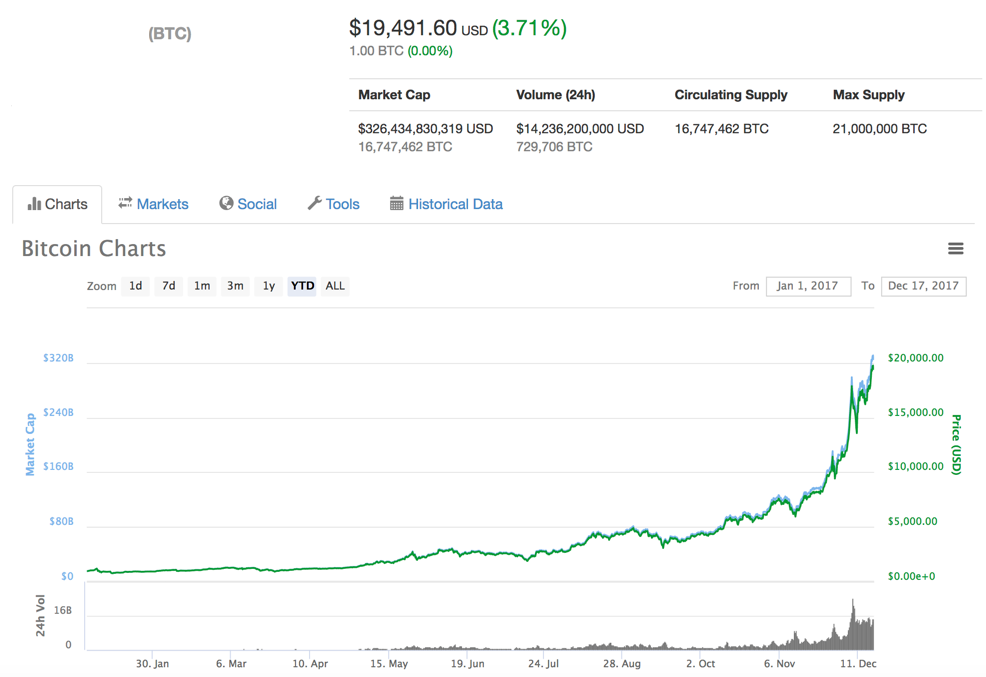
Bitcoin is renowned for its volatility, experiencing dramatic price swings that can lead to substantial gains or losses. This high-risk, high-reward profile means it’s not suitable for everyone and typically constitutes only a small portion of a diversified investment portfolio. Investors must have a high tolerance for risk and a long-term perspective to navigate its market cycles. Education about market trends, technical analysis, and fundamental drivers is crucial for making informed decisions.
Diversification and Portfolio Strategy
For most investors, Bitcoin should be considered as one component of a broader, diversified investment strategy. It’s often categorized as a “satellite” asset, meaning a smaller, potentially higher-risk allocation that complements “core” holdings like stocks, bonds, and real estate. The goal of diversification is to mitigate risk by not putting all one’s eggs in a single basket, ensuring that the performance of any one asset does not overwhelmingly dictate the overall portfolio’s health.
The Long-Term Vision for Bitcoin
Despite its volatility, many investors view Bitcoin as a revolutionary technology with significant long-term potential. Its proponents often cite its scarcity, decentralized nature, censorship resistance, and potential as a global, permissionless store of value and medium of exchange. The ongoing development of its ecosystem, increasing institutional adoption, and its growing recognition as a legitimate asset class contribute to a compelling long-term investment thesis. However, this vision is not without its challenges, including regulatory hurdles, scalability debates, and competition from other digital assets.
In conclusion, “how much is 1 million Bitcoin worth?” is a question that yields a dynamic, astronomical figure, but more importantly, it unlocks a deeper exploration into the profound implications of such wealth, the intricate mechanics of the cryptocurrency markets, and the fundamental principles that govern Bitcoin’s existence and value. While few will ever experience such a fortune, understanding its hypothetical worth illuminates the incredible potential and complexities of the digital financial frontier.
aViewFromTheCave is a participant in the Amazon Services LLC Associates Program, an affiliate advertising program designed to provide a means for sites to earn advertising fees by advertising and linking to Amazon.com. Amazon, the Amazon logo, AmazonSupply, and the AmazonSupply logo are trademarks of Amazon.com, Inc. or its affiliates. As an Amazon Associate we earn affiliate commissions from qualifying purchases.