
Purchasing a car is a significant financial commitment, and for most, it involves taking out a loan. While the focus often falls on the monthly payment, understanding the total interest you’ll pay over the life of that loan is crucial for responsible financial planning. Interest represents the cost of borrowing money, and for an asset like a car that depreciates over time, minimizing this cost can save you thousands of dollars. This article will demystify car loan interest, exploring the factors that influence it, how it’s calculated, and actionable strategies to reduce your overall expenditure, ensuring you make an informed decision that aligns with your financial goals.

Understanding the Anatomy of Car Loan Interest
Before diving into calculations and strategies, it’s essential to grasp the fundamental concepts behind car loan interest. This foundational knowledge empowers you to evaluate loan offers critically and negotiate more effectively.
What is Car Loan Interest?
At its core, interest is the charge for borrowing money. When you take out a car loan, a lender provides you with the funds to purchase the vehicle, and in return, you agree to repay that amount (the principal) plus an additional fee – the interest. This fee compensates the lender for the risk they take by lending you money and for the opportunity cost of not being able to use that money elsewhere. Car loans typically use “simple interest,” meaning the interest is calculated only on the principal balance that remains outstanding. This differs from compound interest, where interest is calculated on both the principal and previously accumulated interest.
Why Calculating Interest Matters
While a low monthly payment might seem attractive, it doesn’t always tell the full story. A lower monthly payment could be a result of a longer loan term, which, paradoxically, often leads to paying significantly more interest over the loan’s duration. Understanding the total interest paid allows you to compare different loan offers accurately, beyond just the monthly sticker price. It provides a clearer picture of the true cost of your car and helps you budget for the long term. Moreover, knowing how much interest you’re paying can motivate you to pay off your loan sooner, saving you money in the process. Without this understanding, consumers often fall into the trap of focusing solely on affordability in the short term, overlooking the substantial long-term financial implications.
Key Components of Your Car Loan
Several key variables coalesce to determine your total interest payment:
- Principal Amount: This is the initial sum of money you borrow to buy the car, minus any down payment or trade-in value. A higher principal naturally means more interest accrues.
- Interest Rate (APR): Expressed as an annual percentage, the Annual Percentage Rate (APR) is the most critical factor. It includes not just the basic interest rate but also certain fees associated with the loan, providing a more comprehensive cost of borrowing. A lower APR translates directly to lower interest payments.
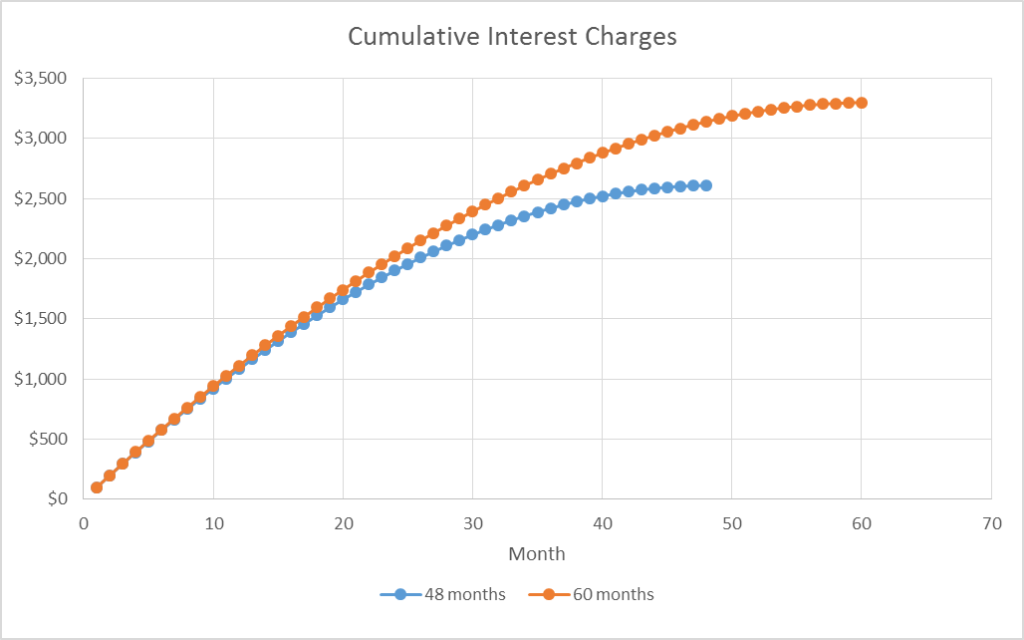
- Loan Term: This is the duration over which you agree to repay the loan, typically measured in months (e.g., 36, 48, 60, 72, or even 84 months). While a longer term can reduce your monthly payment, it almost always increases the total interest paid because the principal takes longer to pay down, allowing interest to accrue for a longer period.
These three elements are inextricably linked, and a change in one will invariably impact the others and, ultimately, your total interest paid.
Factors That Determine Your Total Interest Payment
Beyond the basic components, several external and personal factors play a significant role in shaping the interest rate you’re offered and, consequently, the total interest you’ll pay. Understanding these influences can empower you to improve your financial standing before even applying for a loan.
The Impact of Your Credit Score
Your credit score is arguably the single most important factor influencing the interest rate you receive. Lenders use your credit score as a primary indicator of your creditworthiness – your likelihood of repaying the loan as agreed. A higher credit score (typically above 700-720) signals to lenders that you are a low-risk borrower, making them more willing to offer you lower interest rates. Conversely, a lower credit score indicates higher risk, leading lenders to charge higher rates to compensate for that perceived risk. This difference can be substantial; a borrower with excellent credit might qualify for rates under 3%, while someone with poor credit might face rates of 10% or more, significantly increasing their total interest cost.
Loan Amount and Down Payment
The principal amount you borrow is directly affected by your down payment and any trade-in value. A larger down payment means you need to borrow less money. Since interest is calculated on the principal balance, a lower principal naturally results in less interest paid over the life of the loan, assuming the same interest rate and term. Furthermore, making a substantial down payment can also make you a more attractive borrower in the eyes of lenders, potentially helping you qualify for a slightly better interest rate. It shows financial stability and reduces the lender’s risk exposure.
Interest Rate (APR) vs. Nominal Rate
It’s crucial to distinguish between the nominal interest rate and the Annual Percentage Rate (APR). The nominal interest rate is the basic rate at which interest is calculated on the principal. However, the APR provides a more comprehensive picture of the loan’s cost because it includes not only the nominal interest rate but also certain mandatory fees charged by the lender (e.g., origination fees, processing fees). When comparing loan offers, always use the APR, as it allows for an “apples-to-apples” comparison of the true cost of borrowing across different lenders. A seemingly low nominal rate might be less attractive if the associated fees drive up the APR.
The Length of Your Loan Term
The loan term, or duration, has a dramatic effect on your total interest. While a longer loan term (e.g., 72 or 84 months) will result in lower monthly payments, it invariably leads to paying significantly more interest over the life of the loan. This is because the principal balance is outstanding for a longer period, allowing interest to accrue for more months. For example, a 60-month loan will almost always result in less total interest paid than a 72-month loan for the same principal and APR, even though the monthly payments will be higher for the shorter term. Balancing monthly affordability with total cost is a key consideration here.
New vs. Used Car and Lender Differences
The type of car you finance (new vs. used) can also influence your interest rate. New cars often qualify for lower interest rates, sometimes even promotional 0% or low-APR offers directly from manufacturers, because they are perceived as less risky by lenders (they hold their value better initially and have a warranty). Used cars, especially older models, typically carry higher interest rates due to higher depreciation risk and potential mechanical issues. Furthermore, different types of lenders (banks, credit unions, dealership financing, online lenders) offer varying rates and terms. Credit unions are often known for competitive rates, while dealership financing can sometimes offer incentives but might also have higher markups. Shopping around across different lender types is vital to secure the best possible rate.
Deconstructing Interest Calculation: How It Works
Understanding how interest is calculated on your car loan can give you a powerful edge, allowing you to predict your total cost and identify opportunities for savings. Most car loans operate on a simple interest basis, utilizing an amortization schedule.
The Amortization Schedule Explained
An amortization schedule is a table detailing each payment over the life of your loan, breaking down how much of each payment goes towards interest and how much goes towards the principal. In a simple interest car loan, interest is calculated daily or monthly on the outstanding principal balance. Early in the loan term, a larger portion of your monthly payment goes towards interest, and a smaller portion reduces the principal. As the principal balance decreases with each payment, the interest portion of subsequent payments also decreases, and a larger portion goes towards paying down the principal. This is why paying extra early in the loan can have a more significant impact on reducing total interest.
Let’s illustrate with a simplified example:
If you have a loan with a $20,000 principal at a 5% APR, your monthly interest would roughly be calculated as (Outstanding Principal * Annual Interest Rate) / 12.
In month 1, if your principal is $20,000, interest might be ($20,000 * 0.05) / 12 = $83.33.
If your total monthly payment is $377, then $83.33 goes to interest, and the remaining $293.67 goes to principal, reducing your principal to $19,706.33 for the next month’s calculation. This cycle continues, with the interest portion shrinking as the principal dwindles.
Simple Interest vs. Compound Interest in Car Loans
As mentioned, most standard car loans use simple interest. This means that interest is only calculated on the current outstanding principal balance. It does not compound, meaning you don’t pay interest on previously accrued interest. This is a favorable structure for borrowers compared to loans that compound interest.
For example, if you miss a payment on a simple interest car loan, the interest for that month will still be calculated on the outstanding principal. However, if that loan had compounded interest, the missed payment (which would include the interest portion) could be added to your principal, and future interest would then be calculated on that new, higher principal. Thankfully, this is rare for typical auto loans. However, watch out for clauses about late fees or charges that could effectively increase your overall cost. Always read the fine print to understand how missed payments or late payments are handled and if they could lead to a situation where interest is charged on penalties or deferred interest.
Early Payments and Their Effect
Because car loans operate on simple interest, making extra payments or paying off your loan early directly reduces your outstanding principal balance. Since interest is calculated on this balance, any reduction immediately lessens the amount of interest you’ll pay going forward. For instance, if you make an extra principal payment of $100 in the first year of a 60-month loan, you not only eliminate that $100 from your principal but also eliminate all the future interest that would have accrued on that $100 over the remaining 59 months. This can lead to substantial savings, especially when extra payments are made early in the loan term when the interest portion of your payments is highest.
Strategies to Minimize Your Interest Payments
Minimizing the total interest you pay on your car loan isn’t about luck; it’s about strategic planning and informed decision-making. By implementing a few key strategies, you can significantly reduce the overall cost of your vehicle.
Boosting Your Creditworthiness
The most impactful long-term strategy is to improve your credit score. Before applying for a car loan, take steps to:
- Pay bills on time: Payment history is the biggest factor in your credit score.
- Reduce outstanding debt: Especially revolving credit like credit cards. Lowering your credit utilization ratio (amount of credit used vs. available) can boost your score.
- Avoid opening new credit accounts: This can temporarily lower your score.
- Check your credit report for errors: Dispute any inaccuracies that could be dragging your score down.
Even a moderate improvement in your credit score can move you into a better rate tier, saving you thousands over the life of the loan.
Maximizing Your Down Payment
As discussed, a larger down payment directly reduces the principal amount you need to borrow, thereby reducing the total interest paid. Aim for at least 10-20% of the car’s purchase price, if possible. Not only does this save on interest, but it also helps you build equity in the vehicle faster, making you less likely to be “upside down” (owing more than the car is worth), which is common early in a car loan. If you have an existing car to trade in, its value can effectively act as part of your down payment.
Shorter Terms vs. Lower Monthly Payments
While a longer loan term (e.g., 72 or 84 months) offers lower monthly payments, it drastically increases the total interest you pay. Opting for the shortest loan term you can comfortably afford will save you a substantial amount of interest. Even moving from a 72-month to a 60-month loan can result in significant savings. It’s a trade-off: higher monthly payments in the short term for considerable long-term financial gain. Always calculate the total interest paid for different term lengths before committing.
The Power of Shopping Around and Negotiating
Never take the first loan offer you receive. Approach multiple lenders – banks, credit unions, and online lenders – to get pre-approved for a loan before you step into a dealership. This gives you leverage, as you’ll know the best rate you qualify for and can use it to negotiate with the dealership’s finance department. Dealerships often mark up interest rates, so having an external offer allows you to either beat their rate or walk away with a better deal from your pre-approved lender. A difference of even one percentage point on a large loan can translate into hundreds or thousands of dollars saved.
Refinancing: A Second Chance to Save
If interest rates have dropped since you took out your original loan, or if your credit score has significantly improved, refinancing your car loan could be a smart move. Refinancing involves taking out a new loan to pay off your existing one, ideally at a lower interest rate or with better terms. This can reduce your monthly payment, the total interest paid, or both. It’s especially beneficial if you started with a higher interest rate due to a less-than-perfect credit score and have since worked to improve it.
Making Extra Payments or Rounding Up
One of the simplest yet most effective ways to save on interest is to pay more than your minimum monthly payment whenever possible. Since car loans use simple interest, any extra money you pay goes directly towards reducing your principal. This immediately reduces the basis upon which future interest is calculated. Even small, consistent extra payments—like rounding up your payment to the nearest $50 or making one extra payment per year—can shave months off your loan term and save you hundreds in interest. Ensure your lender applies these extra payments directly to the principal, not just towards future scheduled payments.
Tools and Smart Financial Planning
Armed with knowledge and strategies, the next step is to leverage available tools for smart financial planning around your car loan.
Leveraging Online Calculators
Online car loan calculators are invaluable resources. They allow you to input various scenarios—different principal amounts, interest rates, and loan terms—to see the estimated monthly payment and, crucially, the total interest paid over the loan’s life. This helps you visualize the impact of different choices and compare loan offers effectively. Use them to understand how a larger down payment, a shorter term, or even a one-percentage-point difference in APR affects your bottom line. Many financial websites, bank portals, and even dealership sites offer these calculators for free.
Deciphering Loan Offers and Terms
When presented with a loan offer, don’t just look at the monthly payment. Scrutinize the following:
- The APR: This is your true cost of borrowing.
- The loan term: Understand the total duration.
- Any prepayment penalties: Ensure you won’t be penalized for paying off your loan early. Most simple interest car loans do not have these, but it’s vital to check.
- Fees: Look for origination fees, documentation fees, or other charges that increase the total cost.
- Negative equity clauses: Understand what happens if your car is totaled and you owe more than its value (consider GAP insurance).
Always ask questions and don’t sign anything you don’t fully understand.
Budgeting for Your Car Loan
Integrate your car loan payments into your overall personal budget. Factor in not just the monthly loan payment but also other car-related expenses like insurance, fuel, maintenance, and potential repairs. A common rule of thumb is the “20/4/10 rule”: a 20% down payment, a loan term of no more than four years (48 months), and total monthly car expenses (payment, insurance, fuel) not exceeding 10% of your gross monthly income. While this is a guideline, tailoring it to your specific financial situation ensures your car loan doesn’t become a burden. Being mindful of these costs helps prevent financial strain and keeps you on track toward your broader financial goals.
Conclusion: Driving Towards Financial Prudence
Understanding “how much interest will I pay on my car loan” is not merely an academic exercise; it’s a critical component of responsible financial management. By grasping the core concepts of interest, identifying the factors that influence your rate, and proactively employing strategies to minimize your costs, you empower yourself to make smarter car-buying decisions. From improving your credit score and making a substantial down payment to strategically choosing your loan term and shopping around for the best rates, every action you take can lead to significant savings. Leverage online tools, meticulously review loan offers, and integrate your car expenses into a comprehensive budget. Ultimately, an informed approach to your car loan translates into a lower overall cost for your vehicle, freeing up valuable financial resources for other priorities and setting you on a clearer path to financial well-being. Drive smart, not just far.
aViewFromTheCave is a participant in the Amazon Services LLC Associates Program, an affiliate advertising program designed to provide a means for sites to earn advertising fees by advertising and linking to Amazon.com. Amazon, the Amazon logo, AmazonSupply, and the AmazonSupply logo are trademarks of Amazon.com, Inc. or its affiliates. As an Amazon Associate we earn affiliate commissions from qualifying purchases.