
The question of how much interest one can earn in a savings account is fundamental to personal finance, yet the answer is rarely a single, static figure. For many, the savings account is the bedrock of a financial plan—a safe harbor for emergency funds, short-term goals, and liquid capital. Understanding the mechanics of interest rates, the impact of compounding, and the current economic landscape is essential for anyone looking to optimize their cash reserves. To determine your potential earnings, you must look beyond the surface-level percentage and examine the structural factors that govern how banks reward your deposits.
Understanding the Fundamentals of APY and Interest Calculation
When you open a savings account, the most prominent figure you will encounter is the Annual Percentage Yield (APY). While many people use the terms “interest rate” and “APY” interchangeably, they represent different concepts that significantly impact your total earnings over time.
The Difference Between Nominal Interest and APY
The nominal interest rate is the stated percentage that the bank pays on your principal balance. However, this figure does not account for the effects of compounding. The APY, on the other hand, reflects the total amount of interest you will earn in one year, expressed as a percentage, including the effect of compounding interest. Because APY factors in the interest earned on previous interest, it provides a more accurate representation of your actual return. When comparing accounts, the APY is the gold standard for evaluation because it creates a level playing field between institutions that might use different compounding schedules.
Simple vs. Compound Interest: The Engine of Growth
To understand how much you will earn, you must distinguish between simple and compound interest. Simple interest is calculated solely on the initial principal you deposit. Compound interest is calculated on the principal plus any interest that has already been added to the account. Most modern savings accounts utilize compound interest, which allows your wealth to grow exponentially rather than linearly.
For example, if you deposit $10,000 into an account with a 4.00% APY, you won’t just earn $400 every year. In the second year, you are earning 4.00% on $10,400, assuming no further deposits or withdrawals. Over a decade, this “interest on interest” becomes a powerful force in wealth preservation and growth.
How Compounding Frequency Affects Your Bottom Line
The frequency with which a bank compounds interest—daily, monthly, quarterly, or annually—directly affects the “yield” part of the APY. The more frequently interest is compounded, the faster your balance grows. Most high-yield savings accounts compound interest daily and credit it to your account monthly. While the difference between daily and monthly compounding on a small balance may seem negligible, for significant sums or long-term holdings, daily compounding provides a distinct mathematical advantage.
Factors That Influence Your Savings Account Returns
The interest rate you receive is not arbitrary. It is the result of a complex interplay between federal monetary policy, the competitive landscape of the banking industry, and the specific business model of the institution you choose.
The Federal Reserve and the Benchmark Rate
The single most influential factor in determining savings account interest rates is the Federal Reserve’s “Fed Funds Rate.” This is the interest rate at which commercial banks borrow and lend their excess reserves to each other overnight. When the Federal Reserve raises this benchmark rate to combat inflation, banks typically increase the rates they offer on savings products. Conversely, in a low-rate environment designed to stimulate the economy, savings rates tend to plummet. As a saver, your earnings are largely tied to the macro-economic cycle governed by central bank policy.
Traditional Banks vs. High-Yield Online Banks
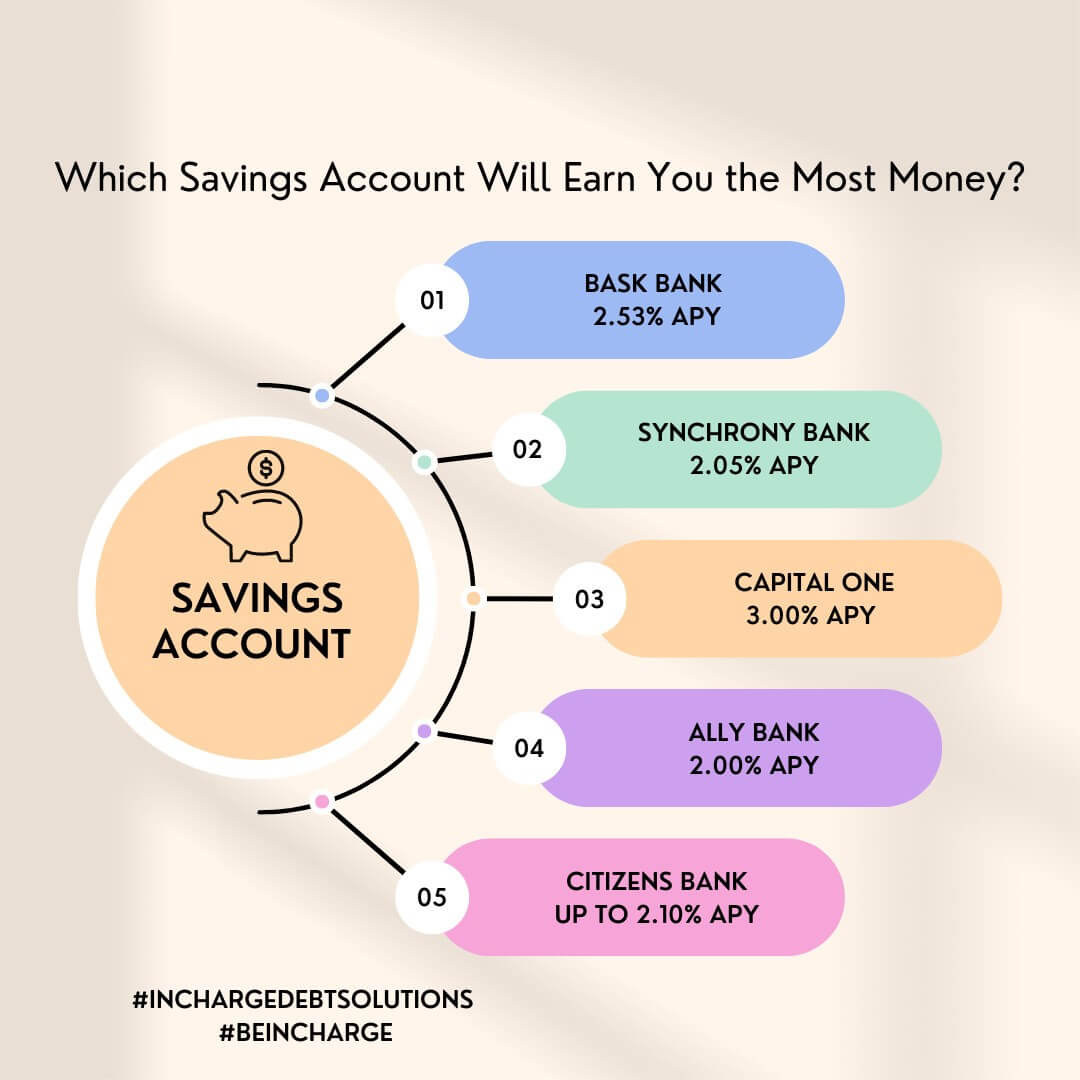
Where you choose to keep your money is arguably the most important decision you can make regarding interest earnings. Traditional “brick-and-mortar” banks often offer remarkably low interest rates—sometimes as low as 0.01% APY. These institutions have high overhead costs, including physical branches and large staffs, which limits their ability to offer competitive rates to depositors.
In contrast, online-only banks or “neobanks” often provide High-Yield Savings Accounts (HYSAs) that offer rates 10 to 50 times higher than the national average. Because these institutions lack the overhead of physical locations, they pass those savings on to the consumer in the form of higher APYs. If you are looking to maximize your earnings, migrating away from traditional big-box banks is often the most effective first step.
Account Minimums and Tiered Interest Rates
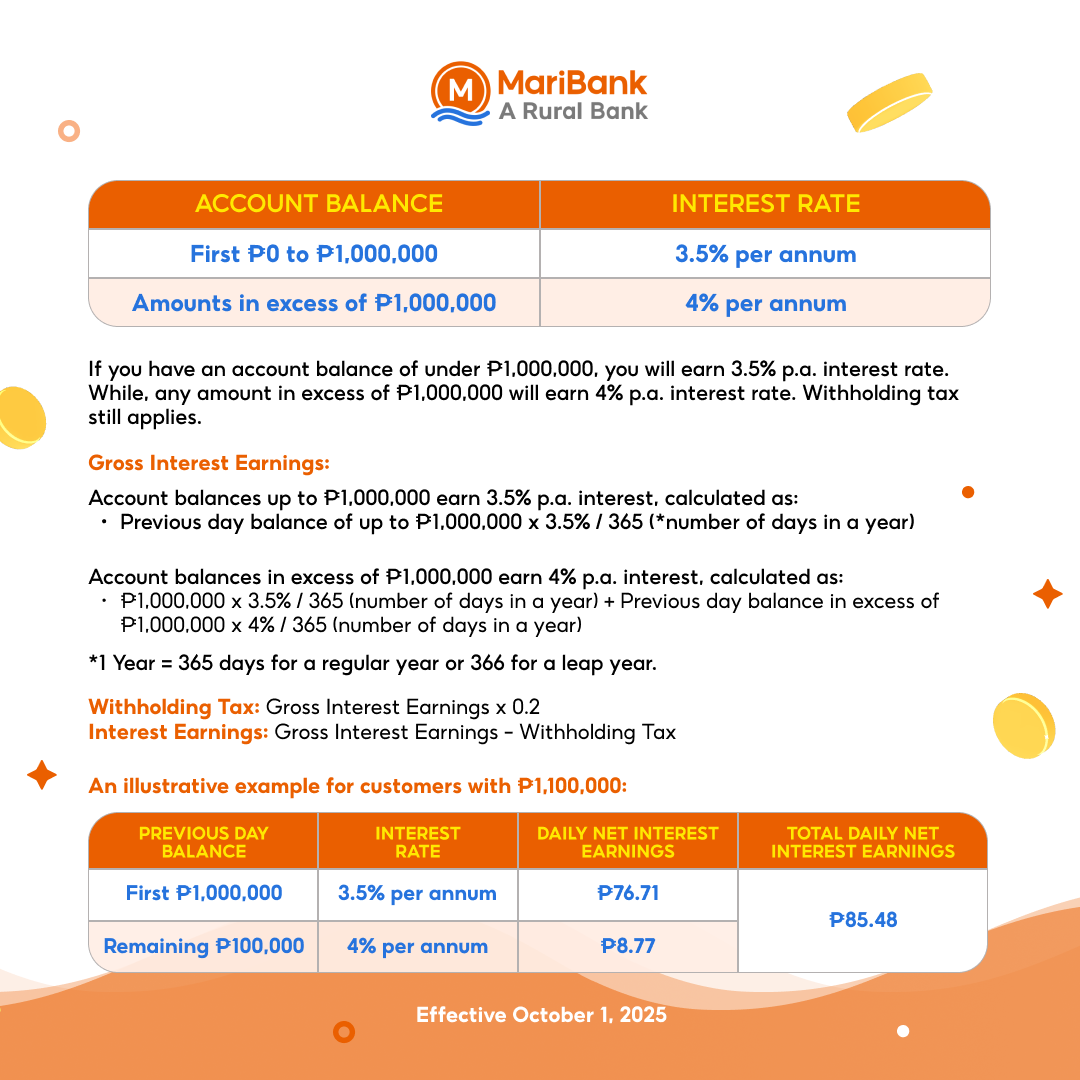
Some financial institutions utilize “tiered” interest rates to reward higher balances. In this model, you might earn a standard rate on the first $10,000, but a significantly higher (or sometimes lower) rate on balances exceeding that threshold. Additionally, some accounts require a minimum daily balance to earn the advertised APY or to waive a monthly maintenance fee. Failing to meet these requirements can lead to fees that quickly evaporate any interest you’ve earned, effectively resulting in a negative return on your capital.
Strategic Ways to Maximize Your Interest Income

Earning a meaningful amount of interest requires more than just picking a bank; it requires a strategic approach to how you allocate your liquid assets.
Exploring High-Yield Savings Accounts (HYSA)
The High-Yield Savings Account is currently the primary vehicle for individuals seeking both liquidity and growth. These accounts are usually FDIC-insured up to $250,000, meaning your principal is protected by the federal government. The primary advantage of an HYSA is that it offers a competitive rate while allowing you to withdraw your money at any time (subject to federal or bank-specific limits on monthly transfers). For an emergency fund, the HYSA is unparalleled in its balance of safety and return.
The Role of Certificates of Deposit (CDs) and Money Market Accounts
If you have funds that you do not need to access for a set period, Certificates of Deposit (CDs) may offer higher rates than standard savings accounts. By “locking in” your money for a term ranging from three months to five years, you provide the bank with a stable source of capital, and they reward you with a fixed interest rate. This protects you against falling interest rates in the future.
Money Market Accounts (MMAs) are a hybrid between savings and checking accounts. They often offer tiered interest rates and may come with check-writing privileges or a debit card. While they once offered significantly higher rates than savings accounts, the gap has narrowed in recent years, making them a niche choice for those who need occasional direct access to their savings.
Utilizing “Bucket” Strategies for Goal-Based Saving
Many modern digital banks allow users to create “buckets” or sub-accounts within a single savings account. While this doesn’t change the APY, it allows for better psychological management of funds. By segregating your “New Car Fund” from your “Emergency Fund,” you can track the growth of specific goals. When you see the interest being distributed across these buckets, it becomes easier to understand how your idle cash is working toward specific milestones in your life.
The Impact of Taxes and Inflation on Real Returns
To accurately calculate how much you will truly earn, you must look at your “real” return, which is the interest earned after accounting for taxes and the eroding effect of inflation.
Why the Nominal Rate Isn’t Your “Real” Profit
Inflation is the rate at which the general level of prices for goods and services is rising. If your savings account offers a 4.00% APY but inflation is running at 3.00%, your “real” rate of return is only 1.00%. In periods of high inflation, even a high-yield savings account might struggle to maintain the purchasing power of your money. This is why savings accounts are generally viewed as tools for capital preservation rather than aggressive wealth accumulation.
Tax Implications: Form 1099-INT
Interest earned in a savings account is considered taxable income by the IRS and most state governments. If you earn more than $10 in interest during a calendar year, your bank will issue a Form 1099-INT. This interest is typically taxed at your ordinary income tax rate. For high earners in a high-tax bracket, the “after-tax yield” can be significantly lower than the advertised APY. When calculating how much you will earn, it is wise to set aside a portion of that interest for your annual tax obligations.
Long-Term Outlook: Is a Savings Account Enough for Your Financial Goals?
While a savings account is an essential tool, its role in your broader financial portfolio should be clearly defined. It is a vehicle for liquidity, not necessarily for long-term wealth creation that outpaces the stock market.
Balancing Liquidity with Growth
The primary value of a savings account is not the interest it generates, but the liquidity it provides. Knowing that you can access $20,000 in the event of a medical emergency or job loss provides a level of financial security that a volatile stock portfolio cannot. However, keeping too much money in a savings account—even a high-yield one—can result in “opportunity cost.” Over decades, the difference between a 4% return in a savings account and a 7-10% historical average return in a diversified index fund is staggering.
Moving Beyond Savings to Investing
Once you have established an adequate emergency fund (typically 3-6 months of expenses) in a high-yield savings account, the incremental benefit of earning more interest decreases. At this stage, many individuals look toward higher-yield, higher-risk instruments like treasury bonds, corporate bonds, or equities. The interest earned in your savings account should be viewed as a “safety premium”—the cost of having your money immediately available and 100% protected against market downturns.
In summary, the amount of interest you will earn in a savings account depends on three main variables: the current federal interest rate environment, the type of institution you choose, and the balance you maintain. By prioritizing high-yield online accounts, understanding the power of daily compounding, and accounting for the realities of taxes and inflation, you can ensure that your idle cash is working as hard as possible. While a savings account may not make you wealthy on its own, it remains the most vital tool for maintaining financial stability and protecting the capital you’ve worked so hard to earn.
aViewFromTheCave is a participant in the Amazon Services LLC Associates Program, an affiliate advertising program designed to provide a means for sites to earn advertising fees by advertising and linking to Amazon.com. Amazon, the Amazon logo, AmazonSupply, and the AmazonSupply logo are trademarks of Amazon.com, Inc. or its affiliates. As an Amazon Associate we earn affiliate commissions from qualifying purchases.