
Purchasing a vehicle is often the second-largest investment a consumer makes, trailing only the purchase of a home. While the sticker price of the car dominates the initial conversation, the actual cost of ownership is heavily dictated by a less visible figure: the interest rate. Understanding how much interest you will pay on a car loan is not merely a matter of looking at a single percentage point; it involves a complex calculation of creditworthiness, market conditions, loan structures, and vehicle types.
In a fluctuating economic environment, the difference between a 4% and an 8% interest rate can equate to thousands of dollars over the life of a loan. To navigate this financial landscape effectively, one must look beyond the monthly payment and dissect the mechanics of automotive financing.

Understanding the Fundamentals of Car Loan Interest Rates
Before diving into the specific numbers, it is essential to distinguish between the “interest rate” and the “Annual Percentage Rate” (APR). While many use these terms interchangeably, they represent different financial realities. The interest rate is the base cost of borrowing the principal amount. The APR, however, includes the interest rate plus any additional fees or costs associated with the loan, such as origination fees or documentation charges. For the most accurate picture of your borrowing costs, the APR is the gold standard.
Simple Interest vs. Precomputed Interest
Most modern car loans utilize a “simple interest” calculation. In this model, interest is calculated daily based on the remaining balance of the loan. This structure is highly beneficial for the borrower because it rewards early payments. If you pay more than the minimum or pay earlier in the month, the principal decreases faster, which in turn reduces the amount of interest that can accrue.
Conversely, some “buy-here-pay-here” lots or predatory lenders may use precomputed interest. In these contracts, the interest is calculated at the beginning of the loan and remains fixed regardless of how quickly you pay it off. Understanding which type of loan you are signing is the first step in managing your long-term financial health.
The Role of Amortization
Car loans are amortized, meaning your monthly payments are split between the principal and the interest. In the early stages of your loan, a larger portion of your payment goes toward interest. As the principal balance declines, the interest portion shrinks, and more of your money goes toward actually owning the vehicle. This is why “upside-down” loans—where you owe more than the car is worth—are so common in the first two years of a long-term loan.
Primary Factors That Determine Your Interest Rate
Interest rates are not a one-size-fits-all metric. Lenders assess risk through various lenses to determine the specific percentage they will offer a borrower.
Credit Score Tiers and Their Impact
Your credit score is the single most influential factor in determining your interest rate. Lenders generally categorize borrowers into tiers:
-
Super Prime (781–850): These borrowers receive the lowest available market rates. They are seen as low-risk and often qualify for promotional 0% or 0.9% financing from manufacturers.
-
Prime (661–780): These borrowers still receive competitive rates, often only a point or two above the super-prime tier.
-
Non-Prime (601–660): Rates begin to climb significantly here. Lenders may view these borrowers with more scrutiny, requiring higher down payments.
-
Subprime (501–600) and Deep Subprime (300–500): Interest rates in these categories can skyrocket into the double digits, sometimes reaching 15% to 25%. For these borrowers, the interest paid over the life of the loan can sometimes exceed the value of the car itself.
Loan Term Length
The length of the loan—typically ranging from 36 to 84 months—has a direct correlation with the interest rate. Shorter loans (36–48 months) generally carry lower interest rates because the lender is exposed to risk for a shorter duration. While longer loans (72–84 months) offer lower monthly payments, they almost always come with higher interest rates and a significantly higher total interest cost. Financially savvy buyers often aim for the “sweet spot” of 60 months to balance affordability with interest efficiency.
New vs. Used Vehicles
Generally, new cars qualify for lower interest rates than used cars. This is because new cars have a higher collateral value and are easier for a bank to value and resell if the borrower defaults. Used cars, while having a lower purchase price, carry higher interest rates to compensate the lender for the increased risk of mechanical failure or rapid depreciation.
The Financial Impact of Interest Over Time
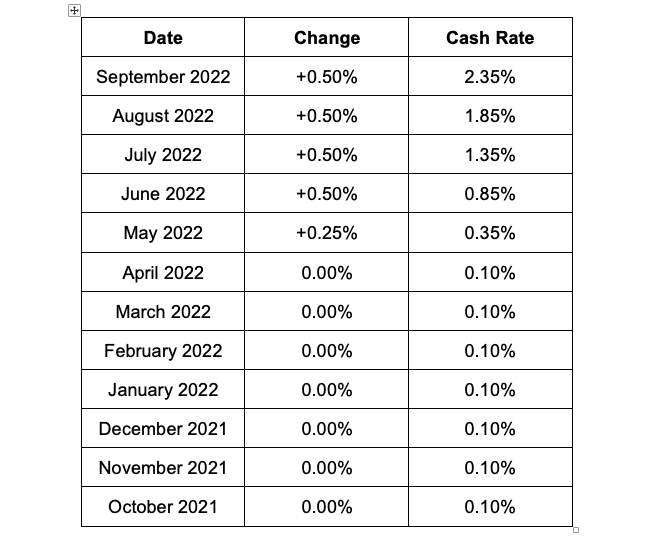
To truly grasp how much interest costs, one must look at the total “cost of the debt.” A common mistake among car buyers is focusing solely on the monthly payment. A $500 monthly payment on a 48-month loan is vastly different from a $500 payment on an 84-month loan.
A Comparative Example
Consider a $35,000 car loan.
-
Scenario A: A 5% interest rate over 60 months results in a monthly payment of $660 and a total interest cost of $4,629.
-
Scenario B: A 10% interest rate over 60 months results in a monthly payment of $743 and a total interest cost of $9,619.
In this scenario, a 5-point difference in the interest rate costs the borrower nearly $5,000 in pure interest. That is money that could have been invested, saved for a home, or used for vehicle maintenance.
The Danger of Negative Equity
When interest rates are high and loan terms are long, a vehicle’s value often depreciates faster than the loan balance is paid down. This creates “negative equity,” or being “underwater.” If you decide to sell the car or if it is totaled in an accident, you may find yourself owing the bank thousands of dollars beyond what the insurance or the buyer will pay. This is why keeping interest rates low and terms short is a vital defensive financial strategy.
Strategies to Secure the Lowest Possible Rates
Securing a favorable interest rate requires proactive financial management and a willingness to shop around rather than accepting the first offer presented at a dealership.
Pre-Approval and Comparison Shopping
One of the most effective tools for a buyer is a pre-approval from a credit union or a bank. Credit unions, being member-owned, often offer rates that are 1% to 2% lower than traditional banks. By walking into a dealership with a pre-approval in hand, you force the dealer’s finance office to either beat that rate or lose the financing business. This shifts the power dynamic back to the consumer.
Improving Credit Health
If your credit score is on the cusp of a higher tier, it may be worth delaying a car purchase by three to six months. Paying down credit card balances to lower your utilization ratio or correcting errors on your credit report can boost your score significantly. Moving from the “Non-Prime” to “Prime” category can save you thousands of dollars in interest.
The Role of the Down Payment
A substantial down payment reduces the “Loan-to-Value” (LTV) ratio. Lenders are more likely to offer lower interest rates to borrowers who have significant “skin in the game.” By reducing the amount the bank has to risk, you prove your financial stability and reduce the total interest accrued from day one, as you are borrowing a smaller principal.
Managing Your Loan and Refinancing Opportunities
Interest costs are not necessarily set in stone once you sign the contract. There are several ways to mitigate interest expenses during the life of the loan.
Accelerated Payments
As most car loans are simple interest, any payment made above the minimum goes directly toward the principal. By making “bi-weekly” payments or adding an extra $50 to each monthly check, you effectively shorten the term of the loan and prevent interest from accruing on that portion of the principal. This is an excellent way for those with high-interest loans to minimize the financial damage.
When to Refinance
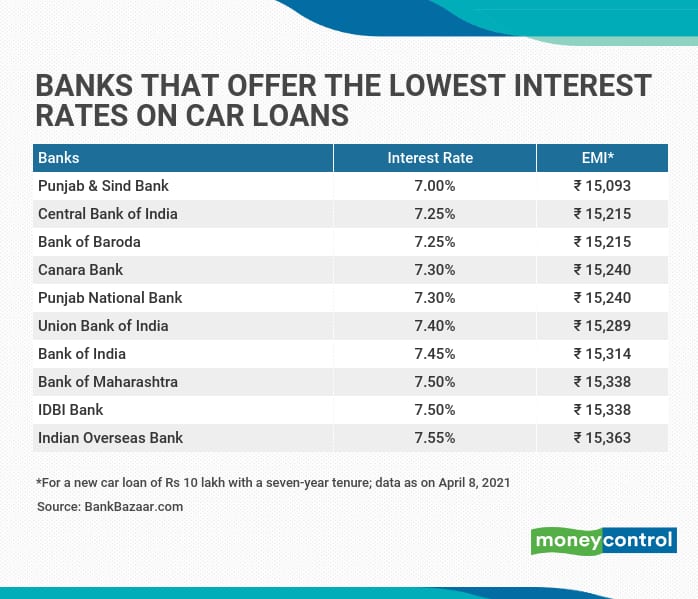
Refinancing a car loan is a common and effective strategy for lowering interest costs. If market interest rates have dropped since you purchased your vehicle, or if your credit score has improved significantly, you may be eligible to replace your current loan with a new one at a lower rate. Generally, it is advisable to look into refinancing if you can lower your rate by at least 1.5% to 2%, provided you do not extend the term of the loan significantly.
Avoiding the “No-Credit” Pitfall
For first-time buyers with no credit history, interest rates can be punitively high. In these cases, utilizing a co-signer with a strong credit history can bridge the gap. The co-signer’s credit profile allows the lender to offer a “Super Prime” or “Prime” rate to a borrower who would otherwise be relegated to the “Subprime” category. However, this is a serious commitment, as the co-signer is equally responsible for the debt.
In conclusion, the question of “how much interest” is a variable that depends heavily on the borrower’s preparation and financial literacy. By understanding the mechanics of interest, monitoring credit tiers, and utilizing competitive shopping strategies, a consumer can transform a car loan from a mounting debt burden into a manageable and efficient path to vehicle ownership. The goal is always to pay for the car, not for the privilege of borrowing the money to buy it.
aViewFromTheCave is a participant in the Amazon Services LLC Associates Program, an affiliate advertising program designed to provide a means for sites to earn advertising fees by advertising and linking to Amazon.com. Amazon, the Amazon logo, AmazonSupply, and the AmazonSupply logo are trademarks of Amazon.com, Inc. or its affiliates. As an Amazon Associate we earn affiliate commissions from qualifying purchases.