
In the modern financial landscape, debt is often presented as a monthly payment—a manageable figure that fits within a budget. However, focusing solely on the monthly installment obscures the most significant cost of borrowing: interest. Whether it is a mortgage, a car loan, or a revolving credit card balance, interest is the price of using someone else’s capital. Understanding exactly how much interest you are paying is the first step toward financial sovereignty. Using an interest calculator is not just about crunching numbers; it is about uncovering the hidden erosion of your net worth and making strategic decisions to stop it.
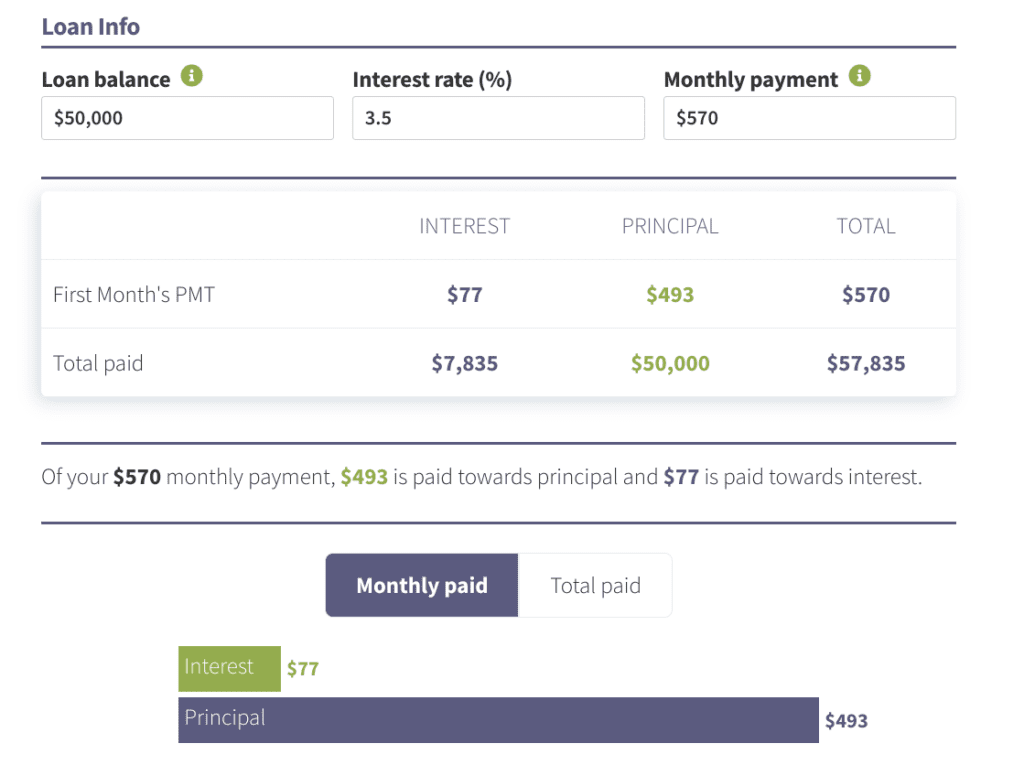
The Mechanics of Interest: Why Calculators Are Essential
To manage money effectively, one must look beyond the surface-level balance. Interest is rarely a flat fee; it is a dynamic, compounding force that changes based on the principal balance, the rate, and the frequency of compounding. Without a dedicated calculator, the math becomes too complex for a quick mental estimate, leading many consumers to underestimate the true cost of their lifestyle.
Compound vs. Simple Interest
The distinction between simple and compound interest is fundamental to personal finance. Simple interest is calculated only on the principal amount of a loan. This is common in some short-term personal loans or specific types of auto financing. However, most consumer debt—particularly credit cards—utilizes compound interest.
Compound interest is the “interest on interest.” If you do not pay off your full balance, the interest charged in one month is added to the principal, and the next month’s interest is calculated on that new, higher total. An interest calculator allows you to visualize this snowball effect, showing how a small balance can balloon into a significant financial burden over time if only minimum payments are made.
The Impact of Annual Percentage Rate (APR)
Many borrowers confuse the “interest rate” with the “APR.” While the interest rate refers to the cost of borrowing the principal, the APR includes the interest rate plus other fees or costs associated with the loan, such as origination fees or points. When using a “how much interest am I paying” calculator, inputting the APR provides a more accurate picture of the total annual cost. High-interest debt, such as credit cards with APRs exceeding 20%, represents a financial emergency that requires immediate attention. Calculators highlight the disparity between a 3% mortgage and a 24% credit card, emphasizing where capital should be allocated first.
Decoding Different Types of Interest Calculators
Different financial products calculate interest in different ways. To get an accurate answer to the question of how much interest you are paying, you must use a tool tailored to the specific type of debt you hold.
Mortgage Amortization Tools
A mortgage is likely the largest interest expense an individual will ever face. Because mortgages are typically amortized over 15 or 30 years, the interest is “front-loaded.” In the early years of a mortgage, the vast majority of your monthly payment goes toward interest, while only a small fraction reduces the principal.
A mortgage interest calculator generates an amortization schedule. This table breaks down every single payment over the life of the loan. By looking at this schedule, a homeowner might realize that on a $400,000 loan at 7% interest, they will pay over $550,000 in interest alone over 30 years. This realization often serves as the catalyst for making extra principal payments or considering a refinance.
Credit Card Interest Estimators
Credit cards are unique because they are “revolving” debt. The balance changes daily, and interest is usually calculated based on the “average daily balance.” If you are carrying a balance, a credit card interest calculator can show you how much of your monthly payment is being “burnt” before it even touches the principal. These tools often include a “time to pay off” feature, which illustrates how many years it will take to reach a zero balance if you only pay the minimum. Seeing a “22-year payoff” for a $5,000 balance is often the wake-up call needed to shift toward aggressive debt reduction.
Auto Loan and Personal Loan Calculators
Auto loans are generally installment loans with fixed rates. However, because cars are depreciating assets, interest payments can lead to a situation where the borrower is “underwater”—owing more than the car is worth. An interest calculator helps a buyer determine if the total cost of the car (including interest) aligns with its long-term value. It also allows for a comparison between different loan terms, showing that while a 72-month loan has a lower monthly payment, the total interest paid is significantly higher than a 48-month loan.
Strategies to Minimize Interest Payments
Once you have used a calculator to identify the sheer volume of interest you are paying, the next logical step is mitigation. Interest is an expense that provides no utility; reducing it is the equivalent of giving yourself a tax-free raise.
The Power of Extra Principal Payments
The most effective way to reduce interest is to reduce the principal balance as quickly as possible. Because interest is calculated based on the remaining balance, every dollar paid above the minimum reduces the base upon which future interest is calculated.

For example, on a 30-year mortgage, making just one extra payment toward the principal each year can shave years off the loan term and save tens of thousands of dollars in interest. Interest calculators often have an “extra payment” field that allows you to see the exact ROI of your additional contributions. In many cases, paying down a 20% APR credit card is a “guaranteed” 20% return on your money, which far outperforms the stock market.
Refinancing and Consolidation
If interest rates have dropped since you took out a loan, or if your credit score has improved, refinancing is a viable strategy. A refinance calculator can help you determine the “break-even point”—the moment when the savings from a lower interest rate outweigh the closing costs of the new loan.
Debt consolidation is another tactic, specifically for high-interest credit card debt. By taking out a personal loan with a lower interest rate to pay off multiple credit cards, you stop the high-interest compounding and move to a structured, lower-cost installment plan. However, this only works if the borrower stops using the credit cards that were paid off; otherwise, they risk doubling their total debt.
How to Calculate Interest Manually: The Math Behind the Tool
While calculators are convenient, understanding the underlying formula provides a deeper sense of control over your finances. It allows you to check for errors and understand how changes in your payment behavior will impact your debt.
The Basic Formula for Simple Interest
The formula for simple interest is:
Interest = Principal × Rate × Time (I = P x R x T)
If you borrow $10,000 at a 5% annual interest rate for 3 years, you would pay:
$10,000 × 0.05 × 3 = $1,500 in interest.
The Complexity of Monthly Compounding
Most consumer loans compound monthly. To find your monthly interest charge, you divide the annual interest rate by 12.
Monthly Interest = (Balance × (APR / 12))
For a credit card with a $5,000 balance and a 24% APR:
$5,000 × (0.24 / 12) = $5,000 × 0.02 = $100.
In this scenario, if your minimum payment is $150, only $50 is actually reducing your debt. The other $100 is pure profit for the bank. Understanding this “Daily Periodic Rate” math underscores why carrying a balance is so detrimental to wealth building.
Leveraging Financial Tools for Long-Term Wealth
The ultimate goal of using an interest calculator is to shift from being an interest payer to an interest earner. Every dollar saved on loan interest is a dollar that can be redirected into interest-bearing assets like index funds, high-yield savings accounts, or real estate.
Opportunity Cost and Debt
In personal finance, the concept of opportunity cost is paramount. The money you pay in interest has a “double cost.” First, there is the actual cash leaving your pocket. Second, there is the lost growth that money could have generated if it were invested.
If you use a calculator and find you are paying $500 a month in interest across various debts, and you realize that $500 invested at a 7% return over 20 years would grow to over $260,000, the true “cost” of that interest is revealed to be much higher than the nominal dollar amount.

Creating a Debt Paydown Roadmap
An interest calculator should be the foundational tool for creating a debt-paydown strategy, such as the “Debt Avalanche” method. In this method, you list all debts and their interest rates, then focus all extra capital on the debt with the highest interest rate first while paying minimums on the rest. This mathematically minimizes the total interest paid over time.
By regularly checking your “interest paid” metrics, you can track your progress. As the principal balances drop, the portion of your payment going toward interest decreases, and the portion going toward principal increases. This creates a positive feedback loop, accelerating your journey toward being debt-free.
In conclusion, knowing how much interest you are paying is not a matter of idle curiosity; it is a vital metric for financial health. By using specialized calculators and understanding the mechanics of compounding, borrowers can transform from passive victims of debt into active managers of their own wealth. The math does not lie: the less interest you pay to others, the more freedom you have to build a future for yourself.
aViewFromTheCave is a participant in the Amazon Services LLC Associates Program, an affiliate advertising program designed to provide a means for sites to earn advertising fees by advertising and linking to Amazon.com. Amazon, the Amazon logo, AmazonSupply, and the AmazonSupply logo are trademarks of Amazon.com, Inc. or its affiliates. As an Amazon Associate we earn affiliate commissions from qualifying purchases.