
The question “how much for one share of Amazon?” is often the first step for many aspiring investors contemplating an entry into the stock market. It’s a natural inquiry, reflecting a desire to understand the cost of owning a piece of one of the world’s most dominant companies. While the direct answer—Amazon’s current stock price—is dynamic and constantly fluctuating, the deeper implications of this question delve into critical aspects of personal finance, investment strategy, and market understanding. This article will explore not just the price, but the context, accessibility, and strategic considerations involved in investing in Amazon, one of the most transformative enterprises of our generation.
Understanding Amazon’s Stock Price (and Why It Changes)
To begin, it’s crucial to acknowledge that the price of one share of Amazon (AMZN) is never static. It’s a real-time reflection of market sentiment, company performance, and broader economic conditions, shifting minute by minute throughout trading hours.
The Current Snapshot
At any given moment during market operation, the price of an Amazon share can be found on financial news websites, brokerage platforms, or through a quick search engine query. For instance, it might be trading around $180, $190, or even $200 – the exact figure is less important than understanding that it represents the equilibrium point between current buyers and sellers. This price is derived from millions of transactions globally, where investors assess the company’s value and future prospects.
A Legacy of Growth and Stock Splits
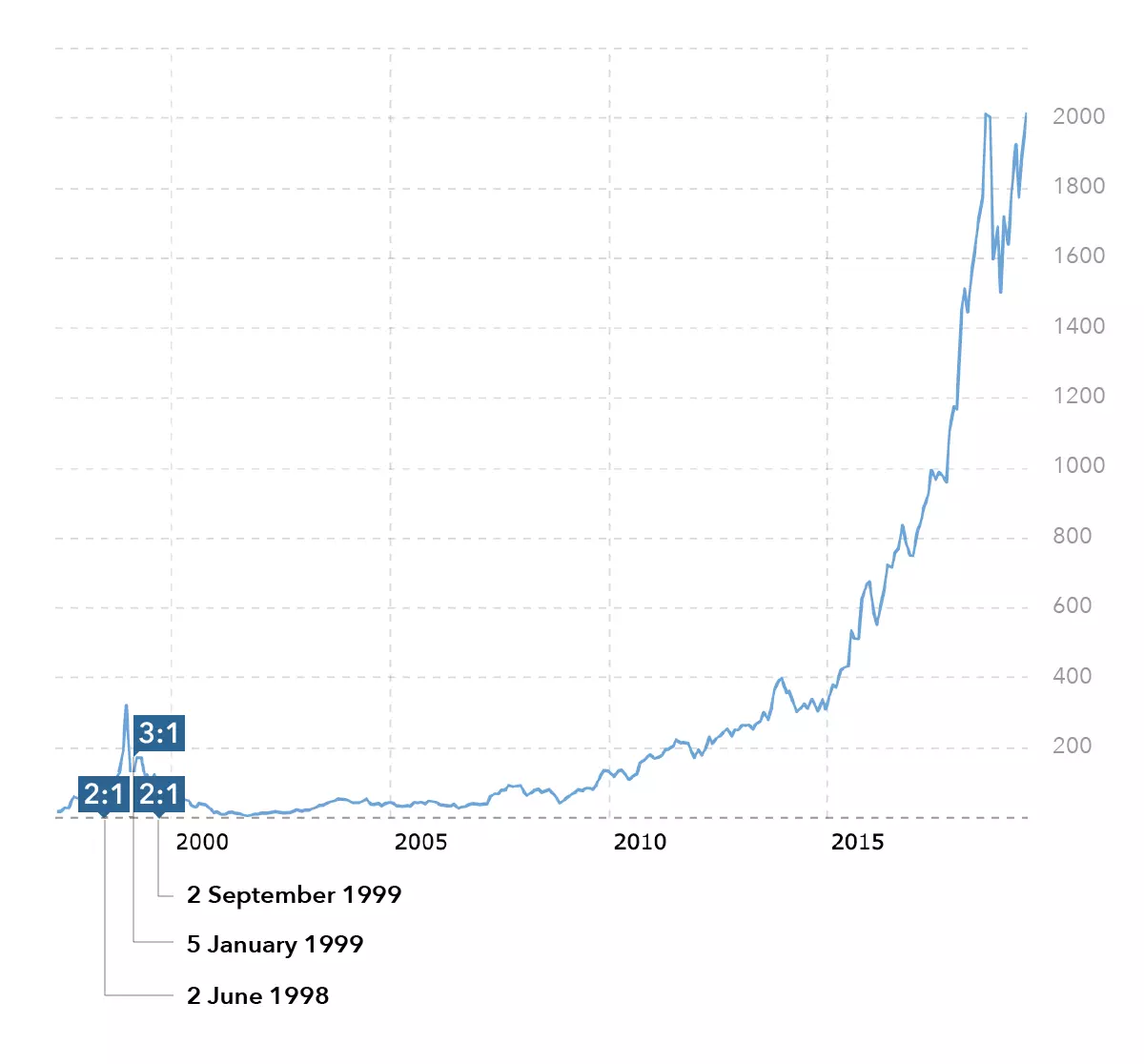
Amazon’s journey to its current valuation has been remarkable, characterized by periods of explosive growth. When Amazon first went public in 1997, its shares were priced at $18. Today’s price, significantly higher, reflects decades of innovation, market expansion, and shareholder value creation.
However, the headline price can be misleading without considering stock splits. Amazon has undergone several stock splits over its history, most notably a 20-for-1 split in June 2022. This event dramatically reduced the per-share price, making shares more accessible to a broader range of individual investors. Prior to this split, a single share of Amazon traded for over $2,000. Post-split, if you owned one share worth $2,000, you would suddenly own 20 shares, each valued at approximately $100 (assuming the total market capitalization remains constant). This maneuver doesn’t change the total value of an investor’s holding but makes the individual share price more “digestible,” especially for those with smaller investment capital. Understanding stock splits is vital to accurately interpreting historical stock performance and present-day pricing.
Factors Driving AMZN’s Valuation
Amazon’s stock price is a complex mosaic influenced by a multitude of factors, both internal and external:
- Company Earnings and Revenue: Amazon’s quarterly and annual financial reports are pivotal. Strong revenue growth, particularly in high-margin segments like Amazon Web Services (AWS), and better-than-expected earnings per share (EPS) often lead to positive stock movement.
- AWS Performance: Amazon Web Services (AWS) is a cloud computing juggernaut and a significant profit driver for the company. Its consistent growth and market dominance are critical to Amazon’s overall valuation.
- E-commerce Trends: While lower-margin, Amazon’s core e-commerce business remains a massive revenue generator. Consumer spending habits, logistical efficiencies, and global expansion in retail significantly impact investor sentiment.
- Advertising Business: Amazon’s burgeoning advertising division is another high-growth, high-margin area. Its performance is increasingly scrutinized by analysts.
- New Ventures and Innovation: Investments in areas like artificial intelligence, healthcare (e.g., One Medical), satellite internet (Project Kuiper), and autonomous vehicles (Zoox) signal future growth potential and influence long-term valuation.
- Competition: The competitive landscape in cloud computing (Microsoft Azure, Google Cloud), e-commerce (Walmart, Shopify), and advertising is fierce. Amazon’s ability to maintain its competitive edge is key.
- Macroeconomic Conditions: Broader economic health, interest rates, inflation, consumer confidence, and geopolitical events all play a role. A strong economy generally favors growth stocks like Amazon, while rising interest rates can make future earnings less attractive in present value terms.
- Market Sentiment: Investor psychology, news cycles, analyst ratings, and overall market trends (bull vs. bear markets) can cause significant short-term fluctuations, sometimes irrespective of fundamental company performance.
Beyond a Single Share: Accessible Investing Strategies
For many, the perceived high price of a single share of a company like Amazon can be a deterrent. However, modern investment platforms have democratized access to even the most expensive stocks, offering several pathways to ownership without needing to buy a full share outright.
The Power of Fractional Shares
Fractional share investing has revolutionized access to high-priced stocks. Most major online brokerages now offer the ability to buy fractions of a share, meaning you can invest any dollar amount you choose, say $50 or $100, into Amazon stock. If Amazon is trading at $180 per share, a $90 investment would buy you 0.5 shares. This eliminates the barrier of needing hundreds or thousands of dollars to purchase a single share and allows investors to build diversified portfolios with smaller capital. It’s an excellent option for new investors or those with limited funds who still want exposure to blue-chip companies.
Diversifying with ETFs and Mutual Funds
Another popular and often recommended strategy for gaining exposure to Amazon, especially for beginners, is through Exchange Traded Funds (ETFs) or mutual funds. Many such funds hold Amazon as one of their top constituents, particularly those focused on:
- Technology Sector ETFs: Funds tracking the broader tech sector or specific sub-sectors where Amazon operates.
- Growth-Oriented ETFs: Funds that invest in companies expected to have above-average growth rates.
- S&P 500 Index Funds: Amazon is a prominent component of the S&P 500 index, so an S&P 500 ETF or mutual fund will naturally include AMZN in its holdings, offering broad market diversification alongside Amazon exposure.
Investing in an ETF or mutual fund provides instant diversification, spreading risk across numerous companies rather than relying solely on the performance of a single stock. This can be a more prudent approach for investors who are not comfortable with the higher volatility associated with individual stock picking.
The Dollar-Cost Averaging Approach
Regardless of whether you buy full shares, fractional shares, or invest via funds, dollar-cost averaging (DCA) is a powerful strategy. DCA involves investing a fixed amount of money at regular intervals (e.g., $100 every month) regardless of the stock price. This strategy helps mitigate risk by averaging out your purchase price over time. When the price is high, your fixed dollar amount buys fewer shares; when the price is low, it buys more. Over the long term, this disciplined approach can reduce the impact of market volatility and often leads to a lower average cost per share than trying to time the market.
Is Amazon Still a Compelling Investment?

For long-term investors, the question isn’t just “how much,” but “is it worth it?” Amazon’s track record is undeniable, but future performance is never guaranteed. Evaluating Amazon as a compelling investment requires a forward-looking analysis of its core businesses, growth prospects, and potential risks.
Amazon’s Enduring Business Segments
Amazon’s strength lies in its diverse and dominant business segments:
- Amazon Web Services (AWS): AWS continues to be the market leader in cloud computing, powering a vast array of global businesses. Its recurring revenue model, high margins, and continuous innovation make it a robust and critical component of Amazon’s valuation. As digital transformation continues globally, AWS is poised for sustained growth.
- E-commerce Dominance: Despite increasing competition, Amazon’s e-commerce platform maintains a significant market share, especially in key regions. Its expansive logistics network, Prime membership benefits, and vast product selection create a powerful moat. While lower margin than AWS, the sheer volume and customer loyalty are undeniable.
- Advertising Empire: Amazon’s advertising business has quietly grown into a multi-billion dollar segment, leveraging its vast user data and prominent placement within its e-commerce ecosystem. This segment offers high margins and significant growth potential as more brands seek to reach Amazon’s enormous customer base.
- New Growth Vectors: Amazon continues to invest heavily in future growth areas, including artificial intelligence, streaming services (Prime Video, Twitch), smart home devices (Alexa), healthcare, and satellite internet. While some of these are long-term bets, they illustrate Amazon’s relentless pursuit of innovation and market expansion.
Navigating Risks and Future Challenges
No investment is without risk, and Amazon faces several challenges:
- Regulatory Scrutiny: Amazon’s size and market dominance draw significant antitrust and regulatory attention globally, which could lead to operational restrictions or fines.
- Competition: Fierce competition across all its segments (Microsoft, Google, Walmart, Shopify, etc.) means Amazon must constantly innovate and execute flawlessly to maintain its lead.
- Economic Downturns: A significant global recession could impact consumer spending on e-commerce and reduce enterprise IT budgets, affecting AWS growth.
- Labor and Supply Chain Issues: Amazon’s massive operational footprint makes it vulnerable to labor disputes, wage pressures, and supply chain disruptions.
- Valuation Concerns: Some critics argue that Amazon’s stock price often reflects future growth expectations that are already priced in, making it potentially vulnerable if those expectations aren’t met.
Long-Term Growth Potential
Despite the risks, many investors view Amazon’s long-term growth potential as substantial. Its leadership in critical technological and consumer trends (cloud computing, e-commerce, AI, digital advertising) provides a strong foundation. The company’s culture of innovation and willingness to invest in disruptive technologies suggest it can continue to find new avenues for growth. For investors with a long-term horizon (5+ years) and a belief in Amazon’s continued ability to innovate and execute, AMZN remains a compelling stock to research.
Practical Steps to Investing in Amazon
If you’ve decided to invest in Amazon, the process is straightforward, thanks to modern online brokerages.
Choosing the Right Brokerage Account
The first step is to open a brokerage account. Look for online brokers that offer:
- Low or Zero Commissions: Most major brokers now offer commission-free trading for stocks and ETFs.
- Fractional Shares: If you plan to invest smaller amounts, ensure the broker supports fractional shares.
- User-Friendly Platform: An intuitive interface for buying, selling, and managing your investments.
- Research Tools and Educational Resources: Access to company financials, analyst reports, and educational content can be invaluable.
- Customer Support: Reliable customer service for any questions or issues.
Popular choices include Fidelity, Charles Schwab, Vanguard, E*TRADE, Robinhood, and M1 Finance, among others. Each has its pros and cons, so research which best fits your needs.
Placing Your First Order
Once your account is open and funded:
- Search for Amazon (AMZN): Use the ticker symbol “AMZN” to find Amazon’s stock.
- Decide on Your Investment Amount: Determine how much money you want to invest. Remember you can buy fractional shares.
- Choose Order Type:
- Market Order: Buys shares immediately at the current market price. This is quick but the price might fluctuate slightly from what you see.
- Limit Order: Allows you to specify the maximum price you’re willing to pay per share. Your order will only execute if the stock hits or falls below that price. This offers more control but your order might not fill immediately if the price doesn’t drop to your limit. For beginners, a market order for a small fractional amount is often sufficient.
- Review and Confirm: Double-check all the details of your order before confirming.
The Importance of Continuous Learning and Portfolio Review
Investing is an ongoing process. Once you own Amazon shares (or any investment), it’s crucial to:
- Stay Informed: Keep abreast of Amazon’s news, earnings reports, and industry trends.
- Understand Your Portfolio: Regularly review how Amazon fits into your overall investment strategy and asset allocation.
- Diversify: Ensure your portfolio is diversified across different companies, industries, and asset classes to manage risk. Never put all your eggs in one basket.
- Rebalance: Periodically adjust your portfolio to maintain your desired asset allocation.
- Consult a Professional: If you’re unsure about your investment decisions or need personalized advice, consider consulting a qualified financial advisor.

Key Takeaways for Aspiring Investors
The initial question, “how much for one share of Amazon?”, opens the door to a broader understanding of investing. While Amazon’s stock price fluctuates, modern tools like fractional shares and investment funds make ownership accessible to nearly everyone. Investing in a company like Amazon requires not just capital, but also an understanding of its business fundamentals, growth drivers, potential risks, and how it fits into your personal financial goals. Remember that investing carries inherent risks, and past performance is not indicative of future results. By approaching investing with knowledge, discipline, and a long-term perspective, you can build a portfolio designed to help you achieve your financial aspirations.
aViewFromTheCave is a participant in the Amazon Services LLC Associates Program, an affiliate advertising program designed to provide a means for sites to earn advertising fees by advertising and linking to Amazon.com. Amazon, the Amazon logo, AmazonSupply, and the AmazonSupply logo are trademarks of Amazon.com, Inc. or its affiliates. As an Amazon Associate we earn affiliate commissions from qualifying purchases.