
In the landscape of global finance, few entities command as much attention and volatility as Meta Platforms, Inc., the parent company of Facebook. To answer the question of how much Facebook is worth, one must look beyond a single number and analyze the complex interplay of market capitalization, revenue models, institutional confidence, and the strategic pivot toward artificial intelligence. As of 2024, Meta has solidified its position within the “Magnificent Seven,” a group of high-performing tech stocks that drive the majority of the market’s gains. However, understanding the true valuation of this social media titan requires a granular look at its financial health and the economic engines that power its growth.
Understanding Meta’s Market Capitalization and Revenue Streams
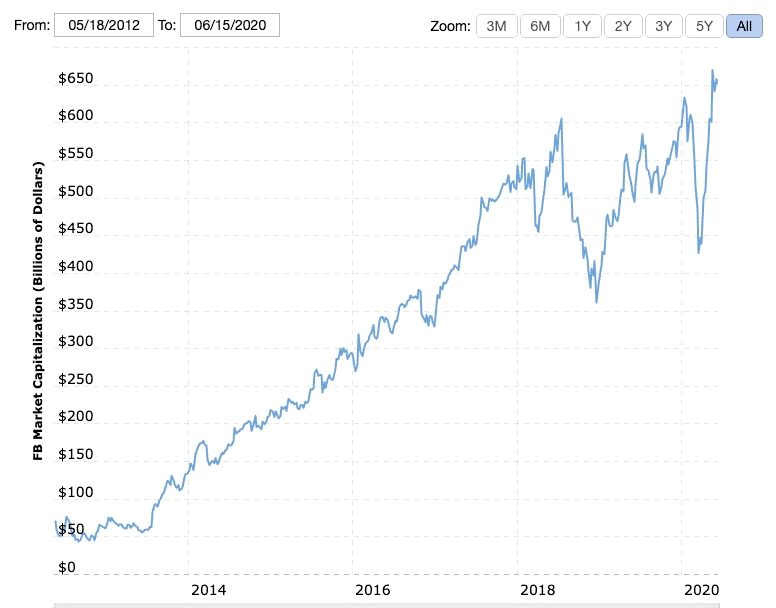
Market capitalization, or market cap, is the most common metric used to determine a company’s worth. It is calculated by multiplying the total number of a company’s outstanding shares by the current market price of one share. For Meta, this figure has seen dramatic fluctuations. After a challenging 2022 where the company’s value plummeted, Meta underwent a historic recovery, frequently crossing the $1 trillion threshold. This valuation places it in an elite tier of global companies, reflecting investor belief in its long-term profitability.
The Shift from Facebook to Meta Platforms, Inc.
While many still use the name “Facebook” interchangeably with the company, the 2021 rebranding to Meta Platforms was a significant financial signal. This shift was not merely a cosmetic change; it represented a strategic reallocation of capital. The company’s worth is now segmented into two primary reporting units: Family of Apps (FoA) and Reality Labs (RL). The Family of Apps—which includes Facebook, Instagram, Messenger, and WhatsApp—remains the primary driver of value. These platforms boast billions of daily active users (DAUs), creating a massive data ecosystem that advertisers find indispensable.
Ad Revenue: The Engine of Growth
The vast majority of Meta’s worth is derived from its advertising business. Over 98% of the company’s total revenue typically comes from digital advertising. The “worth” of Facebook is essentially the worth of its ability to target specific demographics with unparalleled precision. Despite the challenges posed by privacy regulation changes, Meta has leveraged machine learning to improve ad delivery, ensuring that its Return on Ad Spend (ROAS) remains high for millions of businesses worldwide. This consistent cash flow is what supports the company’s high valuation and allows it to reinvest in more speculative ventures.
ARPU (Average Revenue Per User) Analysis
To understand Meta’s intrinsic value, analysts look closely at Average Revenue Per User (ARPU). This metric varies significantly by geography. A user in the United States or Canada is worth substantially more in advertising dollars than a user in the Asia-Pacific region or the “Rest of World” segment. However, the sheer volume of users in emerging markets provides a different kind of value—growth potential. As digital infrastructure improves in these regions, the monetization of those users represents a massive upside for the company’s future valuation.
Key Financial Metrics Driving the Valuation
Beyond market cap, professional investors utilize several key financial ratios and metrics to determine if Meta is fairly valued, undervalued, or overvalued. These metrics provide a window into the company’s operational efficiency and its ability to generate wealth for its shareholders.
Profitability and Operating Margins
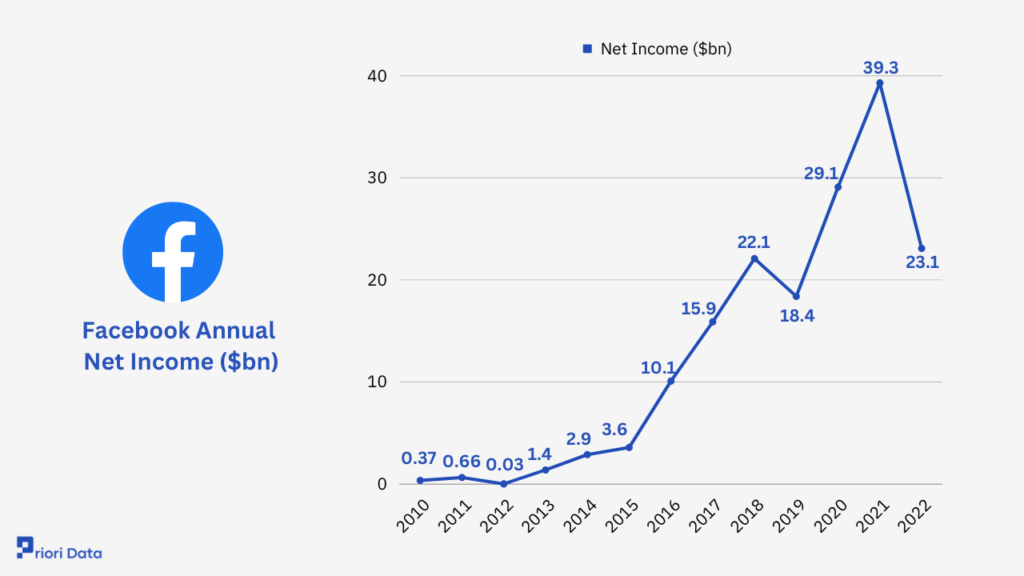
Meta has historically maintained impressive operating margins, often exceeding 30% to 40%. This efficiency was highlighted during Mark Zuckerberg’s self-proclaimed “Year of Efficiency” in 2023. By streamlining the workforce and cutting non-essential projects, Meta significantly boosted its net income. For an investor, high margins indicate a “moat”—a competitive advantage that allows a company to maintain profitability even when facing headwinds. When margins expand, the “worth” of the company typically rises as it signals that the business can generate more profit from every dollar of revenue.
Free Cash Flow and R&D Investment
Free Cash Flow (FCF) is the cash a company produces through its operations, minus the cost of expenditures on assets. Meta generates billions of dollars in FCF every quarter. This liquidity gives the company the “dry powder” needed to acquire competitors (as it did with Instagram and WhatsApp), buy back its own shares, or issue dividends. In early 2024, Meta initiated its first-ever quarterly dividend, a milestone that signaled the company’s transition into a more mature, cash-generating powerhouse. This move attracted a new class of “income investors,” further stabilizing and increasing the company’s market value.
Institutional Ownership and Market Sentiment
A significant portion of Meta’s worth is held by institutional investors, such as mutual funds, pension funds, and ETFs. When these large players increase their positions, it provides a floor for the stock price. The “worth” of the company is also tied to its Price-to-Earnings (P/E) ratio. A high P/E ratio suggests that investors expect high growth in the future, while a lower P/E might suggest the company is undervalued relative to its earnings. Meta’s P/E has historically been lower than some of its Big Tech peers like Amazon or Nvidia, leading many value investors to view it as a high-growth company at a reasonable price.
Challenges and Risks to Facebook’s Financial Standing
No valuation is permanent, and Facebook’s worth is constantly under pressure from internal and external risks. Investors must weigh the company’s massive revenue against the potential for catastrophic regulatory or competitive shifts.
Regulatory Pressures and Antitrust Concerns
Governments in the United States and the European Union have Meta under a microscope. Antitrust lawsuits seeking to break up the company or limit its data-sharing practices pose a direct threat to its valuation. For example, the Digital Markets Act (DMA) in Europe forces Meta to change how it handles user data across its various services. If Meta is restricted in how it tracks users, its ad targeting becomes less effective, which could lead to a decline in revenue and, consequently, a lower market worth.
The Impact of Privacy Changes
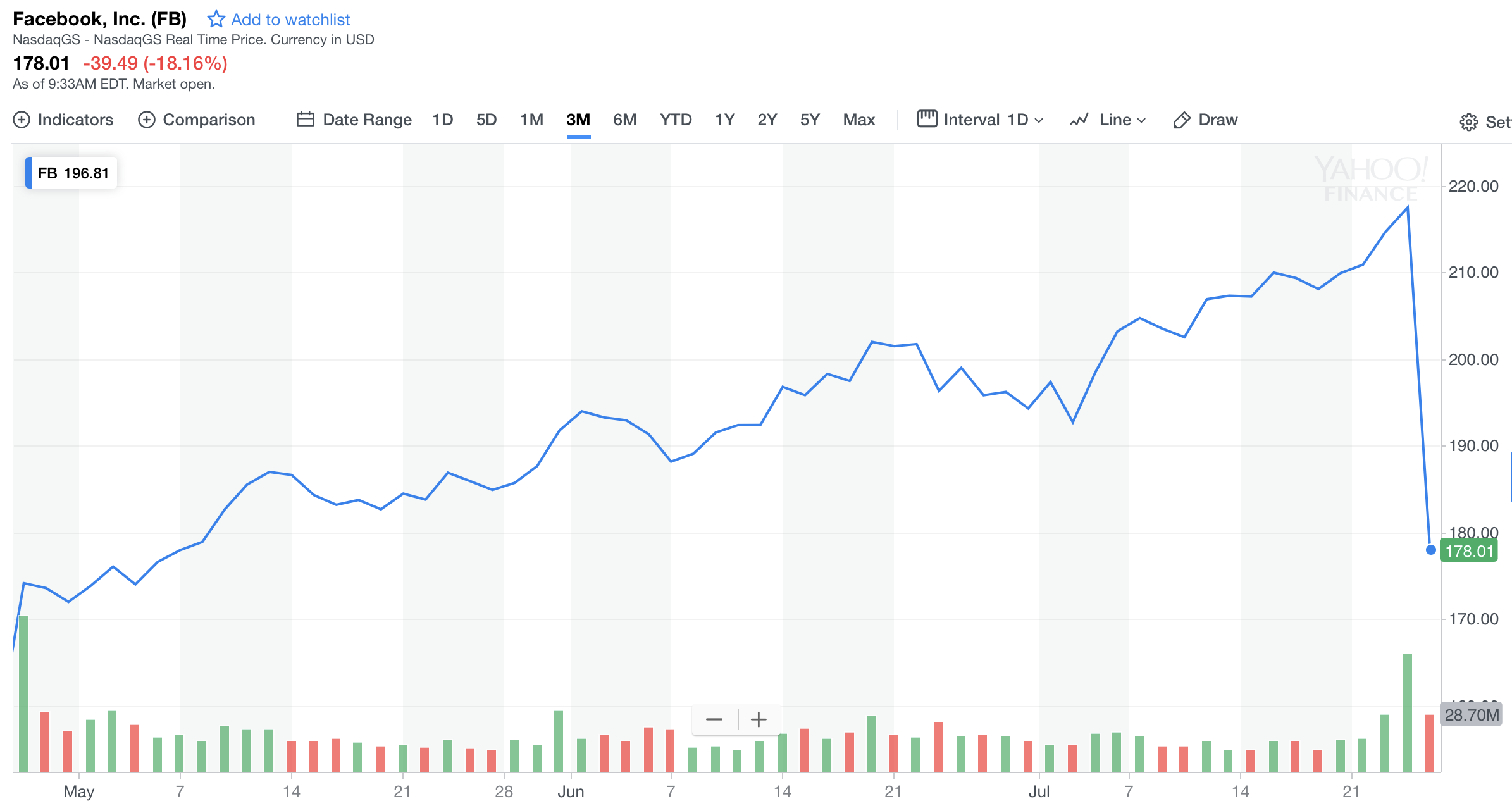
Apple’s App Tracking Transparency (ATT) framework was a watershed moment for Meta’s valuation. By allowing users to opt out of tracking, Apple disrupted Meta’s ability to gather the data necessary for its ad algorithms. This change initially wiped billions off Meta’s market cap. The company’s worth today depends largely on its ability to build “privacy-enhanced” advertising tools that can achieve high performance without relying on the invasive tracking methods of the past.
Competition from TikTok and Emerging Platforms
The battle for “user attention” is a zero-sum game. The rise of TikTok forced Meta to pivot heavily toward “Reels” on Instagram and Facebook. While Reels has successfully regained user engagement, its monetization rate was initially lower than traditional Feed or Stories ads. The worth of the company is intrinsically linked to its ability to win the “attention economy.” If younger demographics continue to migrate to new platforms, the long-term terminal value of Meta’s current apps could be called into question.
The Future Outlook: The Metaverse and AI Integration
When calculating how much Facebook is worth today, one must also account for the billions of dollars being poured into the future. Meta is no longer just a social media company; it is an infrastructure play for the next generation of computing.
The Reality Labs Gamble
The Reality Labs division, which focuses on virtual reality (VR) and augmented reality (AR), currently operates at a significant loss—often losing over $10 billion per year. To some investors, this is a “value sink” that detracts from the company’s current worth. To others, it is an essential investment in the future “Metaverse.” If Meta succeeds in becoming the dominant operating system for AR/VR, its future valuation could dwarf its current social media-based market cap. However, until these products see mass adoption, Reality Labs remains a drag on short-term profitability.
Monetizing Artificial Intelligence
Perhaps the most significant boost to Meta’s recent valuation has been its aggressive integration of Artificial Intelligence (AI). By developing the Llama series of Large Language Models (LLMs), Meta has positioned itself as a leader in open-source AI. From a financial perspective, AI enhances the company’s worth in two ways: it improves the efficiency of ad targeting (driving revenue) and it enhances user engagement through AI-generated content and sophisticated recommendation engines. Investors are currently pricing in the “AI premium,” betting that Meta will be one of the primary beneficiaries of the generative AI revolution.
Long-term Growth Projections for Investors
For the individual investor or the financial analyst, determining how much Facebook is worth involves a Discounted Cash Flow (DCF) analysis. This involves projecting the company’s future cash flows and discounting them back to the present value. Most optimistic models suggest that as long as Meta maintains its dominance in the social media space and successfully transitions its ad business into the AI era, its valuation has significant room to grow.
In summary, the worth of Facebook (Meta) is a reflection of its massive user base, its unparalleled advertising engine, and its bold, albeit expensive, bets on the future of computing. While regulatory hurdles and competition remain constant threats, the company’s robust balance sheet and recent pivot toward operational efficiency have solidified its status as a cornerstone of the modern financial system. Whether Meta is “worth” its current price depends on one’s belief in the company’s ability to innovate and maintain its grip on the world’s attention in an increasingly fragmented digital landscape.
aViewFromTheCave is a participant in the Amazon Services LLC Associates Program, an affiliate advertising program designed to provide a means for sites to earn advertising fees by advertising and linking to Amazon.com. Amazon, the Amazon logo, AmazonSupply, and the AmazonSupply logo are trademarks of Amazon.com, Inc. or its affiliates. As an Amazon Associate we earn affiliate commissions from qualifying purchases.