
The sun, an inexhaustible source of power, has long captivated humanity with its potential. In the modern era, solar panels stand as a testament to our ability to harness this celestial energy, transforming sunlight into a usable electricity supply. Yet, for many contemplating a switch to solar, a fundamental question persists: exactly how much energy can these photovoltaic marvels genuinely generate? It’s a question that delves deep into the technological intricacies of solar power, moving beyond mere curiosity to encompass critical factors of efficiency, design, and environmental variables. Understanding the true output of solar panels is not just about numbers; it’s about grasping the underlying science, the evolving technology, and the practical considerations that define their performance in the real world. This exploration will unpack the core metrics, dissect the influential factors, and highlight the advancements continually pushing the boundaries of solar energy generation.
Understanding Solar Panel Energy Output: The Core Metrics
To accurately assess the energy output of solar panels, it’s essential to understand the primary metrics used in the industry. These measurements provide a standardized way to compare different systems and predict performance.
Kilowatt-Hours (kWh) and Peak Power (kWp) Defined
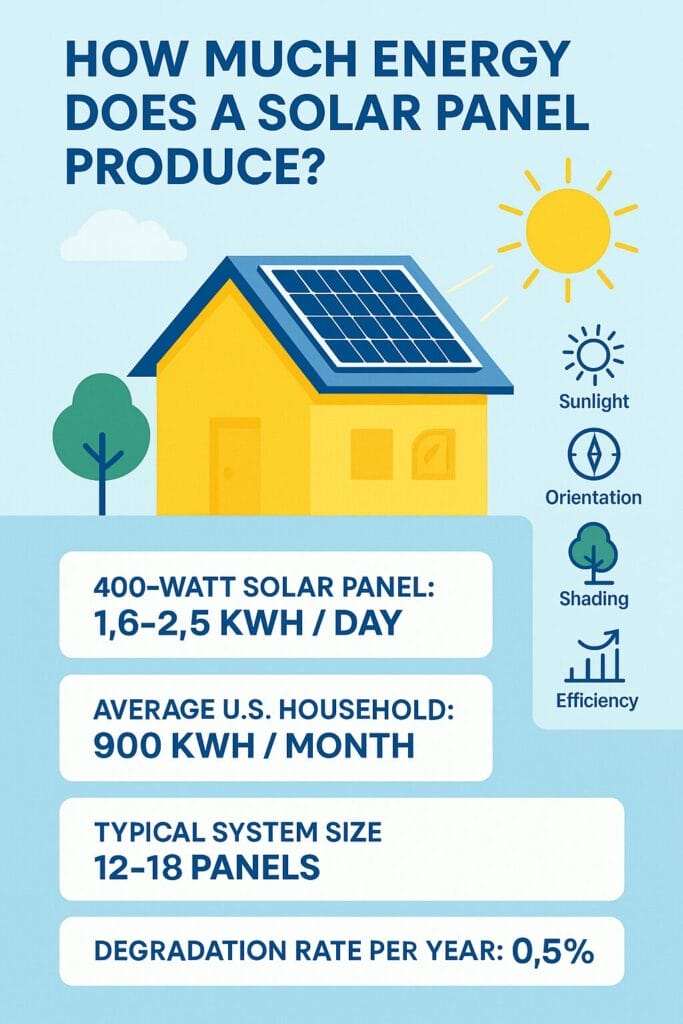
The most crucial unit for measuring energy generation is the kilowatt-hour (kWh). This represents the amount of energy consumed or produced over time – specifically, one kilowatt (1,000 watts) of power used or generated for one hour. When discussing solar panels, kWh is the practical measure of how much electricity your system actually provides to your home or the grid over a day, month, or year.
Complementing kWh is kilowatt-peak (kWp), which refers to the maximum power a solar panel or system can produce under ideal laboratory conditions. These “standard test conditions” (STC) include a cell temperature of 25°C and a solar irradiance of 1,000 watts per square meter (W/m²), simulating midday sun. While kWp is excellent for comparing the rated capacity of different panels, it’s a theoretical maximum. Real-world output will almost always be lower due to a multitude of factors. For instance, a typical residential solar panel might have a peak power rating of 300-400 Wp, meaning under perfect conditions, it can generate 300-400 watts of power at any given moment.
Average Daily and Annual Generation Estimates
Translating kWp into real-world kWh involves considering how many hours of effective sunlight a system receives. A common industry benchmark, particularly in well-irradiance regions like much of the US or Australia, suggests that a 1 kWp solar system might produce, on average, between 3 to 5 kWh per day. This translates to approximately 1,095 to 1,825 kWh per year for every kilowatt of installed capacity.
However, these are broad averages. A more precise estimate considers the “solar insolation” or “peak sun hours” of a specific location. For example, a region receiving 5 peak sun hours per day means that, on average, the sun’s intensity is equivalent to 5 hours of full 1,000 W/m² irradiance. In such a location, a 5 kWp system could realistically generate 5 kWp * 5 peak sun hours * (a system efficiency factor, typically 0.75-0.85 for real-world losses) = approximately 18.75 to 21.25 kWh per day.
The Myth of “Constant” Generation
It’s a common misconception that solar panels generate energy constantly at their peak capacity throughout the day. In reality, solar output fluctuates significantly. The generation curve typically follows the sun’s path: low in the morning, peaking around midday, and declining in the afternoon. Clouds, shading, and seasonal changes further disrupt this ideal curve. Therefore, while a panel might be rated for 400 Wp, it will only hit that peak for a brief period on a perfectly sunny day, and even then, only if all other conditions are optimal. Understanding this variability is key to managing expectations and designing an effective energy system, especially when considering energy storage solutions.
Key Technological and Environmental Factors Influencing Performance
The actual energy generated by a solar panel system is a complex interplay of its inherent technological characteristics and the environment in which it operates. Optimizing these factors is crucial for maximizing output.
Panel Efficiency and Type: A Deep Dive
The efficiency of a solar panel is arguably the most critical technological factor. It represents the percentage of sunlight hitting the panel that is converted into usable electricity.
- Monocrystalline Panels: These are typically the most efficient, ranging from 17% to over 22%. Made from a single, pure silicon crystal, they have a uniform dark appearance and perform well in sunny conditions. Their higher efficiency means more power from a smaller footprint.
- Polycrystalline Panels: Slightly less efficient (15-17%), these panels are made from multiple silicon crystals, giving them a speckled, bluish appearance. They are generally more affordable and offer good performance, though they require more space than monocrystalline panels for the same output.
- Thin-Film Panels: With efficiencies typically between 10-13%, these are the least efficient but also the most flexible and lightweight. They are made by depositing thin layers of photovoltaic material (like amorphous silicon, cadmium telluride, or CIGS) onto a substrate. While they require a larger area to generate the same power, they can perform better in low-light conditions and high temperatures, and are suitable for specialized applications.
- Emerging Technologies: The industry is constantly pushing boundaries with technologies like PERC (Passivated Emitter Rear Cell), TOPCon (Tunnel Oxide Passivated Contact), HJT (Heterojunction Technology), and perovskite cells, which are achieving efficiencies exceeding 25% in laboratory settings, promising even higher real-world yields.
Geographical Location and Solar Irradiance
The amount of sunlight a location receives, known as solar irradiance, is a fundamental environmental factor. Regions closer to the equator generally receive more direct and intense sunlight throughout the year, leading to higher generation potential. Even within a country, variations can be significant. For example, a system in Arizona will likely generate more kWh annually than an identically sized system in Seattle, simply due to differences in average daily sun exposure. Factors like cloud cover, fog, and the length of daylight hours across seasons also play a substantial role.
System Design and Installation Precision
Beyond the panels themselves, the system’s design and installation quality are paramount.
- Orientation and Tilt Angle: In the Northern Hemisphere, panels ideally face true south (or north in the Southern Hemisphere) to maximize exposure to the sun. The tilt angle should match the latitude of the location for optimal year-round performance, or be adjusted seasonally for specific energy needs. Incorrect orientation can drastically reduce output.
- Shading: Even partial shading from trees, chimneys, adjacent buildings, or utility poles can disproportionately reduce a panel’s output. Modern systems often use micro-inverters or power optimizers to mitigate the impact of shading on individual panels, preventing one shaded panel from dragging down the performance of the entire string.
- Inverter Efficiency: Inverters convert the DC electricity generated by panels into usable AC electricity for homes and the grid. Inverter efficiency typically ranges from 95% to 98%. While seemingly small losses, a less efficient inverter can shave off valuable percentage points from your total generation.
Environmental Variables: Temperature, Shading, and Soiling
Other environmental factors further influence performance:
- Temperature: Counterintuitively, solar panels perform less efficiently at higher temperatures. While sunlight is necessary, excessive heat reduces the voltage and power output of silicon cells. Most panels have a temperature coefficient, indicating how much their power output decreases for every degree Celsius above 25°C (STC). This means a panel might produce less on a scorching summer day than on a bright, cool spring day.
- Soiling: Accumulation of dust, dirt, pollen, bird droppings, and other debris on the panel surface can block sunlight and reduce output. The extent of this loss depends on the frequency of rainfall and the local environment, but regular cleaning can mitigate significant performance drops, especially in dusty regions.
Calculating Your Solar Potential: Tools and Techniques
Estimating the potential energy output of a solar panel system accurately requires leveraging various tools and professional expertise, providing homeowners and businesses with realistic projections.
Online Calculators and Simulation Software
The first step in assessing solar potential often involves readily accessible online calculators. Websites like Google’s Project Sunroof, PVWatts Calculator (from NREL in the US), or local utility company portals offer free, easy-to-use tools. By inputting your address, these calculators can estimate your roof’s solar potential, factoring in local weather data, typical sun hours, and shading from nearby objects. They often provide estimates for annual kWh generation and potential financial savings.
More sophisticated simulation software, used by solar installers and engineers (e.g., PVSyst, Helioscope), offers highly detailed analysis. These tools can model complex roof geometries, specific panel types, inverter configurations, hourly weather data, and even predictable shading patterns throughout the year. They generate precise generation reports, accounting for system losses and providing a much more accurate prediction of real-world performance.
The Role of Professional Energy Audits
While online tools provide a good starting point, a professional energy audit offers the most accurate assessment. A qualified solar installer will conduct an on-site evaluation, considering:
- Detailed Shading Analysis: Using specialized tools, they can map out precise shading impacts at different times of the day and year, which is critical for system sizing and panel placement.
- Roof Assessment: Evaluating roof structural integrity, age, material, and available space for optimal panel layout.
- Electrical System Review: Checking existing electrical infrastructure to ensure compatibility and identify any necessary upgrades.
- Energy Consumption Analysis: Reviewing past utility bills to understand your energy usage patterns, allowing for a system design that matches your specific needs.
This comprehensive approach ensures that the proposed solar system is optimally designed for your unique site, maximizing energy generation and economic returns.
Monitoring Systems for Real-time Insights
Once installed, monitoring systems become indispensable tools for tracking actual energy generation. Most modern solar installations include an inverter with built-in monitoring capabilities, accessible via a web portal or smartphone app. These systems provide:
- Real-time Output Data: Displaying current power generation (in watts or kilowatts).
- Historical Data: Showing daily, weekly, monthly, and annual energy production (in kWh).
- Performance Alerts: Notifying owners of any system malfunctions or significant drops in output.
- Environmental Data: Some advanced systems can also track panel temperature or local weather conditions.
Regularly reviewing monitoring data allows homeowners to verify that their system is performing as expected, identify any issues promptly, and gain a deeper understanding of their energy production patterns. This transparency is a cornerstone of smart energy management and ensures that the investment continues to deliver its promised value.
The Evolution of Solar Technology: Boosting Future Yields
The solar industry is a crucible of innovation, constantly pushing the boundaries of what’s possible in energy generation. Breakthroughs in materials science, cell architecture, and system integration are leading to panels that are more efficient, durable, and versatile than ever before.
Next-Generation Cell Technologies and Bifacial Panels
The quest for higher efficiency is relentless. Beyond the standard monocrystalline cells, several advanced cell technologies are now entering mainstream production:
- PERC (Passivated Emitter Rear Cell): These cells incorporate a passivation layer on the rear side to reflect unabsorbed light back into the cell, allowing for a second pass and increasing efficiency by about 1-2%.
- TOPCon (Tunnel Oxide Passivated Contact): An evolution of PERC, TOPCon cells use a thin tunnel oxide layer to further improve passivation and reduce electron recombination, leading to efficiencies over 23%.
- HJT (Heterojunction Technology): Combining the best features of crystalline silicon and amorphous silicon thin-film technology, HJT cells achieve very high efficiencies (over 24%) and perform exceptionally well in high temperatures.
- Perovskite Cells: Still largely in research and development, perovskites are a promising class of materials that could revolutionize solar. They offer high theoretical efficiencies, can be printed onto flexible surfaces, and are potentially much cheaper to produce. While stability and durability remain challenges, they hold immense potential for future generations of solar panels.
Another significant innovation is bifacial solar panels. Unlike traditional panels that only absorb sunlight from the front, bifacial panels have active cells on both sides. This allows them to capture direct sunlight on the front and reflected light (from the ground, snow, or light-colored roofs) on the rear, potentially increasing overall energy generation by 5-30%, depending on the installation environment. This technology is particularly effective in ground-mounted systems or on white, reflective rooftops.
Smart Inverters and Advanced System Optimizers
The “brains” of a solar system, inverters, have also undergone a transformation.
- Smart Inverters: Modern inverters are no longer just DC-to-AC converters. They come equipped with advanced software, grid services capabilities, and communication features. They can provide reactive power, regulate voltage, and even participate in demand-response programs, contributing to grid stability and efficiency.
- Power Optimizers: These small devices are installed on each solar panel (or pairs of panels) and work in conjunction with a central inverter. They optimize the output of each individual panel, mitigating the effects of shading, soiling, or panel-level performance variations. This ensures that the weakest panel doesn’t drag down the entire string’s output, leading to higher overall system efficiency.
- Micro-inverters: Installed on each panel, micro-inverters convert DC to AC at the panel level. This offers even finer-grained optimization than power optimizers, making systems highly resilient to shading and allowing for greater flexibility in design and expansion.
Integrated Energy Storage Solutions
While not directly increasing generation, integrated energy storage solutions significantly enhance the usability and value of the generated energy. Batteries (like lithium-ion systems) store excess solar electricity produced during the day for use at night or during power outages. This maximizes self-consumption, reduces reliance on the grid, and provides energy independence. The integration of advanced battery management systems (BMS) with solar inverters ensures seamless power flow, intelligent charging/discharging based on time-of-use rates, and optimal battery health. As battery technology advances and costs decrease, energy storage is becoming an increasingly integral component of comprehensive solar solutions.
Predictive Analytics and AI for Enhanced Performance
The convergence of AI and solar technology is leading to new frontiers in performance optimization. Predictive analytics leverages historical weather data, real-time sensor information, and machine learning algorithms to forecast solar generation with increasing accuracy. This allows grid operators to better manage intermittent renewable energy sources and enables homeowners to make informed decisions about energy consumption or battery usage. AI can also identify subtle performance degradations or potential faults in a solar system before they become significant issues, facilitating proactive maintenance and ensuring consistent optimal output. These intelligent systems are transforming solar from a static energy source into a dynamic and highly responsive component of the energy grid.
Maximizing Your Solar Investment Through Smart Tech Choices
Making an informed decision about your solar panel system involves more than just comparing prices. It requires a strategic approach to technology selection and system maintenance to ensure optimal performance and a strong return on investment over the long lifespan of the system.
Selecting the Right Panel for Your Needs
The “best” solar panel isn’t a universal truth; it’s the one that best fits your specific requirements, budget, and site conditions.
- Efficiency vs. Space: If roof space is limited, investing in higher-efficiency (e.g., monocrystalline, PERC, TOPCon) panels will yield more power from a smaller footprint, even if they cost more upfront. If you have ample space, slightly less efficient but more cost-effective polycrystalline panels might offer a better price-to-power ratio.
- Temperature Performance: In extremely hot climates, consider panels with a better temperature coefficient, which indicates less power degradation at higher temperatures. HJT technology, for example, is known for its excellent performance in heat.
- Shading Tolerance: If your roof is prone to partial shading, a system utilizing micro-inverters or power optimizers is highly recommended. These technologies optimize individual panel performance, preventing shading on one panel from significantly impacting the output of the entire system.
- Durability and Warranty: Look for panels from reputable manufacturers offering strong performance warranties (typically 25 years or more) and product warranties (10-12 years). This indicates confidence in the panel’s long-term reliability and output.
- Aesthetics: For some, the visual appeal of panels is important. All-black monocrystalline panels often offer a sleeker look compared to the bluish hue of polycrystalline options.
Maintenance and Longevity Best Practices
While solar panels are generally low-maintenance, a few best practices can significantly contribute to their longevity and sustained high performance:
- Regular Cleaning: Periodically inspect your panels for dirt, dust, pollen, and debris. In most climates, rainfall will provide sufficient cleaning. However, in dry, dusty areas or after prolonged dry spells, a gentle rinse with water (preferably in the morning or evening when panels are cool) can prevent significant energy losses. Avoid abrasive cleaners or harsh brushes.
- Shading Management: Regularly trim trees or bushes that may grow to shade your panels. Address any new construction or obstructions that could cast shadows.
- System Monitoring: Regularly check your monitoring system’s data to ensure consistent performance. Any sudden or gradual drop in output (not explained by weather) could indicate an issue that needs investigation.
- Professional Inspections: Consider periodic professional inspections (every 2-5 years) to check electrical connections, inverter health, mounting integrity, and ensure all components are functioning optimally. These checks can identify minor issues before they become major problems, preserving your system’s efficiency and extending its lifespan.
By making smart technological choices during the initial installation and committing to good maintenance practices, homeowners and businesses can ensure their solar panels deliver maximum energy generation for decades, truly capitalizing on their investment in renewable energy.
The Bright Future of Solar Energy Generation
The journey to understand how much energy is generated by solar panels reveals a landscape of continuous technological advancement and sophisticated engineering. From the fundamental metrics of kWh and kWp to the intricate dance of panel efficiency, geographical irradiance, and smart system design, every factor plays a pivotal role in the ultimate output. We’ve seen how innovations like PERC, bifacial cells, smart inverters, and integrated storage solutions are not just incremental improvements but transformative steps towards more powerful and reliable solar energy systems.
The solar industry is not static; it’s a dynamic field where research and development constantly unlock new potentials. As we move forward, the integration of AI, predictive analytics, and even more exotic materials like perovskites promise to further redefine the limits of solar energy generation, making it an even more compelling and accessible power source. For anyone considering solar, the current era offers an unprecedented blend of mature, reliable technology and exciting, future-proof innovations. The sun’s energy, once a distant ideal, is now a quantifiable, manageable, and ever-improving reality, ready to power a sustainable future.
aViewFromTheCave is a participant in the Amazon Services LLC Associates Program, an affiliate advertising program designed to provide a means for sites to earn advertising fees by advertising and linking to Amazon.com. Amazon, the Amazon logo, AmazonSupply, and the AmazonSupply logo are trademarks of Amazon.com, Inc. or its affiliates. As an Amazon Associate we earn affiliate commissions from qualifying purchases.