
The Affordable Care Act (ACA), signed into law in 2010, represents one of the most significant pieces of legislation concerning healthcare and finance in modern American history. Often lauded for expanding health insurance coverage to millions, it is simultaneously scrutinized for its financial implications. The question, “How much does the Affordable Care Act cost?” is not a simple one, as its financial footprint is multifaceted, impacting the federal government, state budgets, individual taxpayers, consumers, and businesses in various direct and indirect ways. Understanding these costs requires a deep dive into the mechanisms of the law, its funding sources, and its broader economic effects, revealing a complex interplay of expenses, subsidies, and societal benefits.

Understanding the Dual Nature of ACA Costs
To grasp the full financial scope of the ACA, it’s essential to consider its costs from two primary perspectives: the burden on the federal government and taxpayers, and the out-of-pocket expenses faced by individuals and businesses. These two dimensions, while interconnected, illuminate different facets of the law’s financial architecture.
Costs to the Federal Government and Taxpayers
The federal government bears a substantial portion of the ACA’s financial weight, primarily through subsidies and expanded programs. The Congressional Budget Office (CBO) and the Joint Committee on Taxation (JCT) routinely provide estimates, which serve as critical benchmarks for public discourse.
- Subsidies for Marketplace Plans: A cornerstone of the ACA is the provision of financial assistance to help eligible individuals and families afford health insurance purchased through state and federal marketplaces. This assistance comes in two main forms:
- Premium Tax Credits (PTCs): These are refundable tax credits that lower an individual’s monthly premium payments. Eligibility is tied to income levels relative to the federal poverty line (FPL), with credits designed to cap premium costs at a certain percentage of household income. The federal government covers the difference.
- Cost-Sharing Reductions (CSRs): These subsidies further reduce out-of-pocket expenses like deductibles, co-payments, and co-insurance for eligible individuals enrolled in silver-level plans. While the funding mechanism for CSRs has been a subject of political debate, their economic impact is to make healthcare more accessible and affordable for lower-income enrollees.
- Medicaid Expansion: A significant component of the ACA involved expanding Medicaid eligibility to nearly all adults with incomes up to 138% of the FPL. The federal government initially covered 100% of the costs for this newly eligible population, gradually decreasing its share to 90% by 2020 and beyond, with states covering the remaining 10%. This expansion represents a major federal expenditure, albeit one that shifts costs from uncompensated care (often borne by hospitals and local governments) to the federal budget.
- Administrative Costs: Like any large-scale government program, the ACA incurs administrative costs for setting up and running federal and state marketplaces, regulatory oversight, enforcement, and data collection. While a smaller fraction of the overall cost, these are nonetheless a recurring federal expense.
- Revenue Sources: It’s crucial to note that the ACA also included mechanisms to generate revenue and offset some of its costs. These included various taxes (e.g., a tax on high-income earners, a tax on medical device manufacturers – largely repealed or suspended) and penalties (e.g., the individual mandate penalty – later set to $0). The CBO’s analyses have generally concluded that the ACA was designed to be deficit-neutral or even deficit-reducing over the long term, due to these offsetting revenues and cost-saving measures within the healthcare system.
Costs for Individuals and Businesses
Beyond the federal ledger, the ACA also introduces direct and indirect costs for individuals and the business sector.
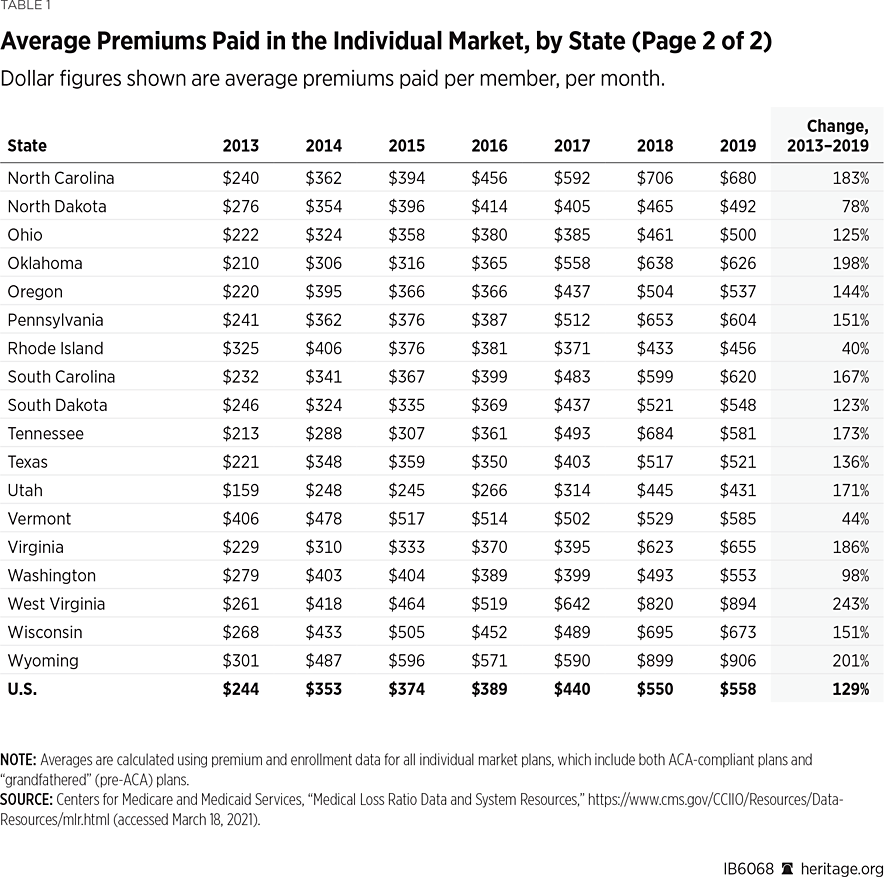
- Premiums for Marketplace Plans: Even with subsidies, many individuals still pay a portion of their health insurance premiums. The cost of these premiums varies significantly based on factors such as plan type (Bronze, Silver, Gold, Platinum), metal level, age, location, and tobacco use. For those above subsidy eligibility thresholds, or in areas with limited competition, premiums can be substantial.
- Deductibles, Co-pays, and Out-of-Pocket Maximums: While the ACA mandated certain benefits and capped out-of-pocket maximums, individuals are still responsible for deductibles, co-pays, and co-insurance until those maximums are met. These can represent significant financial burdens, especially for those with chronic conditions or unexpected medical emergencies.
- Employer Costs: The ACA introduced an “employer mandate” requiring large employers (generally those with 50 or more full-time equivalent employees) to offer affordable health insurance coverage to their full-time employees or face penalties. This mandate increased compliance costs and, in some cases, benefit expenses for businesses. Smaller businesses, while exempt from the mandate, also faced decisions regarding whether to offer coverage, sometimes navigating new tax credits available to them.
- Individual Mandate (Historical Context): Originally, the ACA included an individual mandate requiring most Americans to have health insurance or pay a penalty. While the penalty was effectively repealed (set to $0) beginning in 2019, its presence for several years represented a financial cost or incentive for millions of individuals to purchase coverage.
The Financial Mechanisms Powering the ACA
The architecture of the ACA is complex, built upon a foundation of financial mechanisms designed to redistribute costs, expand access, and ensure a functional insurance market. Understanding these elements is key to appreciating how “the cost” is distributed and managed.
Premium Tax Credits and Cost-Sharing Reductions
These two forms of financial assistance are central to making insurance affordable under the ACA. Premium Tax Credits are crucial for individuals and families whose income falls between 100% and 400% of the FPL (with temporary expansions allowing higher incomes to qualify under the American Rescue Plan Act). They operate on a sliding scale, meaning those with lower incomes receive larger subsidies. Cost-Sharing Reductions, on the other hand, target out-of-pocket expenses for those with incomes up to 250% of the FPL who enroll in silver plans, effectively making deductibles and co-pays lower. Without these mechanisms, the sticker price of marketplace plans would be prohibitive for a vast segment of the population, undermining the ACA’s goal of expanding coverage.
Medicaid Expansion Funding
The expansion of Medicaid profoundly altered the landscape of healthcare funding. By offering generous federal matching funds, the ACA incentivized states to extend coverage to low-income adults who previously fell into a “coverage gap” – too poor for marketplace subsidies but not qualifying for traditional Medicaid. For states that expanded, the federal government covers a substantial majority of the costs for this new population. This federal investment reduces the financial strain on state and local governments that would otherwise bear the costs of uncompensated care for the uninsured, often through emergency room visits. The economic calculus for states often involves balancing the state’s 10% share against the inflow of federal dollars and the reduction in uncompensated care.
Revenue Generation and Funding Sources
The ACA was not merely a spending bill; it also incorporated numerous provisions aimed at funding its initiatives and bending the healthcare cost curve. These included:
- Taxes and Fees: A variety of new taxes and fees were introduced, such as the net investment income tax and an increased Medicare surtax for high-income earners, as well as an excise tax on high-cost employer-sponsored health coverage (the “Cadillac tax”), though the latter was eventually repealed before it took effect. Other revenue sources included fees on health insurers and pharmaceutical companies.
- Penalties: The employer mandate penalty and, historically, the individual mandate penalty, were designed both to encourage compliance and generate revenue. With the individual mandate penalty now at $0, its revenue-generating aspect has ceased.
- Anticipated Savings: A key premise of the ACA was that expanding coverage and promoting preventive care would ultimately lead to a healthier population, fewer emergency room visits, and a more efficient healthcare system, thereby reducing overall healthcare spending in the long run. Measures like accountable care organizations (ACOs) and payment reforms were intended to drive efficiency and quality, though quantifying these savings precisely remains a complex and ongoing effort.

The Economic Impact and Value Proposition of the ACA
Beyond the direct financial outlays and revenue streams, the ACA has had a profound, if sometimes debated, economic impact. Assessing its cost fully requires an understanding of its broader value proposition and effects on the economy.
Measuring the Macroeconomic Effects
Economists continually study the ACA’s influence on various macroeconomic indicators:
- National Healthcare Spending: While the ACA’s aim was to curb the growth of healthcare costs, total national healthcare spending has continued to rise, albeit at a slower pace in some periods following its implementation compared to historical trends. It’s challenging to isolate the ACA’s specific impact from other factors like an aging population, medical innovation, and general economic conditions. However, analyses suggest that provisions promoting value-based care and prevention may have contributed to some moderation in spending growth.
- Job Creation/Loss: The impact on employment has been a contentious area. Some argue that employer mandate penalties and increased benefit costs led to job losses or a reduction in full-time employment. Others contend that the growth of the healthcare sector, coupled with reduced financial insecurity for individuals, stimulated demand and supported job creation. Most credible analyses suggest a relatively minor net effect on overall employment.
- Effects on Federal Deficit: The CBO’s original scoring and subsequent re-estimates have consistently projected that the ACA, as enacted, would reduce federal deficits over the long term, largely due to its revenue-generating provisions and slower growth in Medicare spending. However, subsequent legislative changes, such as the repeal of the individual mandate penalty and the expansion of subsidies under the American Rescue Plan Act, have altered these projections, increasing federal spending relative to earlier estimates.
The Value Beyond Direct Financial Outlays
The “cost” of the ACA must also be weighed against the “value” it delivers, much of which is not easily quantified in monetary terms but represents significant societal and individual benefits:
- Reduced Uninsured Rates: One of the most undeniable achievements of the ACA is the dramatic reduction in the number of uninsured Americans. Millions gained coverage through marketplaces, Medicaid expansion, or by staying on parents’ plans until age 26. This translates to fewer individuals foregoing necessary medical care due to cost.
- Improved Health Outcomes and Financial Security: With insurance, individuals are more likely to seek preventive care, manage chronic conditions, and receive timely treatment, potentially leading to better health outcomes. Furthermore, having insurance provides critical financial protection against catastrophic medical bills, significantly reducing medical debt and bankruptcy caused by illness.
- Protection Against Pre-existing Conditions: The ACA prohibited insurers from denying coverage or charging higher premiums based on pre-existing health conditions, a major protection for millions of Americans who previously struggled to find affordable coverage.
- Preventive Care Without Cost-Sharing: The law mandated that certain preventive services, such as immunizations, screenings, and contraception, be covered without co-pays or deductibles, making it easier for people to stay healthy and potentially avoiding more expensive treatments down the line.
- Economic Benefits of a Healthier Workforce: A healthier population is often a more productive workforce. Reduced illness and improved access to care can translate into fewer missed workdays and greater economic participation.
Navigating ACA Costs: Strategies for Individuals and Businesses
Understanding the costs associated with the ACA is one thing; navigating them effectively is another. Both individuals and businesses have strategies to optimize their financial situation under the law.
For Individuals Seeking Coverage
Individuals looking for health insurance through the ACA marketplace can take several steps to manage their costs:
- Understanding Marketplace Options: Explore the healthcare.gov website (or state-specific exchanges) to compare plans. Plans are categorized by “metal levels” (Bronze, Silver, Gold, Platinum), indicating the percentage of costs the plan covers versus what you pay.
- Maximizing Subsidies: Accurately report your income and household size to ensure you receive all eligible premium tax credits and, if applicable, cost-sharing reductions. Even small changes in income or family structure can affect eligibility.
- Choosing Appropriate Plans: A Bronze plan has lower premiums but higher deductibles, suitable for those who expect minimal healthcare use. Silver plans offer moderate premiums and deductibles, and are the only plans eligible for cost-sharing reductions. Gold and Platinum plans have higher premiums but lower deductibles, ideal for those who anticipate significant medical needs.
- Considering Medicaid if Eligible: For very low-income individuals, checking eligibility for Medicaid (especially in states that expanded) can offer comprehensive coverage with minimal or no out-of-pocket costs.
For Businesses Managing Compliance and Costs
Businesses, particularly large employers, must carefully manage their responsibilities and costs under the ACA:
- Understanding Employer Mandate Responsibilities: Large employers must track employee hours to determine full-time equivalent status and ensure they offer affordable, minimum essential coverage to avoid penalties. Consulting with HR and legal professionals is often crucial.
- Strategies for Offering Affordable Coverage: Businesses can explore various plan designs, self-insurance options, and contribution strategies to provide compliant coverage while managing their budgets. Leveraging group purchasing power can also help.
- Impact on Small vs. Large Businesses: Small businesses (under 50 FTEs) are exempt from the employer mandate and may qualify for small business health care tax credits if they offer coverage through the SHOP (Small Business Health Options Program) marketplace, which can offset up to 50% of premium costs. Large businesses face the mandate and must factor potential penalties and benefit costs into their financial planning.
Conclusion
The question of “how much does the Affordable Care Act cost” reveals not a single, static figure, but a complex, dynamic financial ecosystem. Its costs are borne by the federal government through subsidies and expanded programs, by states in their share of Medicaid expansion, and by individuals and businesses through premiums, out-of-pocket expenses, and compliance efforts. These expenses are partially offset by dedicated revenue streams and anticipated long-term savings from a healthier populace.
Ultimately, the ACA represents a substantial investment in the nation’s health and financial security, aimed at broadening access to care and protecting millions from medical bankruptcy. While the financial burden is significant and subject to ongoing political and economic debate, the value proposition—measured in terms of reduced uninsured rates, guaranteed protections for pre-existing conditions, and improved public health outcomes—is equally profound. Understanding the true cost of the ACA, therefore, requires a comprehensive view that balances direct monetary outlays against the considerable societal and individual benefits it delivers.
aViewFromTheCave is a participant in the Amazon Services LLC Associates Program, an affiliate advertising program designed to provide a means for sites to earn advertising fees by advertising and linking to Amazon.com. Amazon, the Amazon logo, AmazonSupply, and the AmazonSupply logo are trademarks of Amazon.com, Inc. or its affiliates. As an Amazon Associate we earn affiliate commissions from qualifying purchases.