
When investors ask, “How much does Tesla stock cost?” they are often looking for more than just a single numerical figure displayed on a brokerage app. In the world of high-stakes investing, the “cost” of a share in Tesla (NASDAQ: TSLA) is a multifaceted concept that encompasses the current market price, the valuation premiums associated with its disruptive technology, and the inherent volatility that has defined the company’s decade-long journey on the public markets.
Tesla remains one of the most actively traded and debated tickers in history. To understand its cost, one must look past the ticker tape and analyze the underlying financial mechanics, the historical context of its price movements, and the strategic considerations that dictate whether the current price represents a value or a premium.
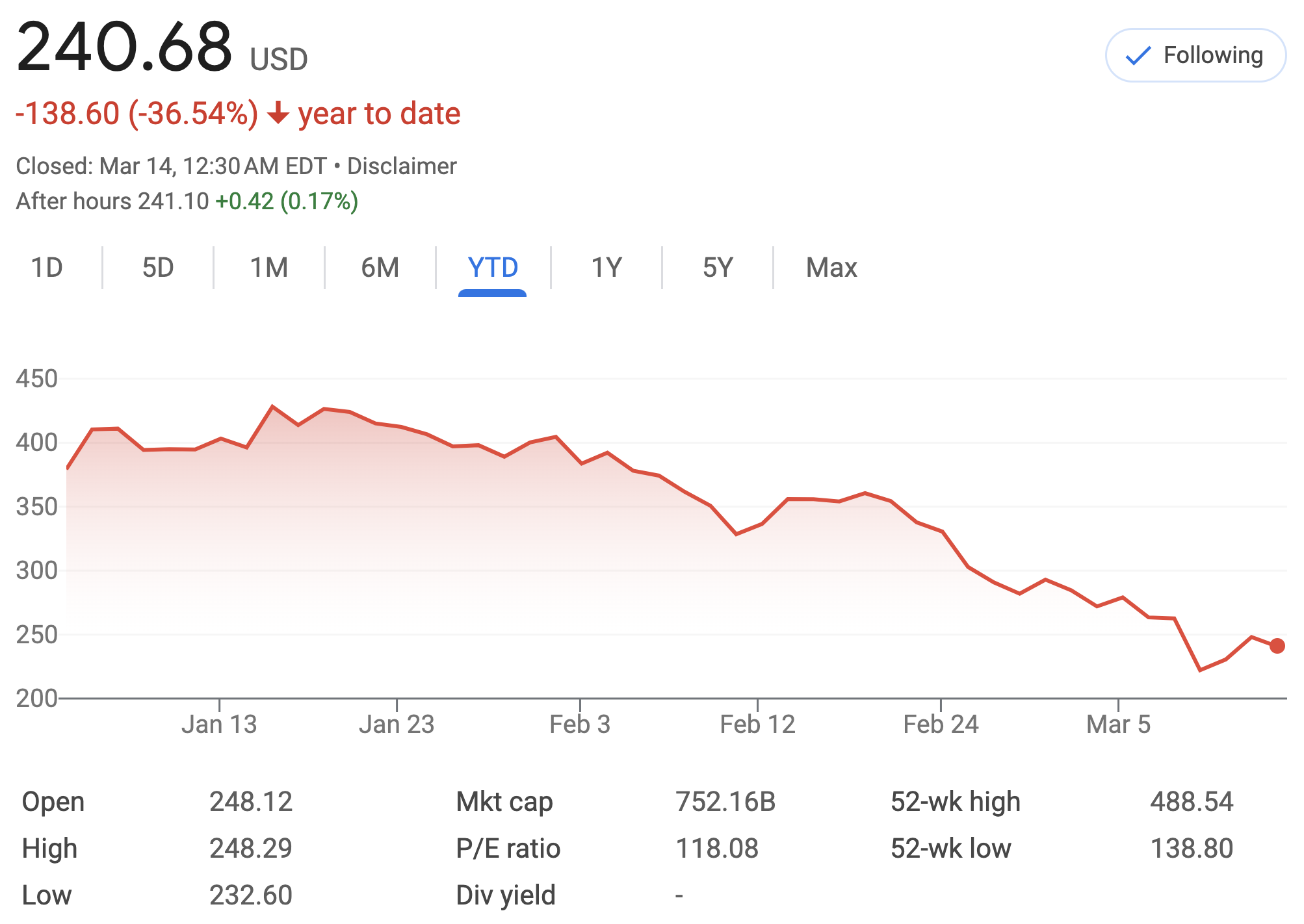
Understanding Tesla’s Current Market Valuation
The nominal price of a single share of Tesla stock is determined by the continuous interplay of supply and demand on the Nasdaq exchange. Unlike traditional automotive companies, Tesla’s share price often behaves like a high-growth software stock, prone to dramatic swings based on quarterly earnings, macroeconomic shifts, and even social media sentiment.
The Mechanics of Stock Price Fluctuations
The “cost” of Tesla is never static. It is influenced by institutional buying, retail interest, and algorithmic trading. Several factors contribute to the daily fluctuations in TSLA’s price:
-
Quarterly Delivery Reports: Perhaps the single most important metric for Tesla investors is the number of vehicles produced and delivered. Any deviation from Wall Street expectations can cause the stock price to shift by double-digit percentages in a single session.
-
Macroeconomic Environment: As a growth stock, Tesla is highly sensitive to interest rates. When the Federal Reserve raises rates, the discounted future cash flows of growth companies become less attractive, often driving the share price down.
-
Regulatory Credits: Tesla’s ability to sell regulatory credits to other automakers has historically been a significant part of its profitability, and shifts in environmental policy can impact the perceived value of these credits.
Market Cap vs. Share Price
To truly understand how much Tesla costs, an investor must look at its market capitalization. Market cap is calculated by multiplying the total number of outstanding shares by the current share price. While a share might cost $200 or $250, the company’s total valuation has hovered between $500 billion and over $1 trillion in recent years.
This distinction is crucial. A high share price does not necessarily mean a company is “expensive” in the financial sense, nor does a low share price mean it is “cheap.” For Tesla, the market cap reflects the aggregate belief of investors in the company’s future dominance not just in electric vehicles (EVs), but in energy storage, robotics, and autonomous driving.
Key Factors Influencing Tesla’s Share Price
When evaluating the cost of Tesla stock, investors must weigh the variables that differentiate it from legacy automakers like Ford or Toyota. The “Tesla Premium” is built on several pillars that fluctuate in influence.
Production and Delivery Metrics
Tesla’s valuation is heavily tied to its manufacturing efficiency. The opening of “Gigafactories” in Berlin and Texas represented significant capital expenditures that initially weighed on the stock but eventually became catalysts for price appreciation. The cost of the stock often reflects the market’s confidence in Tesla’s ability to scale production while maintaining—or increasing—operating margins. When Tesla demonstrates that it can produce vehicles more cheaply than its competitors, the stock price generally reflects that competitive advantage.
The “Elon Musk Premium” and CEO Influence
It is impossible to discuss the cost of Tesla stock without addressing the influence of its CEO, Elon Musk. Musk is viewed by many as a visionary who justifies the stock’s high valuation, while others see his extracurricular activities—such as the acquisition of X (formerly Twitter)—as a risk factor. The “Musk Premium” can add significant value to the stock during periods of innovation, but it can also lead to “key person risk,” where the stock price fluctuates based on the CEO’s public statements or perceived distractions.
Innovation and the FSD Catalyst
A significant portion of Tesla’s current stock price is “priced in” for future technology, specifically Full Self-Driving (FSD) and the Optimus humanoid robot. If an investor buys Tesla stock today, they are not just paying for a car company; they are paying for a software-as-a-service (SaaS) and AI company. The “cost” of the stock includes the speculative value of a future where Tesla operates a global fleet of autonomous robotaxis. If progress in FSD stalls, the stock often faces a correction as the “AI premium” evaporates.

Historical Performance: From Penny Stock to Trillion-Dollar Club
To understand the current cost, one must look at where Tesla has been. The stock has undergone a meteoric rise that has minted “Teslanaires” while also subjecting shareholders to gut-wrenching drawdowns.
Stock Splits and Their Impact on Accessibility
Tesla has utilized stock splits to keep its share price accessible to retail investors. In August 2020, the company executed a 5-for-1 split, followed by a 3-for-1 split in August 2022.
-
Why Splits Matter: A stock split does not change the fundamental value of the company or the total value of an investor’s holding. However, by lowering the price per share, Tesla makes it easier for individual investors to purchase “whole shares” rather than fractional ones.
-
Psychological Impact: Lowering the nominal cost of a share often increases liquidity and can lead to a short-term rally as the stock becomes “psychologically” more affordable to the masses.
Volatility as a Constant Companion
Tesla is famously volatile. It is not uncommon for the stock to see 30% to 50% retracements within a single year. For the long-term investor, the “cost” of owning Tesla is the emotional toll of this volatility. Understanding that Tesla is a high-beta stock—meaning it moves more aggressively than the broader market (S&P 500)—is essential for anyone looking to add it to their portfolio.
How to Evaluate the “Cost” of TSLA Beyond the Price Tag
In professional finance, the “cost” of a stock is often evaluated through valuation multiples. These metrics help investors determine if the stock is overvalued or undervalued relative to its earnings and its peers.
Price-to-Earnings (P/E) Ratio and Forward Multiples
The P/E ratio is the most common tool used to see if a stock is “expensive.” Historically, Tesla has traded at a P/E ratio significantly higher than the automotive industry average. While a traditional car company might trade at a P/E of 6x to 10x, Tesla has frequently traded at 50x, 80x, or even over 100x earnings.
-
Trailing P/E: This looks at the last 12 months of actual earnings.
-
Forward P/E: This looks at estimated earnings for the next year.
Investors often justify Tesla’s high “cost” per dollar of earnings because of its high growth rate. If Tesla doubles its earnings every few years, a high P/E today might look like a bargain in retrospect.
Competitor Comparison in the EV and Tech Sector
When assessing the cost of TSLA, it must be benchmarked against two different groups:
-
Legacy Auto: Compared to GM or Volkswagen, Tesla looks incredibly expensive. However, Tesla carries no legacy debt related to internal combustion engine (ICE) manufacturing and has much higher software margins.
-
Big Tech (Mag 7): When compared to Apple, Microsoft, or Nvidia, Tesla’s valuation often looks more in line with the “Magnificent Seven.” In this context, the cost of Tesla is evaluated based on its data collection capabilities and AI compute power (Dojo).
Strategic Considerations for Potential Investors
Deciding to pay the current market price for Tesla requires a strategic approach to risk management and portfolio construction.
Dollar-Cost Averaging into Tesla
Given Tesla’s volatility, many financial advisors suggest “Dollar-Cost Averaging” (DCA) rather than buying a large position all at once. By investing a fixed dollar amount at regular intervals (e.g., $500 every month), an investor buys more shares when the price is low and fewer shares when the price is high. This reduces the risk of “buying the top” and lowers the average cost basis over time.

Long-term Growth vs. Short-term Speculation
The “cost” of entry depends on the investor’s time horizon. Short-term traders might find the current price “expensive” due to technical resistance levels or upcoming economic data. Conversely, long-term “Bulls” argue that if Tesla successfully transitions to a dominant AI and energy company, the current share price—regardless of today’s specific number—will eventually be viewed as a generational buying opportunity.
Ultimately, the cost of Tesla stock is a reflection of the market’s collective appetite for risk and its belief in a sustainable energy future. Whether the price is $150 or $400, the true cost involves an understanding of the company’s fundamentals, its leadership, and the global shift toward electrification. Potential investors should utilize financial tools like stop-loss orders and diversification to ensure that the “cost” of investing in this high-growth giant doesn’t compromise their overall financial stability.
aViewFromTheCave is a participant in the Amazon Services LLC Associates Program, an affiliate advertising program designed to provide a means for sites to earn advertising fees by advertising and linking to Amazon.com. Amazon, the Amazon logo, AmazonSupply, and the AmazonSupply logo are trademarks of Amazon.com, Inc. or its affiliates. As an Amazon Associate we earn affiliate commissions from qualifying purchases.