
For the modern consumer, the question “How much does a Tesla cost?” is rarely answered by a single sticker price. In the realm of personal finance and strategic investing, a Tesla is not merely a vehicle; it is a complex financial asset with a unique depreciation curve, a fluctuating entry price, and a distinct total cost of ownership (TCO) profile. As Tesla continues to dominate the electric vehicle (EV) market, understanding the fiscal implications of ownership requires a deep dive into capital outlay, tax incentives, and long-term operational expenditures.
1. The Capital Outlay: Deciphering the Current Pricing Tiers
The initial cost of a Tesla is a moving target. Unlike traditional dealerships that rely on “MSRP” and dealer markups, Tesla utilizes a direct-to-consumer model with dynamic pricing. This means the cost of entry can fluctuate based on market demand, supply chain efficiencies, and strategic shifts in corporate margins.
Entry-Level Economics: The Model 3 and Model Y
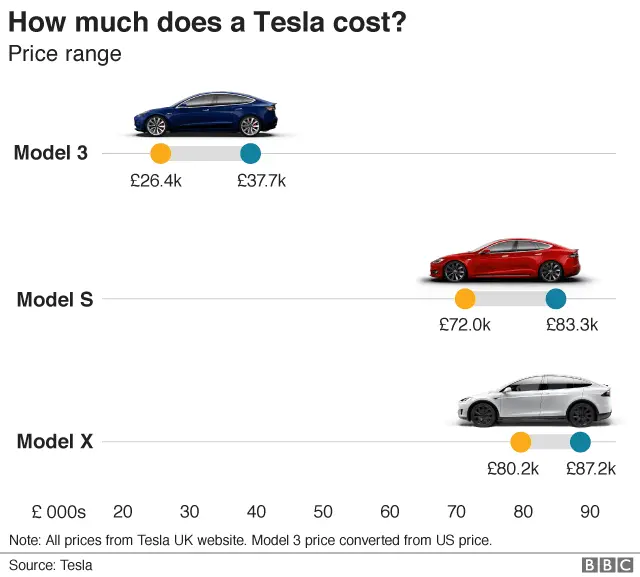
The Model 3 and Model Y represent the “accessible” tier of the Tesla ecosystem. From a financial planning perspective, these vehicles are positioned to compete with mid-tier luxury sedans and crossovers. As of the current market cycle, the Model 3 serves as the primary entry point, often priced in the mid-$30,000 to low-$40,000 range before incentives. The Model Y, the world’s best-selling vehicle in recent years, commands a premium over the Model 3, typically sitting in the $45,000 to $55,000 bracket. For the budget-conscious buyer, these models represent the most efficient path to EV ownership without sacrificing the brand’s signature technology.
The Premium Investment: Model S and Model X
Moving up the financial ladder, the Model S (sedan) and Model X (SUV) represent significant capital investments, often exceeding $75,000 and $80,000 respectively. These vehicles are categorized as luxury assets. From a wealth management perspective, the acquisition of these models often involves different financing structures, such as commercial leasing or Section 179 tax deductions for business owners, given their weight and price points.
The Hidden Variable: Software and Add-ons
One cannot discuss the cost of a Tesla without addressing the digital upgrades. The “Full Self-Driving” (FSD) capability is a significant financial consideration, often costing an additional $8,000 to $15,000 (or a monthly subscription fee). When calculating the total investment, buyers must decide if this software-based asset provides enough utility or potential resale value to justify the upfront cost.
2. The Incentive Landscape: Leveraging Government Subsidies
In the world of personal finance, the “net price” is far more important than the “gross price.” Tesla’s cost structure is inextricably linked to federal and state incentives, which can swing the total cost by nearly 20%.
The Federal Tax Credit (Inflation Reduction Act)
Under the current U.S. tax code, specifically the Inflation Reduction Act (IRA), certain Tesla models qualify for a $7,500 federal tax credit. This is a critical component of the financial equation. For many buyers, this credit is now applicable at the point of sale, effectively acting as an immediate down payment. However, eligibility is subject to strict income caps and vehicle price limits (e.g., $55,000 for sedans and $80,000 for SUVs/trucks). Navigating these thresholds is a vital exercise in tax planning.
State-Level Rebates and Local Perks
Beyond federal incentives, various states offer additional rebates. In states like California, Colorado, or Massachusetts, these can range from $1,000 to $5,000. Furthermore, some utility companies provide rebates for home charging installations. When these are aggregated, the effective cost of a Tesla Model 3 can occasionally drop into the high-$20,000 range, making it financially competitive with a base-model Toyota Camry or Honda Accord.
Financing vs. Leasing: The Cost of Capital
With interest rates fluctuating, the method of acquisition is a major factor in the total cost. Tesla’s in-house financing often competes with traditional banks, but buyers with high credit scores may find better “cost of carry” through external credit unions. Leasing a Tesla has become more popular as it allows consumers to hedge against rapid technological obsolescence, though it typically removes the ability to purchase the vehicle at the end of the term—a unique policy in the industry that buyers must account for in their long-term mobility budget.
3. Total Cost of Ownership (TCO): Maintenance, Fuel, and Resilience
The true financial brilliance of a Tesla—or its greatest risk—lies in the operational costs over a five-to-ten-year horizon. Traditional internal combustion engine (ICE) vehicles have thousands of moving parts; a Tesla has significantly fewer, which fundamentally alters the maintenance budget.
The Electricity vs. Gasoline Arbitrage
The most immediate financial benefit of Tesla ownership is the “fuel” savings. On average, charging a Tesla at home costs significantly less per mile than refueling a gasoline vehicle. For a driver covering 15,000 miles per year, the savings can range from $1,000 to $2,500 annually, depending on local electricity rates and the price of oil. Over a six-year ownership period, this equates to a $6,000 to $15,000 reduction in the total cost of ownership.
Maintenance and Repair Realities
Teslas do not require oil changes, spark plug replacements, or emissions checks. However, they are not maintenance-free. The heavy weight of the battery packs leads to faster tire wear, a recurring expense that many first-time owners overlook. Furthermore, out-of-warranty repairs on Tesla’s proprietary technology can be expensive. From a financial risk management perspective, it is prudent for owners to maintain an emergency fund specifically for potential high-cost items like the thermal management system or onboard computers after the basic warranty expires.
Insurance Premiums: The Hidden Cost
One of the most significant “surprises” in the Tesla financial model is the cost of insurance. Due to the high cost of body work and the advanced sensor suites involved in even minor collisions, Tesla insurance premiums are often 20% to 50% higher than those for comparable luxury cars. Tesla has addressed this by launching its own insurance product in several states, using real-time driving behavior to price premiums, which can offer substantial savings for conservative drivers.
4. Depreciation Curves and Resale Value
For any significant purchase, the “burn rate” of the asset’s value is paramount. Tesla has historically enjoyed some of the highest resale values in the automotive industry, but recent years have seen a shift in this trend.
Historical Performance vs. Current Volatility
Previously, Teslas held their value remarkably well due to high demand and limited supply. However, as Tesla has aggressively cut prices on new models to gain market share, the resale value of used Teslas has faced downward pressure. For the owner, this means the “cost” of the car—defined as the difference between the purchase price and the eventual sale price—has become more volatile.
The Software-Defined Value
Unlike traditional cars that degrade in features over time, Teslas receive over-the-air (OTA) updates. This has an interesting financial effect: a five-year-old Tesla may have more features today than it did when it was purchased. This “feature growth” helps mitigate some depreciation, as the car remains technologically relevant far longer than its competitors.
Battery Longevity and Asset Lifecycle
The ultimate determinant of a Tesla’s long-term value is the battery health. Current data suggests that Tesla batteries retain about 85% to 90% of their capacity after 150,000 miles. For a long-term investor in their own personal transportation, this longevity supports a longer amortization period, allowing the owner to spread the initial high cost over 10 or 15 years, which significantly lowers the annual cost compared to a vehicle that might be “spent” at 200,000 miles.
5. Strategic Considerations: Is a Tesla a Sound Financial Decision?
To conclude the analysis of how much a Tesla truly costs, we must look at the opportunity cost and the broader financial picture.
The Opportunity Cost of Capital
When someone spends $50,000 on a Tesla, they are forgoing the opportunity to invest that money in the market. In a professional financial analysis, the “cost” includes the lost 7-10% annual return that capital could have generated in an index fund. Therefore, the decision to buy a Tesla is often a trade-off between lifestyle utility and wealth accumulation.
Business Use and Tax Deductions
For business owners and independent contractors, the “cost” of a Tesla can be dramatically reduced through Section 179 and bonus depreciation. A Model X, which exceeds the 6,000-pound GVWR (Gross Vehicle Weight Rating), may qualify for significant immediate write-offs, allowing a business to deduct a large portion of the purchase price in the first year. This makes the “after-tax cost” of a Tesla much lower for the entrepreneurial class than for the average W-2 employee.

Final Verdict: The Net Economic Impact
Ultimately, a Tesla’s cost is a function of the purchase price minus the tax incentives, plus the increased insurance and tire costs, minus the significant fuel and maintenance savings, all adjusted for the eventual resale value. While the upfront price is high, the TCO often reveals that a Tesla is financially comparable to a vehicle costing $10,000 to $15,000 less at the dealership. For the financially savvy consumer, the Tesla is not just a car; it is a calculated shift in how one allocates their personal transportation budget.
aViewFromTheCave is a participant in the Amazon Services LLC Associates Program, an affiliate advertising program designed to provide a means for sites to earn advertising fees by advertising and linking to Amazon.com. Amazon, the Amazon logo, AmazonSupply, and the AmazonSupply logo are trademarks of Amazon.com, Inc. or its affiliates. As an Amazon Associate we earn affiliate commissions from qualifying purchases.