
In an increasingly digital world, subscription services have become an integral part of many households’ financial landscapes. Among these, Amazon Prime stands out as a colossal offering, bundling a wide array of benefits from expedited shipping to digital entertainment. For millions worldwide, it’s a staple, almost an invisible line item in their monthly or annual budget. But beyond the convenience, the fundamental question persists for both potential and existing subscribers: how much does Prime membership truly cost, and more importantly, what is its financial value proposition?
Understanding the precise cost of an Amazon Prime membership is more nuanced than a single dollar figure. It involves considering various payment structures, potential discounts, and critically, weighing these costs against the tangible and intangible benefits it delivers. This deep dive will explore the financial intricacies of Prime, helping you ascertain if it aligns with your personal finance goals and provides genuine value for your hard-earned money. From annual vs. monthly payments to the often-overlooked financial impact of its myriad perks, we’ll dissect the true cost and guide you in making an informed financial decision about this pervasive subscription service.

Understanding the Core Prime Membership Tiers and Pricing
At its heart, Amazon Prime offers a tiered pricing structure designed to cater to different financial preferences and life stages. While the fundamental benefits remain largely consistent across these tiers, the way you pay can significantly alter your overall financial outlay and commitment. It’s crucial to understand these options to select the most cost-effective path for your circumstances.
Annual vs. Monthly Payment Structures
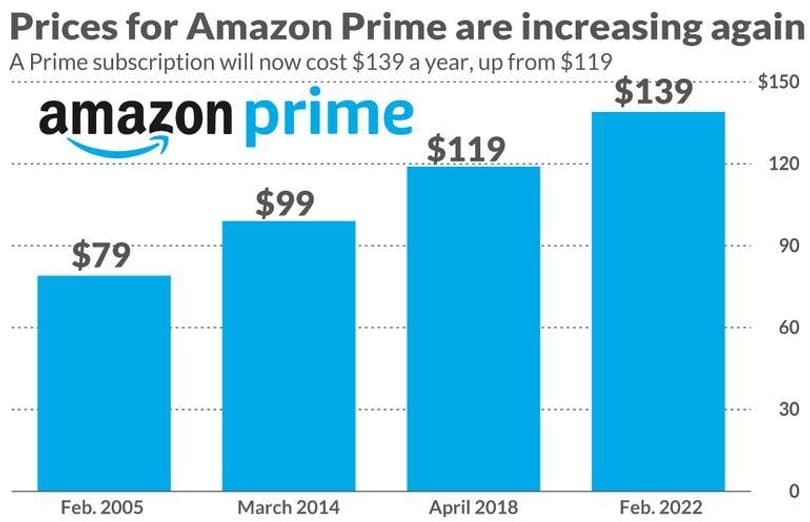
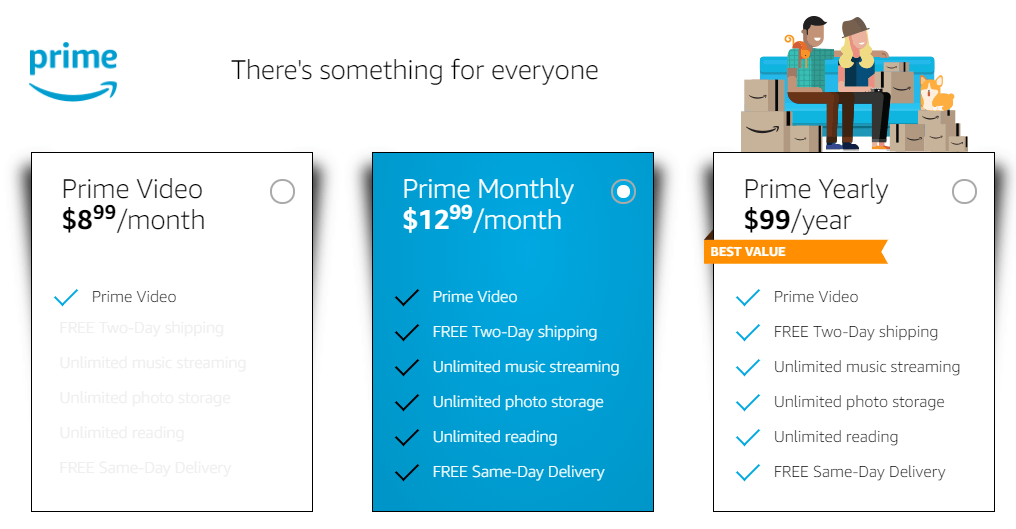
The most common decision faced by prospective Prime members is whether to opt for an annual lump sum payment or a recurring monthly fee. Currently, a standard Amazon Prime membership costs approximately $14.99 per month or $139 per year. On the surface, the annual option presents a clear financial advantage. Paying $139 once a year translates to an effective monthly cost of roughly $11.58, representing a savings of nearly $3.41 per month, or over $40 annually, compared to the monthly subscription model.
This savings structure encourages commitment. From a financial planning perspective, if you anticipate using Prime services consistently throughout the year, the annual payment is almost invariably the more financially prudent choice. However, the monthly option offers flexibility. For individuals who are unsure about their long-term usage, or who prefer to manage smaller, more frequent outlays rather than a larger single payment, the monthly fee provides an escape hatch without a significant upfront commitment. It allows for easy cancellation if circumstances change or if the service no longer meets their needs, albeit at a higher cumulative cost over 12 months.
Student and Qualifying Government Assistance Discounts
Amazon recognizes that not all financial situations are equal and offers reduced-price Prime memberships for specific demographics. For eligible college students, Prime Student offers a significantly discounted rate, typically around $7.49 per month or $69 per year. This halving of the standard price makes Prime far more accessible to students often operating on tighter budgets, providing them with essential benefits like free shipping for textbooks and supplies, and access to entertainment for downtime. Eligibility usually requires a valid .edu email address and verification of enrollment.
Similarly, individuals receiving qualifying government assistance, such as EBT or Medicaid, can also access a discounted Prime membership, often at a similar rate to Prime Student. This initiative aims to make the benefits of Prime, particularly affordable access to goods and digital services, more inclusive. For these demographics, the financial relief offered by these discounts is substantial, making a service that might otherwise be out of reach a viable option. It underscores Amazon’s strategy to broaden its subscriber base by addressing diverse economic realities.
The Cost in Relation to Specific Prime Benefits (e.g., shipping, streaming)
When considering the cost, it’s beneficial to break down what you’re actually paying for. While the $14.99/month or $139/year is a single fee, it unlocks a vast ecosystem of services. The marquee benefit, often cited as the primary driver for subscription, is free two-day (and often faster) shipping on millions of eligible items. For frequent online shoppers, this benefit alone can quickly offset the membership cost by eliminating shipping fees that can range from $5 to $15 per order.
Beyond shipping, Prime offers an extensive Prime Video library, comparable in scale to standalone streaming services like Netflix or Hulu. It includes original series, movies, and documentaries, representing a significant entertainment value. Prime Music, though not as expansive as Amazon Music Unlimited, provides ad-free access to millions of songs. Other benefits include Prime Reading (access to a rotating selection of eBooks), Prime Gaming (free games and in-game content), Amazon Photos (unlimited photo storage), and exclusive access to deals and sales events like Prime Day.
Financially, the question becomes: how many of these benefits do you actually use? If you primarily subscribe for shipping and rarely touch Prime Video, then you’re effectively paying for services you don’t consume, potentially diminishing the perceived financial value. Conversely, if you leverage most of these perks, the single subscription fee becomes an incredibly cost-efficient bundle, potentially saving you the cost of multiple separate subscriptions.
Is Prime Worth the Investment? A Financial Value Proposition
Determining the “worth” of an Amazon Prime membership transcends a simple comparison of cost versus benefits. It requires a more comprehensive financial evaluation, where one quantifies potential savings, assigns value to convenience and entertainment, and considers how the service integrates into one’s overall spending habits. Viewing Prime not just as an expense, but as a potential investment in convenience and savings, provides a clearer picture.
Quantifying Savings from Free Shipping
For many, the primary allure of Prime is the expedited, free shipping. To truly quantify this saving, a simple exercise is to track your online purchases from Amazon (or other retailers that would typically incur shipping costs) over a month or year. Estimate what you would have paid in shipping fees without Prime. For instance, if you place 10 orders a year, and each order would typically incur a $7 shipping charge, that’s $70 in potential shipping costs saved. If you place 20 orders, that’s $140.
For a Prime membership costing $139 annually, saving $140 in shipping fees alone means the membership effectively pays for itself. If you save more, you’re financially ahead. However, it’s crucial to be honest about your purchasing habits. Does Prime incentivize you to buy more than you normally would just to “make the most” of the free shipping? This phenomenon, sometimes called the “Prime effect,” can negate financial savings if it leads to increased, unnecessary spending. The true saving comes from essential purchases where shipping costs would genuinely be incurred otherwise.
Valuing Digital Benefits: Prime Video, Music, and Gaming
Beyond shipping, Prime’s digital offerings like Prime Video, Prime Music, and Prime Gaming add significant financial value, especially when compared to standalone subscription services. A premium streaming service like Netflix might cost $15-20 per month, a music streaming service like Spotify Premium around $10-11 per month, and gaming subscriptions often come with their own fees.
If you actively use Prime Video as your primary or secondary streaming service, you’re potentially saving the cost of an entirely separate subscription. The same applies to Prime Music – if it sufficiently meets your audio needs, you might avoid paying for another music service. While Amazon’s offerings might not always be as comprehensive as dedicated platforms, their inclusion in Prime means you’re receiving these services at no additional direct cost. To value this, consider: what would you pay for these services individually, and how much of that need does Prime fulfill? If Prime Video replaces a $15/month subscription, that’s $180 in annual savings right there, making your $139 Prime membership a financial gain.
Exclusive Deals and Early Access: Hidden Savings?
Prime members often gain exclusive access to deals, discounts, and early access to Lightning Deals, particularly during major sales events like Black Friday and the highly anticipated Prime Day. These exclusive promotions can lead to significant savings on specific products, ranging from electronics to household essentials. For instance, if you’re planning a major purchase, waiting for Prime Day or a member-exclusive deal could shave tens or even hundreds of dollars off the price.
However, assigning a precise financial value to these “hidden savings” is challenging. They are opportunistic and depend entirely on whether the deals align with items you genuinely need or planned to buy. Impulse purchases driven by a “deal” can quickly erode any potential savings. The true financial benefit here comes from strategic shopping – if you use Prime to buy items you were already going to purchase, and at a better price, then it contributes to the overall financial value. Otherwise, it’s a perk that might not directly translate into tangible financial gain.
Financial Strategies for Maximizing Your Prime Membership
Once you’ve decided to invest in an Amazon Prime membership, the next step is to adopt smart financial strategies to ensure you’re getting the absolute most out of your subscription. This isn’t just about using the features; it’s about making conscious choices that align with your budget and extract maximum financial utility.
Budgeting for Your Prime Subscription
Integrating Prime into your personal budget requires a deliberate approach. If you opt for the annual payment, ensure you allocate funds for that lump sum effectively. Some individuals find it helpful to set aside a small amount each month (e.g., $11.58) into a dedicated savings account to cover the annual fee when it’s due. This avoids a surprise large expense. For monthly payers, it’s a recurring fixed cost that should be explicitly listed under “subscriptions” or “entertainment” in your budget.
Beyond the direct cost, factor in the “Prime effect” on your spending habits. If having Prime encourages more frequent or larger purchases, consciously budget for these potential increases. Set strict spending limits for Amazon purchases each month, separate from the Prime subscription cost itself, to prevent overspending. Regular budget reviews will help you track if Prime is genuinely saving you money or subtly increasing your overall expenditure.
Sharing Prime Benefits: Family Plans and Cost-Sharing
One of the most underutilized financial benefits of Prime is the ability to share certain perks with other members of your household. Amazon Household allows two adults and up to four teens and four children to share Prime benefits, including free shipping, Prime Video, and Kindle Owners’ Lending Library. This is a significant financial advantage for families or even housemates, as it effectively halves the cost per individual.
If you split the $139 annual fee with another adult, your personal cost drops to $69.50 per year – an exceptionally good value for all the benefits. This strategy leverages the membership to its fullest, distributing the financial burden while amplifying the collective utility. Before signing up solo, consider who in your household could benefit and how you might split the cost equitably.
Leveraging Prime Credit Cards for Rewards
For frequent Amazon shoppers, integrating an Amazon-branded credit card into your financial strategy can further enhance the value of your Prime membership. Cards like the Amazon Prime Rewards Visa Signature Card offer significant cashback rewards, typically 5% back on Amazon.com and Whole Foods Market purchases for Prime members.
This 5% cashback can quickly accumulate, effectively reducing your overall spending and subtly offsetting the cost of your Prime membership. For example, if you spend $2,000 annually on Amazon (excluding the Prime fee), a 5% cashback translates to $100 back in rewards. This nearly covers the annual Prime membership cost. However, responsible credit card use is paramount. Only use these cards if you can pay off your balance in full each month to avoid interest charges, which would negate any cashback benefits. Used wisely, it’s a powerful financial tool for Prime members.
Alternatives to Prime: When to Consider Other Options
While Amazon Prime offers undeniable convenience and a compelling bundle of services, it’s not the only solution, nor is it the best financial fit for everyone. For those who find the cost outweighs the benefits, or whose usage patterns don’t align with the Prime ecosystem, exploring alternatives is a financially savvy move.
Evaluating Standalone Streaming Services
If your primary reason for considering or maintaining Prime is Prime Video, evaluate if a dedicated streaming service might offer better value or a content library more aligned with your tastes. Services like Netflix, Hulu, Disney+, Max, or Apple TV+ each have their own unique content and pricing structures. While individually they might cost similar to or more than Prime, if you only need streaming and don’t heavily utilize other Prime benefits, a focused subscription might be a more efficient allocation of your entertainment budget. Furthermore, rotating subscriptions (subscribing to one for a few months, canceling, then subscribing to another) can be a cost-effective strategy to access diverse content without accruing multiple simultaneous fees.
Alternatives for Fast Shipping (e.g., specific retailers, minimum order free shipping)
For individuals who primarily use Prime for shipping, explore whether your shopping habits warrant the annual fee. Many retailers now offer their own free shipping thresholds (e.g., free shipping on orders over $35 or $50), or loyalty programs that provide similar benefits. Walmart+, for instance, offers free shipping on eligible orders, along with other perks, potentially serving as a direct competitor for shipping needs.
Consider consolidating your purchases at specific retailers that offer free shipping without a membership. Grouping items into larger, less frequent orders can also help you meet minimum order thresholds, effectively getting “free” shipping without paying an annual fee. For occasional purchases, simply paying a one-off shipping fee might be cheaper than an annual Prime subscription if you rarely order online.
Prioritizing Your Spending: Needs vs. Wants
Ultimately, the decision to subscribe to Prime, or any subscription service, boils down to a fundamental personal finance principle: prioritizing your spending. Distinguish between needs and wants. While access to goods and digital entertainment can feel essential in modern life, scrutinize if Prime genuinely fulfills a need more efficiently or if it’s primarily a “want” that you could live without or fulfill through cheaper alternatives.
If your budget is tight, cutting discretionary subscriptions like Prime could free up significant funds for savings, debt repayment, or other essential expenses. Periodically re-evaluate your usage: are you using enough of Prime’s features to justify the cost? Or has it become an auto-renewal you barely think about? A mindful approach to subscription management ensures your money is always working for you, not against you.
The Long-Term Financial Impact of Prime Membership
Beyond the immediate cost and benefits, it’s important to consider the long-term financial implications of an Amazon Prime membership. Subscriptions, by their nature, are designed for recurring revenue, and understanding their sustained impact on your personal finances is key to prudent financial management.
Subscription Creep and Budget Management
Amazon Prime, while a single subscription, can be a gateway to “subscription creep.” The perceived “free” benefits might lead to complacency about other digital expenses. For instance, you might feel less inclined to cancel another streaming service because Prime Video is “included,” even if you rarely watch it. Or you might upgrade to Amazon Music Unlimited (a separate fee) because you’re already in the Amazon ecosystem.
Effective budget management means regularly auditing all your subscriptions. Are you paying for Prime and also Netflix, Hulu, Spotify, and a gaming service? Does Prime genuinely replace some of these, or is it just another layer? Over time, these seemingly small, recurring fees can add up to a significant portion of your discretionary income. A comprehensive view of your recurring expenses, perhaps using a budgeting app or spreadsheet, is vital to prevent subscription creep from silently eroding your financial health.
The Psychological Cost of Convenience
The convenience offered by Prime—faster shipping, instant entertainment—has a psychological dimension that can influence spending habits. The ease of “one-click” ordering and the absence of a visible shipping charge can subtly encourage more frequent or impulsive purchases. While not a direct financial cost, this psychological effect can lead to increased spending on goods you might not truly need, indirectly making Prime more expensive than its sticker price suggests.
It’s crucial to cultivate conscious spending habits even within the convenient Prime ecosystem. Before making a purchase, take a moment to ask if it’s truly necessary, if you could find it cheaper elsewhere, or if it’s an impulse buy driven by the immediate gratification Prime offers. Financial discipline requires resisting the urge to always choose the path of least resistance if it leads to unnecessary expenditure.
Reassessing Value Annually
Like any significant financial commitment, the value of your Prime membership should be reassessed annually. Before your renewal date, take stock:
- Usage: How often did you use free shipping? How many hours did you spend on Prime Video/Music?
- Savings: Did you quantify any significant savings from shipping fees or exclusive deals?
- Alternatives: Have new alternatives emerged that better suit your needs or budget?
- Budget Alignment: Does Prime still fit comfortably within your financial plan, or are there other priorities for that $139 (or monthly equivalent)?
Circumstances change. Your shopping habits might evolve, your entertainment preferences might shift, or your financial situation might tighten. An annual review ensures that your Prime membership continues to deliver genuine financial value and remains a wise allocation of your money. If it no longer aligns with your needs or budget, cancelling is a straightforward financial decision that prioritizes your fiscal well-being over ingrained convenience.
In conclusion, “how much does Prime membership cost” is a question with a multi-faceted answer. While the immediate price tag is clear, the true financial implication involves an ongoing evaluation of its value, your usage, and its alignment with your personal finance goals. By understanding the pricing tiers, quantifying benefits, employing smart financial strategies, and regularly reassessing its worth, you can ensure that your Amazon Prime membership remains an asset, not an overlooked liability, in your financial portfolio.
aViewFromTheCave is a participant in the Amazon Services LLC Associates Program, an affiliate advertising program designed to provide a means for sites to earn advertising fees by advertising and linking to Amazon.com. Amazon, the Amazon logo, AmazonSupply, and the AmazonSupply logo are trademarks of Amazon.com, Inc. or its affiliates. As an Amazon Associate we earn affiliate commissions from qualifying purchases.