
In the modern landscape of personal finance, the subscription model has transitioned from a niche convenience to a dominant budgetary pillar. At the center of this transition sits Amazon Prime, a service that has evolved from a simple free-shipping program into a multi-faceted digital ecosystem. For the savvy consumer, the question “how much does Prime cost?” is not merely a request for a price tag; it is an inquiry into value proposition, opportunity cost, and the strategic allocation of household funds.
As of 2024, the standard cost for an Amazon Prime membership in the United States is $14.99 per month or $139 per year. However, a purely surface-level look at these figures ignores the nuanced financial tiers available and the broader impact this expenditure has on a consumer’s annual cash flow. Understanding the true cost of Prime requires a deep dive into its pricing structures, the psychology of its spending impact, and a rigorous cost-benefit analysis.
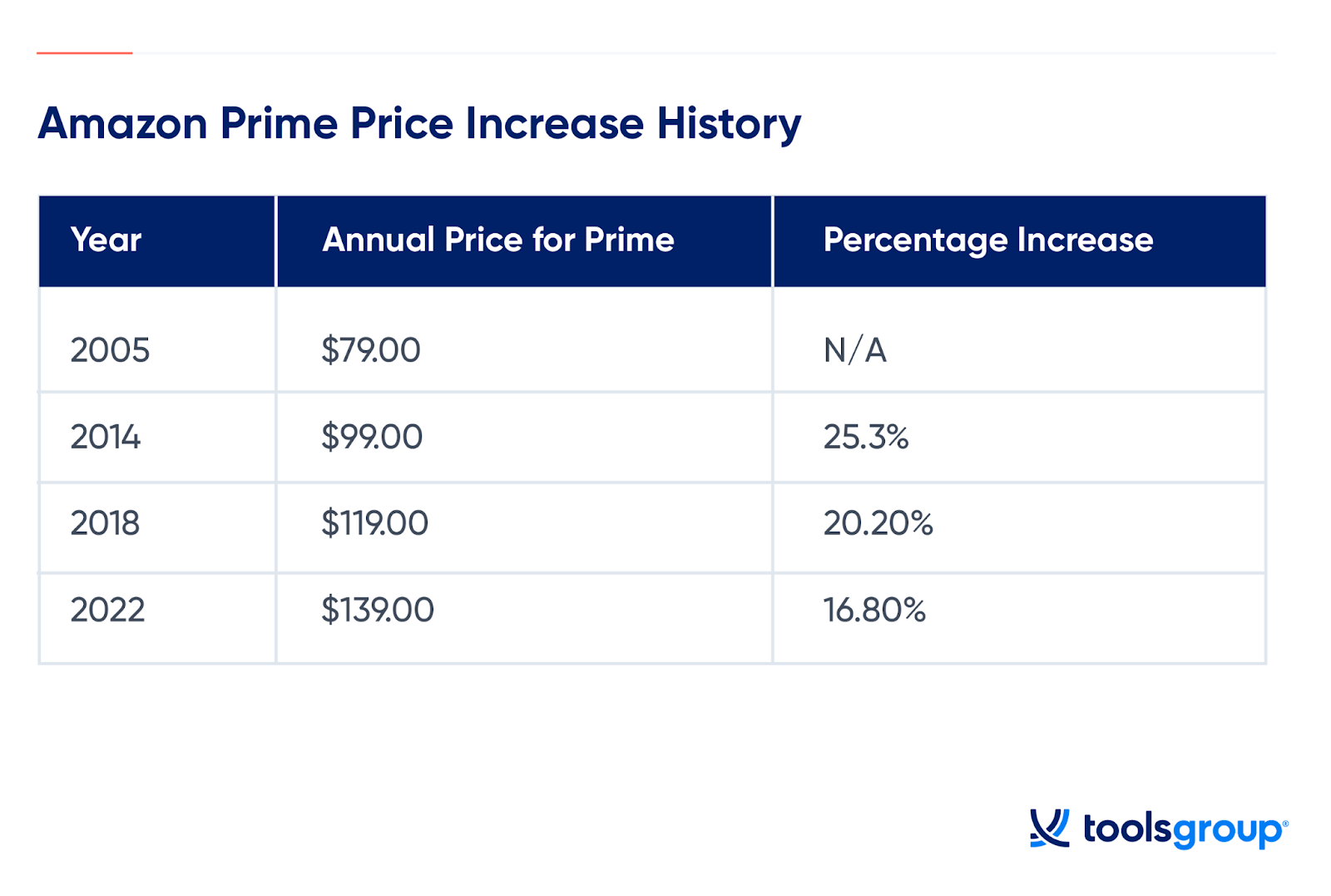
The Direct Costs: Breaking Down the Subscription Models
When integrating a recurring expense into a personal budget, the first step is identifying the most efficient payment structure. Amazon offers several entry points into its Prime ecosystem, each tailored to different financial profiles and liquidity needs.
Monthly vs. Annual Plans: The Math of Prepayment
The most common decision consumers face is whether to pay $14.99 monthly or $139 annually. From a personal finance perspective, the annual plan is the clear winner for those with the necessary liquidity. By paying upfront, the total annual cost is reduced by approximately $40 compared to the monthly installments (which total $179.88 over 12 months). This represents a “discount” of nearly 23%.
For individuals practicing strict envelope budgeting or those with volatile cash flows, the $14.99 monthly fee might feel more manageable, but it functions essentially as a high-interest convenience fee for the privilege of not paying upfront. If your financial goal is to minimize fixed costs, the annual plan acts as a small but meaningful investment in long-term savings.
Specialized Tiers: Student and Assistance Pricing
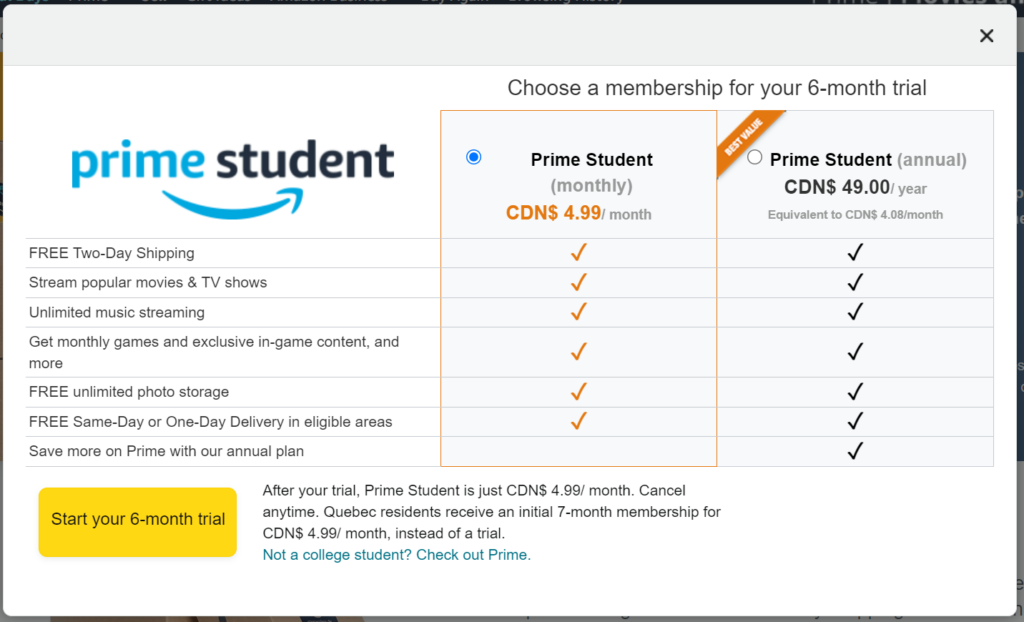
Amazon has strategically implemented tiered pricing to capture demographics with limited disposable income. Prime Student is currently priced at $7.49 per month or $69 per year, offering a 50% discount to verified students. For those focusing on building a financial foundation during their university years, this is a significant value play.
Furthermore, “Prime Access” is available for $6.99 per month for recipients of select government assistance programs, such as SNAP or Medicaid. This tier is an important financial tool for lower-income households, allowing them to access the logistical savings of Prime (such as grocery delivery and discounted essentials) without the burden of the full retail price.
The “Prime Effect”: Impact on Personal Budgeting and Spending Habits
The cost of Prime is not limited to the subscription fee itself. In the world of behavioral economics, “The Prime Effect” refers to how a membership changes a consumer’s relationship with spending. Once the “sunk cost” of the membership fee is paid, consumers often feel a psychological need to “get their money’s worth.”
The Psychology of “Free” Shipping and Impulse Buys
The primary financial lure of Prime is “free” shipping. However, in personal finance, nothing is truly free. The removal of shipping friction often leads to an increase in transaction frequency. When the barrier to purchase—the $5.99 or $9.99 shipping fee—is removed, the threshold for making a purchase drops significantly.
Data suggests that Prime members spend, on average, more than double what non-members spend on Amazon annually. For a budget-conscious individual, this can lead to “subscription creep” where the convenience of the service facilitates unplanned impulse buys. To manage this, financial experts recommend a “24-hour cooling-off period” for any non-essential item in the Amazon cart, regardless of how fast the shipping may be.
Consolidation of Services: Can Prime Replace Other Expenses?
To truly calculate the net cost of Prime, one must look at what other expenses it can offset. Prime is no longer just a shipping service; it is a bundle of digital tools. A standard Prime membership includes Prime Video, Prime Music, Prime Reading, and Amazon Photos.
From a wealth-management perspective, if a Prime membership allows a household to cancel a $15.49/month Netflix subscription or an $11/month Spotify plan, the Prime membership effectively pays for itself. In this scenario, the “cost” of Prime becomes a “savings” of over $100 per year through service consolidation. Auditing your digital subscriptions to eliminate redundancies is a hallmark of sophisticated financial planning.

Evaluating the ROI: Is the Membership Fee Worth It?
A professional financial analysis of a subscription requires calculating the Return on Investment (ROI). Is the $139 annual fee generating enough value to justify its place in your budget?
The Break-Even Point: Shipping Volume vs. Subscription Cost
The simplest way to calculate the ROI of Prime is to analyze your shipping habits. If the average shipping cost for a non-Prime order is $7, a consumer would need to place 20 orders per year to break even on a $139 annual membership.
If you find that your household averages only one or two orders a month, the financial benefit of the shipping alone may not justify the cost. However, for those who use Amazon for “Subscribe & Save” items—recurring household essentials like detergent, pet food, and toiletries—the 15% discount offered on those items can quickly exceed the cost of the membership. In this case, Prime shifts from a luxury expense to a strategic procurement tool.
Maximizing Value Through Secondary Financial Perks
Beyond shipping and streaming, Prime offers several “hidden” financial perks that are often overlooked in a standard budget audit:
- Prime Rx: For those without comprehensive health insurance, the Prime prescription savings can offer up to 80% off generic medications.
- Grubhub+: As of 2024, Prime includes a free year of Grubhub+, which waives delivery fees on food orders—a potential savings of $120/year for frequent diners.
- Whole Foods Discounts: For the grocery budget, Prime members receive an additional 10% off sale items at Whole Foods Market.
When these perks are utilized, the “realized value” of the membership can soar into the thousands of dollars, making the $139 entry fee one of the highest-yielding “investments” in a consumer’s annual budget.
Strategic Financial Management of Digital Subscriptions
As we navigate an era of “subscription fatigue,” managing the cost of services like Prime requires a proactive approach. It is not enough to simply pay the bill; one must manage the account with the same rigor applied to an investment portfolio.
Auditing Your “Subscription Creep”
Financial health is often maintained by what you don’t spend. It is advisable to conduct a quarterly “subscription audit.” This involves looking at your bank statements to identify recurring charges and evaluating their utility. If you haven’t used Prime Video in three months or find yourself buying more at local brick-and-mortar stores, the cost of Prime may no longer be justified.
Many consumers find success in “cycling” subscriptions—paying for Prime for one month during the holiday season to handle gift shipping, then canceling it for the remainder of the year. This targeted spending approach ensures you are only paying for the service when its utility is at its peak.
Leveraging Credit Card Rewards for Prime Memberships
For those committed to the Amazon ecosystem, the financial cost can be further mitigated through strategic credit use. The Amazon Prime Visa card, for instance, offers 5% back on all Amazon and Whole Foods purchases.
If a household spends $3,000 a year on Amazon (including the membership fee and groceries), the 5% cash back yields $150. This effectively wipes out the $139 cost of the Prime membership, making the service “free” through rewards optimization. This is a prime example of how understanding the financial tools surrounding a product can transform an expense into a break-even or even a profitable arrangement.
Conclusion: The Final Accounting
So, how much does Prime cost? While the sticker price is $139 per year, the financial reality is much more complex. It is a cost that varies based on your payment schedule, your demographic status, and your ability to consolidate other digital expenses.
From a personal finance perspective, Prime is a double-edged sword. It offers unparalleled logistical efficiency and the potential for significant consolidation of entertainment and shopping costs. However, it also requires a disciplined approach to prevent the “Prime Effect” from inflating your discretionary spending.
By treating the Prime membership not as an automated deduction, but as a strategic financial tool, consumers can ensure that the value they extract from the service far exceeds the capital they put in. Whether through utilizing student discounts, leveraging credit card rewards, or auditing usage patterns, the goal remains the same: maximizing every dollar in the pursuit of financial efficiency.
aViewFromTheCave is a participant in the Amazon Services LLC Associates Program, an affiliate advertising program designed to provide a means for sites to earn advertising fees by advertising and linking to Amazon.com. Amazon, the Amazon logo, AmazonSupply, and the AmazonSupply logo are trademarks of Amazon.com, Inc. or its affiliates. As an Amazon Associate we earn affiliate commissions from qualifying purchases.