
The digital landscape has undergone a seismic shift over the last decade, transitioning from physical media and linear television to a sophisticated ecosystem of Video on Demand (VOD) services. At the forefront of this evolution is Paramount Plus, a platform that serves as a case study for how legacy media companies integrate complex software infrastructure with massive content libraries. For tech enthusiasts and digital consumers, the question “how much does Paramount Plus cost?” is not merely a matter of monthly budgeting; it is an inquiry into the value of the underlying technology, the quality of the streaming protocols, and the robustness of the user interface.
As we dissect the cost of Paramount Plus through a technological lens, we find a tiered system designed to balance data accessibility with premium features like 4K resolution, Dolby Atmos integration, and advanced ad-insertion algorithms.
Decoding the Paramount Plus Subscription Infrastructure
The pricing architecture of Paramount Plus is divided into two primary tiers, each representing a different level of technical service and feature access. Understanding these tiers requires a look at how the platform manages its backend delivery and ad-tech integration.
The Essential Tier: Ad-Supported Tech and Data Management
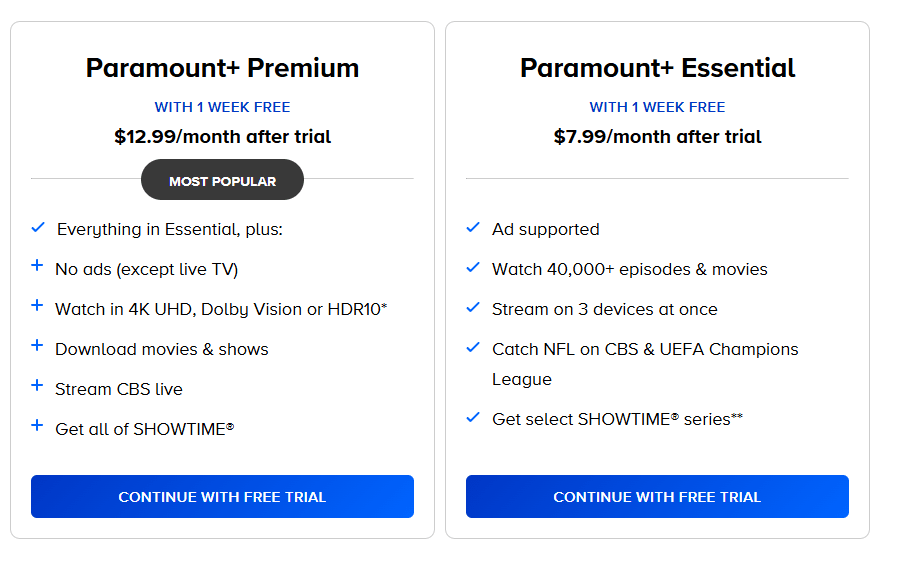
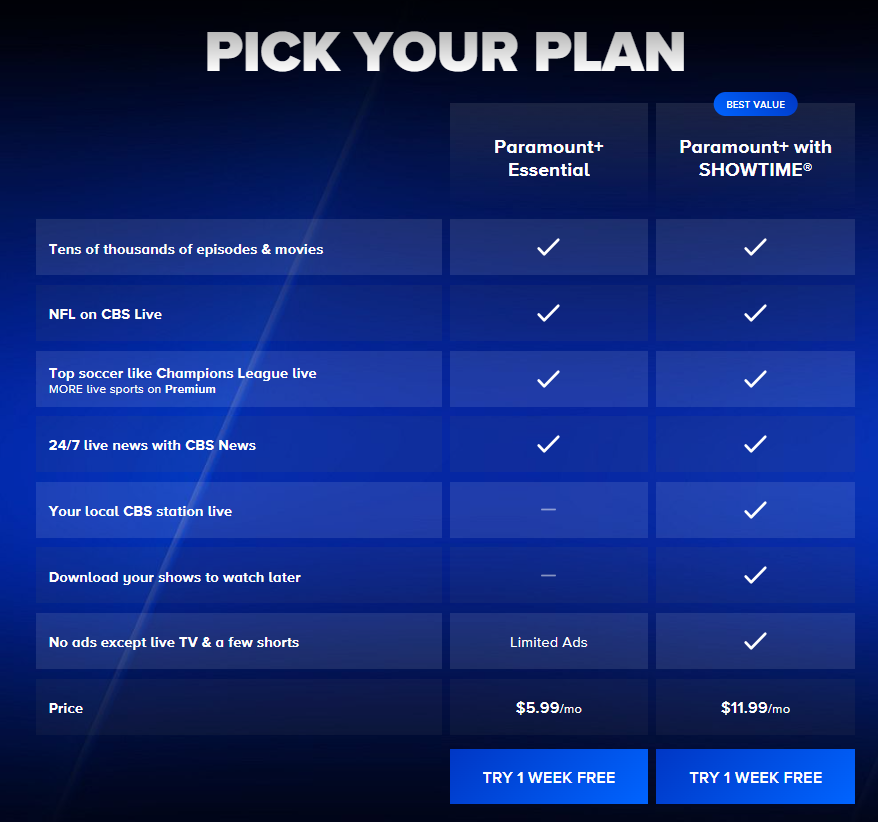
The entry-level “Essential” plan, typically priced at $5.99 per month (or $59.99 annually), represents the standard for modern ad-supported streaming. From a technical standpoint, this tier is a marvel of dynamic ad insertion. Unlike traditional television, where ads are baked into the broadcast, the Essential tier utilizes server-side ad insertion (SSAI) to deliver personalized commercials in real-time without interrupting the stream’s metadata.
While this tier provides access to the full library of over 45,000 episodes and movies, it is capped at High Definition (1080p). For the average user on a mobile device or a standard monitor, this bitrate is sufficient, but it lacks the high-frequency data transmission found in the premium tier. Furthermore, the Essential plan does not include the local live CBS station, as the technical overhead required to synchronize local broadcast signals with a global digital platform is reserved for the higher-tier infrastructure.
The Paramount Plus with SHOWTIME Tier: Premium Features and 4K Integration
At the higher end of the spectrum is the “Paramount Plus with SHOWTIME” plan, priced at $11.99 per month (or $119.99 annually). This is where the platform’s high-end tech specs truly shine. This tier is essentially the “pro” version of the software, offering an ad-free experience (with the exception of live TV and select shows) and unlocking the 4K UHD, HDR10, and Dolby Vision capabilities.
The jump from 1080p to 4K requires a significant increase in bandwidth and processing power. Paramount’s tech stack must handle the delivery of larger files while maintaining low latency to prevent buffering. Additionally, this tier includes the integration of the SHOWTIME library and the live CBS feed, requiring a complex content delivery network (CDN) that can handle geo-fencing to ensure viewers receive the correct local affiliate signals based on their IP address and GPS data.
The Technological Value Proposition: What Your Subscription Buys Beyond Content
When evaluating the cost of a streaming service, one must consider the hardware compatibility and the software optimizations that allow the service to run across various ecosystems. Paramount Plus isn’t just a library; it is a cross-platform application that must remain stable on everything from a high-end PlayStation 5 to a budget-tier Roku stick.
High-Definition Streaming and Dolby Atmos Support
One of the primary technical justifications for the premium tier is the support for advanced audiovisual protocols. For users with high-fidelity home theater setups, the inclusion of Dolby Atmos is a critical feature. Dolby Atmos is an object-based audio format that allows sound to be treated as individual entities in a 3D space. Delivering this data stream alongside a 4K video feed requires sophisticated compression algorithms (like HEVC or H.265) that maximize quality while minimizing data usage.
The cost of the subscription also funds the ongoing development of these streaming codecs. As display technology improves, Paramount Plus must update its backend to support higher bitrates and better color depth, ensuring that the software does not become the bottleneck for a user’s expensive hardware.
Cross-Platform Compatibility and Device Synchronization
A significant portion of the platform’s development budget goes into ensuring a seamless experience across the “Big Three” operating systems (iOS, Android, and Windows) as well as proprietary smart TV OS environments like Tizen (Samsung) and WebOS (LG).
The synchronization tech used by Paramount Plus allows for a “continue watching” feature that is remarkably low-latency. If you pause a film on your Apple TV, the timestamp is immediately synced to the cloud via a RESTful API, allowing you to resume at the exact millisecond on your Android smartphone. This level of state-management requires a highly available database architecture (such as NoSQL or specialized cloud instances) that can handle millions of concurrent read/write operations.
Maximizing Performance: Software Optimization and Offline Capabilities
For the mobile-first user, the value of the Paramount Plus subscription is often found in the efficiency of its mobile application and its ability to handle content in low-connectivity environments.
The Download Feature: Local Storage and Mobile App Efficiency
Exclusive to the Paramount Plus with SHOWTIME tier is the ability to download content for offline viewing. This is a crucial piece of mobile tech that involves complex Digital Rights Management (DRM). When a user downloads a show, the app doesn’t just save a video file; it saves an encrypted data package that checks against a local license key to ensure the subscription is active.
Technically, the app must manage local storage effectively, offering users the choice between “Standard” and “High” quality downloads. This ensures that users with limited storage on their devices can still utilize the feature without crashing the OS. The engineering required to make this process seamless—handling interrupted downloads and verifying licenses without an active internet connection—is a testament to the platform’s robust software engineering.
Profile Management and Parental Control Algorithms
The cost of Paramount Plus also covers the sophisticated algorithms used for user personalization. Modern streaming is moving away from simple categorization and toward machine-learning-driven recommendations. Each profile on a Paramount Plus account acts as a data silo, where viewing habits are analyzed to surface relevant content.
Moreover, the platform’s parental control tech allows for granular restrictions based on metadata tags. Parents can lock profiles behind PINs and set rating limits that filter the entire UI dynamically. This is not just a visual filter but a deep-level query adjustment that prevents unauthorized content from even being indexed in the search results of a restricted profile.
Comparing the Tech Stack: Paramount Plus vs. The Streaming Giants
To truly understand if the cost is justified, we must look at how Paramount Plus compares to competitors like Netflix or Disney+ from a technical performance perspective.
Latency and Live Sports Streaming (The NFL on Paramount Plus)
One area where Paramount Plus distinguishes itself is in live sports broadcasting, specifically NFL games and UEFA Champions League matches. Live-streaming sports is one of the most difficult technical feats in the software world. Unlike VOD, where content can be cached at the “edge” of a network, live sports require real-time encoding and distribution with minimal latency.
Paramount Plus utilizes advanced low-latency streaming protocols (such as LL-HLS or DASH) to ensure that the digital feed is as close to the “real-time” broadcast as possible. For many tech-savvy sports fans, the $5.99–$11.99 price point is justified solely by the quality of this live-stream pipeline, which often outperforms traditional “skinny” bundles in terms of stability and resolution.
UI/UX Trends and Navigation Architecture
The User Interface (UI) of Paramount Plus has seen several iterations aimed at reducing “choice paralysis” and improving navigation speed. The app uses a modular design language that allows it to update its layout on the fly without requiring a full app store update. This is achieved through server-driven UI, where the structure of the home screen is sent as a JSON file from the server and rendered locally by the app.
This technical approach ensures that the “Trending Now” or “Live News” sections are always current. When comparing the cost of Paramount Plus to other apps, the fluidity of the interface and the speed of the search algorithm—which must index tens of thousands of assets across different genres—are key indicators of a high-quality tech product.

The Future Cost of Tech Integration in Streaming
As we look toward the future, the cost of Paramount Plus will likely continue to reflect the integration of emerging technologies. We are already seeing the beginnings of AI-enhanced upscaling, where the app could theoretically improve the quality of older 4:3 content to fit modern 4K displays using machine learning.
The “cost” of the service is a reflection of a massive digital engine that works behind the scenes to provide high-definition visuals, immersive audio, and a stable, multi-device experience. Whether you opt for the budget-friendly Essential plan or the feature-rich SHOWTIME tier, you are paying for a piece of sophisticated software that bridges the gap between the golden age of cinema and the cutting-edge of the digital frontier. For the modern consumer, Paramount Plus represents a balanced intersection of traditional media and high-performance technology.
aViewFromTheCave is a participant in the Amazon Services LLC Associates Program, an affiliate advertising program designed to provide a means for sites to earn advertising fees by advertising and linking to Amazon.com. Amazon, the Amazon logo, AmazonSupply, and the AmazonSupply logo are trademarks of Amazon.com, Inc. or its affiliates. As an Amazon Associate we earn affiliate commissions from qualifying purchases.