
For most individuals, a vehicle is the second-largest purchase they will make in their lifetime, trailing only behind real estate. However, unlike a home, which typically appreciates over time, a car is a depreciating asset. Understanding the precise financial value of your vehicle—and how that value fluctuates within the broader economic landscape—is a cornerstone of sound personal finance. Whether you are looking to trade in for a newer model, sell privately to boost your savings, or simply audit your net worth, knowing “how much my car is worth” requires a deep dive into market analytics and asset management.
Understanding the Financial Mechanics of Vehicle Depreciation
Depreciation is the most significant “silent” cost of car ownership. From a personal finance perspective, it represents the loss in value an asset experiences over time due to wear, tear, and obsolescence. To manage your wealth effectively, you must understand how this curve operates.
The Immediate Hit: New Car vs. Used Car Value
The moment a new car is driven off the dealership lot, it typically loses about 10% to 20% of its value. By the end of the first year, that figure can climb to 30%. From a financial planning standpoint, this is why many experts recommend buying “slightly used” vehicles to avoid the steepest part of the depreciation curve. When you ask about your car’s worth, you are essentially measuring how much of that original capital investment remains after the market has finished its initial correction.
Factors That Accelerate Depreciation
Several variables can cause a vehicle to lose value faster than the industry average. High mileage is the most obvious; the more a car is used, the closer it moves toward costly mechanical failures. However, brand reputation also plays a massive role. Brands known for reliability (such as Toyota or Honda) tend to hold their value much better than luxury brands (such as BMW or Mercedes-Benz), which often see a sharp decline in value once their manufacturer warranties expire.
Key Indicators of Your Car’s Market Value
Determining the value of your car is not a matter of guesswork; it is a calculation based on specific metrics that buyers and dealerships use to mitigate their own financial risk.
Mileage and Mechanical Longevity
In the world of used car finance, mileage is the primary currency. A car with 30,000 miles is viewed as an asset with significant life remaining, whereas a car crossing the 100,000-mile threshold is often seen as a liability risk. Each mile driven subtracts a specific dollar amount from the total valuation. If you are tracking your net worth, monitoring your odometer is as important as monitoring your bank balance.
Cosmetic Condition and Interior Preservation
While mechanical health is vital, the “curb appeal” of a vehicle dictates its “retail-ready” status. Scratches, dents, or faded paint can decrease a car’s value by thousands of dollars because they signal to the buyer that the previous owner may have also neglected the internal components. Similarly, the interior condition—smoke odors, torn upholstery, or stained carpets—can be a financial deal-breaker. Maintaining a pristine interior is one of the simplest ways to protect your investment’s residual value.
Service History as a Value Protector
A well-documented service history is essentially a financial audit for your car. If you can prove through receipts and logs that the oil was changed every 5,000 miles and the timing belt was replaced on schedule, you reduce the “risk premium” a buyer might otherwise demand. In a private sale, a complete service record can allow you to command a price at the top end of the market range, often 5% to 10% higher than a car without documentation.
Leveraging Financial Tools for Accurate Valuation
To get a realistic figure, you cannot rely on what you think the car is worth or what you originally paid. You must utilize the same financial tools used by lenders and professional buyers.

Using Blue Book and NADA Guides
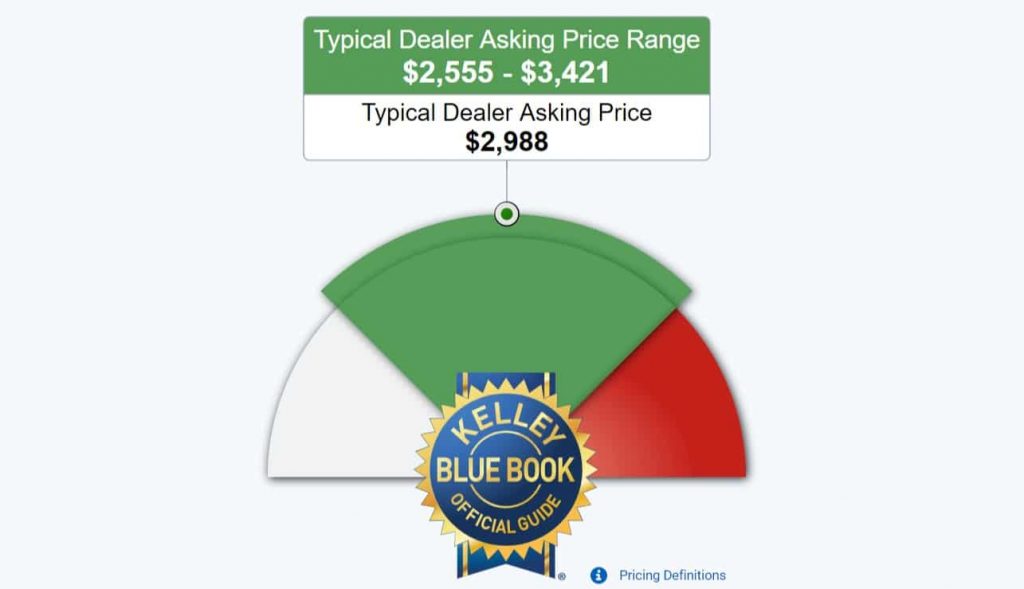
Resources like Kelley Blue Book (KBB) and the National Automobile Dealers Association (NADA) guides are the industry standards for vehicle valuation. They aggregate millions of data points from auctions, dealership sales, and private transactions to provide a range of values. When using these tools, it is crucial to be honest about your car’s condition. Most owners categorize their car as “Excellent,” but statistically, only about 5% of used cars truly fit that description. Overestimating condition leads to unrealistic financial expectations.
Comparing Trade-in vs. Private Party Values
There is often a significant gap—sometimes several thousand dollars—between what a dealer will give you (Trade-In Value) and what an individual will pay you (Private Party Value).
- Trade-In Value: This is essentially the wholesale price. The dealer needs to leave room for their own profit margin and the costs of reconditioning and marketing.
- Private Party Value: This is closer to the retail price. You capture more of the car’s value, but you take on the “labor cost” of listing the car, meeting buyers, and handling the paperwork.
Regional Market Volatility
Value is also dictated by geography—a concept known as regional supply and demand. A rear-wheel-drive convertible is worth more in Florida than in Alaska. Conversely, a 4×4 SUV will hold its value much better in the Pacific Northwest than in the Southwest. When researching “how much my car is worth,” ensure your valuation tool is set to your specific zip code to account for these local economic variances.
Strategic Timing: When to Sell for Maximum Return
In finance, timing is everything. The car market operates in cycles, and selling at the right moment can mean the difference between a loss and a break-even scenario.
The “Sweet Spot” in the Vehicle Life Cycle
The most financially savvy time to sell or trade in a vehicle is usually between the three-year and five-year mark. At this stage, the car has already taken its largest depreciation hit, but it still has enough modern technology and remaining reliability to be highly attractive to the second-hand market. Once a car hits 100,000 miles or 10 years of age, the depreciation curve flattens, but the cost of maintenance usually spikes, often making it a “money pit” rather than an asset.
Seasonal Fluctuations in the Used Car Market
The used car market typically sees a surge in prices during the spring. This is often driven by tax refund season, when many consumers have an influx of cash for down payments. Conversely, the end of the year (December) is often the best time to buy but the worst time to sell, as dealerships are trying to clear inventory for new year models, driving down the value of older stock.
Practical Steps to Boost Resale Value Before Liquidation
If you find that your car’s current market value is lower than you anticipated, there are several strategic steps you can take to “reclaim” some of that lost equity before you sell.
High-ROI Repairs and Detailing
Not all repairs are worth the investment. For example, spending $2,000 on a new transmission for a car worth $4,000 rarely makes financial sense. However, spending $200 on a professional “stage 1” detailing and paint correction can often add $1,000 to the perceived value of the car. Replacing burnt-out bulbs, worn windshield wipers, or inexpensive plastic trim pieces can remove “objection points” for a buyer, allowing you to hold firm on your asking price.
Documentation and Transparency
In any financial transaction, transparency builds trust, and trust commands a premium. Prepare a “Seller’s Packet” that includes the vehicle history report (like Carfax or AutoCheck), all maintenance records, and a clear title. By providing this upfront, you position yourself as a sophisticated seller. This reduces the buyer’s perceived risk, which is often the biggest hurdle to achieving a high sale price.
The Impact of Inflation and Supply Chain on Your Car’s Worth
It is worth noting that the traditional rules of car valuation have been disrupted in recent years by global supply chain issues and inflation. In some cases, used cars have actually appreciated in value due to a shortage of new car inventory. Keeping an eye on the Consumer Price Index (CPI) for used vehicles can help you identify unique windows of opportunity where your car might be worth significantly more than the standard depreciation models suggest.
By treating your car as a serious financial asset rather than just a mode of transportation, you can navigate the complexities of valuation with confidence. Understanding the interplay between depreciation, market trends, and maintenance will ensure that when you finally ask, “how much is my car worth,” the answer is a figure that supports your overall financial health.
aViewFromTheCave is a participant in the Amazon Services LLC Associates Program, an affiliate advertising program designed to provide a means for sites to earn advertising fees by advertising and linking to Amazon.com. Amazon, the Amazon logo, AmazonSupply, and the AmazonSupply logo are trademarks of Amazon.com, Inc. or its affiliates. As an Amazon Associate we earn affiliate commissions from qualifying purchases.