
Flying to Paris, the City of Lights, is a dream for many, but the financial aspect of airfare often presents the first hurdle. The cost isn’t a fixed number; rather, it’s a dynamic figure influenced by a multitude of economic factors, market forces, and personal choices. Understanding these variables is crucial for any traveler aiming to manage their personal finance effectively and secure the best possible deal. From the timing of your booking to the flexibility of your travel dates, every decision can significantly impact the final price tag of your journey.

Deconstructing the Core Variables Affecting Flight Prices
The price of an airline ticket is a complex sum derived from various components, each subject to market fluctuations and consumer demand. Savvy financial planning for international travel begins with a thorough understanding of these underlying drivers.
Booking Window: The Early Bird Catches the Worm (or Pays Less)
One of the most impactful financial decisions you’ll make regarding airfare is when you book. Airlines employ sophisticated algorithms to adjust pricing based on demand, remaining seat availability, and historical data. Generally, booking too early (e.g., more than six months out) can sometimes mean paying a premium because airlines haven’t yet released their full range of discounted fares. Conversely, booking too late (within a few weeks of departure) almost guarantees higher prices as the remaining seats become scarce and airlines capitalize on last-minute demand.
The financial sweet spot typically falls between two to four months before an international flight. During this window, airlines are often balancing early bookings with attracting a broader range of travelers, leading to more competitive pricing. For peak seasons, extending this window to five or six months might be prudent to lock in a reasonable rate before prices inevitably climb.
Time of Year: Peak Season vs. Shoulder Season
Travel seasons exert a significant influence on airfare costs. Peak season, characterized by high demand, invariably leads to inflated prices. For Paris, this typically includes the summer months (June to August), major holidays like Christmas and New Year’s, and school breaks (e.g., spring break). During these periods, families and vacationers flock to popular destinations, driving up the cost of flights and accommodation.
Financially astute travelers often target shoulder seasons (April-May and September-October) or the off-peak winter months (November to March, excluding holidays). During these times, demand is lower, leading to more competitive airfares. Not only will you save on flights, but you’ll also likely find better deals on hotels and experience fewer crowds at attractions, enhancing the overall value of your trip.
Departure and Arrival Airports: Flexibility Pays
Your choice of departure and arrival airports can significantly alter your flight costs. Major international hubs generally offer more competitive pricing due to higher competition among airlines and a greater volume of flights. For instance, flying from a large international airport like New York (JFK/EWR) or Los Angeles (LAX) to Paris (CDG/ORY) is often cheaper than flying from smaller regional airports.
Similarly, Paris has two main international airports: Charles de Gaulle (CDG) and Orly (ORY). While CDG is larger and typically handles more international traffic, sometimes Orly might offer better deals, especially with budget carriers. Being flexible enough to check prices into both, and considering a short, inexpensive train journey from a slightly further airport, can lead to substantial savings. Financial insight dictates comparing all viable options, not just the most convenient ones.
Airline Choice and Class of Service: Budget vs. Premium
The airline you choose and your preferred class of service are paramount financial considerations. Legacy carriers (e.g., Air France, Delta, United) generally offer more amenities, including checked baggage, in-flight meals, and entertainment, bundled into the base fare. Budget airlines (e.g., Norwegian, LEVEL, Play Airlines – though some routes and services vary) often provide significantly lower base fares but charge extra for nearly everything, from seat selection to carry-on bags and meals.
For some, the all-inclusive nature of a legacy carrier might represent better overall value, especially if they require specific services. For others, meticulously choosing only the necessary add-ons from a budget airline can result in substantial savings. The class of service (Economy, Premium Economy, Business, First) dramatically impacts cost, with each upgrade adding hundreds or thousands of dollars. Unless a business expense or extreme comfort is a priority, most personal finance budgets will stick to economy or premium economy for long-haul flights.
Layover Preferences: Direct vs. Connecting Flights
Direct flights, while convenient, almost invariably command a premium. Airlines charge more for the efficiency and time-saving aspect of a non-stop journey. Financially, opting for connecting flights, even with slightly longer layovers, can often reduce your airfare significantly. The trade-off is time and potential inconvenience, but for budget-conscious travelers, this strategy is a cornerstone of cost reduction. Weigh the monetary savings against your comfort and schedule constraints to find the optimal balance.
Deconstructing the All-Inclusive Price Tag
When you see a flight price, it’s not just the airline’s charge for carrying you. It’s a composite of several elements, some of which are non-negotiable and others that can be strategically minimized.
Base Fare: The Airline’s Core Revenue
This is the fundamental cost of the seat itself, determined by the airline based on demand, competition, route, and booking class. It’s the starting point from which all other charges are added. Market dynamics, fuel costs, and operational expenses heavily influence the base fare.
Taxes and Fees: Government Levies and Airport Charges
A significant portion of your ticket price is comprised of government taxes and airport-imposed fees. These can include passenger service charges, security fees, immigration fees, and fuel surcharges (though often now integrated into the base fare or distinct). These charges are largely unavoidable and vary by country, airport, and route. They are a fixed cost component that must be factored into your financial planning for the trip.
Ancillary Fees: Baggage, Seat Selection, and In-Flight Services
This is where budget airlines often make up for their low base fares, and even legacy carriers can add to the total.
- Baggage Fees: Checked bags are almost always extra on budget airlines and often on basic economy fares with legacy carriers. Even carry-on bags can incur fees. This is a crucial area for financial discipline: pack light or understand the fee structure thoroughly.
- Seat Selection: Many airlines charge for advance seat selection, especially for desirable seats like those with extra legroom. Opting for random assignment at check-in can save money.
- In-Flight Services: Meals, drinks, blankets, pillows, and entertainment systems might be extra, particularly on budget carriers. Bringing your own snacks and entertainment can significantly reduce these incidental expenses.
Currency Exchange Rates: An Often-Overlooked Factor

If you’re booking flights in a currency different from your own, the exchange rate can subtly impact the final cost. While not a direct fee, a fluctuating exchange rate can make a previously good deal slightly less favorable, or vice versa, by the time the transaction is processed. It’s advisable to monitor rates and consider booking in your local currency if the conversion offered by the airline or booking platform is less favorable than your credit card’s rate.
Strategies for Savvy Travelers to Minimize Costs
With a clear understanding of the cost components, you can employ several financial strategies to reduce your airfare to Paris.
Utilize Flight Comparison Websites and Price Alerts
Websites like Google Flights, Skyscanner, Kayak, and Expedia are indispensable financial tools. They allow you to compare prices across multiple airlines and online travel agencies (OTAs) simultaneously. Moreover, setting up price alerts for your desired route and dates can notify you of drops in fares, allowing you to pounce on a good deal before it disappears. This proactive monitoring is key to securing optimal pricing.
Consider Budget Airlines for Specific Routes
While sometimes requiring more careful planning to avoid hidden fees, budget airlines can offer substantial savings on the base fare. Always calculate the total cost, including all potential ancillary fees, before concluding that a budget option is cheaper. For instance, flying a budget airline to a hub airport in Europe, and then a separate, low-cost flight to Paris, might sometimes be cheaper than a direct legacy carrier flight.
Be Flexible with Dates and Airports
As discussed, flexibility is a superpower in flight booking. Using flexible date search options on comparison sites (e.g., “whole month” or “cheapest month”) can reveal significantly lower prices for shifting your travel by just a few days. Similarly, comparing prices for nearby departure or arrival airports can unlock better deals.
Travel During Off-Peak Seasons
Beyond the financial savings, traveling during the shoulder or off-peak seasons means fewer crowds and often a more authentic experience. Evaluate whether the higher cost and larger crowds of peak season are worth it for your financial and experiential goals.
Leverage Credit Card Rewards and Airline Miles
For those with a solid personal finance strategy that includes rewards credit cards, accumulating points or miles can dramatically offset the cost of flights. Many travel-focused credit cards offer lucrative sign-up bonuses that can be enough for a round-trip ticket to Europe. Regularly paying off your balance to avoid interest charges makes these rewards truly free. Consider co-branded airline credit cards for direct mileage accumulation with your preferred carrier.
Pack Light to Avoid Baggage Fees
This simple strategy is one of the most effective ways to cut costs, especially with budget airlines. Learn to pack efficiently and strategically, using travel-sized toiletries and versatile clothing items. If a checked bag is absolutely necessary, pre-purchase it online during booking, as fees are almost always higher at the airport.
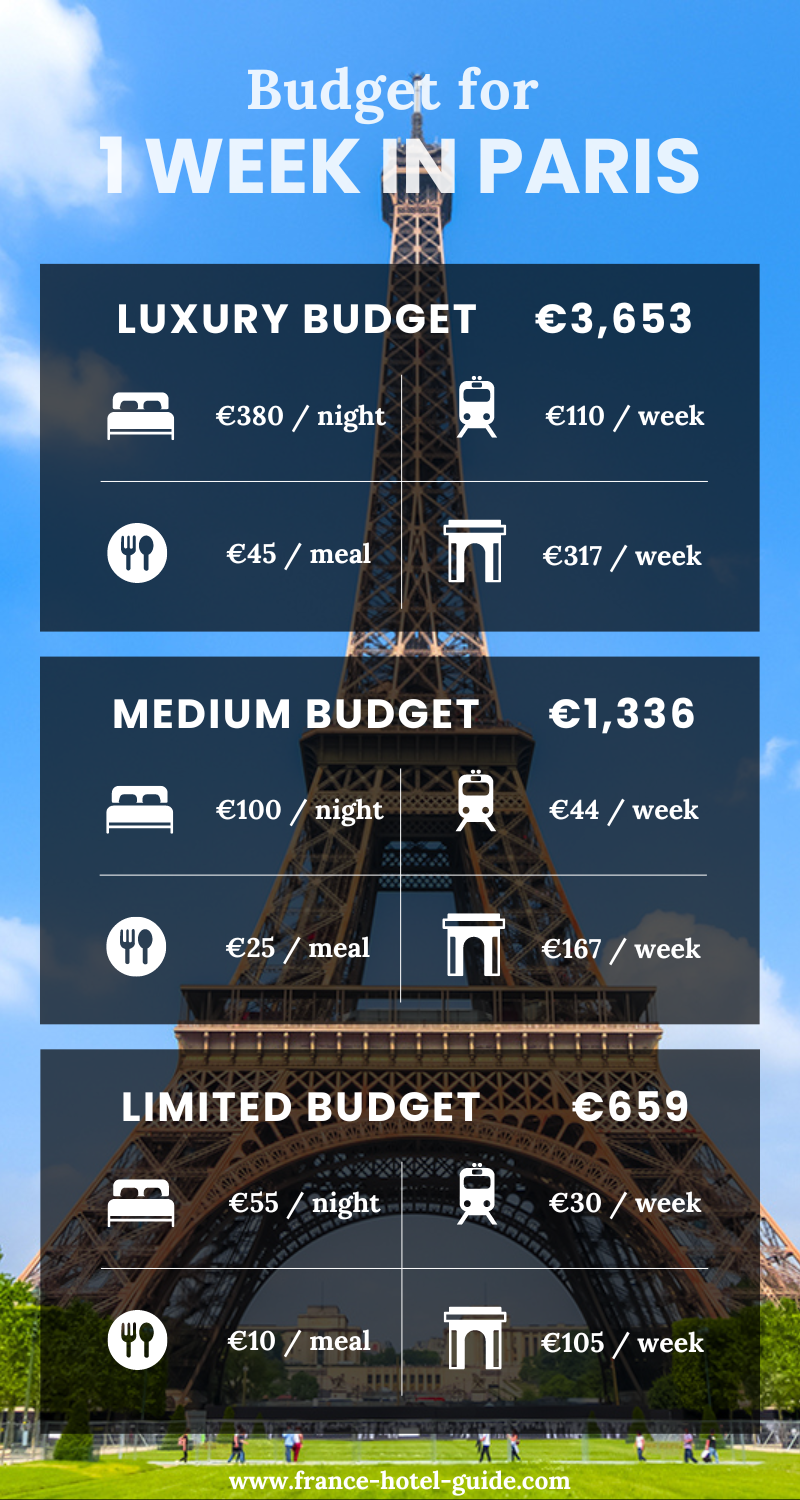
Beyond the Airfare: Budgeting for the Full Parisian Experience
While airfare is a major component, a complete financial plan for a trip to Paris must extend beyond the flight.
Accommodation Costs: Hotels, Airbnbs, Hostels
Paris offers a range of lodging options. Luxury hotels can cost hundreds of euros per night, while budget hotels, Airbnbs, or hostels provide more affordable alternatives. Booking in advance, especially outside peak season, can yield better rates. Consider staying slightly outside the most central, tourist-heavy districts to find more economical choices, balancing cost with commute time.
Ground Transportation: Airport Transfers and City Transit
Factor in the cost of getting from the airport to your accommodation (RER train, bus, taxi) and then navigating the city itself. Paris has an excellent public transportation system (Metro, RER, bus) that is far more economical than relying on taxis or ride-shares for all travel. Consider multi-day passes if you plan extensive sightseeing.
Food and Drink: Dining Out vs. Self-Catering
Parisian cuisine is a highlight, but dining out for every meal can quickly deplete a budget. Balance restaurant experiences with self-catering options from local markets or supermarkets. Picnics in parks are a delightful and cost-effective way to enjoy the city. Coffee and pastries from local boulangeries are much cheaper than cafe sit-downs.
Attractions and Activities: Museum Passes and Tour Costs
Many popular attractions have entrance fees. Investigate multi-attraction passes (e.g., Paris Pass, Paris Museum Pass) to see if they offer savings for your planned itinerary. Prioritize which sites are most important to you and budget accordingly. Don’t forget free attractions like walking tours, exploring neighborhoods, and enjoying public parks.
Miscellaneous Expenses: Souvenirs, SIM Cards, Emergencies
Allocate a contingency fund for unexpected costs, souvenirs, local SIM cards for connectivity, or any minor emergencies. Having this buffer is a cornerstone of responsible financial planning for international travel.
Ultimately, the cost to fly to Paris is a figure you can significantly influence through informed decisions and strategic financial planning. By understanding the variables, employing smart booking tactics, and budgeting for the entire trip, you can transform the dream of visiting Paris into an affordable reality.
aViewFromTheCave is a participant in the Amazon Services LLC Associates Program, an affiliate advertising program designed to provide a means for sites to earn advertising fees by advertising and linking to Amazon.com. Amazon, the Amazon logo, AmazonSupply, and the AmazonSupply logo are trademarks of Amazon.com, Inc. or its affiliates. As an Amazon Associate we earn affiliate commissions from qualifying purchases.