
In the modern landscape of personal finance, the recurring subscription has become a primary line item in the average household budget. Among these, Amazon Prime stands as the titan of consumer ecosystems. What began as a simple loyalty program centered on expedited shipping has evolved into a multi-faceted financial commitment that touches on entertainment, grocery logistics, digital storage, and hardware. To answer the question of how much it costs to be an Amazon Prime member, one must look beyond the sticker price of the annual fee and analyze the broader economic impact on a consumer’s spending habits, opportunity costs, and the value proposition of the integrated services.
Understanding the Direct Costs: Membership Tiers and Pricing Structures
The most immediate answer to the cost of Amazon Prime is found in its tiered pricing structure. As of the current fiscal period, the standard consumer membership in the United States is priced at $139 per year. For those who prefer a more flexible, short-term commitment, the monthly rate stands at $14.99. From a financial planning perspective, the annual payment represents a significant discount—approximately $40 in savings over the course of twelve months compared to the monthly installment plan. However, the $139 upfront cost requires a liquidity management strategy that not every household is prepared for, leading many to opt for the higher-interest “convenience” of the monthly fee.
Discounted Rates for Specific Demographics
Amazon utilizes a strategic pricing model to capture segments of the market that are more price-sensitive or in specific life stages. Prime Student is a notable example, offered at $7.49 per month or $69 per year. This represents a 50% discount and serves as a long-term customer acquisition strategy, locking in brand loyalty during a consumer’s formative spending years.
Furthermore, the “Prime Access” program targets recipients of government assistance (such as SNAP, EBT, or Medicaid). This tier costs $6.99 per month. From a personal finance standpoint, this is an attempt to democratize access to the Prime ecosystem, though critics often argue that the ease of one-click purchasing can be a double-edged sword for those on strict, fixed budgets.
Business Prime for Corporate Financial Management
For entrepreneurs and corporate entities, the cost structure shifts into a different category of business expense. Business Prime is scaled based on the number of users, starting at $69 per year for a single-user “Duo” plan (intended for those who already have a personal Prime account) and scaling up to “Small” ($129/year for up to 5 users), “Medium” ($499/year for up to 100 users), and “Enterprise” ($1,299/year for over 100 users). For a business, these costs are often tax-deductible as necessary operating expenses, making the effective cost lower than the nominal fee when accounting for tax savings.
The Opportunity Cost and Hidden Expenses of the Prime Ecosystem
Calculating the true cost of a Prime membership requires an analysis of behavioral economics. The “Prime Effect” refers to the tendency of members to concentrate their spending within the Amazon ecosystem to justify the membership fee. Financial data suggests that Prime members spend an average of $1,400 per year on the platform, compared to roughly $600 for non-members. This suggests that while the “shipping is free,” the ease of the transaction often leads to increased discretionary spending.
The Psychology of “Free Shipping” and Impulse Purchasing
The $139 annual fee acts as a “sunk cost.” Once a consumer has paid this fee, they feel a psychological urge to use the service as much as possible to “get their money’s worth.” In personal finance, this can lead to a decrease in price-comparison shopping. A member might buy a household item on Amazon for $15 that is available at a local big-box store for $12, simply because the perceived cost of shipping is zero and the convenience is high. Over dozens of transactions per year, this lack of price auditing can cost a household hundreds of dollars in “convenience leakage.”
Add-on Services and Subscription Creep
The base cost of Prime is often just the entry point into a series of additional financial outlays. Amazon’s strategy involves “upselling” within the Prime interface. For example:
-
Prime Video Channels: While many movies are free, premium channels like Max, Paramount+, or MGM+ require additional monthly fees ranging from $5.99 to $15.99.
-
Amazon Music Unlimited: While a “Lite” version is included with Prime, the full library requires an additional monthly fee, albeit discounted for Prime members.
-
Audible and Kindle Unlimited: These are separate subscriptions that, while integrated into the ecosystem, represent further monthly drains on a consumer’s cash flow.
When these are aggregated, the “cost of being Amazon Prime” can easily swell from $139 a year to over $500 a year if a user is not diligent about monitoring their recurring digital expenses.
Evaluating the ROI: Is the Membership Fee Justifiable?
From an objective financial standpoint, the value of Prime is determined by the “Break-Even Point.” To find this point, a consumer must calculate the cost of shipping they would have otherwise paid. If the average expedited shipping cost for a non-member is $7.99, a member would need to place approximately 18 orders per year to recover the $139 annual fee through shipping savings alone.
Quantitative Analysis: Shipping and Grocery Savings
For high-frequency shoppers, the ROI is undeniably positive. A household that orders 50 times a year is effectively paying $2.78 per delivery through their Prime membership. Furthermore, the integration with Whole Foods Market provides Prime members with an additional 10% discount on sale items. For a family that spends $200 a week on groceries at Whole Foods, the potential savings could exceed the membership cost in less than three months, making the Prime fee a profitable investment in their food budget.
Qualitative Benefits and Digital Assets
The financial value of the non-shipping perks must also be factored into the ROI equation:
-
Prime Video: If a consumer cancels a $15/month Netflix subscription because they are satisfied with Prime Video’s library, the Prime membership has paid for itself through “substitution value.”
-
Amazon Photos: Offering unlimited full-resolution photo storage, this service can replace paid tiers of Google Photos or iCloud, potentially saving a user $20 to $100 per year in cloud storage fees.
-
Prime Reading: Access to a rotating library of ebooks and magazines can reduce a household’s entertainment and education budget.
Strategic Alternatives and Cost-Saving Measures
For the financially savvy consumer, there are ways to mitigate the cost of the Prime membership or achieve similar results without the annual fee. One of the most effective methods is the “Amazon Household” feature. This allows two adults to share a single Prime membership and its benefits while keeping their payment methods and order histories separate. This effectively cuts the cost of Prime in half ($69.50 per person) while maintaining full service.
Comparing Prime to Competitor Subscriptions
The landscape of retail subscriptions is increasingly competitive. Walmart+ is the most direct competitor, priced at $98 per year. It offers free shipping, fuel discounts, and a complimentary subscription to Paramount+. For a consumer living in a rural area where gas savings are paramount, the ROI of Walmart+ might exceed that of Amazon Prime. Target’s Circle 360 is another entrant, focusing on same-day delivery via Shipt. When deciding where to allocate subscription dollars, a consumer must perform a “utility audit” to see which ecosystem aligns most closely with their actual consumption patterns rather than their aspirational ones.
The “No-Cost” Amazon Strategy
It is a common misconception that one must be a Prime member to get free shipping on Amazon. The platform offers free standard shipping on orders over $35 for non-members. For a disciplined consumer who can “batch” their purchases—waiting until they have $35 worth of goods in their cart before checking out—the cost of being an Amazon user is effectively zero. This approach avoids the $139 annual fee and naturally curbs impulse spending, as the consumer must wait to reach the spending threshold.

The Future of Subscription Economics: Predicting Price Hikes
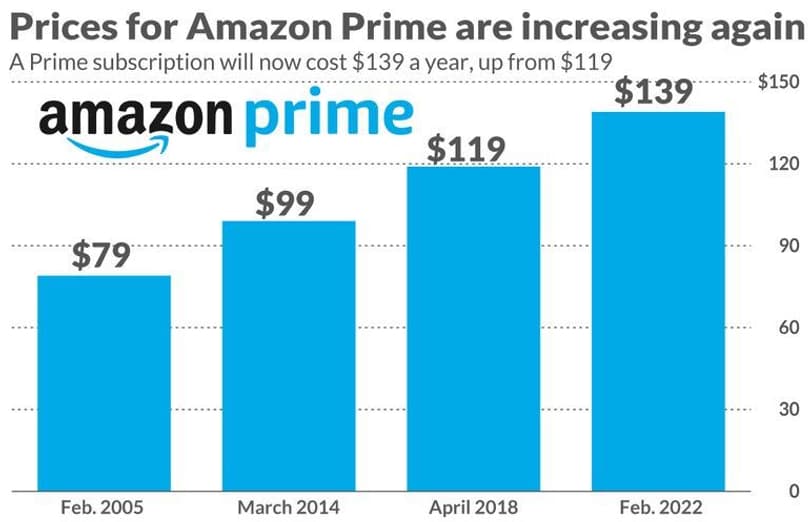
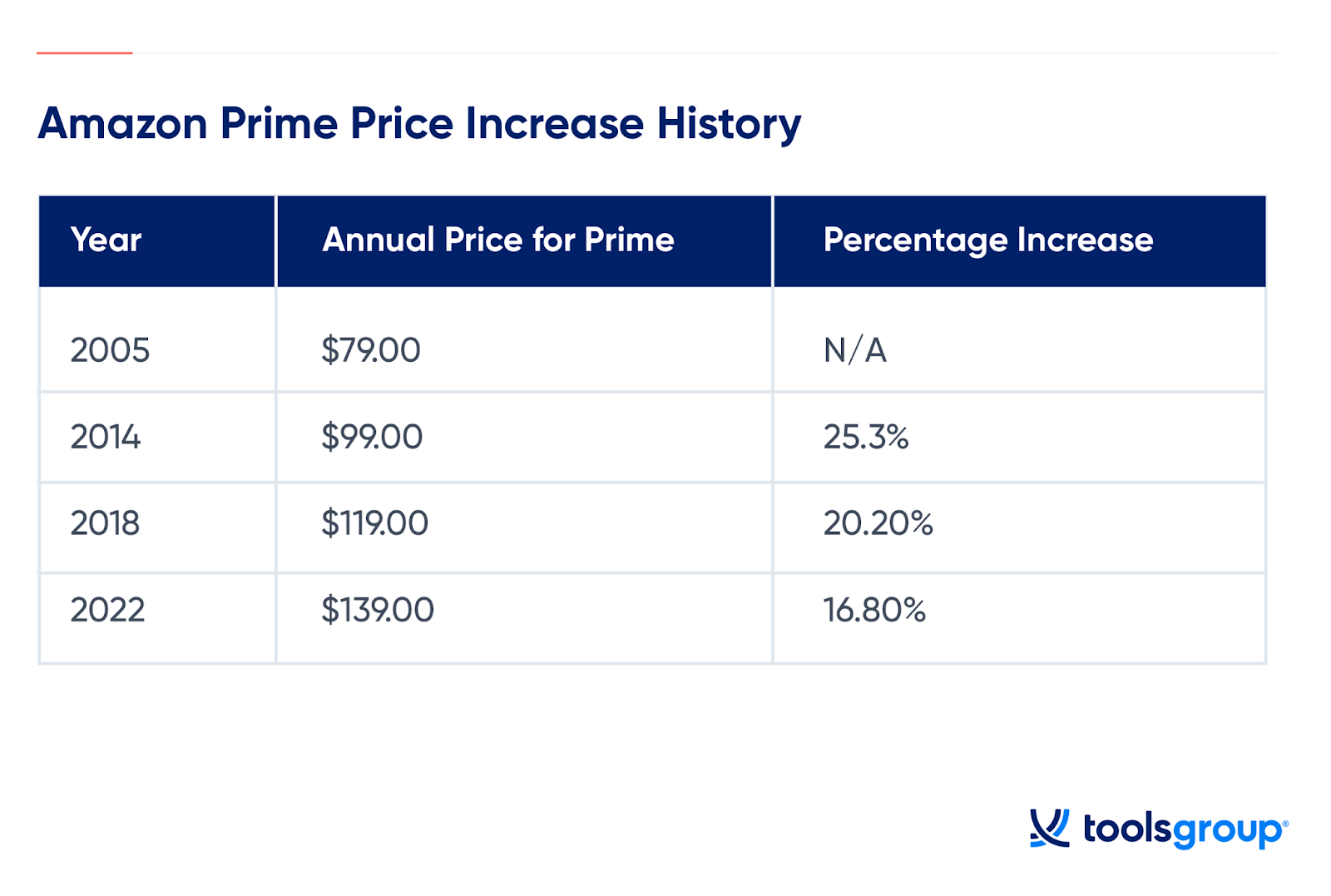
The history of Amazon Prime’s pricing shows a clear upward trajectory. In 2005, the service launched at $79. It moved to $99 in 2014, $119 in 2018, and finally $139 in 2022. As the cost of logistics, fuel, and labor continues to rise, it is mathematically probable that the membership fee will continue to escalate.
From a personal finance perspective, this necessitates a yearly re-evaluation of the service. A subscription that was a “great deal” at $79 may be a “marginal burden” at $159 or $179. Consumers must move away from a “set it and forget it” mentality regarding their Prime membership. As the ecosystem expands into healthcare (One Medical) and satellite internet (Project Kuiper), the price of entry will likely reflect the increasing complexity of the services offered.
Ultimately, the cost of being Amazon Prime is a variable figure. For the strategic user who utilizes Household sharing, maximizes Whole Foods discounts, and replaces other digital subscriptions with Prime’s offerings, the membership is a powerful tool for financial efficiency. For the impulsive shopper who ignores the “subscription creep” of add-on channels and fails to batch orders, Prime can become a silent drain on net worth. In the realm of personal finance, the goal is not to avoid spending, but to ensure that every dollar of “cost” generates a superior return in “value.”
aViewFromTheCave is a participant in the Amazon Services LLC Associates Program, an affiliate advertising program designed to provide a means for sites to earn advertising fees by advertising and linking to Amazon.com. Amazon, the Amazon logo, AmazonSupply, and the AmazonSupply logo are trademarks of Amazon.com, Inc. or its affiliates. As an Amazon Associate we earn affiliate commissions from qualifying purchases.