
In an era saturated with digital entertainment, streaming services have transitioned from luxury add-ons to essential components of many household budgets. Paramount Plus, with its extensive library of movies, original series, and live sports, has carved out a significant niche. However, for the financially savvy consumer, the primary question isn’t just about what’s available, but “how much does it cost?” Understanding the financial implications of subscribing to Paramount Plus, or any streaming service, is crucial for effective personal finance management. This guide delves deep into the pricing structures, value propositions, and strategies for optimizing your investment in Paramount Plus, framing it entirely through a financial lens to help you make an informed economic decision.
Deconstructing Paramount Plus Pricing Tiers: Understanding Your Investment Options
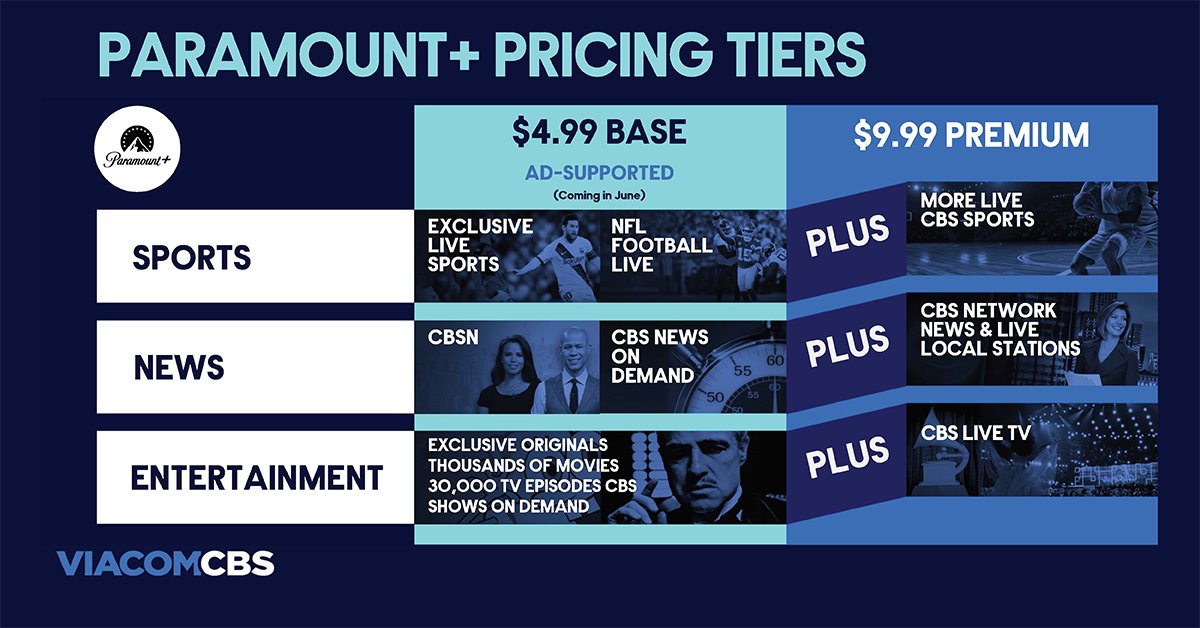
Paramount Plus, like many of its competitors, employs a tiered pricing model designed to cater to different consumer needs and budgets. Each tier represents a distinct financial commitment with varying levels of features and access. Grasping these differences is the first step in assessing which option, if any, aligns with your financial goals and entertainment preferences.
The Essential Plan: Ad-Supported Value
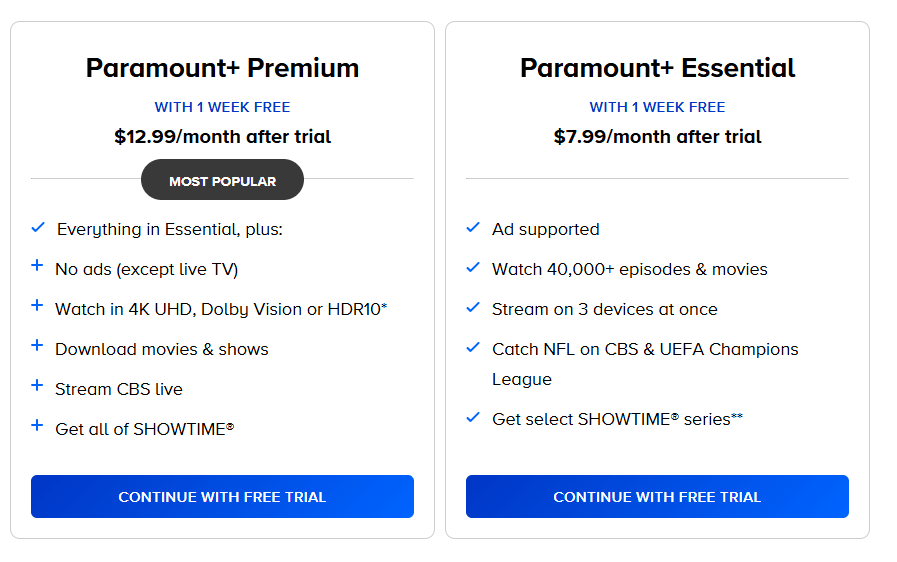
The Essential plan represents the entry point into the Paramount Plus ecosystem, priced at a more accessible rate. Typically, this tier comes with limited commercial interruptions during on-demand content. While it provides access to a vast library of movies and TV shows, it usually does not include access to your local live CBS station (though live NFL on CBS and UEFA Champions League are generally included).
From a financial perspective, the Essential plan is designed for budget-conscious viewers who prioritize cost savings over an uninterrupted viewing experience. It allows subscribers to enjoy a significant portion of Paramount Plus’s offerings without breaking the bank. The trade-off for its lower price point is the presence of advertisements, which can be a minor inconvenience for some but a negligible factor for others, especially given the cost efficiency. For many, the value derived from access to exclusive content at a reduced monthly or annual fee outweighs the occasional commercial break.
The Premium Plan: Ad-Free Experience and Enhanced Features
Stepping up from the Essential plan, the Premium tier offers a more comprehensive and seamless viewing experience. The most significant upgrade here is the ad-free streaming for on-demand content, allowing for uninterrupted enjoyment of movies and series. Additionally, the Premium plan typically includes access to your local live CBS station, providing a robust offering of news, prime-time shows, and live sports. It also often boasts enhanced download capabilities and 4K UHD streaming for select titles, enriching the overall user experience.
Financially, the Premium plan represents a higher investment, justified by its added convenience and features. Consumers considering this tier are often those who place a high value on an uninterrupted viewing experience, desire access to live local programming, or simply want the best possible quality available. The incremental cost between the Essential and Premium plans needs to be weighed against these benefits. For individuals who frequently stream and are sensitive to ads, the Premium plan’s higher price point can be seen as a worthwhile expenditure that enhances their daily entertainment value, effectively buying back their time and improving their viewing comfort.
Bundling Opportunities: Maximizing Savings with SHOWTIME
Paramount Plus has further expanded its offering through strategic bundling, most notably with SHOWTIME. This combined package merges the extensive Paramount Plus library with SHOWTIME’s critically acclaimed original series, movies, and sports. This combined offering is usually presented as a distinct, higher-priced tier, or as an upgrade to the existing Premium plan.
From a financial planning perspective, bundling is often a smart move for consumers who were already considering or subscribing to both services independently. By combining them under a single subscription, the bundle typically offers a notable discount compared to purchasing each service separately. This strategy not only simplifies billing but also provides a broader spectrum of content at a more favorable aggregate price. It requires a clear assessment of one’s entertainment consumption habits; if you’re a fan of content from both Paramount Plus and SHOWTIME, the bundle can represent significant savings and an enhanced return on your entertainment investment. It’s a prime example of how strategic purchasing can optimize your household’s entertainment budget.
Understanding the True Value: Beyond the Monthly Fee
The sticker price of a Paramount Plus subscription is just one facet of its overall financial value. A comprehensive financial assessment requires looking beyond the monthly or annual fee to evaluate what you genuinely receive for your money. This involves scrutinizing the content library, the specific features offered, and how well the service integrates into your existing digital ecosystem.
Content Library and Exclusive Originals: Is the Entertainment Worth It?
The core offering of any streaming service is its content. Paramount Plus boasts a deep catalog, leveraging the vast archives of Paramount Pictures, CBS, MTV, Comedy Central, Nickelodeon, and the Smithsonian Channel. It’s also become a hub for exclusive original series (e.g., Yellowstone prequels like 1883 and 1923, Star Trek universe expansions), and live sports.
From a financial standpoint, the “worth” of this content is highly subjective and depends entirely on your personal viewing habits and preferences. If the majority of your desired shows and movies are available on Paramount Plus, then even a higher subscription fee can represent significant value, potentially replacing expensive cable packages or multiple other streaming subscriptions. Conversely, if you only find a handful of appealing titles, the cost-per-hour of enjoyment might be considerably higher, making it a less financially efficient choice. Evaluating the uniqueness and breadth of content relevant to you is paramount to justifying the expenditure.
Feature Set Comparison: What You Get for Your Money
Beyond content, the features accompanying your subscription contribute significantly to its perceived value. This includes aspects like the number of simultaneous streams allowed, user profiles, download capabilities for offline viewing, and streaming quality (HD, 4K UHD, HDR).
The financial implication here lies in how these features enhance or detract from your experience. For a multi-person household, the ability to stream on multiple devices simultaneously is a critical value-add, as it means one subscription can serve several users, effectively reducing the per-person cost. Download capabilities can save on mobile data costs for commuters or travelers. Access to 4K UHD content, while often requiring compatible hardware, offers a premium viewing experience that some users might find worth the extra cost of the Premium tier. Assessing these features against your household’s usage patterns helps quantify the utility and therefore the financial justification of the subscription.
Device Compatibility and User Experience: Enhancing Your Investment
A streaming service, however rich its content, is only as good as its accessibility and usability. Paramount Plus is widely available across a plethora of devices, including smart TVs, streaming media players (Roku, Apple TV, Fire TV), gaming consoles, mobile devices, and web browsers. The user interface and overall experience—how easy it is to find content, create watchlists, and resume playback—also play a role.
From a financial lens, excellent device compatibility means you don’t need to invest in new hardware just to access the service, making your existing tech investments more versatile. A smooth, intuitive user experience minimizes frustration and maximizes your enjoyment, ensuring you get the most out of your paid subscription time. Conversely, a poor user experience could lead to underutilization, making the monthly fee feel like a wasted expenditure. Therefore, the seamless integration of Paramount Plus into your digital lifestyle contributes to its overall financial value by ensuring consistent and enjoyable usage.
Strategies for Optimizing Your Paramount Plus Subscription
Once you’ve decided Paramount Plus is a potential contender for your entertainment budget, smart financial strategies can help ensure you get the most value for your money. These tactics focus on minimizing costs while maximizing access to content.
Leveraging Free Trials: Test Before You Commit
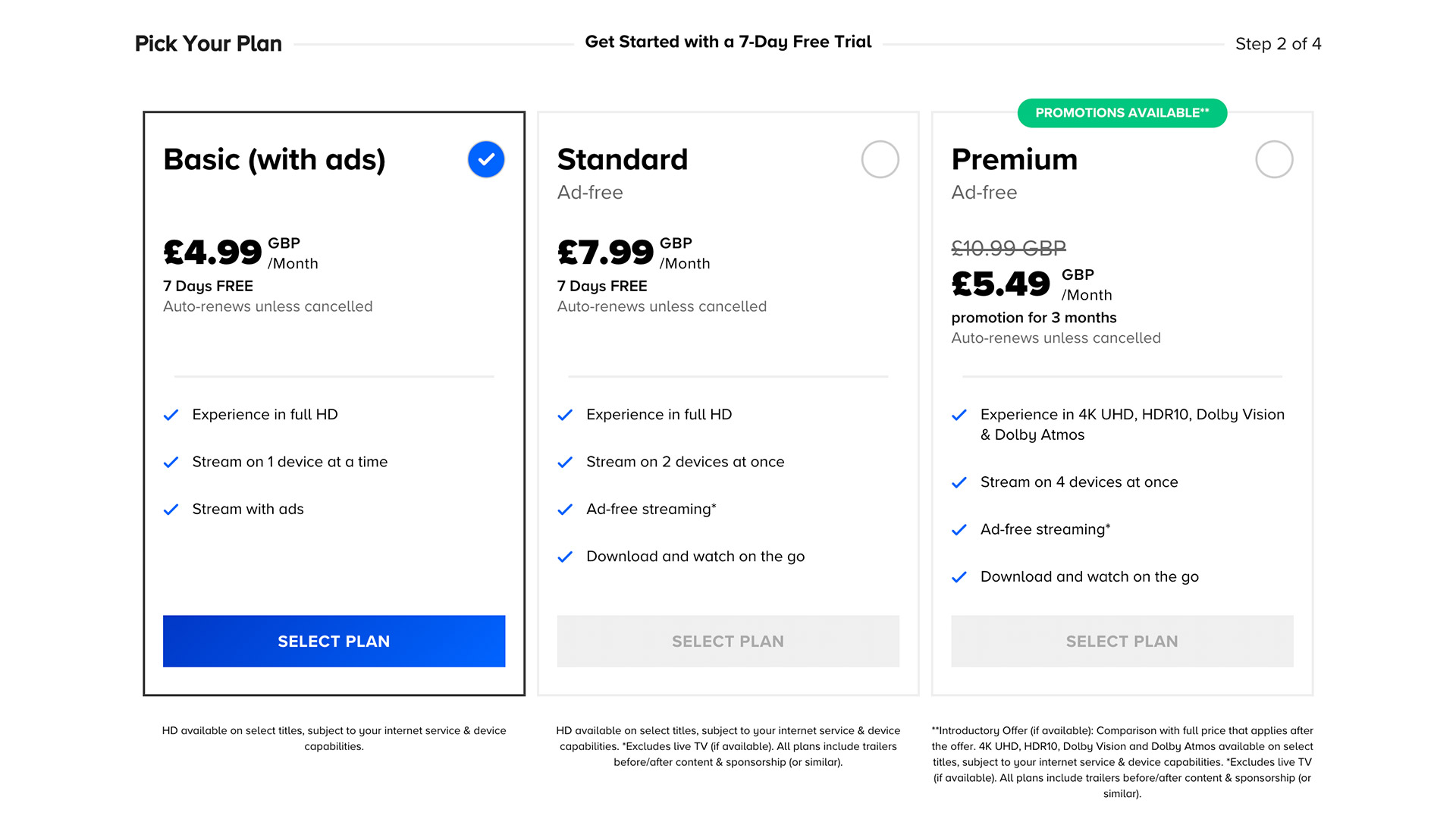
Almost all streaming services, including Paramount Plus, offer a free trial period. Typically lasting 7 days, this trial is a crucial financial tool that allows you to “try before you buy.”
From a financial perspective, a free trial is an opportunity to conduct a zero-cost audit of the service. During this period, you can explore the content library, test the user interface, assess streaming quality on your devices, and determine if the service genuinely aligns with your entertainment needs and habits. It allows you to validate the potential financial investment without any risk. It’s essential to set a reminder to cancel before the trial expires if you decide it’s not a good fit, thereby avoiding an unwanted charge and safeguarding your budget.
Annual Subscriptions vs. Monthly Payments: Unlocking Long-Term Savings
Paramount Plus, like many subscription services, often provides a discount for committing to an annual plan rather than paying month-to-month. While the upfront cost is higher for an annual subscription, the total cost over a 12-month period is significantly lower.
This is a classic financial trade-off: convenience vs. savings. For a service you know you’ll use consistently throughout the year, an annual subscription is almost always the more financially prudent choice. It represents a commitment that yields a measurable discount, making your entertainment budget stretch further. However, if your viewing habits are sporadic or you anticipate canceling within a few months, the monthly option offers greater flexibility, albeit at a higher effective cost. A careful assessment of your long-term entertainment needs is essential here.
Student Discounts and Other Promotional Offers: Searching for Hidden Deals
Many streaming platforms recognize specific demographics or engage in periodic promotions to attract new subscribers. Paramount Plus has historically offered student discounts (e.g., 25% off specific plans) and other limited-time promotional codes or bundles.
From a financial standpoint, actively seeking out these discounts can lead to substantial savings. Checking reputable coupon sites, the Paramount Plus website directly, or even through partner promotions (e.g., mobile carriers, internet providers) can uncover deals that reduce your recurring expense. These promotions are essentially free money back into your pocket, making your entertainment budget more efficient. Always verify the terms and conditions, including eligibility requirements and expiration dates, to ensure you can fully leverage these savings.
The Art of Stacking and Churning: Managing Multiple Streaming Services
In today’s streaming landscape, it’s common for households to subscribe to multiple services. “Stacking” refers to having several active subscriptions simultaneously, while “churning” involves subscribing to a service for a period, canceling it, and then subscribing to another, rotating through services based on content availability.
Financially, a strategic approach to stacking and churning can optimize your overall entertainment budget. Stacking multiple services might be justified if your household has diverse viewing preferences that cannot be met by a single platform. However, it’s crucial to regularly review these subscriptions to avoid “subscription creep,” where small monthly fees add up to a significant overall expense. Churning, on the other hand, can be a highly cost-effective strategy. By subscribing only when new content you want to watch drops, binging it, and then canceling until the next must-see show, you minimize your active subscription months, dramatically reducing annual costs. This requires discipline but can lead to substantial savings.
Paramount Plus in Your Personal Finance Ecosystem
Integrating any new recurring expense, like a Paramount Plus subscription, into your personal finance framework requires thoughtful consideration. It’s not just about the absolute cost, but how it fits into your broader financial picture.
Budgeting for Streaming Services: A Modern Household Expense
In the past, entertainment budgets primarily encompassed cable TV, movie rentals, or theater tickets. Today, streaming services are a dominant category. Incorporating Paramount Plus into your budget means allocating a specific portion of your discretionary income.
From a financial planning perspective, this involves tracking your spending and ensuring that your total outlay for streaming services doesn’t exceed a comfortable percentage of your disposable income. Tools like budgeting apps or spreadsheets can help monitor these expenses. Regularly reviewing your streaming subscriptions as part of your overall budget check-up is crucial to prevent these relatively small, recurring costs from accumulating into a significant, unnoticed drain on your finances.
Opportunity Cost: Where Else Could Your Money Go?
Every dollar spent on a Paramount Plus subscription is a dollar that cannot be spent elsewhere. This concept is known as opportunity cost—the value of the next best alternative that you forgo.
Financially, understanding opportunity cost is vital. If a Paramount Plus subscription costs $11.99 per month, that’s nearly $144 per year. Could that money be better allocated towards a savings goal, an investment, debt repayment, a different hobby, or even another essential service? For instance, prioritizing savings for a down payment or contributing to a retirement fund might yield greater long-term financial benefits than immediate entertainment. This doesn’t mean entertainment is bad, but it forces a conscious decision about where your financial priorities truly lie.
Evaluating ROI (Return on Investment) for Entertainment Spending
While traditional ROI metrics typically apply to business investments, a similar concept can be applied to personal entertainment spending. What is the “return” you’re getting for your investment in Paramount Plus?
For entertainment, the return is primarily in terms of enjoyment, relaxation, and access to desired content. To evaluate this “ROI,” consider how frequently you use the service and how much enjoyment you derive from it. If you subscribe to the Premium plan but rarely watch, or primarily utilize content that’s also available elsewhere, your ROI is likely low. Conversely, if Paramount Plus is a primary source of your entertainment, consistently used by multiple household members, and provides unique content you truly value, then your financial investment is yielding a high return in terms of personal satisfaction and utility. This evaluation encourages a mindful approach to discretionary spending.
Making an Informed Financial Decision
Ultimately, the decision of whether or not to subscribe to Paramount Plus, and at what tier, boils down to a personalized financial assessment. It requires introspection about your habits, awareness of market trends, and a clear understanding of your financial priorities.
Assessing Your Viewing Habits and Priorities
Before committing, take stock of your current entertainment consumption. Do you frequently watch shows and movies that are exclusive to Paramount Plus? Are you a fan of the live sports it offers? How many hours per week do you realistically anticipate using the service?
From a financial planning perspective, aligning your spending with your actual usage and preferences is key to maximizing value. If you’re a casual viewer, the Essential plan might suffice, or perhaps even a temporary subscription for a specific show. If it’s a primary source of entertainment for an entire family, the Premium or bundled option might be justified. Your personal priorities, whether it’s saving money, enjoying an ad-free experience, or accessing specific content, should guide your financial choice.
The Evolving Streaming Landscape: Future Price Adjustments
The streaming market is dynamic. Services frequently adjust their pricing, add or remove content, and introduce new tiers. Paramount Plus is no exception, having undergone various adjustments since its inception.
From a financial perspective, this means your current assessment is a snapshot in time. It’s prudent to remain aware of potential future price increases or changes in features that could impact the long-term financial viability of your subscription. Building flexibility into your budget and regularly reviewing your subscriptions ensures you can adapt to these changes without financial strain.
Final Considerations: Is Paramount Plus the Right Fit for Your Wallet?
Paramount Plus offers a compelling catalog of content for various tastes. However, whether it represents a good financial decision depends on your individual circumstances.
Consider the cost in relation to your overall entertainment budget, your household income, and your other financial goals. Utilize free trials, explore annual plans, and seek out discounts. Evaluate the true value beyond the dollar amount by considering content relevance, features, and user experience. By approaching the “how much does it cost” question with a thorough financial lens, you can confidently decide if Paramount Plus is an investment that truly enhances your personal finance ecosystem and delivers a worthwhile return on your entertainment dollar.
aViewFromTheCave is a participant in the Amazon Services LLC Associates Program, an affiliate advertising program designed to provide a means for sites to earn advertising fees by advertising and linking to Amazon.com. Amazon, the Amazon logo, AmazonSupply, and the AmazonSupply logo are trademarks of Amazon.com, Inc. or its affiliates. As an Amazon Associate we earn affiliate commissions from qualifying purchases.