
Tax season often brings a mix of anxiety and anticipation. For millions of taxpayers, the primary concern isn’t just how much they might owe the IRS, but how much they will have to pay to get their taxes filed correctly. H&R Block, one of the most recognized names in the financial services industry, offers a wide array of products ranging from free DIY software to high-end personalized consultations with tax attorneys.
However, H&R Block’s pricing structure is famously fluid. Because tax situations vary wildly from a student with a single W-2 to a small business owner with complex depreciation schedules, there is no single “price tag.” To navigate these costs effectively, one must understand the tiers of service, the hidden fees, and the value proposition of each filing method.

The Architecture of H&R Block’s Pricing Model
H&R Block operates on a multi-tiered pricing strategy designed to capture every segment of the market. Whether you are a digital nomad who prefers a mobile app or a retiree who wants to sit down in a physical office, the price you pay is dictated by the complexity of your financial life and the level of human intervention required.
DIY Online vs. In-Person Assistance
The most significant price divide exists between the Do-It-Yourself (DIY) online software and the Assisted (In-Person or Virtual) services. DIY software is significantly cheaper because you are providing the labor; you are the data entry clerk and the reviewer. In-person services carry the overhead of physical office space and the hourly rate of a professional tax preparer. Generally, DIY packages range from $0 to $115 (plus state fees), while in-person preparation rarely starts below $80 and can easily climb into the mid-hundreds.
The “Base Fee plus Forms” System
For in-person filings, H&R Block often uses a pricing model based on the forms required. There is typically a base fee for a standard federal return (Form 1040). From there, additional charges are tacked on for every supplemental schedule. If you have dividend income (Schedule B), capital gains from stock sales (Schedule D), or rental property income (Schedule E), each of these adds a predetermined amount to your final invoice. This is why a “simple” return can quickly become expensive if you have multiple small investment accounts.
Seasonal Fluctuations and Early Bird Incentives
In the world of personal finance, timing is everything. H&R Block frequently adjusts its online software pricing throughout the tax season. Prices are typically at their lowest in January and early February. As the April 15th deadline approaches, “early bird” discounts expire, and prices for the same software packages can increase by $10 to $30.
Cost Breakdown for DIY Online Filing Products
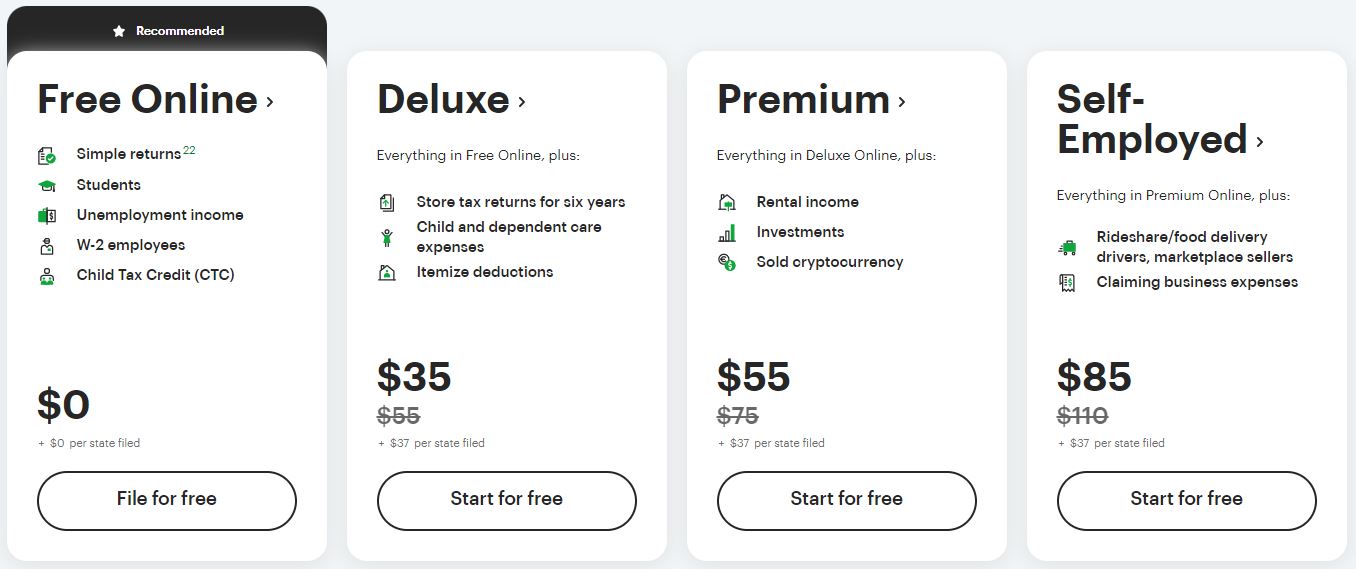
For the tech-savvy taxpayer looking to minimize expenses, H&R Block’s online platform is the most common choice. The platform is divided into four main tiers, each targeting a specific financial demographic.
H&R Block Free Online
The Free Online version is designed for the simplest tax situations. It covers W-2 income, unemployment income, and student loan interest deductions. It is one of the more robust “free” offerings in the market because it includes some features—like Earned Income Tax Credit (EITC) and child tax credit forms—that competitors sometimes charge for. However, if you have any complexity, such as itemized deductions or freelancer income, you will be forced to upgrade.
Deluxe Online: For Homeowners and Investors
The Deluxe tier (typically priced between $35 and $55) is the sweet spot for many middle-class families. This version is necessary if you want to itemize deductions (Schedule A). It also handles Health Savings Accounts (HSAs) and provides organized storage for previous years’ returns. It is important to note that state returns are almost never included in the base price and usually cost an additional $37 to $45 per state.
Premium Online: For Complex Investments
If you sold stocks, bonds, or cryptocurrency during the year, or if you own rental property, the Premium tier (ranging from $65 to $85) is required. This version includes more advanced calculators to determine the cost basis of your investments. In the context of modern personal finance, where retail trading and crypto have become mainstream, many taxpayers find themselves pushed into this tier unexpectedly.
Self-Employed Online: The Entrepreneur’s Choice
Small business owners, freelancers, and contractors (1099 workers) require the Self-Employed version. This is the most expensive DIY tier, usually priced between $85 and $115. It includes specialized tools for Schedule C, allowing you to deduct business expenses like home office costs, travel, and equipment. For a side-hustler making a few thousand dollars a year, this fee can represent a significant percentage of their profit, making it a critical line item in their business budget.

Professional In-Person Tax Preparation Costs
While online filing is cheaper, many Americans prefer the security of a professional. When you walk into an H&R Block office, you aren’t just paying for software; you are paying for expertise and a guarantee of accuracy.
The Starting Rate for Simple Returns
For a very basic return—one W-2 and no dependents—you might find promotional rates starting around $80. However, this is the floor. In many urban markets, the actual starting price for a professional to handle a standard return is closer to $150. This fee covers the professional’s time to interview you, input your data, and perform a final review.
Complexity Surcharges and State Fees
As mentioned, the “menu” of forms drives the price up. A taxpayer with a mortgage, two children, a 401(k) rollover, and a state filing requirement can expect an in-person bill ranging from $250 to $450. If you are a high-net-worth individual with K-1s from partnerships or complicated multi-state filing requirements, the cost can exceed $500. It is always advisable to ask for a “Price Preview” before the preparer begins the work.
H&R Block Expat and Business Services
H&R Block also offers specialized services for U.S. citizens living abroad and for incorporated businesses (S-Corps, Partnerships). These are not standard consumer products and are priced much higher, often starting at $300 to $500, reflecting the specialized knowledge required to navigate international tax treaties or corporate tax law.
Hidden Costs and Value-Added Services
The “sticker price” of tax preparation is rarely the final amount deducted from your bank account. There are several optional services and administrative fees that can inflate the total cost.
Refund Transfers and Financial Products
One of the most common “hidden” costs is the Refund Transfer fee. If you choose to have H&R Block’s fees deducted directly from your tax refund rather than paying upfront, you are essentially taking out a short-term loan. This service can cost between $39 and $60. From a personal finance perspective, this is a high-cost convenience; paying upfront with a credit or debit card is almost always the more economical choice.
Peace of Mind® and Audit Support
H&R Block offers an add-on called “Peace of Mind” Extended Service Plan. For a fee (usually around $40), they promise to represent you in the event of an audit and provide reimbursement for certain errors made by the preparer. While this provides emotional security, many financial advisors point out that H&R Block already stands behind their work with a basic accuracy guarantee. The “Peace of Mind” plan is essentially an insurance product.
Tax Pro Review for DIY Filers
For those who want the low cost of DIY but the security of a professional, H&R Block offers “Tax Pro Review.” This is a hybrid service where you complete your return online, and then a professional reviews every line before you file. This service typically adds $50 to $90 to the price of your DIY software package. For many, this represents the best balance of cost and confidence.
Is H&R Block Worth the Cost? A Value Analysis
To determine if H&R Block is the right financial choice, you must compare it against the alternatives: doing it yourself for free via the IRS Free File program, using a competitor like TurboTax, or hiring a local Certified Public Accountant (CPA).
H&R Block vs. TurboTax
In the battle of the giants, H&R Block is often slightly more affordable than TurboTax, particularly in the mid-to-high tiers. H&R Block’s “Free” version is also generally more inclusive than TurboTax’s equivalent. However, TurboTax is often cited as having a slightly more intuitive user interface. From a pure “money” perspective, H&R Block often wins on price, while TurboTax wins on user experience.
H&R Block vs. Independent CPAs
For complex financial situations, a local CPA might charge $500 to $1,000. While this is more expensive than H&R Block, a CPA provides year-round tax planning advice that a seasonal H&R Block preparer may not. If your goal is simply compliance (getting the forms filed), H&R Block is the more cost-effective “Money” move. If your goal is long-term tax strategy and wealth preservation, the higher investment in a CPA may yield a better return on investment.
Final Financial Considerations
The cost of tax preparation is an investment in your financial health. Choosing the cheapest option can lead to costly errors or missed deductions, while overpaying for services you don’t need (like refund transfers) eats into your net worth. By understanding that H&R Block’s pricing is modular—based on software tier, form complexity, and human expertise—you can choose the level of service that aligns with your budget and your peace of mind. Always check for coupons, file early to lock in lower rates, and pay upfront to avoid administrative surcharges. In the end, the “best” price is the one that ensures your taxes are filed accurately for the lowest possible total expenditure.
aViewFromTheCave is a participant in the Amazon Services LLC Associates Program, an affiliate advertising program designed to provide a means for sites to earn advertising fees by advertising and linking to Amazon.com. Amazon, the Amazon logo, AmazonSupply, and the AmazonSupply logo are trademarks of Amazon.com, Inc. or its affiliates. As an Amazon Associate we earn affiliate commissions from qualifying purchases.