
Losing a job is a monumental life event, often bringing with it a whirlwind of financial anxieties. Among the most pressing concerns for many is the immediate question of health insurance. Employer-sponsored health plans are a cornerstone of financial security for millions, and their sudden absence can feel like a devastating blow. The cost of maintaining health coverage without an employer’s contribution can seem daunting, but understanding your options and the financial assistance available is crucial. This article delves deep into the factors influencing health insurance costs when you’re unemployed, explores the various avenues for coverage, and provides strategies to make it affordable, all within the framework of sound personal finance.
The Critical Importance of Health Coverage During Unemployment
In a period already marked by financial uncertainty, the thought of adding medical bills to your worries can be terrifying. Health insurance isn’t just a convenience; it’s a vital financial safeguard, especially when your income stream has been disrupted.
Navigating Financial Vulnerability
Unemployment inherently increases financial vulnerability. Savings might be dwindling, and the search for new employment can be unpredictable. During this time, an unexpected medical emergency – whether a sudden illness, an accident, or even the continuation of necessary prescriptions – could lead to catastrophic debt without adequate health coverage. Hospital stays, specialist visits, and ongoing treatments can quickly rack up tens or even hundreds of thousands of dollars in expenses. Without insurance, these costs fall directly on your shoulders, potentially bankrupting even those with substantial savings. Access to healthcare itself might be delayed or forgone due to cost concerns, leading to worsening health outcomes and even higher costs down the line.
Protecting Your Health and Your Savings
Beyond the immediate financial impact of medical bills, consistent access to healthcare supports your overall well-being, which is paramount when you’re looking for a new job. Maintaining your health ensures you can actively participate in interviews, networking events, and the demands of a new role once secured. Regular check-ups, preventative care, and managing existing conditions are investments in your future employability. Forgoing insurance to save a few hundred dollars a month could easily cost you thousands or even hundreds of thousands if a major health event occurs. Health insurance, therefore, acts as a critical protective layer, shielding your accumulated wealth, emergency fund, and future financial stability from the unpredictable and often exorbitant costs of healthcare. It allows you to focus on your job search and recovery, rather than being crippled by medical debt.
Key Factors Influencing Health Insurance Costs
The cost of health insurance without an employer subsidy is not a one-size-fits-all figure. Several variables play a significant role in determining your monthly premiums and out-of-pocket expenses. Understanding these factors is the first step in estimating your potential costs.
Age and Location: Demographic Determinants
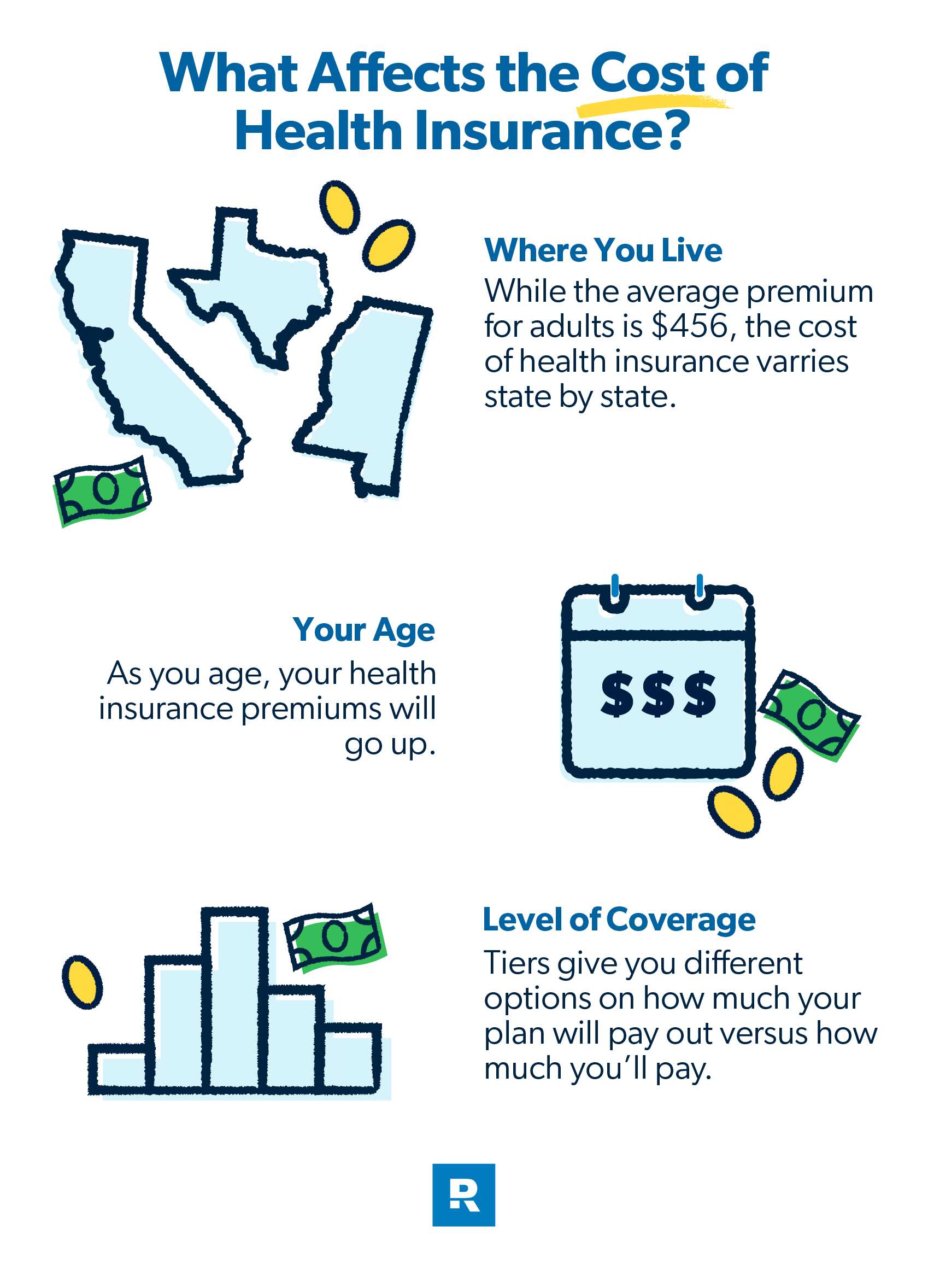
- Age: Generally, health insurance premiums tend to increase with age. Older individuals typically face higher healthcare costs due to a higher likelihood of needing more medical services. While the Affordable Care Act (ACA) limits how much insurers can vary premiums based on age (a 3:1 ratio for older vs. younger adults), it remains a significant factor. A 60-year-old will almost certainly pay more for the same plan than a 30-year-old.
- Location: Where you live significantly impacts insurance costs. Premiums vary widely by state and even by county within a state. This is due to several factors, including the local cost of healthcare services, the number of insurers operating in the area (competition), state regulations, and the general health of the population. Urban areas might have more competition and diverse plan options, but also higher costs of living and services.
Plan Type and Coverage Level
The kind of plan you choose directly correlates with its cost. Health insurance plans are typically categorized by metallic tiers on the ACA Marketplace:
- Bronze plans have the lowest monthly premiums but the highest deductibles and out-of-pocket maximums. They cover about 60% of healthcare costs, with you paying 40%. They are ideal for those who anticipate needing minimal medical care and want protection against catastrophic events.
- Silver plans offer moderate premiums and moderate deductibles. They cover about 70% of costs, with you paying 30%. Crucially, Silver plans are the only tier eligible for Cost-Sharing Reductions (CSRs), which reduce deductibles, co-payments, and out-of-pocket maximums for eligible low-income individuals.
- Gold plans have higher monthly premiums but lower deductibles and out-of-pocket maximums. They cover about 80% of costs, with you paying 20%. These are suitable for individuals who expect to use a lot of medical services and want more predictable costs.
- Platinum plans have the highest premiums but the lowest deductibles and out-of-pocket maximums, covering about 90% of costs. They are best for those with significant ongoing medical needs.
- Catastrophic plans are available to individuals under 30 or those with a hardship exemption. They have very low premiums but extremely high deductibles and are primarily for emergency coverage.
Choosing between these tiers involves a trade-off between monthly premiums and potential out-of-pocket expenses. A lower premium often means higher costs when you actually use medical services.
Income and Household Size: The Subsidy Equation
One of the most impactful factors for unemployed individuals is their income level relative to the Federal Poverty Level (FPL) and their household size. The Affordable Care Act (ACA) provides financial assistance in the form of:
- Premium Tax Credits (Subsidies): These reduce your monthly premium, making coverage more affordable. Eligibility is based on your household income falling between 100% and 400% of the FPL (for 2024, the “subsidy cliff” at 400% FPL has been temporarily removed, meaning more people qualify for assistance, or receive more assistance). The amount of your tax credit is calculated on a sliding scale, ensuring that you pay no more than a certain percentage of your income for the benchmark (second-lowest-cost Silver) plan.
- Cost-Sharing Reductions (CSRs): These are only available with Silver plans and further reduce your deductibles, co-payments, and maximum out-of-pocket expenses. CSRs are available to individuals with incomes between 100% and 250% of the FPL.
For those with very low incomes (generally below 138% of the FPL in states that expanded Medicaid), Medicaid may be an option, offering free or very low-cost health coverage. Your income during unemployment will likely be lower than when employed, potentially making you eligible for significant subsidies that dramatically reduce your health insurance costs.
Exploring Your Health Insurance Options When Unemployed
When you lose your job, you trigger a “Qualifying Life Event” (QLE), which opens a Special Enrollment Period (SEP) for health insurance. This means you don’t have to wait for the annual Open Enrollment Period to sign up for coverage. You typically have 60 days from the loss of your job-based coverage to enroll in a new plan.
The ACA Marketplace: Subsidized and Comprehensive Coverage
The Health Insurance Marketplace (Healthcare.gov or your state’s exchange) is often the best starting point for unemployed individuals. It’s the only place where you can access Premium Tax Credits and Cost-Sharing Reductions based on your income and household size.
- Comprehensive Benefits: Plans offered on the Marketplace must cover ten essential health benefits, including prescription drugs, hospitalization, mental health services, maternity care, and preventive services.
- Income-Based Assistance: As discussed, your reduced income during unemployment will likely qualify you for substantial subsidies, making quality health insurance much more affordable than you might expect. Many individuals find that they can get a robust Silver plan for a very low monthly premium, sometimes even $0, especially with the enhanced subsidies currently in place.
- Ease of Comparison: The Marketplace allows you to compare various plans side-by-side, making it easier to find coverage that fits both your health needs and your budget.

COBRA: Continuing Employer-Sponsored Benefits
The Consolidated Omnibus Budget Reconciliation Act (COBRA) allows you to temporarily continue your employer-sponsored health coverage (and dental/vision, if applicable) after leaving a job.
- Identical Coverage: The main advantage of COBRA is that you retain the exact same plan, doctors, and network you had before.
- High Cost: The significant drawback is cost. With COBRA, you are responsible for paying the entire premium, including the portion your former employer used to pay, plus an administrative fee (up to 2% of the premium). This can be exceptionally expensive, often hundreds or even thousands of dollars per month, making it unaffordable for many unemployed individuals.
- Temporary Solution: COBRA coverage typically lasts for 18 months, though it can extend up to 36 months in certain circumstances.
- Strategic Use: COBRA can be a good short-term bridge if you need to continue specific treatments with particular doctors and anticipate finding new employer-sponsored coverage quickly. However, it’s generally much more expensive than Marketplace plans for those eligible for subsidies.
Medicaid: State-Provided Assistance
Medicaid is a joint federal and state program that provides free or low-cost health coverage to low-income individuals and families.
- Income Eligibility: Eligibility for Medicaid is primarily based on your income relative to the Federal Poverty Level (FPL). In states that have expanded Medicaid, coverage is available to adults with incomes up to 138% of the FPL. In non-expansion states, eligibility is much more restrictive, often limited to specific categories like pregnant women, children, and individuals with disabilities.
- Comprehensive Coverage: Medicaid plans generally offer very comprehensive benefits with minimal or no out-of-pocket costs.
- Automatic Enrollment Potential: If you apply for a plan on the ACA Marketplace and your income is determined to be below the Medicaid threshold, your application will typically be forwarded to your state’s Medicaid agency for consideration. This makes it a seamless process to check your eligibility.
Short-Term Health Insurance Plans: A Temporary Solution
Short-term health insurance plans are designed to provide temporary, limited coverage for unexpected medical emergencies.
- Low Premiums: They typically have much lower monthly premiums than ACA-compliant plans.
- Limited Coverage: However, they are not subject to ACA regulations. This means they often don’t cover essential health benefits, may not cover pre-existing conditions, can have high deductibles, and might have caps on how much they’ll pay out. They are often not suitable for ongoing medical needs or comprehensive care.
- Not a Long-Term Solution: They are best used as a bridge for a few months if you’re certain you’ll get new employer coverage soon and want basic catastrophic protection, or if you earn too much for subsidies but find ACA plans unaffordable. They should be approached with caution and a thorough understanding of their limitations.
Spousal or Family Plans: Leveraging Existing Coverage
If your spouse or a family member has employer-sponsored health insurance, you might be able to join their plan.
- Qualifying Life Event: Losing your job-based coverage is a QLE, allowing you to enroll in a spouse’s plan outside of open enrollment.
- Cost Implications: Adding a family member usually increases the premium for the existing plan. You’ll need to compare this cost against what you might pay for an individual plan on the Marketplace, especially considering potential subsidies. It’s not uncommon for adding a spouse to an employer plan to be more expensive than a subsidized individual plan, so careful comparison is warranted.
Strategies to Afford Health Insurance Without an Employer
Navigating the landscape of health insurance costs while unemployed requires a strategic approach to personal finance. Beyond simply choosing a plan, there are tactics you can employ to minimize your out-of-pocket expenses and leverage available financial assistance.
Understanding Premium Tax Credits and Cost-Sharing Reductions
The cornerstone of affordability for most unemployed individuals is the ACA’s financial assistance.
- Accurate Income Projection: When applying on the Marketplace, accurately project your income for the entire year. If your unemployment means your annual income will be significantly lower than previous years, this will dramatically increase your subsidy eligibility. Update your income projection if your financial situation changes throughout the year to ensure you receive the correct amount of assistance.
- Silver Plan for CSRs: If your income falls within the range for Cost-Sharing Reductions (100-250% of FPL), enrolling in a Silver plan is critical. These subsidies are tied only to Silver plans and can drastically reduce your deductibles, co-payments, and out-of-pocket maximums, making a Silver plan behave like a Gold or Platinum plan in terms of cost-sharing, but with a much lower premium due to the Premium Tax Credit.
Maximizing Deductible and Out-of-Pocket Limits
While subsidies reduce your premiums, it’s essential to understand deductibles, co-pays, and out-of-pocket maximums:
- Budget for Out-of-Pocket: Even with insurance, you will likely have out-of-pocket expenses. Factor your deductible and potential co-pays into your monthly budget. An emergency fund is crucial for covering these costs, especially during unemployment.
- High-Deductible Health Plans (HDHPs) with HSAs: For those who don’t qualify for significant subsidies, or who are generally healthy, an HDHP might offer lower premiums. If it’s an HSA-eligible HDHP, you can pair it with a Health Savings Account (HSA).
Health Savings Accounts (HSAs): Tax-Advantaged Savings
If you choose an HSA-eligible High-Deductible Health Plan (HDHP), an HSA offers a powerful triple tax advantage:
- Tax-Deductible Contributions: Money you contribute to an HSA is tax-deductible.
- Tax-Free Growth: The funds grow tax-free.
- Tax-Free Withdrawals for Qualified Medical Expenses: Withdrawals for qualified medical expenses are tax-free.
This allows you to save specifically for healthcare costs while potentially reducing your taxable income. During unemployment, if you have existing HSA funds, they can be a vital resource for covering your deductible and other out-of-pocket medical expenses. Even if you don’t contribute, using existing funds for eligible expenses preserves your other savings.
Seeking Professional Guidance
Navigating health insurance options and financial assistance can be complex.
- Marketplace Navigators/Assisters: The ACA Marketplace provides free, unbiased assistance from trained navigators or assisters who can help you understand your options, calculate subsidies, and enroll in a plan.
- Financial Planners: A financial planner specializing in personal finance during life transitions can help integrate health insurance costs into your overall unemployment budget and long-term financial strategy. They can provide insights on managing savings, unemployment benefits, and other resources to ensure you remain financially stable while securing vital health coverage.
The Long-Term Financial Impact of Being Uninsured
Choosing to go without health insurance, even for a short period, is a gamble with potentially devastating financial consequences that far outweigh the savings on monthly premiums. It’s an act of financial imprudence that can unravel years of careful financial planning.
The Hidden Costs of Medical Debt
Without health insurance, a single unexpected illness or injury can lead to medical bills that quickly spiral into unmanageable debt. This isn’t just a hypothetical concern; medical debt is a leading cause of bankruptcy in the United States. Even minor procedures can carry significant price tags, and chronic conditions or emergencies can result in expenses in the tens or hundreds of thousands of dollars.
- Impact on Credit Score: Unpaid medical bills can be sent to collections, severely damaging your credit score. A poor credit score can impede your ability to secure loans, rent an apartment, or even get certain jobs in the future.
- Wage Garnishment and Liens: In severe cases, medical providers can pursue legal action, leading to wage garnishment or liens on your assets, further compounding your financial distress.
- Compromised Future: The burden of medical debt can delay or derail critical financial goals, from saving for retirement and a down payment on a home to funding your children’s education. It essentially puts your financial future on hold, adding immense stress to an already challenging period of unemployment.

Peace of Mind: An Priceless Investment
Beyond the quantifiable financial costs, there’s an invaluable, often overlooked, benefit of having health insurance: peace of mind. Knowing that you are protected against unforeseen medical expenses allows you to focus your energy on productive activities, such as your job search, family well-being, and maintaining your mental health.
- Reduced Stress: The constant anxiety of potential medical bills, or the fear of getting sick without coverage, is a significant emotional drain. Health insurance removes this layer of stress, contributing to better overall mental health during a stressful transition.
- Access to Preventative Care: Being insured encourages preventative care, such as annual check-ups, screenings, and vaccinations. These services are often covered at no additional cost and can catch potential health issues early, preventing them from becoming more serious and costly down the road. This proactive approach not only protects your health but also saves money in the long run by avoiding expensive treatments for advanced diseases.
- Foundation for Rebuilding: As you work to rebuild your career and financial standing post-unemployment, having health insurance provides a stable foundation. It ensures that health events don’t derail your progress, allowing you to allocate your resources towards getting back on your feet rather than battling medical debt.
In conclusion, while the cost of health insurance without a job can seem intimidating, it is an essential financial investment. By understanding the available options, leveraging subsidies, and strategically planning, you can secure vital coverage, protect your finances, and maintain your health during your transition back to employment. Ignoring this critical aspect of personal finance can lead to far greater financial hardship in the long term.
aViewFromTheCave is a participant in the Amazon Services LLC Associates Program, an affiliate advertising program designed to provide a means for sites to earn advertising fees by advertising and linking to Amazon.com. Amazon, the Amazon logo, AmazonSupply, and the AmazonSupply logo are trademarks of Amazon.com, Inc. or its affiliates. As an Amazon Associate we earn affiliate commissions from qualifying purchases.