
Navigating the landscape of health insurance can often feel like deciphering a complex financial puzzle. For many individuals and families, the monthly premium is a significant line item in their budget, yet its exact figure remains elusive until they dive deep into the myriad of available plans. Understanding how much health insurance costs a month isn’t just about knowing a number; it’s about comprehending the intricate web of factors that influence this crucial expense, and ultimately, making an informed financial decision that safeguards both your health and your wallet. This article will demystify the monthly cost of health insurance, exploring the key determinants, various plan types, strategies for cost reduction, and the broader financial implications beyond the premium itself.

Understanding the Core Factors Influencing Health Insurance Premiums
The seemingly simple question “how much does health insurance cost a month?” reveals itself to be multifaceted upon closer inspection. There isn’t a single universal price tag; instead, monthly premiums are shaped by a combination of individual circumstances, market dynamics, and policy choices. Grasping these foundational factors is the first step toward accurately estimating and managing your healthcare expenditures.
Age and Location: Key Demographic Determinants
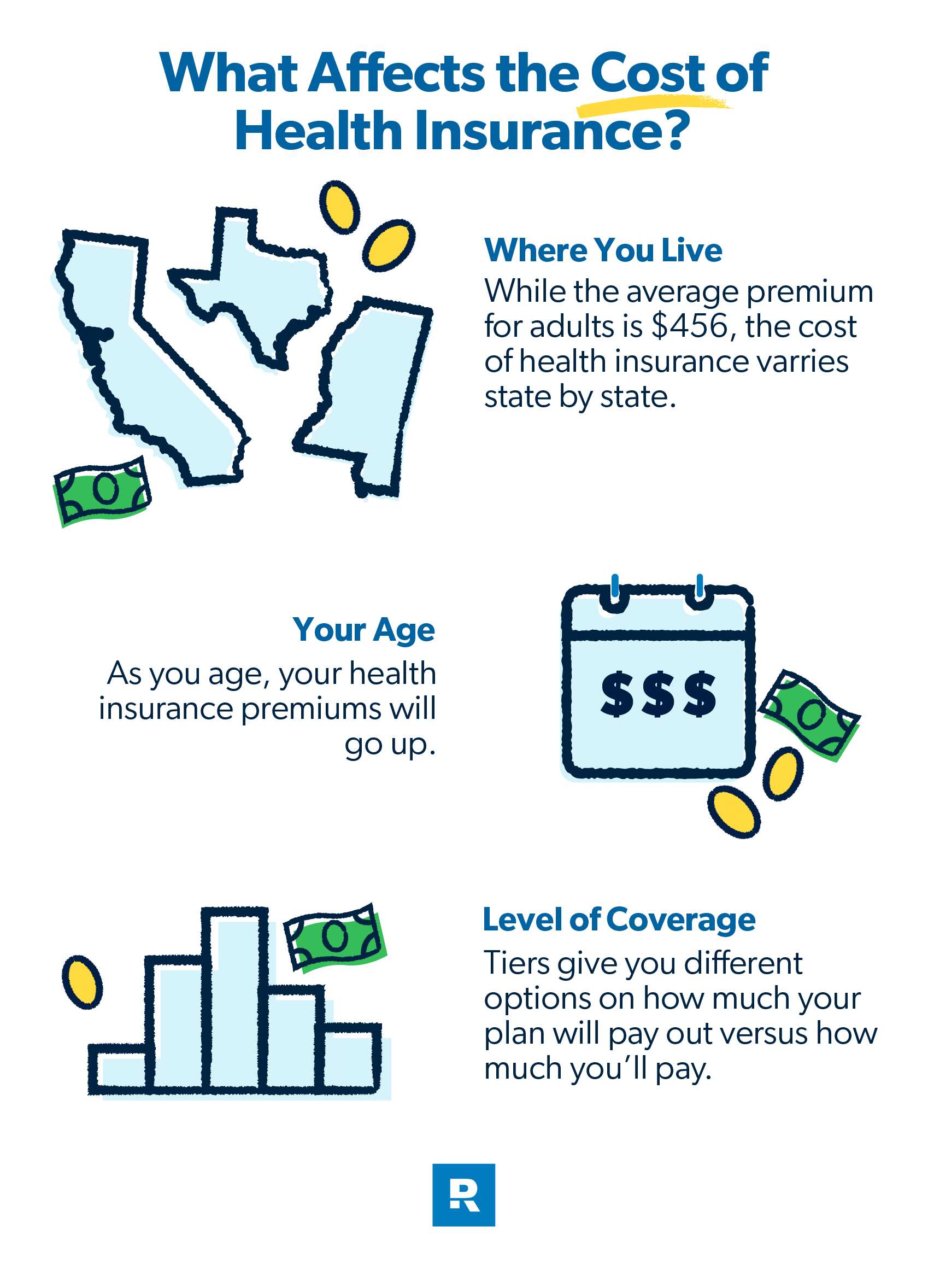
One of the most significant predictors of your health insurance premium is your age. Generally, younger individuals tend to pay less than older individuals because they are statistically less likely to require extensive medical care. Health insurance companies are permitted to charge older adults up to three times more than younger adults for the same plan under current regulations, reflecting the increased actuarial risk. For instance, a 25-year-old might find a premium that is substantially lower than that offered to a 55-year-old for an identical policy.
Your geographical location also plays a pivotal role. Healthcare costs, competition among insurers, and state-specific regulations vary widely across the country, and even within different counties of the same state. A densely populated urban area with numerous healthcare providers and robust competition might offer different pricing structures compared to a rural region with fewer options. Factors such as the cost of living, local medical facility charges, and the overall health of the population in a given area can all influence the baseline premiums for residents.
Plan Type and Coverage Level: A Spectrum of Choices
The type of health insurance plan you choose, along with its level of coverage, directly impacts your monthly premium. Plans are broadly categorized by their structure (e.g., HMO, PPO, EPO, POS, HDHP), each offering different levels of flexibility in choosing providers and different cost-sharing mechanisms. A plan that offers broad network access and lower out-of-pocket costs when you receive care (like a PPO with a low deductible) will typically command a higher monthly premium compared to a plan that restricts your choice of providers or requires you to pay more out-of-pocket (like an HMO or an HDHP).
Furthermore, plans are often grouped into metallic tiers—Bronze, Silver, Gold, and Platinum—on the Affordable Care Act (ACA) marketplace. These tiers indicate the percentage of healthcare costs the plan is expected to cover versus what you’re expected to pay out-of-pocket.
- Bronze plans have the lowest monthly premiums but the highest deductibles and out-of-pocket costs. They cover approximately 60% of healthcare expenses.
- Silver plans offer moderate premiums and moderate out-of-pocket costs, covering about 70% of expenses. These are the only plans eligible for cost-sharing reductions.
- Gold plans have higher premiums but lower deductibles and out-of-pocket costs, covering about 80% of expenses.
- Platinum plans feature the highest premiums but the lowest deductibles and out-of-pocket costs, covering about 90% of expenses.
Your choice among these tiers fundamentally alters the balance between your upfront monthly financial commitment and your potential future medical expenses.
Tobacco Use and Medical History: Personal Health Considerations
While the ACA largely eliminated medical underwriting (where insurers could deny coverage or charge more based on pre-existing conditions), it still permits insurers to levy higher premiums for tobacco use. Smokers can face premiums up to 50% higher than non-smokers in some markets, reflecting the increased health risks associated with tobacco. This is a significant financial incentive for individuals to quit smoking, as it can lead to substantial long-term savings on health insurance costs.
Prior to the ACA, an individual’s medical history played a much larger role, often leading to denial of coverage or exorbitant premiums for those with chronic conditions. Today, while pre-existing conditions cannot lead to higher premiums or denial of coverage, your overall health habits (like tobacco use) remain a factor. For employer-sponsored plans, wellness programs tied to health metrics might offer premium discounts, subtly linking personal health choices to financial benefits.
Decoding Different Types of Health Insurance Plans
Understanding the different structural designs of health insurance plans is crucial, as each type carries distinct implications for your financial outlay, both in terms of monthly premiums and out-of-pocket costs at the point of care. The choice often comes down to balancing flexibility, cost, and risk tolerance.
HMOs, PPOs, and EPOs: Navigating Managed Care Options
- Health Maintenance Organizations (HMOs): These plans typically have lower monthly premiums because they restrict you to a network of doctors and hospitals. You must choose a primary care physician (PCP) who then refers you to specialists within the HMO network. Without a referral, care from a specialist is usually not covered. This managed care approach can save money for both the insurer and the policyholder, but at the cost of less flexibility.
- Preferred Provider Organizations (PPOs): PPOs offer more flexibility than HMOs. You don’t usually need a referral to see a specialist, and you can see out-of-network providers, though you’ll pay more for doing so. This broader choice comes with a higher monthly premium compared to HMOs. The financial trade-off is often worth it for those who prioritize provider choice and don’t want the hassle of referrals.
- Exclusive Provider Organizations (EPOs): EPOs combine elements of both HMOs and PPOs. They typically offer a network of providers, and you generally don’t need a referral to see specialists within that network. However, like HMOs, they usually won’t cover out-of-network care except in emergencies. Premiums for EPOs often fall between HMOs and PPOs.
POS and HDHPs: Hybrid Models and High Deductible Plans
- Point of Service (POS) Plans: These are hybrid plans, offering more flexibility than an HMO but less than a PPO. You typically choose a PCP within the network, who then refers you to specialists. Like PPOs, you can go out-of-network for care, but you’ll pay a higher cost share. POS plans aim to blend the cost-saving features of HMOs with some of the freedom of PPOs, resulting in premiums that can vary widely.
- High-Deductible Health Plans (HDHPs): HDHPs are characterized by lower monthly premiums but much higher deductibles than traditional plans. For individuals, the deductible can be several thousand dollars, meaning you pay a significant amount out-of-pocket before your insurance starts covering costs (beyond preventive services). The main financial appeal of HDHPs is their eligibility for a Health Savings Account (HSA), which allows you to save pre-tax money for healthcare expenses, invest it, and withdraw it tax-free for qualified medical costs. This makes HDHPs attractive to healthy individuals or those who prefer to self-insure for routine care while having catastrophic coverage.
Catastrophic Plans: Safety Nets for Young Adults
Catastrophic plans are designed primarily for younger individuals (under 30) or those with hardship exemptions. They offer very low monthly premiums but come with extremely high deductibles, essentially serving as a financial safety net against major illnesses or accidents. They cover essential health benefits, but only after you’ve paid a substantial amount out-of-pocket. These plans are not eligible for premium tax credits (subsidies) on the ACA marketplace, making them a bare-bones option for those with tight budgets who want protection against financially devastating health events.
Exploring Avenues for Reducing Your Monthly Premiums
While health insurance costs can seem daunting, several strategies and programs exist to help mitigate the financial burden. Being aware of these options is key to optimizing your healthcare spending and finding affordable coverage.

Government Subsidies and Tax Credits: The Affordable Care Act (ACA)
The Affordable Care Act (ACA) introduced significant financial assistance mechanisms to make health insurance more accessible.
- Premium Tax Credits: These are subsidies that reduce your monthly premium for plans purchased through the ACA marketplace. Eligibility is based on household income, relative to the Federal Poverty Level (FPL). The credit can be applied directly to your premium each month, or you can claim it when you file your taxes. This can dramatically lower the stated monthly cost for eligible individuals and families, making even Gold or Silver plans more affordable than their sticker price.
- Cost-Sharing Reductions (CSRs): Available only for Silver plans, CSRs lower the amount you have to pay for deductibles, copayments, and coinsurance. Like premium tax credits, eligibility is tied to income. When combined, these subsidies can make comprehensive health insurance surprisingly affordable for those who qualify.
Employer-Sponsored Plans: Group Benefits and Contributions
For many, the most cost-effective way to get health insurance is through an employer-sponsored plan. Employers typically contribute a substantial portion of the monthly premium, significantly reducing the employee’s out-of-pocket cost. In fact, employers pay, on average, over 80% of the premium for single coverage and over 70% for family coverage. This shared cost model makes employer plans a highly attractive financial benefit. Often, employers offer a choice of plans (e.g., an HMO and a PPO), allowing employees to select an option that best fits their financial and healthcare needs.
Health Savings Accounts (HSAs) and Flexible Spending Accounts (FSAs): Tax-Advantaged Savings
While not directly reducing your monthly premium, HSAs and FSAs offer powerful tax advantages that effectively lower your overall healthcare expenses, making them crucial financial tools.
- HSAs: As mentioned, these are available only with HDHPs. Contributions are tax-deductible, the money grows tax-free, and withdrawals for qualified medical expenses are also tax-free. This triple tax advantage can lead to substantial long-term savings, helping you manage your high deductible and other medical costs more efficiently. Unlike FSAs, HSA funds roll over year after year and are portable, even if you change employers.
- FSAs: These accounts are typically offered through employer plans (both HDHPs and traditional plans). You contribute pre-tax dollars from your paycheck, which can then be used for qualified medical expenses. The primary drawback is the “use-it-or-lose-it” rule, where most funds must be spent by the end of the plan year, though some plans offer a grace period or a small rollover amount. FSAs are excellent for covering predictable out-of-pocket costs like copays, deductibles, and prescription drugs.
Shopping Around and Comparing Plans: Diligence Pays Off
Just like any major financial decision, shopping around and comparing plans is paramount. Don’t settle for the first option you see. Use resources like the ACA marketplace (healthcare.gov), state exchanges, and private insurance brokers to compare different plans side-by-side. Pay attention not only to the monthly premium but also to the deductibles, copayments, coinsurance, and out-of-pocket maximums. A slightly higher premium might lead to significantly lower out-of-pocket costs when you need care, or vice-versa. Understanding your anticipated healthcare needs (e.g., frequent doctor visits, specific prescriptions) can guide you to the most cost-effective plan in the long run.
Beyond Monthly Premiums: The Total Cost of Healthcare
Focusing solely on the monthly premium provides an incomplete picture of your total healthcare expenses. To truly understand “how much health insurance costs a month” and, more broadly, how much healthcare costs you annually, it’s essential to factor in other out-of-pocket expenses that come into play when you actually receive medical services. These components—deductibles, copayments, and coinsurance—are critical to your financial planning.
Deductibles, Copayments, and Coinsurance: Understanding Out-of-Pocket Expenses
- Deductible: This is the amount you must pay out of your own pocket for covered medical services before your insurance plan starts to pay. For example, if your plan has a $3,000 deductible, you are responsible for the first $3,000 in covered medical costs each year. Once you meet your deductible, your insurance begins to pay its share. Plans with lower monthly premiums typically have higher deductibles, requiring you to shoulder more initial costs.
- Copayment (Copay): A copay is a fixed amount you pay for a covered healthcare service after you’ve met your deductible (though some plans offer copays for certain services, like doctor visits or prescription drugs, even before the deductible is met). For instance, you might pay a $30 copay for a doctor’s visit or a $15 copay for a generic prescription. Copays do not usually count towards your deductible but do contribute to your out-of-pocket maximum.
- Coinsurance: This is your share of the cost of a covered healthcare service, calculated as a percentage (e.g., 20%) of the allowed amount for the service, after you’ve met your deductible. If your coinsurance is 20% and your insurance pays 80% of a $100 service, you’d pay $20. Coinsurance continues until you reach your out-of-pocket maximum.
Understanding these components is vital for budgeting. A plan with a low monthly premium might seem financially attractive upfront, but if it comes with a high deductible and substantial coinsurance, your actual costs could skyrocket if you experience a serious illness or injury.
Out-of-Pocket Maximums: Your Financial Safety Net
The out-of-pocket maximum (or out-of-pocket limit) is a crucial financial protection feature of most health insurance plans. It is the most you will have to pay for covered medical services in a plan year. Once you reach this limit, your insurance plan pays 100% of the cost of all covered essential health benefits for the remainder of the year. This maximum typically includes what you pay for your deductible, copayments, and coinsurance. It does not usually include your monthly premiums, charges for services not covered by your plan, or amounts paid to out-of-network providers if your plan doesn’t cover them. The out-of-pocket maximum provides a cap on your financial exposure, preventing catastrophic medical bills from bankrupting you. When comparing plans, a lower out-of-pocket maximum often corresponds to a higher monthly premium, highlighting another financial trade-off.
The Value of Health Insurance: Protecting Your Financial Future
While the monthly premium and potential out-of-pocket costs represent significant expenses, the value of health insurance far outweighs these figures for most people. Health insurance acts as a critical financial safety net, protecting individuals and families from the potentially devastating costs of unexpected illness, injury, or chronic conditions. A single serious medical event—such as a heart attack, cancer diagnosis, or major accident—can quickly accrue bills totaling tens or even hundreds of thousands of dollars, far exceeding most people’s savings. Investing in health insurance is, in essence, an investment in financial security and peace of mind, ensuring access to necessary medical care without facing financial ruin.
Navigating Enrollment Periods and Making Informed Decisions
The timing of your health insurance decisions is almost as important as the choices themselves. Understanding when you can enroll or change plans is crucial for maintaining continuous coverage and ensuring you have the most financially suitable option.
Open Enrollment vs. Special Enrollment Periods: When to Act
- Open Enrollment Period: This is the designated time each year (typically in the fall, from November 1st to December 15th for coverage starting January 1st in most states) when individuals can sign up for a new health insurance plan or switch existing plans for the following year. This is the primary window for most people to make changes without a qualifying life event. Missing this period means you generally cannot get coverage or change plans until the next Open Enrollment, unless you qualify for a Special Enrollment Period.
- Special Enrollment Period (SEP): Outside of Open Enrollment, you can enroll in or change a health insurance plan only if you experience a qualifying life event. These events trigger an SEP, usually lasting 60 days from the date of the event. Common qualifying life events include:
- Losing existing health coverage (e.g., due to job loss, turning 26 and coming off a parent’s plan).
- Changes in household size (e.g., marriage, divorce, birth or adoption of a child).
- Moving to a new area where new plans are available.
- Changes in income that affect eligibility for subsidies.
Understanding and acting promptly during an SEP is vital for financial continuity and avoiding gaps in coverage.
Utilizing Online Tools and Professional Advice: Empowering Your Choice
Making an informed decision about health insurance requires more than just glancing at premiums. It involves a thorough financial assessment of your needs, risks, and budget.
- Online Comparison Tools: The official ACA marketplace (healthcare.gov) and various state exchanges provide robust online tools that allow you to compare plans side-by-side, estimate subsidies, and understand the full scope of costs—premiums, deductibles, and out-of-pocket maximums. Private comparison websites and insurer sites also offer similar functionalities.
- Professional Advice: For complex situations, consulting with a licensed insurance broker or a certified navigator can be invaluable. These professionals can help you understand the nuances of different plans, explain your eligibility for subsidies, and guide you toward a plan that aligns with your financial capacity and healthcare requirements. Their expertise can help demystify complex terms and ensure you avoid costly mistakes.
In conclusion, “how much does health insurance cost a month” is a deeply personal financial question with no single answer. It is a dynamic figure influenced by age, location, plan choice, and personal habits, mitigated by subsidies and employer contributions, and amplified by out-of-pocket expenses like deductibles and copays. By thoroughly understanding these factors and proactively utilizing available resources, individuals and families can navigate the complexities of health insurance, secure essential coverage, and protect their financial well-being against the unpredictable nature of healthcare costs.
aViewFromTheCave is a participant in the Amazon Services LLC Associates Program, an affiliate advertising program designed to provide a means for sites to earn advertising fees by advertising and linking to Amazon.com. Amazon, the Amazon logo, AmazonSupply, and the AmazonSupply logo are trademarks of Amazon.com, Inc. or its affiliates. As an Amazon Associate we earn affiliate commissions from qualifying purchases.