
In an era increasingly dominated by digital wallets, contactless payments, and instant wire transfers, the physical paper check remains a surprisingly resilient fixture of the American financial landscape. Whether it is a tax refund, a gift from a relative, or a payroll check from a small business, many consumers still find themselves holding a slip of paper that needs to be converted into spendable currency. Chase Bank, as one of the “Big Four” institutions in the United States, is a primary destination for these transactions. However, the cost of turning that paper into cash depends heavily on your relationship with the bank and the origin of the check itself.

Understanding the fee structure at Chase is essential for effective personal finance management. For those without a traditional bank account, check-cashing fees can represent a significant percentage of their income. For existing customers, knowing the rules can help avoid unnecessary delays or service charges. This guide breaks down exactly what Chase charges, the requirements for cashing a check, and the best alternatives to keep more of your money in your pocket.
Chase Check Cashing Policies for Account Holders vs. Non-Customers
The first and most important distinction in Chase’s policy is whether or not you hold an active account with the bank. Financial institutions prioritize their members, and Chase is no exception. The experience and cost differ dramatically based on your status as a customer.
For Chase Customers: Seamless and Fee-Free
If you have a Chase checking or savings account, cashing a check is generally a free service. Whether the check is drawn on Chase or another bank, you can present the check at a teller window or use a Chase ATM. Because you have an established relationship with the bank, they use your account balance as a form of collateral. If the check were to bounce later, the bank has the right to recoup those funds from your account.
For account holders, the primary concern is not the fee, but the “availability of funds.” While the act of cashing the check is free, Chase may not give you the full amount in cash immediately if your account balance doesn’t cover the check’s value. They may require you to deposit the check and wait for it to clear, providing a portion (usually up to $225) immediately and the remainder the following business day.
For Non-Customers: The “Non-Customer Check Cashing Fee”
If you do not have an account at Chase, the bank is under no obligation to cash a check for you unless that check was issued by a Chase account holder. If you walk into a Chase branch with a check drawn on Bank of America or Wells Fargo and you do not have a Chase account, the teller will politely decline the transaction.
However, if the check is “drawn on Chase”—meaning the person or company who wrote the check has a Chase account—Chase will typically cash it for a fee. As of current standards, Chase generally charges a flat fee of $8 to $10 per check for non-customers. This fee is standard across most of their branches, though it is always subject to change based on local market adjustments or updated corporate policy.
Identification Requirements
Regardless of the fee, Chase maintains strict security protocols to prevent fraud. If you are a non-customer cashing a Chase-issued check, you will be required to provide two forms of identification. Usually, this includes a primary government-issued photo ID (such as a driver’s license or passport) and a secondary form of ID (such as a credit card, social security card, or a current utility bill). Failure to provide these will result in a denial of service, regardless of the check’s validity.
Specific Fee Structures and Limitations
While the flat fee for non-customers is the most common charge, there are nuances to how Chase handles different types of financial instruments. Not every check is treated equally, and understanding these categories can help you navigate the teller line more efficiently.
Government and Payroll Checks
Government checks, such as Social Security payments or federal tax refunds, are often viewed as the “gold standard” of checks because they are backed by the U.S. Treasury. Despite this, Chase’s policy for non-customers usually remains consistent: if you don’t have an account, they may still charge a fee to cash a government check, provided they choose to cash it at all. Many people find that large retail chains (like Walmart) or specialized check-cashing stores offer more competitive rates for government checks than traditional banks do for non-customers.
For payroll checks, if the employer uses Chase for their business banking, the $8-$10 fee is the standard “toll” for cashing that check at the source. For many hourly workers, this fee can be a significant burden. For example, if a worker is cashing a $400 weekly paycheck, a $10 fee represents a 2.5% “tax” on their earnings every single week.
Limits on Check Amounts
Chase imposes limits on the amount a non-customer can cash at a branch. While these limits are not always publicly advertised and can vary by branch manager discretion, it is common for branches to refuse to cash checks for non-customers that exceed $2,500 to $5,000. This is a risk-mitigation strategy. If a check is for a very large sum, the bank prefers the security of a deposit into a verified account rather than a large cash payout to a transient visitor.
The Cost of Convenience: ATM and Mobile Deposits
For customers, the “charge” is zero, but the “cost” can be time. To mitigate this, Chase offers Chase QuickDeposit via their mobile app and deposit-enabled ATMs. While these are free for customers, non-customers do not have access to these tools. It is worth noting that some “second-chance” banking apps or fintech platforms allow check cashing via smartphone for a percentage fee (often 1% to 5%), which serves as a digital alternative to the Chase teller window for those without traditional bank access.
Alternatives to Cashing Checks at a Chase Branch
If you find that the $8-$10 fee is too high, or if you don’t have a Chase account and the check is drawn on a different bank, there are several alternatives to consider. Managing your money wisely means minimizing these transactional costs.
Cashing at the Issuing Bank
The most effective way to cash a check if you don’t have a bank account is to go to the bank that issued the check. If the check has a “Wells Fargo” logo on it, go to Wells Fargo. If it has a “PNC” logo, go to PNC. While almost all banks now charge a fee for non-customers (ranging from $5 to $15), some smaller regional banks or credit unions may cash checks drawn on their accounts for a lower fee or even for free.
Retail Check Cashing Services
Large retailers like Walmart and various grocery store chains (such as Kroger or Publix) offer check-cashing services that are often cheaper than Chase’s non-customer fee. Walmart, for instance, typically charges around $4 for checks up to $1,000. For payroll and government checks, these retail options are often the most cost-effective path for the unbanked.
Prepaid Debit Cards and Digital Wallets
Apps like PayPal, Venmo, and Ingo Money allow users to “cash” checks by taking a photo of them. If you are willing to wait 10 days for the funds to clear, the service is often free. If you want the money “instantly” (within minutes), they charge a percentage of the check’s value. For small checks, this percentage might be less than Chase’s $10 fee; for large checks, the flat fee at the bank is usually the better deal.
Tips for Avoiding and Managing Banking Fees
Financial literacy is about more than just knowing numbers; it is about strategic planning to ensure that the banking system works for you, rather than you working for the bank.
Opening a Low-Cost Account
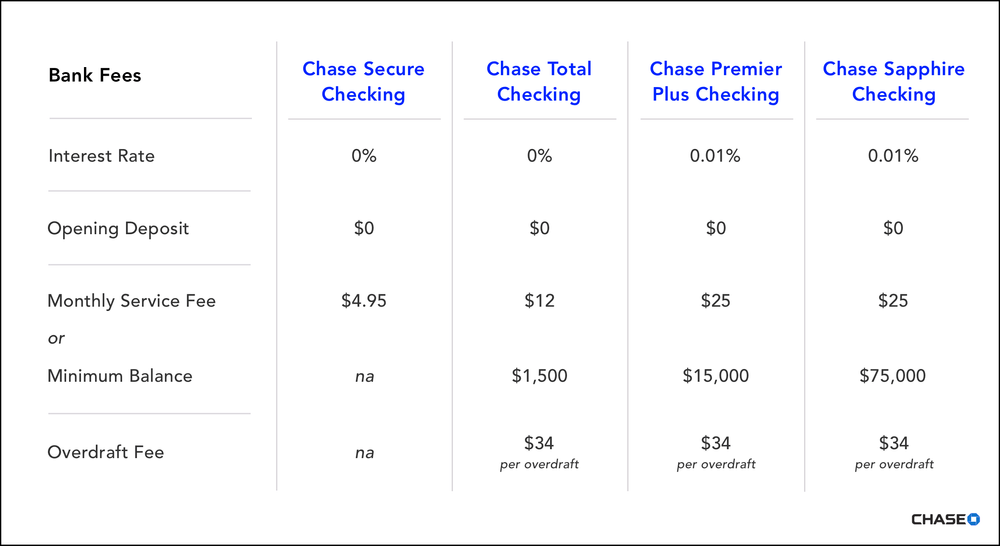
If you find yourself paying Chase $8 or $10 multiple times a month to cash checks, it is time to consider opening an account. Chase offers a “Chase Secure Banking” account which has no overdraft fees and a low monthly service fee (often $4.95). If you cash just one check a month, the account has already paid for itself. Furthermore, having an account builds a financial history that can be useful for securing loans or credit cards in the future.
Use Direct Deposit
The best way to avoid check-cashing fees is to eliminate the paper check entirely. Most employers, and even government agencies, prefer direct deposit. Direct deposit at Chase is free and often allows you to access your funds earlier than a physical check would. Many Chase accounts even waive their monthly maintenance fees if you have a certain amount of direct deposits each month.
Strategic Timing
If you must cash a check as a non-customer, ensure you have all your documentation ready to avoid multiple trips. Because Chase branches have different cash-on-hand levels, cashing a large check is best done in the middle of the week. Monday mornings and Friday afternoons are the busiest times for tellers, and a busy teller is more likely to strictly adhere to policies or limits that might be slightly more flexible during slower hours.

The Verdict on Chase Check Cashing
Chase Bank provides a reliable, secure environment for cashing checks, but that reliability comes at a price for those who are not members of the institution. For Chase customers, the service is a standard perk of their account, integrated into a suite of digital and physical tools designed for convenience. For non-customers, the $8-$10 fee is a reminder of the “cost of being unbanked.”
In the grander scheme of personal finance, cashing a check at a branch should be viewed as a last resort for non-customers. Between retail alternatives, the issuing bank’s own branches, and the growing world of fintech, there are numerous ways to access your money. However, if you find yourself at a Chase branch with a Chase-drawn check in hand, be prepared with your two forms of ID and the expectation that the bank will take its cut for the convenience of immediate liquidity. By understanding these fees and the logic behind them, you can make informed decisions that protect your hard-earned income.
aViewFromTheCave is a participant in the Amazon Services LLC Associates Program, an affiliate advertising program designed to provide a means for sites to earn advertising fees by advertising and linking to Amazon.com. Amazon, the Amazon logo, AmazonSupply, and the AmazonSupply logo are trademarks of Amazon.com, Inc. or its affiliates. As an Amazon Associate we earn affiliate commissions from qualifying purchases.