
Understanding the true cost of “Amazon TV” is far more complex than simply looking up a single price tag. Amazon’s expansive foray into the home entertainment sector isn’t a singular product but a diverse ecosystem encompassing hardware, software, and subscription services, each carrying its own financial implications. For the financially savvy consumer, navigating this landscape requires a deep dive into various components, from initial device purchases to recurring content subscriptions and potential hidden expenses. This article aims to provide a comprehensive financial breakdown, allowing you to accurately budget for and optimize your Amazon TV experience, squarely within the realm of personal finance and strategic spending.

Deconstructing “Amazon TV”: The Ecosystem of Costs
The term “Amazon TV” can refer to several distinct yet interconnected products and services. To accurately assess the financial outlay, it’s crucial to disaggregate these components and understand their individual price points and how they contribute to your overall entertainment budget.
Amazon Fire TV Devices: Upfront Hardware Investment
The most tangible cost associated with “Amazon TV” often begins with the purchase of a Fire TV device. These streaming media players transform any compatible television into a smart TV, providing access to a vast array of streaming services, apps, and Amazon’s own content library. The pricing varies significantly based on features, processing power, and resolution capabilities.
- Fire TV Stick Lite: As the entry-level option, the Lite version typically hovers around $29.99 – $39.99. It offers basic HD streaming and a voice remote without TV controls. Financially, this is the lowest barrier to entry for accessing the Fire TV ecosystem.
- Fire TV Stick (3rd Gen): Priced slightly higher, usually $39.99 – $49.99, this model provides a more robust HD streaming experience and an Alexa Voice Remote with TV controls (power, volume). For a modest increase, consumers gain significant convenience.
- Fire TV Stick 4K: For users with 4K televisions, the Fire TV Stick 4K (and its improved 4K Max counterpart) is essential. These devices generally range from $49.99 – $64.99. They support 4K Ultra HD, Dolby Vision, HDR, and HDR10+, offering a superior visual experience. From a financial perspective, this is an investment in future-proofing one’s entertainment setup, especially if upgrading a TV or planning to.
- Fire TV Cube: The premium streaming device, the Fire TV Cube, often costs around $119.99 – $139.99. It combines a powerful streaming player with an Echo smart speaker, allowing for hands-free Alexa control. This represents a significant upfront cost for those seeking the ultimate convenience and performance, essentially integrating two devices into one.
- Fire TV Blaster: A less common but related accessory, the Fire TV Blaster (~$34.99) is designed to add universal remote capabilities to existing Fire TV setups, controlling soundbars and AV receivers. While not mandatory, it’s an additional expense for enhanced control.
When budgeting, consider that these prices are generally MSRP, and Amazon frequently offers sales, especially during major shopping events like Prime Day or Black Friday, potentially reducing the initial hardware investment.
Amazon-Branded Smart TVs: Integrated Solutions
Beyond sticks and cubes, Amazon has also ventured into manufacturing its own line of smart televisions with integrated Fire TV software. These devices eliminate the need for an external streaming stick, offering a streamlined experience right out of the box.
- Amazon Fire TV Omni Series: These premium 4K UHD TVs offer hands-free Alexa voice control, a sleek design, and often feature local dimming for improved picture quality. Prices vary significantly by screen size:
- 43-inch: ~$329.99 – $429.99
- 50-inch: ~$409.99 – $509.99
- 55-inch: ~$479.99 – $579.99
- 65-inch: ~$699.99 – $829.99
- 75-inch: ~$999.99 – $1,149.99
These TVs represent a significant lump sum investment, but they bundle the “smart” functionality directly into the display, potentially saving on the cost of a separate streaming device.
- Amazon Fire TV 4-Series: A more budget-friendly 4K UHD option, the 4-Series provides a strong balance of features and price.
- 43-inch: ~$299.99 – $379.99
- 50-inch: ~$359.99 – $449.99
- 55-inch: ~$409.99 – $499.99
- Insignia/Toshiba Fire TV Edition: Amazon also partners with brands like Insignia and Toshiba to produce Fire TV Edition smart TVs. These often offer competitive pricing across various sizes, typically ranging from $150 – $800+ depending on size and features.
From a financial planning perspective, choosing an integrated Fire TV can simplify your setup and potentially offer better value than buying a TV and a separate high-end streaming stick. However, it also means a higher initial outlay.
The Core of Content: Amazon Prime Video Subscription
While the hardware provides the access point, the content is what truly drives the entertainment experience. A fundamental component of “Amazon TV” is Amazon Prime Video, which is typically included with an Amazon Prime membership.
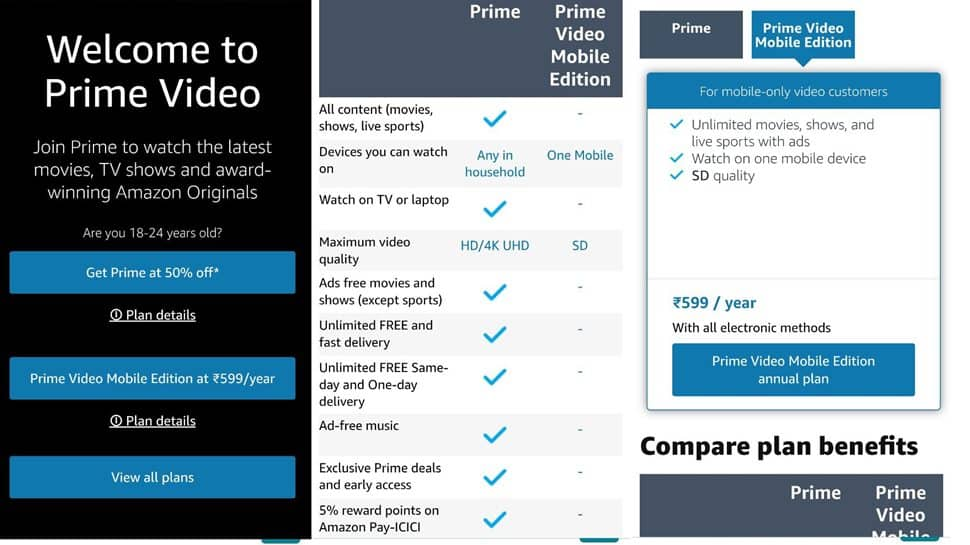
- Amazon Prime Membership: This comprehensive subscription costs approximately $14.99 per month or $139 per year (saving roughly $40 annually). Prime Video is just one facet of this membership, which also includes free two-day shipping, Amazon Music Prime, Prime Reading, and other benefits.
- Financially, if you already utilize other Prime benefits, the cost of Prime Video is effectively absorbed. For those solely interested in the video content, it represents a monthly or annual commitment.
- Special discounts exist for students (Prime Student, $7.49/month or $69/year) and qualifying government assistance recipients (e.g., EBT, Medicaid, $6.99/month), making the service more accessible.
- Standalone Prime Video: For those who do not require or desire the full suite of Prime benefits, Prime Video can be subscribed to independently for approximately $8.99 per month. This is a crucial financial distinction for budget-conscious consumers who only want the streaming service.
The cost of Prime Video is a recurring expense that forms the foundation of much of the content available through the Amazon TV ecosystem, unlocking a vast library of movies, TV shows, and Amazon Originals.
Beyond the Initial Purchase: Unveiling Ongoing Expenses
The upfront costs of devices and a base Prime Video subscription are only part of the financial picture. To fully enjoy the Amazon TV experience, particularly for those looking to “cut the cord” from traditional cable, additional recurring expenses are almost inevitable.
Streaming Service Subscriptions: The Recurring Drain
While Prime Video offers a substantial library, most consumers subscribe to multiple streaming services to satisfy their diverse entertainment cravings. These add significantly to the monthly outlay.
- Major Services: Netflix (starts ~$6.99 with ads to $22.99/month), Disney+ (starts ~$7.99 with ads to $13.99/month), Hulu (starts ~$7.99 with ads to $17.99/month, or bundles with Disney+/ESPN+), HBO Max (now Max, starts ~$9.99 with ads to $19.99/month), Peacock (starts ~$5.99 with ads to $11.99/month), Paramount+ (starts ~$5.99 with ads to $11.99/month), Apple TV+ ($9.99/month), and many more.
- Niche Services: Beyond the giants, there are numerous niche services for specific genres or content, which can add another $5-$15 per month each.
These costs accumulate rapidly. A typical cord-cutter might subscribe to 3-5 major services, easily adding $30-$70+ per month to their entertainment budget, irrespective of the Fire TV device or Prime Video cost. This highlights a critical budgeting point: the “Amazon TV” device is merely a portal; the real recurring cost often lies in the content subscriptions chosen by the user.
Digital Purchases and Rentals: The A La Carte Model
Even with a Prime Video subscription, not all content is “free.” Amazon Prime Video offers a vast library for purchase or rental, including new release movies and TV shows not yet available on subscription services.
- Movie Rentals: Typically range from $3.99 – $5.99 for standard definition (SD) or high definition (HD) versions, with a 48-hour viewing window after starting.
- Movie Purchases: Often range from $9.99 – $19.99 for new releases or popular titles, granting indefinite access.
- TV Show Season Passes/Individual Episodes: Episodes typically cost $1.99 – $3.99, while full season passes can range from $19.99 – $49.99+, depending on the show and number of episodes.
These a la carte costs are discretionary but can quickly add up if you frequently want to watch the latest content outside of your subscribed services. Budgeting for these impulse purchases is essential for comprehensive financial planning.
Accessories and Enhancements: The Hidden Upgrades
While not always mandatory, certain accessories and enhancements can improve the Amazon TV experience, leading to additional, often overlooked, costs.
- Soundbars/Home Theater Systems: To complement the visual experience, many users invest in external audio systems. Basic soundbars start around $100-$200, while full home theater setups can run into hundreds or thousands of dollars.
- Extended Warranties/Protection Plans: Retailers often offer extended warranties for TVs and sometimes for Fire TV devices. These can add $20-$100+ to the initial purchase, providing peace of mind but increasing the total cost.
- Network Equipment: For optimal 4K streaming, a robust home network is crucial. Upgrading to a mesh Wi-Fi system or a high-speed router might be necessary, costing anywhere from $100-$500+.
- Game Controllers: If you plan to play games on your Fire TV device, a compatible Bluetooth game controller (e.g., Amazon Luna Controller, various third-party controllers) typically costs $40-$70.
These “optional” expenses demonstrate that the total financial commitment to a fully immersive Amazon TV experience can extend far beyond the core device and subscriptions.
The Value Equation: Financial Prudence vs. Entertainment Demands
Understanding the costs is one thing; assessing the value is another. From a financial perspective, the “cost” of Amazon TV is not just a number, but a balance between expenditure and the perceived benefit of entertainment, convenience, and access.
Cost-Benefit Analysis for Different User Profiles
The ideal “Amazon TV” setup and its associated costs will vary significantly based on individual usage patterns and financial priorities.
- The Casual Viewer: For someone who primarily watches free content or only has Prime Video, a Fire TV Stick Lite (~$30-40) and their existing Prime membership (~$14.99/month or $139/year) might be their entire “Amazon TV” budget. This offers good value for minimal outlay.
- The Power Streamer/Cord-Cutter: This user might invest in a Fire TV Stick 4K Max or Fire TV Cube (~$60-140), subscribe to Prime Video, and add 3-5 additional streaming services (e.g., Netflix, Max, Disney+, Hulu – totaling $40-$70+ per month). Their annual cost, excluding the initial device, could easily exceed $800-$1,000, offering a vast library of content without cable TV bills.
- The Integrated Enthusiast: Someone opting for an Amazon Fire TV Omni Series TV (~$300-1100+) along with Prime Video and several other subscriptions, plus a soundbar (~$100-200+), would face a much higher initial investment, but a seamless, high-quality entertainment hub. Their total annual cost could be well over $1,000 – $1,500+ including device amortization, but for some, the immersive experience justifies the premium.
Each profile presents a different financial equation, emphasizing that value is subjective and tied to individual entertainment consumption.
Hidden Savings: Leveraging Prime Benefits
For those who already subscribe to Amazon Prime for its shipping benefits, the inclusion of Prime Video adds significant value at no additional cost. The financial savvy consumer leverages the full spectrum of Prime benefits (e.g., Amazon Music, Prime Reading, exclusive deals) to amortize the annual Prime membership fee across multiple services, making the perceived cost of Prime Video itself much lower. Without these other benefits, the standalone Prime Video subscription ($8.99/month) might be a more financially prudent choice.
The Long-Term Perspective: Device Lifespan and Upgrades
Consider the lifespan of your Amazon TV devices. Fire TV Sticks typically last for many years, but technology evolves. Upgrading to a newer model for enhanced features (e.g., faster processor, Wi-Fi 6E, better remote) might be considered every 3-5 years. A new Fire TV Stick 4K Max, for example, is a modest $60 investment over several years, which is a small annual cost when amortized. Smart TVs generally have a longer lifespan (5-10 years), making their higher initial cost a longer-term investment. Financial planning should account for potential upgrade cycles.
Strategies for Smart Spending: Maximizing Your Amazon TV Budget
Effectively managing the cost of your Amazon TV experience involves proactive budgeting and strategic decision-making.
Budgeting for Streaming: Prioritization and Rotation
The “streaming fatigue” and associated costs are real. To maintain financial control:
- Prioritize: Identify your must-have streaming services. Which ones do you use most frequently? Which have exclusive content you can’t live without?
- Rotate Subscriptions: Instead of subscribing to all services simultaneously, consider rotating them. For example, subscribe to HBO Max for a month to binge a specific show, then cancel and subscribe to Disney+ for the next month. This can significantly reduce your monthly recurring costs from, say, $70 to $20-$30.
- Utilize Free Trials: Take advantage of free trials for new services to explore content before committing financially. Just remember to cancel before the trial ends to avoid unwanted charges.
Utilizing Free Content and Ad-Supported Services
The Fire TV ecosystem isn’t just about paid content. Numerous free, ad-supported streaming services can help reduce your financial burden while still providing a wealth of entertainment.
- Freevee (formerly IMDb TV): Amazon’s own ad-supported service, offering a rotating library of movies and TV shows for free.
- Pluto TV, Tubi, The Roku Channel, Crackle: These platforms provide thousands of free movies and TV episodes across various genres.
- Network Apps: Many broadcast networks (e.g., ABC, NBC, CBS) offer free access to recent episodes of their shows with ads, often requiring only a free account.
Integrating these free options into your viewing habits can substantially cut down on the need for multiple paid subscriptions.
Deals, Sales, and Bundles: Timing Your Purchases
Exercising patience and timing your purchases can lead to significant savings on both hardware and subscriptions.
- Device Sales: Amazon frequently offers discounts on Fire TV Sticks, Cubes, and Fire TV Edition TVs during major sales events (Prime Day, Black Friday, Cyber Monday, holiday sales). Waiting for these sales can save you 20-50% on the initial hardware cost.
- Subscription Bundles: Periodically, Amazon or other providers offer bundles (e.g., Disney+/Hulu/ESPN+ bundle) that are cheaper than subscribing to each service individually. Keep an eye out for these.
- Promotional Offers: Amazon often runs promotions for new Prime Video Channels (add-on subscriptions within Prime Video, e.g., Starz, Paramount+) offering discounted rates for the first few months.
By being a smart consumer and leveraging these financial strategies, you can enjoy a rich Amazon TV experience without overstretching your budget.
In conclusion, the question “how much does Amazon TV cost?” doesn’t have a single, simple answer. It involves an ecosystem of potential expenses, from the initial hardware investment in Fire TV devices or smart TVs to ongoing subscriptions like Amazon Prime Video and various third-party streaming services. Additionally, discretionary spending on digital purchases and even optional accessories can further inflate the total financial commitment. By meticulously dissecting these costs, understanding the value proposition for your specific viewing habits, and employing smart budgeting strategies like subscription rotation and leveraging free content, consumers can navigate the Amazon TV landscape with financial prudence, tailoring their entertainment expenses to meet both their desires and their budget.
aViewFromTheCave is a participant in the Amazon Services LLC Associates Program, an affiliate advertising program designed to provide a means for sites to earn advertising fees by advertising and linking to Amazon.com. Amazon, the Amazon logo, AmazonSupply, and the AmazonSupply logo are trademarks of Amazon.com, Inc. or its affiliates. As an Amazon Associate we earn affiliate commissions from qualifying purchases.