
For many seniors, managing personal finances efficiently is a paramount concern. Every subscription service, every monthly outlay, requires careful consideration to ensure it provides genuine value without straining the budget. Amazon Prime, with its extensive array of services ranging from expedited shipping to digital entertainment, often presents itself as a compelling option. However, the critical question for seniors, and those who assist them, remains: What is the true cost, and more importantly, what is the financial value of an Amazon Prime membership?
This article delves into the specifics of Amazon Prime’s pricing structure for seniors, explores potential avenues for discounts, and provides a comprehensive financial assessment to help determine if this popular service is a wise monetary investment for older adults.

Deconstructing Amazon Prime’s Standard Membership Costs
Before exploring any potential senior-specific discounts, it’s essential to understand the baseline financial commitment for an Amazon Prime membership. The standard pricing structure forms the foundation upon which any savings are built and against which the value proposition must be measured.
Annual vs. Monthly Financial Commitments
Amazon Prime offers two primary payment structures for its full membership, each with distinct financial implications:
- Monthly Membership: Priced at $14.99 per month, this option offers flexibility. It allows subscribers to cancel at any time, which can be advantageous for those who only wish to use Prime services sporadically (e.g., during peak shopping seasons like Black Friday or Prime Day). However, the cumulative cost over a year is significantly higher, totaling approximately $179.88. For a senior on a fixed income, this monthly debit can feel more manageable, but it represents a less cost-effective choice in the long run if the service is used consistently.
- Annual Membership: At a cost of $139 per year, the annual membership represents a substantial saving compared to its monthly counterpart. Opting for the yearly payment essentially grants two months of service for free when compared to paying month-to-month. This upfront payment requires a larger single outlay, which might be a consideration for some budgets, but it ultimately provides greater financial efficiency over a 12-month period.
The choice between monthly and annual payment plans hinges on a senior’s cash flow, budgeting preferences, and anticipated usage patterns. From a purely financial standpoint, the annual option offers the best value for continuous users.
The Core Value Proposition: What Your Money Buys
Beyond the raw cost, understanding what an Amazon Prime membership financially offers is crucial. The subscription isn’t just about paying for one service; it’s an ecosystem of benefits designed to save money, time, and provide entertainment value. These include:
- Free Two-Day (and Faster) Shipping: This is often the primary draw, eliminating shipping costs for millions of eligible items. For seniors who may have mobility challenges or prefer the convenience of home delivery, the savings on individual shipping fees can quickly outweigh the membership cost, especially for frequent online shoppers.
- Prime Video: Access to a vast library of movies, TV shows, and exclusive originals. This represents significant entertainment value, potentially replacing or supplementing other paid streaming services, thereby freeing up funds in the entertainment budget.
- Prime Music: Ad-free access to millions of songs. For music lovers, this can eliminate the need for separate music streaming subscriptions.
- Prime Reading and Amazon First Reads: Access to a rotating selection of free ebooks, magazines, and comics. For avid readers, this translates into direct savings on book purchases.
- Prime Photos: Unlimited cloud storage for photos. This can negate the need for paid cloud storage services, offering a secure backup for cherished memories.
- Exclusive Deals and Discounts: Access to special offers, especially during events like Prime Day, which can lead to considerable savings on everyday purchases and larger items.
- Prescription Savings: Through Prime Rx, members can often get discounts on prescription medications at participating pharmacies, a significant financial benefit for many seniors.
Each of these benefits, when utilized, contributes to the overall financial justification of the membership cost, potentially offsetting it through direct savings or by reducing expenditures on alternative services.
Senior-Specific Savings: Identifying Financial Assistance for Prime
While Amazon does not offer a universal, age-based “senior discount” for Prime membership, it does provide significant reduced-cost options for eligible individuals, many of whom are seniors managing their finances.
Current Status of Dedicated Senior Discounts
It is a common misconception that Amazon offers a direct discount for seniors purely based on age. As of current policies, Amazon Prime does not have a specific “senior discount.” This means that individuals over a certain age (e.g., 60, 65) do not automatically qualify for a reduced Prime membership rate without meeting other specific criteria. This fact often comes as a surprise to many, highlighting the importance of clarifying the available financial assistance programs.
Leveraging EBT and Medicaid for Reduced Rates
The most significant and widely utilized discounted Prime membership program targets individuals receiving certain government assistance. This is where many seniors may find a considerable financial break.
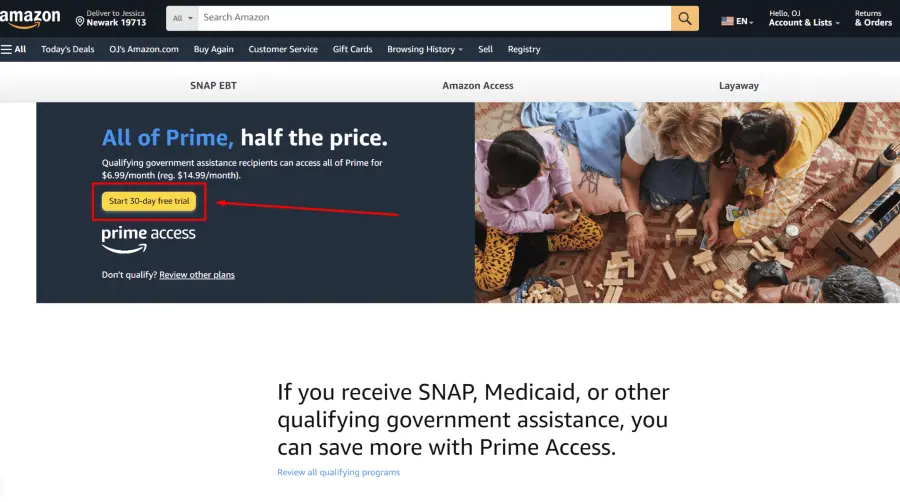
- EBT Card Holders: Individuals who receive government assistance such as SNAP (Supplemental Nutrition Assistance Program), also known as food stamps, and have a valid EBT (Electronic Benefits Transfer) card are eligible for a reduced Prime membership rate. This rate is typically $6.99 per month, a substantial saving from the standard $14.99 monthly fee. For many seniors relying on SNAP benefits, this program makes Prime significantly more accessible and affordable.
- Medicaid Recipients: Similarly, individuals enrolled in Medicaid, the federal and state health care program for low-income individuals and families, are also eligible for the same discounted Prime rate of $6.99 per month. Given that a large proportion of seniors rely on Medicaid for their healthcare needs, this benefit can directly reduce their monthly outgoings for essential services and entertainment.
These programs are crucial because they directly address the financial constraints often faced by seniors on fixed or limited incomes, making valuable services like Prime more within reach.
Verifying Eligibility for Financial Aid Programs
To qualify for the discounted Prime membership through EBT or Medicaid, seniors (or their caregivers) need to go through a verification process. This typically involves:
- Providing Proof of Eligibility: This usually entails uploading an image of a valid EBT card or documentation proving active enrollment in Medicaid. Amazon uses a third-party verification service to confirm eligibility, ensuring the integrity of the program.
- Regular Re-verification: Eligibility is usually not a one-time process. Amazon typically requires re-verification every 12 months to ensure that subscribers continue to meet the program’s criteria. This ensures the benefit is directed to those who genuinely need the financial assistance.
It’s important for seniors to understand these requirements and be prepared to provide the necessary documentation to access these valuable savings. Misinformation about a direct “senior discount” can lead to missed opportunities for genuine financial relief through these assistance programs.
The Tangible Financial Benefits of an Amazon Prime Membership for Seniors

Beyond the direct cost of the membership, the true financial value of Amazon Prime for seniors lies in the tangible and intangible savings it offers. A comprehensive financial perspective requires evaluating these benefits against the subscription fee.
Quantifying Savings on Shipping and Delivery
For many seniors, the elimination of shipping costs is the most immediate and quantifiable financial benefit. Consider the average cost of standard shipping from various online retailers, which can range from $5 to $10 per order. If a senior places just three online orders a month that would otherwise incur shipping fees, they could save anywhere from $15 to $30. Over a year, this translates to $180 to $360 in avoided shipping charges. When compared to the annual Prime cost of $139 (or even $83.88 for the discounted rate), the savings can quickly surpass the membership fee, making it a net financial gain. Furthermore, the convenience of faster delivery and grocery delivery options saves time and effort, an invaluable, albeit indirect, financial benefit.
Unlocking Entertainment Value: Prime Video and Music
Entertainment budgets are often a significant expenditure for seniors. Prime Video and Prime Music offer substantial value that can directly impact these costs:
- Prime Video: A separate streaming service like Netflix or Hulu can cost upwards of $10-$15 per month. If Prime Video adequately fulfills a senior’s entertainment needs, it can eliminate the necessity for these additional subscriptions, saving $120-$180 annually. The breadth of content, from classic films to contemporary series, provides a robust entertainment library at no extra direct cost beyond the Prime membership.
- Prime Music: Many ad-free music streaming services also come with a monthly fee of around $10. Prime Music can serve as a viable alternative, particularly for those who enjoy a wide variety of music without the need for highly specialized features, offering another potential $120 annual saving.
For seniors who might be considering paying for these services separately, Prime consolidates them into a single, cost-effective package.
Exclusive Deals and Prime Day: Maximizing Your Budget
Amazon Prime members frequently gain access to exclusive deals and discounts, particularly during major sales events like Prime Day. These sales can offer significant percentage off on everything from electronics and household goods to groceries and clothing. For seniors who are strategic shoppers, aligning their larger purchases with these events can lead to substantial financial savings. For example, a large purchase like a new TV or appliance during Prime Day with a 20-30% discount could easily save hundreds of dollars, far exceeding the annual Prime membership cost. This requires planning and awareness but presents a clear opportunity for budget optimization.
Additional Monetary Advantages: Prime Reading, Photos, and More
Beyond the major draws, several other Prime benefits contribute to financial well-being:
- Prime Reading/First Reads: For avid readers, free access to a rotating library of e-books and early access to new releases can save hundreds of dollars annually on book purchases.
- Prime Photos: Unlimited, full-resolution photo storage in the cloud, often valued at $50-$100 per year for comparable services, offers peace of mind and frees up funds that might otherwise be spent on external storage solutions.
- Prime Gaming: Free games and in-game content can provide entertainment without additional expenditure.
- Whole Foods Market Discounts: For seniors living near a Whole Foods, Prime membership offers exclusive discounts and 5% back on select purchases, adding up to tangible grocery savings over time.
- Prescription Savings (Prime Rx): As mentioned, significant discounts on prescription medications can directly reduce healthcare expenses, which are often a major financial concern for seniors.
Cumulatively, these smaller benefits can add up to considerable annual savings, bolstering the financial case for a Prime membership.
Is Amazon Prime a Sound Financial Decision for Seniors?
Ultimately, the decision of whether Amazon Prime is a worthwhile financial investment for a senior depends heavily on individual circumstances, usage habits, and financial priorities. It’s a personal cost-benefit analysis.
Personalizing Your Cost-Benefit Analysis
To determine if Prime is financially sensible, seniors (or their caregivers) should ask:
- How frequently do I order items online? If it’s more than once or twice a month, the shipping savings alone likely justify the cost.
- Do I pay for other streaming services (video, music) that Prime could replace? Consolidating services could lead to net savings.
- Do I read e-books or use cloud storage for photos?
- Am I eligible for EBT/Medicaid? The $6.99/month rate dramatically lowers the bar for financial justification.
- Do I regularly shop at Whole Foods or rely on prescription medications?
By tallying potential savings from each benefit, and comparing it to the annual or monthly membership fee (standard or discounted), a clear picture of the net financial gain or loss emerges.
Strategic Tips for Optimizing Your Prime Investment
For seniors who decide to invest in Prime, maximizing its financial value is key:
- Go Annual if You’re a Consistent User: The $139 annual fee is more cost-effective than $14.99/month.
- Explore EBT/Medicaid Eligibility: If qualified, the $6.99/month rate offers unparalleled value.
- Utilize All Benefits: Don’t just focus on shipping. Explore Prime Video, Music, Reading, and Photos to squeeze maximum value from the subscription.
- Shop Smart During Sales: Plan larger purchases around Prime Day and other exclusive Prime member deals.
- Consider “Prime Household”: If living with family, a Prime membership can be shared with one other adult in the household, allowing two people to benefit from many of the perks for the price of one, further spreading the financial commitment.
- Monitor Prescription Savings: Regularly check Prime Rx for discounts on necessary medications.
Budget-Conscious Alternatives and Considerations
For seniors whose usage doesn’t justify the Prime cost, or who are looking for alternatives, several options exist:
- Free Shipping Thresholds: Many retailers offer free shipping once a certain order total is met. Grouping purchases can avoid shipping fees without a subscription.
- Library Services: Local libraries offer free access to books, movies, and music, often through digital platforms like Libby or Hoopla, which can replace some Prime benefits without any cost.
- Free Streaming Services: Platforms like Tubi, Pluto TV, and Crackle offer ad-supported movies and TV shows for free.
- Amazon Without Prime: You can still shop on Amazon without a Prime membership, simply paying for shipping on individual orders or opting for slower, free shipping on eligible orders.
- Gifted Memberships: Family members might consider gifting an annual Prime membership, covering the cost as a gift.
In conclusion, while Amazon Prime does not offer a blanket senior discount, its reduced rate for EBT and Medicaid recipients provides a critical financial lifeline for many older adults. For those who do not qualify for these programs, a careful analysis of the numerous benefits against the standard membership cost often reveals a positive return on investment, particularly for frequent online shoppers and those who can consolidate their entertainment and other service subscriptions. For seniors, a Prime membership isn’t just about convenience; it’s a financial tool that, when leveraged strategically, can contribute to significant annual savings and an enhanced quality of life.
aViewFromTheCave is a participant in the Amazon Services LLC Associates Program, an affiliate advertising program designed to provide a means for sites to earn advertising fees by advertising and linking to Amazon.com. Amazon, the Amazon logo, AmazonSupply, and the AmazonSupply logo are trademarks of Amazon.com, Inc. or its affiliates. As an Amazon Associate we earn affiliate commissions from qualifying purchases.