
Amazon, the e-commerce titan that started as an online bookstore, has grown into a sprawling global enterprise touching nearly every facet of modern commerce and technology. Its financial footprint is immense, making it one of the most scrutinized companies by investors, analysts, and economists alike. The question “How much does Amazon make?” isn’t merely about a single figure; it’s an inquiry into the diverse, interconnected financial engines that power one of the world’s most valuable companies, revealing a complex tapestry of revenue streams, operational costs, and strategic investments. Understanding Amazon’s earnings requires delving deep into its varied business segments, their profitability, and the long-term financial philosophy that underpins its phenomenal growth.
Unpacking Amazon’s Colossal Revenue Streams
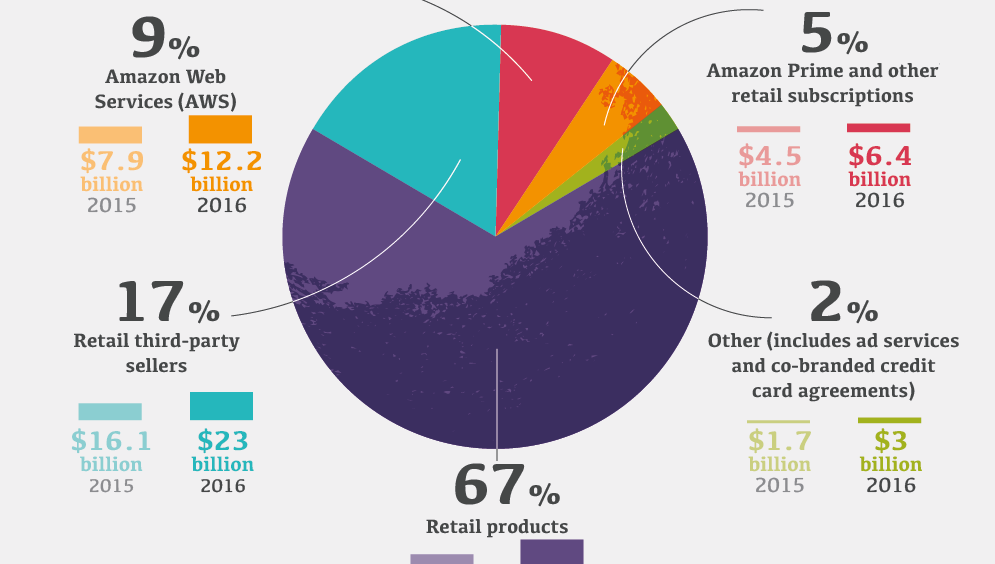
Amazon’s revenue generation is a masterclass in diversification, having successfully leveraged its initial e-commerce dominance into a multi-faceted financial ecosystem. While the retail arm remains foundational, it’s far from the sole driver of the company’s colossal top line.
E-commerce Dominance: The Retail Engine
At its core, Amazon’s identity is rooted in its vast online marketplace. This segment includes online store sales (product sales directly to consumers), third-party seller services (commissions, fulfillment and shipping fees, and other seller programs), and physical stores (Whole Foods Market, Amazon Go, etc.). This business unit leverages massive scale, sophisticated logistics, and a customer-centric approach to capture an unparalleled share of global retail spending. Billions of products, millions of sellers, and a highly efficient supply chain enable Amazon to process an extraordinary volume of transactions daily. While often operating on thin margins due to fierce competition and high operational costs, the sheer volume of sales makes it an immense revenue contributor. This segment’s growth is fueled by continuous innovation in customer experience, rapid delivery options, and global expansion into new markets.
AWS: The Cloud Computing Behemoth
Perhaps Amazon’s most significant financial success story and its primary profit engine is Amazon Web Services (AWS). Launched in 2006, AWS provides on-demand cloud computing platforms and APIs to individuals, companies, and governments on a metered pay-as-you-go basis. This includes computing power, storage, databases, analytics, machine learning, and a vast array of other cloud services. AWS has become the undisputed leader in the cloud infrastructure market, powering everything from startups to Fortune 500 companies. Its high-margin, recurring revenue model stands in stark contrast to the often lower-margin retail operations. AWS’s consistent growth, driven by the global digitalization trend and increasing enterprise adoption of cloud solutions, contributes a disproportionately high share of Amazon’s overall operating income, making it a critical pillar of the company’s financial strength and market valuation.
Advertising: A High-Margin Growth Driver
Often underestimated but increasingly vital, Amazon’s advertising business has quietly blossomed into a multi-billion-dollar juggernaut. Leveraging its immense customer data and search traffic on its e-commerce platform, Amazon offers advertisers a powerful way to reach consumers at the point of purchase. This includes sponsored product listings, display ads, and video ads both on and off Amazon properties. The appeal for advertisers is clear: high intent buyers are already on Amazon to shop. This segment boasts significantly higher profit margins compared to traditional retail, making it a crucial component of Amazon’s profitability mix. As more brands recognize the value of advertising within Amazon’s ecosystem, this revenue stream continues to expand at a rapid pace, directly enhancing the company’s overall financial health.
Subscriptions: Prime’s Ecosystem Value
Amazon Prime is more than just a delivery service; it’s a comprehensive subscription ecosystem that locks in customer loyalty and provides a steady stream of recurring revenue. Prime membership offers benefits such as free two-day shipping (and often same-day/next-day), access to Prime Video, Amazon Music, Prime Reading, and exclusive deals. The annual or monthly fees from millions of Prime subscribers worldwide represent a predictable and high-margin revenue stream. Beyond the direct revenue, Prime members tend to spend significantly more on Amazon’s retail platform than non-members, making Prime a strategic asset that fuels other segments of the business and underpins Amazon’s customer retention strategy.
Other Ventures: From Logistics to Healthcare
Amazon’s entrepreneurial spirit has led it into numerous other ventures, each contributing to or supporting its financial ambitions. This includes segments like Amazon Logistics (its rapidly expanding in-house shipping and delivery network), Amazon Devices (Kindle, Echo, Fire TV), Amazon Pharmacy, Amazon Care (though largely dissolved, showing their exploratory nature), and its satellite internet project, Project Kuiper. While some of these are still in early stages of profitability or primarily serve as strategic investments to enhance the core business, they represent Amazon’s relentless pursuit of new markets and revenue opportunities, demonstrating a willingness to invest heavily for long-term financial gain.
Beyond Top-Line: Understanding Profitability
While Amazon’s revenue figures are staggering, understanding “how much Amazon makes” requires looking beyond just the sales numbers to analyze profitability. A high revenue doesn’t automatically equate to high profit, especially for a company known for its aggressive investment strategies.
Gross vs. Net Profit: The Cost of Doing Business
Gross profit, which is revenue minus the cost of goods sold, indicates the efficiency of product sourcing and sales. For Amazon’s retail business, this involves the cost of purchasing inventory, manufacturing devices, and the direct costs associated with digital services. Net profit, or net income, is the bottom line after all operating expenses (fulfillment, technology and content, marketing, general and administrative) and taxes are subtracted. Amazon’s retail segment, with its massive logistical footprint and intense competition, often operates with relatively lower net profit margins compared to its high-margin AWS and advertising segments. The sheer scale, however, still translates into substantial absolute dollar profits. Analyzing the shifts in these profit metrics reveals where Amazon is investing, where it’s cutting costs, and which segments are truly driving its financial health.
Investing for Growth: R&D and Infrastructure
A defining characteristic of Amazon’s financial strategy is its willingness to sacrifice short-term profits for long-term growth. This is evident in its massive investments in research and development (R&D) and infrastructure. Billions are poured into developing new technologies, expanding its cloud computing capacity, building new fulfillment centers, acquiring content for Prime Video, and experimenting with new services. These investments, while reducing current net income, are designed to create new revenue streams, improve operational efficiency, and cement its competitive advantages years into the future. For investors, understanding this philosophy is key to appreciating Amazon’s financial reports; a lower net income might not always be a sign of weakness but rather a strategic deployment of capital for future dominance.

Operational Efficiency and Supply Chain Prowess
Despite the vast scale and complexity of its operations, Amazon continually strives for operational efficiency. Its sophisticated supply chain management, powered by advanced algorithms and extensive automation, is critical to managing costs in its retail division. From optimizing warehouse layouts and delivery routes to integrating AI in inventory management, every aspect is designed to reduce costs per unit and improve speed. The ability to deliver billions of items rapidly and cost-effectively is a competitive moat that directly impacts its profitability. Similarly, in AWS, the continuous optimization of data centers and server utilization helps maintain high margins despite the ever-increasing demand for computing resources.
A Closer Look at Financial Performance Metrics
To quantify “how much Amazon makes,” investors and analysts typically focus on several key financial metrics that provide a comprehensive view of the company’s performance.
Quarterly and Annual Revenue Figures
Amazon regularly reports its financial performance on a quarterly and annual basis. Its annual net sales have consistently grown into hundreds of billions of dollars, often approaching or exceeding half a trillion dollars in recent years. Quarterly figures provide a more granular view, showing seasonal trends (e.g., Q4 is typically the strongest due to holiday shopping) and the immediate impact of market conditions or strategic initiatives. Tracking these trends is crucial for understanding the company’s growth trajectory and market share expansion across its various segments.
Net Income and Earnings Per Share (EPS)
Net income, or the bottom-line profit, is a critical indicator of a company’s financial health. Amazon’s net income can fluctuate significantly due to its heavy investment cycles, economic conditions, and even equity investments (like its stake in Rivian, which can cause significant non-operating gains or losses). Earnings Per Share (EPS) divides the net income by the number of outstanding shares, providing a per-share measure of profitability that is often used by investors to gauge the company’s value. While Amazon is known for prioritizing revenue growth over immediate profitability, its net income figures are still substantial, often in the tens of billions of dollars annually, especially when AWS performs strongly.
Free Cash Flow: A Key Indicator of Health
Perhaps one of the most important metrics for Amazon, particularly given its history of reinvestment, is Free Cash Flow (FCF). FCF represents the cash generated by the business after accounting for cash outflows to support operations and maintain its capital assets. It’s a truer measure of a company’s financial liquidity and its ability to pay down debt, pay dividends (which Amazon doesn’t currently do), or fund further expansion without relying on external financing. Amazon’s founder, Jeff Bezos, historically emphasized FCF as the primary measure of shareholder value. Positive and growing FCF indicates a healthy business with ample resources to fund its ambitious projects and weather economic downturns.
Shareholder Value and Market Capitalization
Ultimately, for public companies, “how much Amazon makes” also translates into shareholder value. Amazon’s market capitalization (the total value of all its outstanding shares) consistently ranks among the highest globally, often exceeding a trillion dollars. This valuation reflects investor confidence in Amazon’s long-term growth prospects, its diverse revenue streams, and its ability to continue innovating and dominating multiple industries. The appreciation of its stock price over decades has created immense wealth for its shareholders, making it a cornerstone of many investment portfolios.
The Future of Amazon’s Financial Empire
Amazon’s journey has been one of continuous evolution, and its future financial performance will depend on its ability to adapt, innovate, and expand.
Diversification and New Market Penetration
Amazon is unlikely to rest on its laurels. Future financial growth will stem from continued diversification into new sectors. This could include further expansion into healthcare technology, autonomous logistics, augmented and virtual reality, and even space commerce through initiatives like Project Kuiper. Penetrating new international markets, particularly in developing economies, also offers significant long-term growth potential for its e-commerce and AWS segments. Each new venture represents a potential multi-billion-dollar revenue stream, though they often come with substantial initial investment costs.
Navigating Economic Headwinds and Opportunities
Like any global giant, Amazon is susceptible to macroeconomic forces. Inflation, supply chain disruptions, changing consumer spending habits, and geopolitical tensions can all impact its revenue and profitability. However, Amazon’s diversified business model also provides resilience. When retail might slow, AWS might continue its robust growth. Furthermore, economic downturns can present opportunities for Amazon to acquire distressed assets or gain market share from weaker competitors, positioning it for stronger growth when conditions improve. Its focus on efficiency and customer value often makes it a go-to for consumers during tighter economic times.

Long-Term Growth Strategies and Innovation
Amazon’s financial strategy remains deeply rooted in its “Day 1” philosophy: maintaining a startup mentality, fostering relentless innovation, and prioritizing customer obsession. This means continuous investment in new technologies like AI and machine learning to personalize experiences, optimize operations, and create entirely new services. The company’s commitment to research and development, its expansive talent pool, and its willingness to experiment—and occasionally fail—are all geared towards securing long-term financial dominance across an ever-broader spectrum of economic activity. The ultimate measure of how much Amazon makes, then, isn’t just today’s profits, but its sustained capacity to generate immense value and reshape industries for decades to come.
aViewFromTheCave is a participant in the Amazon Services LLC Associates Program, an affiliate advertising program designed to provide a means for sites to earn advertising fees by advertising and linking to Amazon.com. Amazon, the Amazon logo, AmazonSupply, and the AmazonSupply logo are trademarks of Amazon.com, Inc. or its affiliates. As an Amazon Associate we earn affiliate commissions from qualifying purchases.