
Understanding the Value of a Safe Deposit Box
A safe deposit box is often considered a bedrock of personal financial security, a physical fortress for your most irreplaceable possessions. Before delving into the specific costs, it’s essential to understand what these secure containers offer and why they remain a relevant financial tool in an increasingly digital world.
What is a Safe Deposit Box?
At its core, a safe deposit box is a secured, locked container located within a protected vault, typically maintained by a bank or credit union. These boxes are designed to offer a higher level of security than what most individuals can achieve at home, protecting valuables from theft, fire, floods, and other disasters. Access requires multiple keys—one held by the renter and a guard key held by the institution—ensuring that neither party can access the box independently.
The Core Appeal: Security and Peace of Mind
The primary reason individuals rent safe deposit boxes is for the unparalleled security they provide. For items that are financially or sentimentally invaluable, the peace of mind derived from knowing they are safeguarded within a bank-grade vault is substantial. This security extends beyond mere physical protection; it also includes discretion and a controlled access environment, minimizing unauthorized handling of sensitive materials. For many, the modest annual fee is a small price to pay for the assurance that their most critical assets are shielded against unforeseen circumstances.
Key Factors Influencing Safe Deposit Box Rental Costs
The cost of renting a safe deposit box is not universal; it fluctuates based on several distinct factors. Understanding these variables is crucial for anyone looking to budget for this financial service.
Box Size: The Primary Determinant
The most significant factor influencing the annual rental fee is the physical size of the safe deposit box. Institutions offer a range of dimensions to accommodate various needs, and larger boxes naturally command higher prices due to the increased space they occupy within the secure vault.
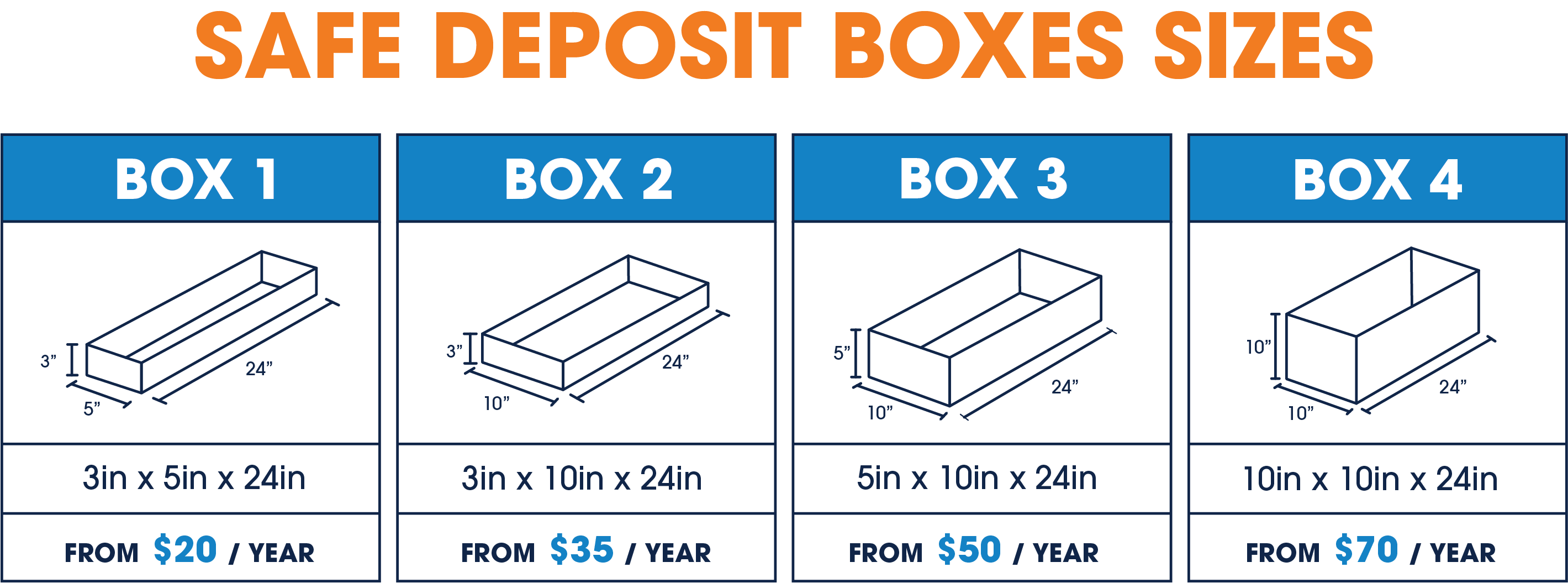
- Small Boxes (e.g., 3x5x24 inches): These are typically the most affordable option, suitable for storing critical documents like birth certificates, passports, small jewelry items, or a handful of important papers. Annual costs often range from $20 to $75.
- Medium Boxes (e.g., 5x10x24 inches): Offering more space, these are popular for deeds, vehicle titles, larger collections of documents, small heirlooms, or modest jewelry collections. Expect to pay anywhere from $50 to $150 per year for this size.
- Large Boxes (e.g., 10x10x24 inches): Designed for more substantial items such as family photo albums, valuable art pieces, extensive document collections, or larger quantities of precious metals, these boxes come with a higher price tag. Annual fees for large boxes commonly fall between $100 and $300.
- Extra Large/Custom Boxes: Some institutions may offer even larger or custom-sized options for unique items like large antique firearms (legal restrictions permitting), significant art, or substantial coin collections. These are less common and their costs can vary widely, potentially exceeding $500 annually.
It’s important to note that the depth (often 24 inches) is usually standard across all sizes, with the height and width being the primary differentiating dimensions.
Financial Institution and Location
Where you rent your safe deposit box also plays a considerable role in its cost.
- Banks vs. Credit Unions: Generally, credit unions are member-owned and often operate with lower overheads, sometimes translating to slightly lower rental fees compared to larger commercial banks. However, this is not a hard-and-fast rule, and competitive pricing exists across both types of institutions. Some banks may also offer discounts to their existing account holders (e.g., premier checking account customers), so inquiring about such benefits is advisable.
- Geographic Variations: Just like real estate, the cost of a safe deposit box can be influenced by location. Institutions in major metropolitan areas or regions with a higher cost of living may charge more than those in suburban or rural areas. Demand can also play a role; in areas with high demand and limited vault space, prices might be higher.
Rental Term and Additional Services
The standard rental term for a safe deposit box is annual, but some institutions may offer incentives for longer commitments.
- Annual vs. Multi-Year Discounts: While less common for safe deposit boxes than for other services, some banks might offer a small discount if you prepay for multiple years (e.g., two or three years). Always ask about such possibilities.
- Insurance Considerations: It’s crucial to understand that the contents of a safe deposit box are not insured by the FDIC or NCUA. While the physical security is high, loss due to natural disaster, theft, or other unforeseen events is a risk that falls on the renter. Many personal homeowners’ or renters’ insurance policies offer some coverage for items stored off-premises, but often with limits. You may need to purchase additional “scheduled personal property” coverage or dedicated safe deposit box insurance for high-value items like rare coins, jewelry, or collectibles. The cost of this additional insurance is separate from the rental fee and depends on the declared value of the items.
Potential Hidden Fees
While the annual rental fee is the most transparent cost, potential renters should be aware of additional charges that can arise under specific circumstances.
- Lost Key Fees: Losing your safe deposit box key can be an expensive mistake. Institutions typically charge a substantial fee for rekeying the lock or drilling the box open to regain access and replace the lock. This fee can range from $100 to $400 or more, depending on the complexity and the institution’s policy. Always keep your key in a very secure, memorable place.
- Late Payment Penalties: If you fail to pay your annual rental fee on time, the institution may levy late payment charges. Continued non-payment can lead to the bank drilling the box open, cataloging its contents, and eventually taking possession or selling the contents to recover fees.
- Drilling Charges: Beyond a lost key, if access is required due to legal action or prolonged non-payment, the cost of drilling the box open will be passed on to the renter or their estate. This is often the same substantial fee as for a lost key.
Typical Cost Ranges and What to Expect
Considering all factors, here’s a general overview of what you might expect to pay for a safe deposit box annually:
General Price Guide by Size
- Small (3×5 inches): $20 – $75
- Medium (5×10 inches): $50 – $150
- Large (10×10 inches): $100 – $300
- Extra Large/Specialty: $300 – $500+
These figures represent typical annual fees. It’s always best to contact several local banks and credit unions to compare their exact pricing and any promotions they might offer.
Regional Cost Differences
As mentioned, prices can vary significantly by region. A small box in a rural town might cost closer to $20-$30, while the same size in a major financial hub could be $60-$75. These regional variations reflect the local economy, operational costs for the financial institution, and the demand for such services.
Beyond the Annual Fee: The Total Expense
When evaluating the cost, consider the total financial commitment. This includes:
- The annual rental fee.
- The potential cost of additional insurance if needed.
- The psychological cost of potential lost key fees (encouraging careful stewardship of your key).
Factor these elements into your personal finance calculations to determine the true expense of utilizing a safe deposit box.
Is a Safe Deposit Box Worth the Investment?
The decision to rent a safe deposit box is a personal financial one, weighing the cost against the value of the items being protected and the peace of mind offered.
Items Best Stored in a Safe Deposit Box
Safe deposit boxes are ideal for items that are difficult or impossible to replace and are not needed for immediate access.
- Irreplaceable Documents: Birth certificates, marriage licenses, divorce decrees, military discharge papers, property deeds, vehicle titles, bonds, stock certificates, collectible currency, valuable contracts, rare family photos, and copies of wills (original wills should be kept where they can be accessed quickly by your executor, though a copy here is good).
- Collectibles and Valuables: Rare coin collections, stamp collections, valuable jewelry not worn regularly, precious metals (gold, silver, platinum bars or coins), heirloom watches, and other small, high-value collectibles.
- Backup Drives: External hard drives or USB sticks containing critical digital data backups, encrypted and password-protected.
Items to Avoid Storing
Certain items are ill-suited for a safe deposit box due to access limitations or other reasons.
- Documents Needed Immediately: Original wills, powers of attorney, passports (if frequently traveled with), living wills, and medical directives should be kept readily accessible to you or your designated agent. In an emergency, accessing a safe deposit box after banking hours or on weekends is impossible.
- Cash: While not illegal to store, cash in a safe deposit box is not insured by the FDIC or NCUA. If the bank fails (highly unlikely but possible), your cash in the box would not be protected, unlike money in a deposit account. Keeping large amounts of cash outside a deposit account also offers no interest earnings.
- Illicit or Dangerous Items: Prohibited items vary by institution but generally include firearms, illegal substances, and hazardous materials.
Comparing Alternatives: Home Safes and Digital Solutions
Before committing to a safe deposit box, consider alternatives:
- Home Safes: A quality home safe can protect against fire and some levels of theft. They offer immediate access, which is a significant advantage. However, even the best home safes are generally less secure than a bank vault, and they are susceptible to home invasion and natural disasters that might affect your property. Costs vary widely based on size, fire rating, and security features, from a few hundred dollars to several thousand.
- Digital Document Storage and Security: For many documents, encrypted cloud storage, secure password managers, and digital backup solutions offer convenient, often free or low-cost alternatives. This is excellent for copies of documents but cannot replace the original physical certificates or irreplaceable physical valuables.
Making an Informed Financial Decision
Ultimately, the decision to rent a safe deposit box is a personal financial calculation. Weigh the cost against the peace of mind, the value of the items you wish to protect, and the security alternatives available. For many, especially those with significant assets or irreplaceable family heirlooms, the modest annual fee of a safe deposit box remains a worthwhile and prudent financial investment in security. Always compare prices from multiple institutions, understand all potential fees, and clarify what is and is not covered by insurance.
aViewFromTheCave is a participant in the Amazon Services LLC Associates Program, an affiliate advertising program designed to provide a means for sites to earn advertising fees by advertising and linking to Amazon.com. Amazon, the Amazon logo, AmazonSupply, and the AmazonSupply logo are trademarks of Amazon.com, Inc. or its affiliates. As an Amazon Associate we earn affiliate commissions from qualifying purchases.