
Retirement is no longer a static milestone reached at age 65 with a gold watch and a guaranteed pension. In the modern economic landscape, retirement is a financial state—a point where your assets generate enough income to support your lifestyle indefinitely. However, the most haunting question for anyone planning for the future remains: “How much is enough?”
The answer is rarely a single, universal number. It is a moving target influenced by inflation, lifestyle choices, healthcare costs, and market volatility. To build a secure future, you must move beyond guesswork and employ a rigorous, strategic approach to personal finance. This guide breaks down the essential components of calculating your retirement needs, the mathematical frameworks used by experts, and the investment strategies required to reach your goal.
1. Defining Your Retirement Lifestyle and Estimated Expenses
Before you can calculate a target number, you must define what retirement looks like for you. Financial planning is not merely about accumulating wealth; it is about funding a specific lifestyle.
The 80% Rule of Thumb
A common starting point in personal finance is the “80% Rule.” This suggests that you will need approximately 80% of your pre-retirement annual income to maintain your current standard of living once you stop working. The logic is that certain costs—such as commuting, professional wardrobes, and payroll taxes—disappear. However, this rule is a generalization. Someone planning to travel the world may find they need 110% of their current income, while someone with a paid-off mortgage and a penchant for gardening might thrive on 50%.
Accounting for Healthcare and Longevity
One of the most underestimated expenses in retirement is healthcare. Even with government programs like Medicare, out-of-pocket costs for supplemental insurance, prescriptions, and long-term care can be staggering. Current estimates suggest a healthy couple retiring today may need several hundred thousand dollars just to cover medical expenses over their lifetime. Factoring in the rising costs of assisted living or home nursing is critical, as these expenses often arrive at the end of retirement when the nest egg is most vulnerable.
Factoring in Inflation and Lifestyle Inflation
Inflation is the “silent killer” of purchasing power. A million dollars today will not buy the same amount of goods and services in twenty or thirty years. When calculating your retirement needs, you must account for an average inflation rate of 2% to 3%. Furthermore, “lifestyle inflation” occurs when your expectations of comfort rise over time. Your plan must be resilient enough to handle the increasing nominal costs of utilities, food, and leisure over a multi-decade retirement period.
2. The Mathematics of the “Magic Number”
Once you have an estimate of your annual expenses, you can use established financial frameworks to determine the total capital required to fund those expenses.
The 4% Rule and the Trinity Study
The most famous benchmark in retirement planning is the “4% Rule,” derived from the Trinity Study. This rule suggests that if you withdraw 4% of your initial portfolio value in the first year of retirement and adjust that amount for inflation every year thereafter, your money has a high probability of lasting at least 30 years.
While the 4% rule is a helpful baseline, it is not infallible. In an era of lower bond yields and increased market volatility, some financial advisors suggest a more conservative withdrawal rate of 3% or 3.5% to ensure the portfolio survives a longer retirement or a prolonged market downturn.
The Multiplier Method (25x Annual Spending)
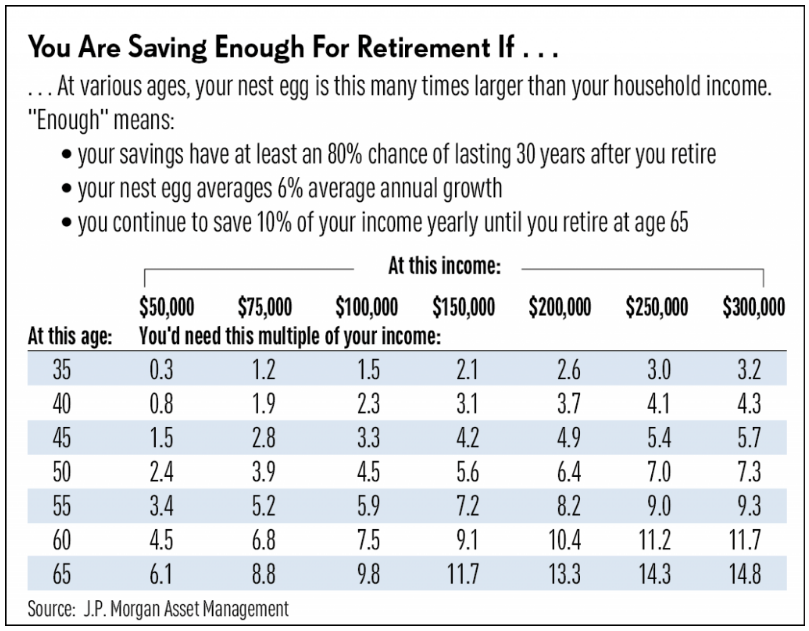
The inverse of the 4% rule is the “25x Rule.” To find your retirement target, simply multiply your desired annual retirement income by 25. For example, if you determine that you need $80,000 per year to live comfortably, your target nest egg would be $2 million ($80,000 x 25 = $2,000,000).
This calculation provides a clear, tangible goal. However, it is vital to subtract guaranteed income sources, such as Social Security or a pension, from your annual requirement before multiplying. If Social Security covers $30,000 of your $80,000 need, you only need your portfolio to provide $50,000. In this case, your target number drops to $1.25 million.
Adjusting for Life Expectancy
Modern medicine is extending lifespans, which means retirements are lasting longer. Planning for a 30-year retirement is standard, but if you retire early (the FIRE movement—Financial Independence, Retire Early) or have a family history of longevity, you may need to plan for 40 or even 50 years of withdrawals. This requires a larger principal balance or a more aggressive investment strategy to ensure the capital is not depleted prematurely.
3. Strategic Asset Allocation and Wealth Accumulation
Reaching your “Magic Number” requires more than just saving; it requires disciplined investing and a deep understanding of market dynamics.
The Power of Compound Interest
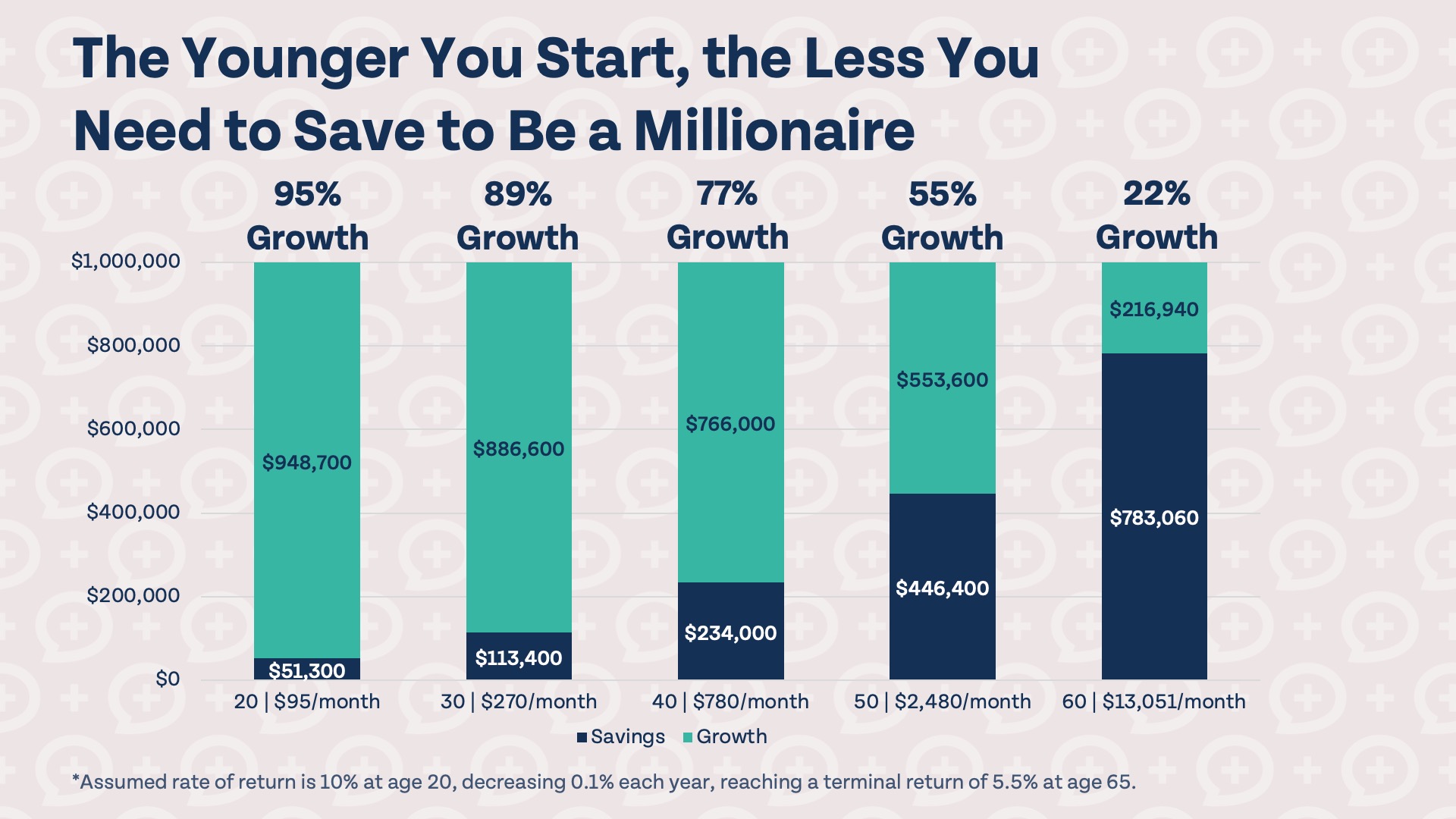
The most potent tool in a saver’s arsenal is time. Compound interest allows your earnings to generate their own earnings. For example, investing $1,000 a month starting at age 25 can result in a significantly larger portfolio by age 65 than investing $3,000 a month starting at age 45. The “cost of waiting” is the single greatest hurdle to reaching a retirement goal. To maximize your retirement fund, you must prioritize early and consistent contributions to the market.
Diversification and Asset Classes
A robust retirement portfolio is diversified across various asset classes, including domestic and international equities, fixed-income bonds, and perhaps real estate or commodities.
- Equities: Provide the growth necessary to outpace inflation.
- Bonds: Provide stability and income, acting as a buffer during stock market corrections.
- Real Estate: Can offer both capital appreciation and reliable rental income.
The right “mix” depends on your age and risk tolerance. As you approach retirement, the strategy typically shifts from aggressive growth to capital preservation.
Leveraging Tax-Advantaged Accounts
In the “Money” niche, tax efficiency is as important as market returns. Utilizing accounts like the 401(k), 403(b), Traditional IRA, or Roth IRA can save you hundreds of thousands of dollars in taxes over a lifetime.
- Traditional Accounts: Offer a tax break today but are taxed as income when you withdraw the money in retirement.
- Roth Accounts: Are funded with after-tax dollars, but the growth and withdrawals are entirely tax-free.
A strategic balance of both types of accounts allows for “tax diversification,” giving you the flexibility to manage your taxable income levels during your retirement years.
4. Mitigating Risks to Your Retirement Security
Even the best-laid plans can be derailed by external factors. A sophisticated financial plan includes contingencies for common retirement risks.
Sequence of Returns Risk
Sequence of returns risk refers to the danger of the market crashing in the very early years of your retirement. If you are forced to sell assets to fund your life during a market bottom, you significantly deplete your principal, making it nearly impossible for the portfolio to recover. To mitigate this, many retirees maintain a “cash bucket”—two to three years of living expenses in high-yield savings or short-term bonds—so they don’t have to sell stocks during a bear market.
Managing Debt Before the Finish Line
Entering retirement with high-interest debt, such as credit card balances or large personal loans, is a major threat to financial stability. Even a mortgage can be a significant burden on a fixed income. Most financial experts recommend a “Debt-Free” approach to retirement. By eliminating monthly debt payments, you lower your mandatory expenses, which in turn reduces the amount of total capital you need to draw from your investments each year.
Creating Multiple Income Streams
Relying solely on a volatile stock market can be stressful. The most secure retirements are built on a “three-legged stool” of income:
- Investments: Your 401(k), IRA, and brokerage accounts.
- Guaranteed Income: Social Security, pensions, or fixed annuities.
- Passive/Active Income: Rental properties, dividends, or a part-time consultancy/side hustle.
By diversifying how your money comes in, you create a safety net that protects you if one source underperforms.
Conclusion
Calculating how much you need to retire is both a mathematical exercise and a personal reflection on your values. While the 25x rule and the 4% withdrawal rate provide essential frameworks, the ultimate success of your retirement depends on your ability to remain disciplined, adapt to changing economic conditions, and manage risks like inflation and healthcare.
Financial independence is not a destination you reach by accident; it is the result of intentional planning, aggressive saving, and smart investing. Whether your number is $500,000 or $5,000,000, the best time to start refining your strategy is today. By understanding the levers of your personal finances, you can move toward retirement with the confidence that your nest egg will support you for as long as you need it.
aViewFromTheCave is a participant in the Amazon Services LLC Associates Program, an affiliate advertising program designed to provide a means for sites to earn advertising fees by advertising and linking to Amazon.com. Amazon, the Amazon logo, AmazonSupply, and the AmazonSupply logo are trademarks of Amazon.com, Inc. or its affiliates. As an Amazon Associate we earn affiliate commissions from qualifying purchases.