
For millions of Americans, Social Security represents a cornerstone of their financial security, particularly in retirement. It’s a program that has provided a vital safety net for nearly a century, offering income to retirees, individuals with disabilities, and survivors of deceased workers. However, despite its pervasive influence, many people grapple with a fundamental question: “How much will I actually receive in Social Security benefits?” The answer isn’t a simple, fixed number; rather, it’s a dynamic calculation influenced by a multitude of factors specific to each individual’s work history, age, and life circumstances.
Understanding your potential Social Security benefits is not just about curiosity; it’s a critical component of effective financial planning. Whether you’re decades away from retirement or approaching your claiming age, having a clear grasp of how these benefits are determined allows you to make informed decisions about your savings, investments, and overall financial future. This comprehensive guide aims to demystify the Social Security benefits calculation, providing you with the insights needed to estimate your future income and strategize for a more secure retirement.
Understanding the Fundamentals of Social Security Benefits
Before diving into the specifics of benefit amounts, it’s essential to lay a foundational understanding of what Social Security is, who is eligible, and the various types of benefits it provides. This context is crucial for appreciating the program’s role in personal finance.
What is Social Security?
Social Security is a federal insurance program in the United States, funded primarily through dedicated payroll taxes (FICA taxes) paid by workers and their employers. It was established in 1935 as part of the New Deal to provide economic security for Americans. While often associated primarily with retirement, its scope is much broader, encompassing a comprehensive suite of benefits designed to protect families against the financial hardship that can arise from retirement, disability, or the death of a wage earner. The underlying principle is that contributions made throughout one’s working life qualify them, and often their families, for benefits when certain life events occur. It acts as a pay-as-you-go system, where current workers’ contributions largely fund the benefits of current retirees and other beneficiaries.
Eligibility Requirements
To qualify for Social Security benefits, individuals must earn “work credits” by working and paying Social Security taxes. In 2024, you earn one work credit for every $1,730 in earnings, up to a maximum of four credits per year. Most people need 40 work credits, accumulated over at least 10 years of work, to be eligible for retirement benefits. For disability or survivor benefits, fewer credits may be required, depending on age and circumstances at the time of onset or death. This system ensures that those who have contributed to the system throughout their careers are the ones who ultimately receive benefits.
Types of Benefits
Social Security isn’t a monolithic program; it offers several distinct types of benefits, each with its own eligibility criteria and calculation methods:
- Retirement Benefits: This is the most common type, providing monthly income to eligible workers and their spouses/children upon reaching retirement age. The amount depends significantly on lifetime earnings and the age at which benefits are claimed.
- Disability Benefits: If an individual becomes severely disabled and cannot work, Social Security Disability Insurance (SSDI) can provide income. Eligibility requires meeting the Social Security Administration’s (SSA) strict definition of disability and having enough work credits.
- Survivor Benefits: When a worker dies, certain family members (spouses, children, dependent parents) may be eligible for survivor benefits. These benefits aim to provide financial support to families who lose a primary earner.
- Supplemental Security Income (SSI): While often confused with Social Security, SSI is a separate, needs-based program that provides financial assistance to low-income individuals who are aged, blind, or disabled, regardless of their work history. It is administered by the SSA but funded by general tax revenues, not Social Security payroll taxes.
Key Factors Influencing Your Social Security Benefit Amount
Determining your Social Security benefit is a complex calculation, but it primarily hinges on a few critical factors. Understanding these elements will illuminate why two individuals with similar careers might receive vastly different monthly payouts.
Your Earnings Record
The most significant factor in determining your Social Security benefit is your lifetime earnings record. The Social Security Administration (SSA) calculates your benefit based on your 35 highest-earning years, adjusted for inflation to reflect average wage levels at the time you earned them. These adjusted earnings are then used to calculate your Average Indexed Monthly Earnings (AIME). If you have fewer than 35 years of earnings, zero earnings years will be factored into the calculation, which can significantly lower your overall benefit. This emphasizes the importance of consistent employment and earning a stable income throughout your career. High earners generally receive higher benefits, up to a certain maximum, because the system is progressive, meaning it replaces a higher percentage of earnings for lower-income workers than for high-income workers.
Your Full Retirement Age (FRA)
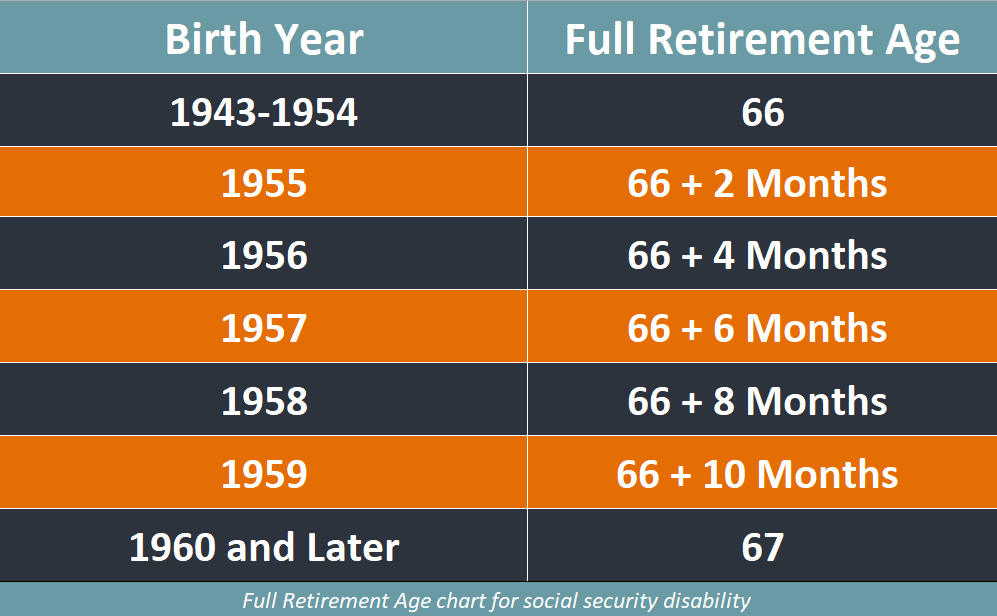
Your Full Retirement Age (FRA), also known as your “normal retirement age,” is the age at which you are entitled to receive 100% of your primary insurance amount (PIA), the benefit calculated from your AIME. FRA is not a universal age; it depends on your birth year. For those born in 1943 through 1954, FRA is 66. It gradually increases by a few months for those born between 1955 and 1959, reaching 67 for anyone born in 1960 or later. Understanding your FRA is crucial because claiming benefits before or after this age will permanently alter your monthly payout.
Claiming Age Decisions
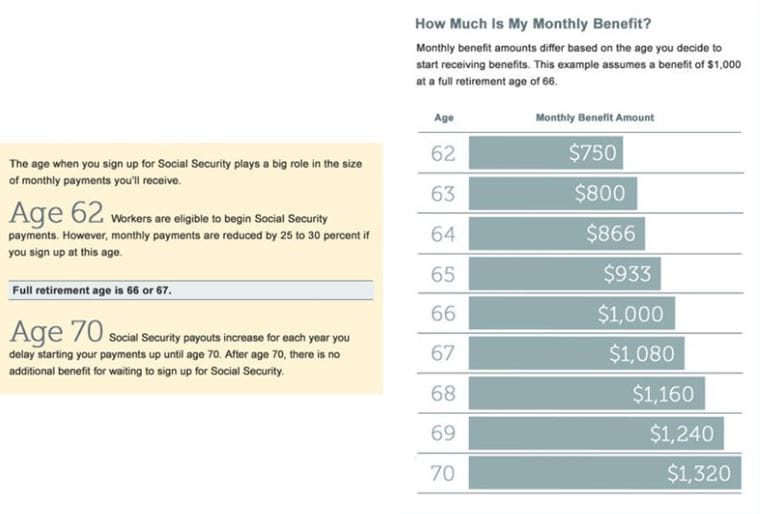
One of the most impactful decisions you’ll make regarding Social Security is when to start receiving benefits. You can begin claiming as early as age 62, but doing so will result in a permanent reduction in your monthly benefit. For example, if your FRA is 67 and you claim at 62, your benefit could be reduced by up to 30%. Conversely, if you delay claiming benefits past your FRA, you can earn Delayed Retirement Credits (DRCs). These credits increase your benefit by a certain percentage for each month you delay, up to age 70. The increase is typically 8% per year (2/3 of 1% per month) for those born in 1943 or later. This means waiting until 70 could boost your monthly payment significantly compared to claiming at FRA. The optimal claiming age is a complex personal decision, influenced by health, life expectancy, other income sources, and financial needs.
Cost-of-Living Adjustments (COLAs)
Once you start receiving Social Security benefits, your payments are generally protected against inflation through Cost-of-Living Adjustments (COLAs). The SSA reviews inflation data annually, and if the cost of living has increased, benefits are adjusted upwards to help maintain purchasing power. COLAs typically take effect in January each year. While not directly influencing your initial benefit calculation, COLAs ensure that the “how much” you get continues to be relevant over the decades you may be receiving benefits.
Navigating Your Social Security Statement and Estimating Benefits
Understanding the factors that influence your benefits is one thing; actually seeing your estimated benefits and reviewing your personal record is another. The Social Security Administration provides several invaluable tools to help you do just that.
Accessing Your Social Security Statement Online
The most direct and accurate way to get personalized information about your Social Security benefits is through your online “My Social Security” account. This secure portal, accessible on the SSA’s official website (www.ssa.gov), allows you to create a personalized account where you can:
- Review your earnings record: It’s vital to ensure your reported earnings are accurate, as any discrepancies could impact your future benefits. Errors should be reported to the SSA promptly.
- Get personalized estimates: See your estimated future benefits at various claiming ages (early retirement, full retirement age, and age 70).
- Check your work credits: Confirm you have enough credits to qualify for benefits.
- Manage your benefits: Once you’re receiving benefits, you can manage your direct deposit information, get a benefit verification letter, and more.
If you are 60 or older and not yet receiving benefits, the SSA used to mail a paper statement annually. While this practice is largely phased out for younger individuals, your online account remains the primary and most up-to-date resource.
Interpreting Your Statement
Once you access your Social Security Statement, take the time to understand its different sections. It typically provides:
- Your Estimated Benefits: This is usually the most anticipated section, showing projections for your monthly benefit amount if you retire at age 62 (early retirement), your Full Retirement Age (FRA), and age 70 (maximum delayed retirement). These estimates are based on your earnings history and assumptions about your future earnings.
- Your Earnings Record: A year-by-year breakdown of your taxable earnings. Cross-reference this with your W-2s or tax returns to catch any potential errors.
- Information About Other Benefits: Estimates for disability and survivor benefits for your family.
- General Information: Explanations of how benefits are calculated, eligibility rules, and other useful facts about the program.
Remember that these are estimates. They are based on your past earnings and an assumption that you will continue to earn at a similar rate until retirement. If your earnings change significantly, or if you stop working earlier than anticipated, your actual benefits may differ.
Using Online Calculators and Tools
Beyond your personal statement, the SSA offers several online calculators that allow for more dynamic estimations:
- Retirement Estimator: Provides instant, personalized estimates of your future Social Security benefits based on your actual earnings record. You can input different retirement dates and future earnings scenarios.
- Benefit Calculators for Spouses, Survivors, and Disability: Specific tools to help estimate benefits for these categories, which often involve more complex eligibility rules.
Additionally, various reputable third-party financial planning websites offer Social Security calculators. While these can be helpful for exploring “what-if” scenarios, always prioritize the information directly from the SSA or consult with a qualified financial advisor for definitive guidance. These tools empower you to model different retirement strategies and understand the financial implications of your choices.
Strategies to Maximize Your Social Security Benefits
While your lifetime earnings are a primary determinant, there are several strategic decisions you can make to optimize and potentially maximize the amount you receive from Social Security. These strategies often involve long-term planning and careful consideration of your personal circumstances.
Working Longer and Earning More
Since your Social Security benefit is based on your 35 highest-earning years, extending your career, especially into your peak earning years, can significantly boost your benefit. If you’ve had years with low or no earnings, continuing to work can replace those “zero” or low-earning years with higher figures, thus increasing your Average Indexed Monthly Earnings (AIME) and, consequently, your Primary Insurance Amount (PIA). Even working just a few extra years if you’re close to 35 years of employment can make a substantial difference. Similarly, if you have an opportunity to increase your income through a promotion, a side hustle, or a career change, remember that higher earnings, up to the annual Social Security maximum taxable earnings limit, contribute to a higher future benefit.
Strategic Claiming for Couples
For married couples, claiming Social Security benefits can be a complex but rewarding strategic endeavor. Unlike single individuals, couples have options for spousal and survivor benefits that can be leveraged to maximize their collective lifetime benefits.
- Spousal Benefits: A spouse can claim a benefit based on their own work record or up to 50% of their spouse’s full retirement age benefit, whichever is higher. To claim spousal benefits, the primary earner must generally have already filed for their own benefits. This option is particularly beneficial if one spouse has a significantly lower earnings record or never worked enough to qualify for their own benefits.
- Survivor Benefits: If one spouse dies, the surviving spouse may be eligible for survivor benefits, which can be up to 100% of the deceased spouse’s benefit. Strategic claiming here might involve one spouse delaying their own benefits to age 70 to maximize their payout, which then becomes the base for the surviving spouse’s benefit.
- “File and Suspend” and “Restricted Application” (largely phased out): It’s important to note that popular strategies like “file and suspend” and “restricted application for spousal benefits only” were largely eliminated by the Bipartisan Budget Act of 2015 for those born after January 1, 1954. However, some exceptions or specific rules might still apply for older individuals or specific scenarios, making professional advice crucial for couples.
Delaying Benefits Past Full Retirement Age
As discussed earlier, delaying benefits beyond your Full Retirement Age (FRA) can significantly increase your monthly payout through Delayed Retirement Credits (DRCs). For each year you delay, up to age 70, your benefit increases by approximately 8%. This can result in a substantially higher monthly income for the rest of your life. While waiting means missing out on benefits for a few years, the increased payout can more than compensate over a longer lifespan. This strategy is particularly attractive for individuals who are in good health, have other sufficient income sources to cover expenses in their early retirement years, or anticipate a long life expectancy. The decision to delay should always be weighed against your personal financial situation and health considerations.
Understanding Taxation of Benefits
While not a strategy to increase your gross benefit, understanding the taxation of Social Security benefits is crucial for maximizing your net income. Depending on your “provisional income” (which includes half of your Social Security benefits plus other modified adjusted gross income), a portion of your Social Security benefits may be subject to federal income tax.
- Thresholds: For single filers, up to 50% of your benefits may be taxable if your provisional income is between $25,000 and $34,000. Up to 85% may be taxable if your provisional income exceeds $34,000. For those filing jointly, the thresholds are $32,000 to $44,000 (up to 50% taxable) and over $44,000 (up to 85% taxable).
- State Taxes: A handful of states also tax Social Security benefits, though most do not.
- Planning Implications: Being aware of these thresholds can influence your retirement income strategy, such as how you draw down from tax-deferred (like 401(k)s and IRAs) versus tax-free (like Roth IRAs) accounts to manage your provisional income and potentially reduce your tax liability on Social Security benefits.
Integrating Social Security into Your Overall Retirement Plan
Social Security, while a powerful component, is rarely sufficient to fund a comfortable retirement on its own. It’s best viewed as a foundational layer, a guaranteed income stream that needs to be complemented by other financial resources. Effective retirement planning involves understanding how Social Security fits into your broader financial picture.
Social Security as a Foundation, Not the Whole Picture
Experts often advise that Social Security benefits are designed to replace approximately 40% of an average worker’s pre-retirement earnings. For higher earners, this percentage can be even lower. This stark reality underscores that relying solely on Social Security for retirement income is generally unsustainable for maintaining one’s desired lifestyle. Instead, consider your Social Security benefits as a reliable base income, a monthly check that helps cover essential expenses. The remaining 60% or more of your retirement income needs to come from other sources, which highlights the critical importance of personal savings and investments.
Financial Planning for Retirement
To bridge the gap between Social Security benefits and your desired retirement income, a robust personal financial plan is indispensable. This plan should encompass:
- Employer-Sponsored Retirement Plans: Maximize contributions to your 401(k), 403(b), or other workplace plans, especially if your employer offers a matching contribution—that’s essentially free money. Understand the vesting schedule and investment options.
- Individual Retirement Accounts (IRAs): Supplement your employer plans with Traditional or Roth IRAs. Traditional IRA contributions may be tax-deductible, with taxes paid in retirement, while Roth IRA contributions are after-tax, allowing for tax-free withdrawals in retirement. The choice depends on your current and projected future tax brackets.
- Personal Investments: Beyond retirement-specific accounts, consider a diversified portfolio of stocks, bonds, mutual funds, and exchange-traded funds (ETFs) in taxable brokerage accounts. These can provide additional growth potential and income streams.
- Budgeting and Expense Management: A crucial part of retirement planning is understanding your projected retirement expenses. Living within your means and carefully managing your budget both before and during retirement will ensure your income sources, including Social Security, stretch further.
- Healthcare Costs: Don’t forget to account for healthcare, which is often a significant and growing expense in retirement. Medicare will cover a portion, but supplemental insurance, deductibles, co-pays, and long-term care needs can be substantial. Factor these into your savings strategy.

Seeking Professional Advice
Navigating the complexities of Social Security, integrating it into your retirement plan, and making optimal claiming decisions can be overwhelming. This is where the expertise of a qualified financial advisor becomes invaluable. A financial planner specializing in retirement:
- Can model different Social Security claiming strategies: They can help analyze your unique situation, including health, life expectancy, spousal benefits, and other income sources, to determine the most advantageous time for you to claim benefits.
- Develop a holistic retirement plan: They can assist in creating a comprehensive plan that integrates your Social Security benefits with your savings, investments, pensions, and other assets to ensure you have sufficient income throughout retirement.
- Provide tax-efficient withdrawal strategies: Advisors can help you plan how to draw down from various retirement accounts (taxable, tax-deferred, tax-free) to minimize your tax burden in retirement, including the taxation of Social Security benefits.
- Adjust plans as life changes: Retirement planning is not a one-time event. A financial advisor can help you periodically review and adjust your plan as your circumstances, market conditions, or Social Security rules evolve.
In conclusion, “how much you get in Social Security” is a deeply personal figure influenced by your unique work history and critical life choices. By understanding the program’s mechanics, utilizing the tools provided by the SSA, strategizing your claiming age, and integrating these benefits into a comprehensive financial plan, you can significantly enhance your financial security and enjoy a more comfortable retirement. The journey to a secure financial future begins with knowledge and proactive planning.
aViewFromTheCave is a participant in the Amazon Services LLC Associates Program, an affiliate advertising program designed to provide a means for sites to earn advertising fees by advertising and linking to Amazon.com. Amazon, the Amazon logo, AmazonSupply, and the AmazonSupply logo are trademarks of Amazon.com, Inc. or its affiliates. As an Amazon Associate we earn affiliate commissions from qualifying purchases.