
The question “how much do stocks cost?” is fundamental for anyone looking to enter the world of investing, yet it’s often misunderstood. On the surface, the answer seems simple: look up a company’s stock price, and there’s your cost. However, this superficial understanding barely scratches the surface of what truly constitutes the “cost” of investing in stocks. Beyond the per-share price, there are a multitude of factors, fees, risks, and strategic considerations that aspiring investors must grasp to make informed decisions. This article delves into the various dimensions of stock “cost,” offering a comprehensive guide to understanding not just the price tag, but the true investment required to build wealth through equity markets.
The Misconception of “Cost” in Stock Investing
When most people ask “how much do stocks cost?”, they are usually referring to the share price – the nominal value at which a single share of a company’s stock trades on an exchange at a given moment. While this is certainly a cost, it’s far from the only cost, and often not even the most significant one when considering a holistic investment strategy.
Understanding Share Price vs. Investment Capital
A stock’s share price is merely the market’s current valuation of one unit of ownership in a company. For instance, if Google (GOOGL) trades at $150 per share, that’s the price you’d pay for one share. If you want to buy 10 shares, you’d need $1,500. This dollar amount represents your initial investment capital. However, it’s crucial to understand that a high share price doesn’t necessarily mean a stock is “expensive” in terms of valuation, nor does a low share price imply it’s “cheap.” A $500 stock from a highly profitable, rapidly growing company might be a better value than a $5 stock from a struggling company. The true measure of a stock’s cost-effectiveness lies in its valuation relative to its earnings, assets, and future prospects, not merely its per-share price. Investment decisions should always be anchored in fundamental analysis, comparing the price to the underlying value and potential for future appreciation, rather than the absolute dollar amount per share.
Beyond the Sticker Price: Transaction Costs and Fees
The share price is just one component of your total outlay. Investing in stocks involves a range of associated costs that can chip away at your returns if not managed carefully.
-
Commissions: While many brokerage firms now offer commission-free trading for stocks and ETFs, some may still charge a small fee per trade, especially for certain types of securities or advanced trading platforms. It’s vital to check your broker’s fee schedule.
-
Bid-Ask Spread: This is the difference between the highest price a buyer is willing to pay (bid) and the lowest price a seller is willing to accept (ask). When you buy, you pay the ask price, and when you sell, you receive the bid price. This small differential is a de facto cost of trading and is part of how market makers profit. For highly liquid stocks, the spread is usually negligible, but for less liquid securities, it can be more substantial.
-
Regulatory Fees: Minor fees imposed by regulatory bodies like the Securities and Exchange Commission (SEC) and the Financial Industry Regulatory Authority (FINRA) are typically passed on to investors, especially on sell orders. These are usually tiny, measured in fractions of a cent per share, but they are part of the overall cost.
-
Account Maintenance Fees: Some brokers might charge annual or monthly fees for holding an account, although these are becoming less common, especially for accounts that meet certain minimum balance requirements or trading activity thresholds.
-
Management Fees (for ETFs/Mutual Funds): If you’re investing in stocks through an Exchange Traded Fund (ETF) or a mutual fund, you’ll pay an expense ratio. This is an annual fee charged as a percentage of your total investment, covering the fund’s operational and management costs. While not a direct cost per individual stock, it’s a significant ongoing cost of investing in a diversified portfolio of stocks.
Understanding these ancillary costs is crucial for calculating your actual return on investment and ensuring that small fees don’t erode your long-term gains.
Factors Influencing a Stock’s Share Price
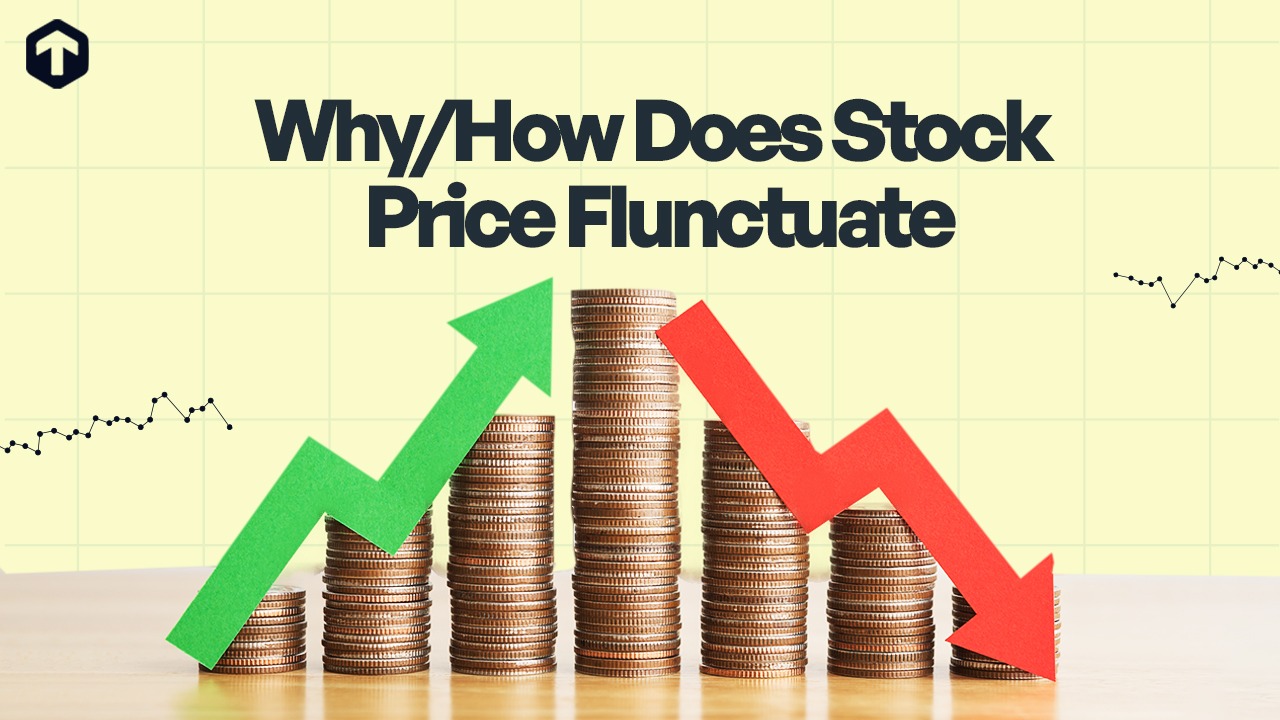
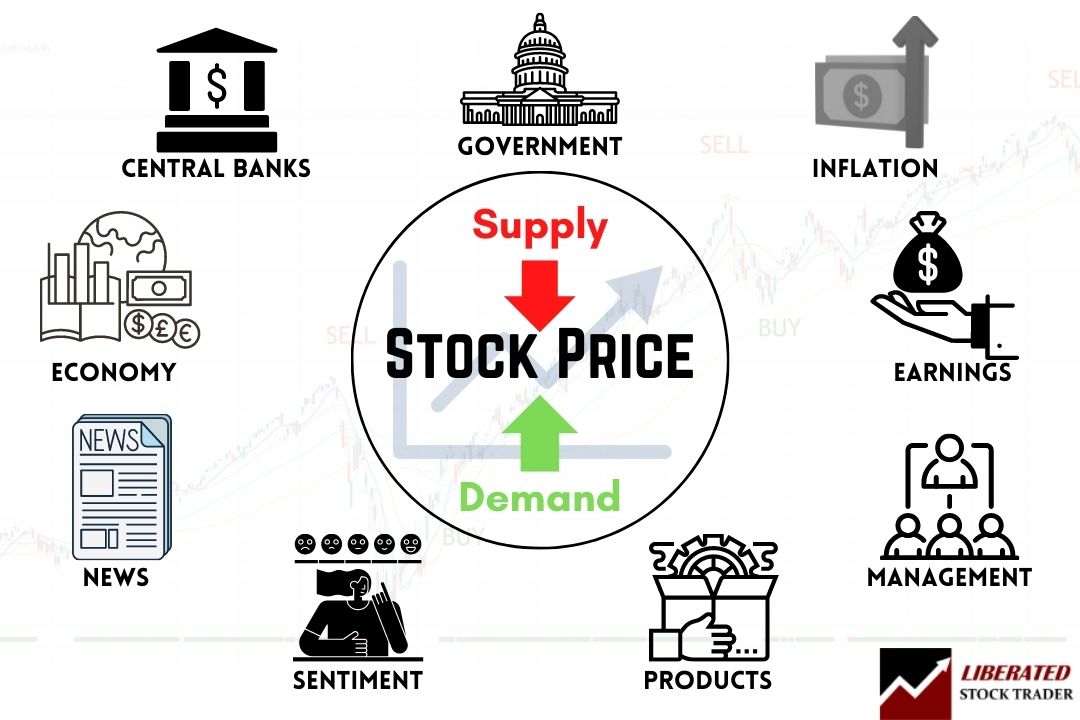
A stock’s “cost” or share price is not static; it fluctuates constantly throughout the trading day and over longer periods. These movements are driven by a complex interplay of market dynamics, company-specific performance, and broader economic trends. Understanding these drivers helps investors contextualize the current price and evaluate its fairness.
Market Dynamics: Supply, Demand, and Investor Sentiment
At its most basic level, a stock’s price is determined by the forces of supply and demand. If more investors want to buy a stock than sell it (high demand, low supply), the price will rise. Conversely, if more investors want to sell than buy (low demand, high supply), the price will fall.
-
Investor Sentiment: This refers to the overall attitude of investors towards a particular stock or the market as a whole. Positive sentiment (optimism, belief in future growth) can drive prices up, while negative sentiment (pessimism, fear) can cause them to fall. Sentiment is often influenced by news, analyst reports, social media, and market “buzz.”
-
Liquidity: Highly liquid stocks (those with a large volume of trading) tend to have tighter bid-ask spreads and more stable prices because it’s easy for buyers and sellers to find each other. Illiquid stocks can experience more volatile price swings.
-
Trading Volume: High trading volume indicates strong interest in a stock and generally confirms price movements. A significant price change on low volume might be less indicative of a strong trend.
Company Fundamentals: Earnings, Growth, and Valuation Ratios
Beyond market mechanics, the underlying health and prospects of the company itself are paramount in determining its share price. Smart investors focus on these fundamentals to assess a stock’s intrinsic value.
-
Earnings Per Share (EPS): This is a key measure of a company’s profitability, calculated by dividing its net income by the number of outstanding shares. Higher EPS often correlates with higher stock prices.
-
Revenue Growth: A company’s ability to consistently increase its sales is a strong indicator of its market position and potential for future profitability.
-
Profit Margins: These metrics (gross margin, operating margin, net margin) show how efficiently a company converts revenue into profit. Healthy and improving margins are attractive to investors.
-
Dividends: For income-oriented investors, a company’s dividend payout and its consistency can be a significant factor.
-
Valuation Ratios: Ratios like the Price-to-Earnings (P/E) ratio, Price-to-Sales (P/S) ratio, and Enterprise Value to EBITDA (EV/EBITDA) help investors compare a company’s stock price to its financial performance. A high P/E ratio, for example, might suggest that investors expect significant future growth, or that the stock is overpriced relative to its current earnings. Conversely, a low P/E might indicate undervaluation or skepticism about future growth.
Economic Conditions and Sector Trends
Macroeconomic factors and industry-specific trends also exert considerable influence on stock prices.
-
Interest Rates: Higher interest rates can make bonds more attractive relative to stocks, as they offer a guaranteed return. They also increase borrowing costs for companies, potentially reducing profitability and growth.
-
Inflation: Inflation can erode purchasing power and corporate profits, impacting stock valuations.
-
GDP Growth: A strong economy generally translates to higher corporate earnings and investor confidence, supporting higher stock prices.
-
Technological Advancements: Innovation can create new industries and disrupt old ones, leading to significant shifts in stock valuations across sectors.
-
Regulatory Changes: Government policies and regulations can have a profound impact on specific industries, affecting the profitability and future prospects of companies within those sectors. For example, new environmental regulations might increase costs for manufacturing companies but benefit renewable energy firms.
Strategies for Entering the Market at “Any Price”
Given that stock prices fluctuate and trying to “time the market” (buying at the absolute low and selling at the absolute high) is notoriously difficult, investors need strategies to manage the entry “cost” and mitigate risk.
Dollar-Cost Averaging: Mitigating Volatility
Dollar-cost averaging (DCA) is an investment strategy where you invest a fixed amount of money at regular intervals (e.g., $100 every month) regardless of the stock’s price. When the price is high, your fixed sum buys fewer shares; when the price is low, it buys more shares. Over time, this strategy averages out your purchase price, reducing the risk of making a large investment at an inopportune peak. It’s a disciplined approach that takes the emotion out of investing and is particularly effective for long-term investors building wealth steadily. The “cost” per share becomes an average over time, making market fluctuations less daunting.

Fractional Shares: Investing with Smaller Budgets
Traditionally, to buy a stock like Google at $150 per share, you needed at least $150. For many, this was a barrier to entry for high-priced stocks. Fractional shares allow investors to buy a portion of a share, making it possible to invest with much smaller sums. For example, with $10, you could buy 0.066 shares of a $150 stock. This innovation has democratized investing, allowing individuals with limited capital to build diversified portfolios of high-quality companies that might otherwise be out of reach. It fundamentally changes the perception of “how much do stocks cost” by allowing investors to define their investment amount rather than being dictated by the share price.
Index Funds and ETFs: Diversification at Lower Entry Points
For investors who find individual stock picking too risky or time-consuming, index funds and ETFs offer a way to invest in a diversified basket of stocks with a single purchase.
-
Index Funds: These are mutual funds designed to track a specific market index, like the S&P 500. By investing in an S&P 500 index fund, you gain exposure to 500 of the largest U.S. companies.
-
ETFs (Exchange-Traded Funds): Similar to index funds, but they trade like individual stocks on an exchange. ETFs can track various indices, sectors, commodities, or bonds.
Both offer instant diversification, spreading your investment across many companies, which inherently reduces the risk associated with any single stock’s performance. The “cost” here is not just the price of the ETF unit, but also the aforementioned expense ratio, which is usually very low for broad market index funds. These vehicles make it possible to own a piece of many companies for a relatively small initial investment, typically much less than buying individual shares of all those companies.
The True Cost of Investing: Risk and Opportunity
Beyond the monetary outlays, there are other, less tangible but equally significant “costs” associated with stock market investing. These relate to the inherent risks involved and the choices investors make with their capital.
Market Volatility and Potential for Loss
The most significant “cost” in investing is the inherent risk of losing capital. Stock prices are volatile; they can go down as well as up. There is no guarantee of returns, and historical performance is not indicative of future results. Market downturns, company-specific failures, or economic crises can lead to substantial losses, potentially wiping out a portion or even all of an investor’s initial capital. This risk is an unavoidable “cost” of seeking higher returns than safer, but lower-yielding, investments like savings accounts or government bonds. Understanding and managing this risk through diversification, proper asset allocation, and investing only what you can afford to lose is paramount.
The Opportunity Cost of Capital
Every dollar you invest in stocks is a dollar that could have been used elsewhere – for a down payment on a house, to start a business, or simply saved in a high-yield savings account. The “opportunity cost” is the value of the next best alternative that you forgo when making an investment decision. If your stock investment underperforms or takes a long time to generate returns, you might look back and realize that another use of that capital would have been more beneficial. This is a critical consideration for investors with specific financial goals and timelines.
Time and Research as Investment “Costs”
For active investors, the time spent on researching companies, analyzing financial statements, monitoring market news, and managing a portfolio is a significant “cost.” While this isn’t a direct monetary payment, it’s a valuable resource. An investor must weigh whether the potential returns from active investing justify the time commitment, or if a more passive approach (like investing in broad-market ETFs) would yield comparable returns with less effort, allowing them to allocate their time elsewhere. Even passive investors still need to spend time on initial setup, learning the basics, and periodic rebalancing.
Making Your First Investment: Practical Steps and Considerations
For those ready to move beyond understanding the “cost” and actually start investing, a structured approach is essential.
Setting Investment Goals and Risk Tolerance
Before buying any stock, clarify your financial goals. Are you saving for retirement, a down payment, or a child’s education? What is your time horizon? Longer time horizons generally allow for more risk. Equally important is understanding your risk tolerance – how comfortable are you with the possibility of your investment losing value? This will guide your asset allocation decisions, influencing how much you invest in potentially higher-growth, higher-risk assets like stocks versus safer, lower-return options.
Choosing a Brokerage Account
To buy stocks, you’ll need to open an investment account with a brokerage firm. Consider factors like:
-
Fees and Commissions: As discussed, look for low or no trading commissions and minimal account maintenance fees.
-
Account Minimums: Some brokers require a minimum deposit to open an account.
-
Investment Options: Does the broker offer individual stocks, ETFs, mutual funds, and other assets you might want to invest in?
-
Platform and Tools: Is the trading platform user-friendly? Does it offer research tools, educational resources, and customer support?
-
Fractional Shares: If you’re starting with a small budget, check if the broker offers fractional shares.
Popular choices include online discount brokers which have largely democratized access to the stock market.
Starting Small and Learning Continuously
It’s wise to begin investing with an amount you’re comfortable losing, especially as you learn the ropes. Fractional shares and dollar-cost averaging are excellent strategies for new investors. The stock market is a dynamic environment, and continuous learning is key to long-term success. Read financial news, understand economic indicators, and periodically review your portfolio and investment strategy. The “cost” of a stock isn’t just its current price; it’s an ongoing commitment to financial education and disciplined decision-making.
In conclusion, the question “how much do stocks cost?” is far more nuanced than a simple glance at a stock quote. It encompasses the share price, transaction fees, the risks associated with market volatility, the opportunity cost of capital, and the personal investment of time and effort. By understanding these various dimensions of “cost,” investors can move beyond superficial pricing and develop a robust, informed approach to building long-term wealth in the equity markets.
aViewFromTheCave is a participant in the Amazon Services LLC Associates Program, an affiliate advertising program designed to provide a means for sites to earn advertising fees by advertising and linking to Amazon.com. Amazon, the Amazon logo, AmazonSupply, and the AmazonSupply logo are trademarks of Amazon.com, Inc. or its affiliates. As an Amazon Associate we earn affiliate commissions from qualifying purchases.