
For many Americans, the question “How much do I owe the IRS?” is often accompanied by a sense of trepidation. Tax debt can feel like a shadow looming over one’s financial health, impacting credit scores, purchasing power, and overall peace of mind. However, the first step toward financial resolution is clarity. Understanding exactly what you owe, why you owe it, and what tools are available to help you settle that debt is essential for any proactive taxpayer.
The Internal Revenue Service (IRS) has modernized significantly over the last decade, offering several streamlined methods for taxpayers to access their account information. Whether you are dealing with a balance from a recent filing error or cumulative debt from several years, this guide provides a deep dive into the mechanisms for checking your balance and the strategic financial moves you can make to resolve your liabilities.
Checking Your Balance: Digital and Physical Methods for Verification
The era of waiting weeks for a paper transcript to arrive in the mail is largely over, though traditional methods still exist for those who prefer them. Today, the most efficient way to determine your tax liability is through the IRS’s digital infrastructure.
Using the IRS Online Account
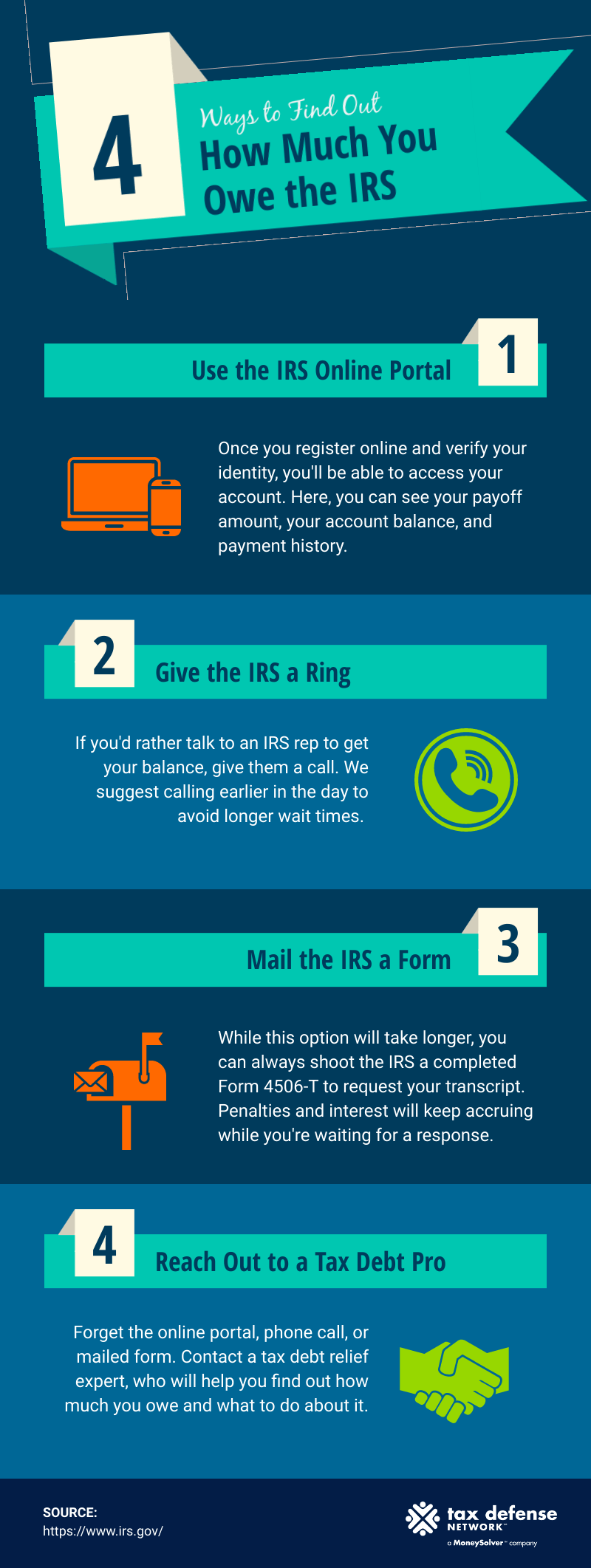
The IRS Online Account tool is the primary gateway for individual taxpayers. By creating a secure account—currently verified through third-party identity providers like ID.me—you gain real-time access to your tax records. Within this portal, you can view the total amount you owe, broken down by tax year. You can also see your payment history, including any scheduled or pending payments, and access key information from your most recent tax return. This is the most accurate “source of truth” for your current standing with the federal government.
Understanding IRS Transcripts
If you need a more granular view of your tax history, you can request different types of transcripts. A “Tax Account Transcript” is particularly useful for those asking how much they owe, as it shows basic data such as return type, marital status, adjusted gross income, taxable income, and all subsequent adjustments made by the IRS after you filed. It provides a running tally of penalties and interest, which often explain why a balance is higher than what was originally reported on the tax return.
Physical Notices and Correspondence
While digital access is faster, the IRS still communicates officially through the U.S. Postal Service. If you owe money, you will likely receive a series of notices, starting with the CP14 notice. These letters are not just bills; they are legal documents that outline the specific tax year in question, the amount of tax, and the accrued penalties and interest. Keeping a chronological file of these notices is vital for anyone working with a financial advisor or tax professional to resolve their debt.
The Anatomy of Tax Debt: Principal, Penalties, and Interest
When a taxpayer asks “How much do I owe?”, the figure provided by the IRS is rarely just the “base” tax. Tax debt is a multi-layered financial obligation that grows over time due to the statutory addition of penalties and interest. Understanding these components is critical for calculating the cost of delaying payment.
Failure to File vs. Failure to Pay
The IRS distinguishes between the act of filing a return and the act of paying the tax. The penalty for failing to file a return on time is generally much higher than the penalty for failing to pay the tax. The “failure-to-file” penalty is usually 5% of the unpaid taxes for each month or part of a month that a tax return is late, capping at 25%. Conversely, the “failure-to-pay” penalty is 0.5% of the unpaid taxes for each month or part of a month the tax remains unpaid. If both penalties apply in the same month, the failure-to-file penalty is reduced by the failure-to-pay penalty.
The Impact of Compounding Interest
Unlike simple interest, IRS interest is compounded daily. The rate is determined quarterly and is typically the federal short-term rate plus 3%. Because interest is charged on the total balance—including the principal tax and the accrued penalties—the amount owed can snowball rapidly if left unaddressed. This compounding nature is why financial experts emphasize settling tax debt before other low-interest liabilities.
Accuracy-Related Penalties
In some cases, the amount you owe might increase due to an audit or a correction of an “understatement” of tax. If the IRS determines that you neglected to report income or took deductions you weren’t entitled to, they may apply an accuracy-related penalty, which is typically 20% of the portion of the underpayment. Understanding whether your balance includes these penalties is the first step in determining if you have grounds for a “penalty abatement.”
Payment Options and Financial Tools for Settling Debt
Once you have identified the exact amount owed, the next step is choosing a payment vehicle. The IRS offers several methods that cater to different liquidity situations, ranging from immediate electronic transfers to structured monthly plans.
Direct Pay and EFTPS
For those who have the funds available, IRS Direct Pay is the most seamless option. It allows you to pay directly from a checking or savings account with no additional fees. For business owners or those with frequent payment obligations, the Electronic Federal Tax Payment System (EFTPS) offers a more robust platform for scheduling payments in advance and maintaining a detailed digital audit trail.
Credit and Debit Card Payments
While the IRS allows payment via credit or debit cards through third-party processors, this is often the least cost-effective method. These processors charge a convenience fee (usually a percentage of the total payment), and if you do not pay off your credit card balance immediately, you will be subject to high-interest rates from your bank on top of what you’ve already paid the IRS. This should generally be viewed as a last resort for liquidity.
Short-Term and Long-Term Payment Plans
If you cannot pay your balance in full immediately, the IRS provides “Online Payment Agreements.” A short-term payment plan gives you up to 180 days to pay your liability in full, including interest and accrued penalties. If you need more time, a long-term payment plan (also known as an installment agreement) allows for monthly payments for up to 72 months. While interest continues to accrue during these plans, setting up a formal agreement often stops more aggressive collection actions, such as wage garnishments or bank levies.
Strategies for Resolving Significant Tax Liability
For taxpayers facing overwhelming debt that they realistically cannot pay back in their lifetime, the IRS provides several “Fresh Start” initiatives. These programs are designed to help taxpayers back into compliance without causing extreme financial hardship.
Offer in Compromise (OIC)
An Offer in Compromise is a program that allows you to settle your tax debt for less than the full amount you owe. This is not a “get out of debt free” card; the IRS only accepts an OIC if they believe the amount offered represents the most they can expect to collect within a reasonable period. The evaluation process is rigorous, involving a deep dive into your assets, income, expenses, and future earning potential.
Currently Not Collectible (CNC) Status
If your current financial situation is so dire that paying even a small amount toward your tax debt would prevent you from meeting basic living expenses (rent, food, healthcare), you may qualify for “Currently Not Collectible” status. While this does not make the debt go away—interest and penalties still accrue—it halts all collection activities, providing the taxpayer with the breathing room needed to stabilize their finances.
Penalty Abatement
In certain circumstances, you may be able to have your penalties removed through “First-Time Penalty Abatement” or by showing “Reasonable Cause.” If you have a clean history of compliance for the past three years but had a lapse due to a death in the family, a natural disaster, or serious illness, the IRS may waive the penalties associated with a specific tax year. This can significantly reduce the “total amount owed” figure.
Proactive Financial Planning to Avoid Future Tax Surprises
Determining how much you owe the IRS today is only half the battle; the other half is ensuring you don’t find yourself in the same position next year. Effective personal finance requires proactive tax planning and a deep understanding of your specific tax triggers.
Adjusting Withholdings and Estimated Payments
For W-2 employees, an unexpected tax bill usually stems from incorrect withholdings. Using the IRS Tax Withholding Estimator can help you adjust your Form W-4 to ensure enough tax is taken out of each paycheck. For freelancers, contractors, and small business owners, the key is making “Estimated Tax Payments” quarterly. Failure to do so often leads to a massive year-end bill that includes underpayment penalties.
Utilizing Tax-Advantaged Accounts
One of the most effective ways to lower your future tax liability is by reducing your taxable income through contributions to 401(k)s, IRAs, or Health Savings Accounts (HSAs). By redirecting funds into these accounts, you are not just saving for the future; you are actively lowering the “Principal” amount the IRS uses to calculate your debt.

The Role of Professional Guidance
While many taxpayers can manage their IRS debt through online tools, complex situations—such as those involving business payroll taxes or international income—often require a Certified Public Accountant (CPA) or a Tax Attorney. These professionals can navigate the nuances of the tax code, represent you in front of the IRS, and help structure a financial plan that protects your assets while satisfying your legal obligations.
Knowing exactly how much you owe the IRS is the foundation of financial literacy. By utilizing digital tools to verify your balance, understanding the mechanics of interest and penalties, and leveraging the available payment and relief programs, you can transform a daunting debt into a manageable plan for financial recovery. Tax debt is a significant hurdle, but with the right information and a disciplined approach, it is a hurdle that can be cleared.
aViewFromTheCave is a participant in the Amazon Services LLC Associates Program, an affiliate advertising program designed to provide a means for sites to earn advertising fees by advertising and linking to Amazon.com. Amazon, the Amazon logo, AmazonSupply, and the AmazonSupply logo are trademarks of Amazon.com, Inc. or its affiliates. As an Amazon Associate we earn affiliate commissions from qualifying purchases.