
For millions of Americans, Social Security represents a cornerstone of their retirement security. Yet, despite its pervasive influence, a surprising number of individuals are unsure about the precise benefits they can expect. This uncertainty can lead to significant gaps in retirement planning, potentially leaving future retirees ill-prepared for their golden years. Understanding “how much do I have in Social Security” isn’t merely about knowing a number; it’s about gaining clarity on a vital income stream that will likely support you throughout your retirement, influencing decisions on savings, investments, and even when you choose to stop working.
This article delves into the intricacies of Social Security benefits, guiding you through the process of discovering your projected payouts, understanding the factors that shape them, and ultimately, integrating this knowledge into a robust financial plan for your future. It’s a journey into empowering yourself with the financial literacy needed to secure a comfortable and worry-free retirement.
The Foundation of Your Retirement: Why Understanding Social Security Matters
Social Security is more than just a government program; it’s a commitment to provide financial protection to millions of Americans. For most, it will serve as a significant, if not primary, source of income during retirement. Ignoring or misunderstanding your potential benefits is akin to building a house without knowing the strength of its foundation.
Beyond a Number: The Strategic Importance of Your Benefits
Knowing your estimated Social Security benefits empowers you to make informed decisions across various aspects of your financial life. It helps you quantify how much more you might need to save independently to achieve your desired retirement lifestyle. For example, if your Social Security benefit covers only 30% of your projected retirement expenses, you know you need to find ways to cover the remaining 70% through personal savings, investments, or other income streams. This clarity allows for adjustments in current spending, investment strategies, and even career choices, ensuring you are actively working towards, rather than passively hoping for, a secure retirement.
Furthermore, understanding your benefits is crucial for long-term financial projections. It allows you to model different retirement scenarios, such as retiring earlier or later, and see how these decisions impact your overall financial health. This strategic insight is invaluable for proactive planning rather than reactive problem-solving when retirement is already at your doorstep.
Social Security’s Role in a Comprehensive Financial Plan
A comprehensive financial plan is like a finely tuned orchestra, with each section playing a crucial role. Social Security is a key section, but it’s not the entire band. It complements other elements such as 401(k)s, IRAs, personal savings, pensions, and other investments. Recognizing its place within this broader ecosystem prevents over-reliance or, conversely, underestimation of its value.
For many, Social Security provides a reliable, inflation-adjusted income stream that acts as a base layer for retirement expenses. This predictable income can allow for greater flexibility or risk-taking with other investment portfolios, as basic living costs are at least partially covered. Conversely, if your projected benefits are modest, it underscores the urgency of maximizing contributions to other retirement accounts. Integrating Social Security into your financial plan means viewing it as one vital component that interacts with all others, contributing to a holistic strategy for financial well-being throughout your golden years.
Unlocking Your Data: How to Access Your Social Security Information
The Social Security Administration (SSA) has made it remarkably easy to access your personalized benefit information. The most efficient and comprehensive way to do so is through their online portal.
Your Digital Gateway: Creating and Utilizing Your My Social Security Account
The “my Social Security” online account is your one-stop shop for all your Social Security benefit information. It provides instant access to your earnings record, estimated future benefits, and much more.
Step-by-Step Guide to Account Setup
- Visit the Official SSA Website: Navigate to www.ssa.gov/myaccount.
- Click “Create an Account”: You’ll be guided through a secure registration process.
- Provide Personal Information: You’ll need to input details like your name, date of birth, Social Security number, and a U.S. mailing address.
- Identity Verification: The SSA takes security very seriously. You’ll typically be asked a series of personal questions that only you would know, often linked to your credit history, to verify your identity. This step is critical for protecting your sensitive information.
- Create Username and Password: Once your identity is confirmed, you’ll establish a unique username and a strong password.
- Set Up Multi-Factor Authentication: For enhanced security, you’ll be prompted to set up a second verification method, such as a text message code to your phone.
Once your account is set up, you can log in at any time to view your latest statement.
Navigating Your Online Statement
Your online Social Security statement is a powerful document. It typically includes:
- Estimated Benefits at Different Ages: Crucially, it shows you what your monthly benefit would be if you claim at age 62 (early retirement), your Full Retirement Age (FRA), and age 70 (delayed retirement). This is invaluable for planning.
- Your Earnings Record: A comprehensive list of your annual earnings as reported to the SSA. This is vital for accuracy.
- Benefit Information: Details on potential disability or survivor benefits for your family.
The Traditional Route: Receiving Your Statement by Mail
While the online account is preferred for its immediacy and detail, the SSA still mails statements to individuals who are approaching retirement age (usually starting around age 60) and who haven’t created an online account. You can also request a paper statement at any time through the SSA website or by calling their toll-free number.
What to Look For on Your Annual Statement
When you receive a paper statement, ensure you review all sections carefully, particularly the estimated benefit amounts for different claiming ages and your earnings history. The paper statement will contain similar information to the online version, presented in a clear, concise format.
Verifying Your Earnings Record: A Crucial Check
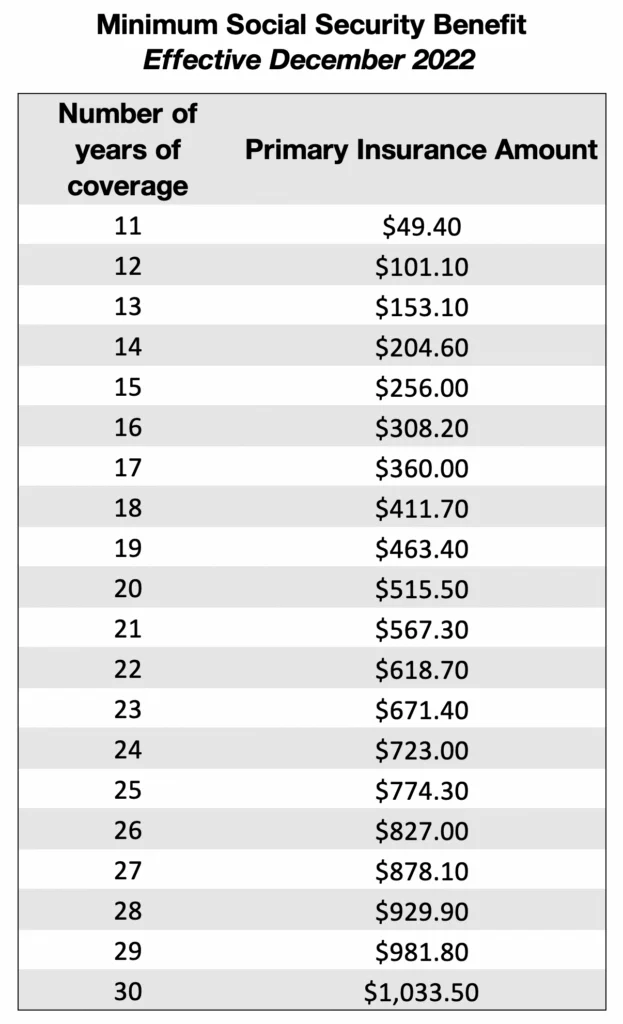
Regardless of whether you access your statement online or via mail, always verify your earnings record. This is perhaps the most critical step. Your Social Security benefits are calculated based on your average indexed monthly earnings (AIME) over your 35 highest-earning years. If there are any inaccuracies in your earnings history — missing years, incorrect reported income — it could significantly impact your future benefits. If you find discrepancies, contact the SSA immediately with proof of earnings (e.g., W-2s, tax returns) to correct the record. Early detection of errors can prevent a substantial reduction in your retirement income.
Dissecting Your Benefit Calculation: Key Factors at Play
Understanding how your Social Security benefit is calculated removes much of the mystery surrounding the program. Several key factors directly influence the amount you receive.
Your Earnings History: The 35-Year Average That Shapes Your Future
The foundation of your Social Security benefit is your lifetime earnings. The SSA calculates your Average Indexed Monthly Earnings (AIME) using your 35 highest-earning years.
How Your AIME (Average Indexed Monthly Earnings) is Calculated
“Indexing” adjusts your past earnings to reflect changes in general wage levels over time. This ensures that the purchasing power of your past earnings is comparable to current earnings. For example, $10,000 earned in 1980 will be indexed up to a much higher amount to reflect what that income would be worth today. After your earnings are indexed, the SSA takes your 35 highest-earning years, sums them up, and divides by 420 (the number of months in 35 years) to arrive at your AIME.
The Impact of Missing or Low-Earning Years
If you have fewer than 35 years of earnings, zero earnings will be factored in for the missing years. This can significantly lower your AIME and, consequently, your monthly benefit. This highlights the importance of consistent employment throughout your career or, if you take time off (e.g., for childcare), understanding the potential impact on your future benefits.
The Critical Decision: When to Claim Your Benefits
The age at which you begin receiving Social Security benefits is one of the most impactful decisions you’ll make regarding your retirement income.
Full Retirement Age (FRA): Your Benchmark
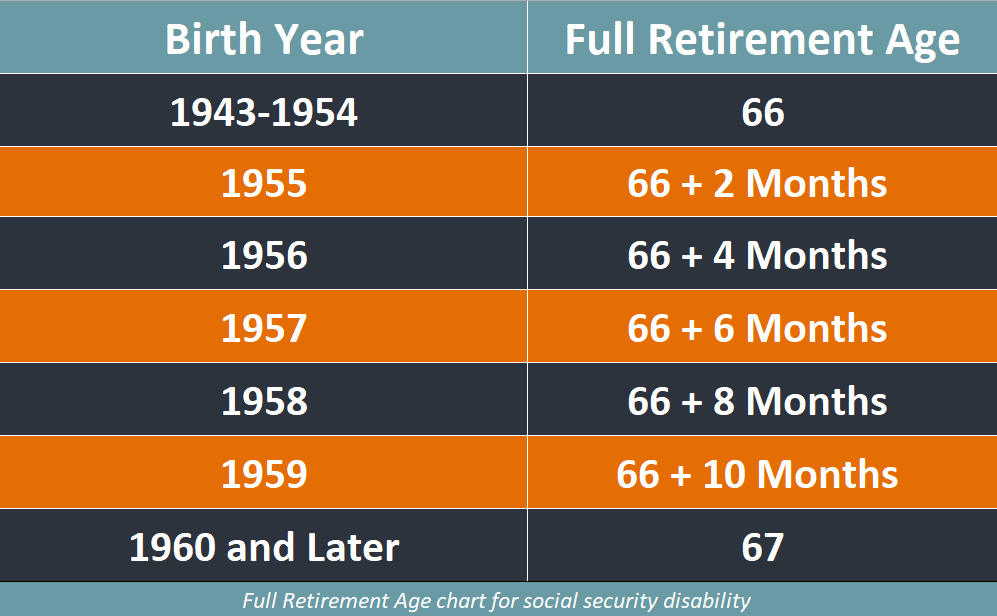
Your Full Retirement Age (FRA) is the age at which you are entitled to receive 100% of your primary insurance amount (PIA), the benefit calculated from your AIME. FRA varies based on your birth year:
- Born 1943-1954: FRA is 66
- Born 1955: FRA is 66 and 2 months
- …
- Born 1960 or later: FRA is 67
The Advantage of Delaying: Earning Delayed Retirement Credits
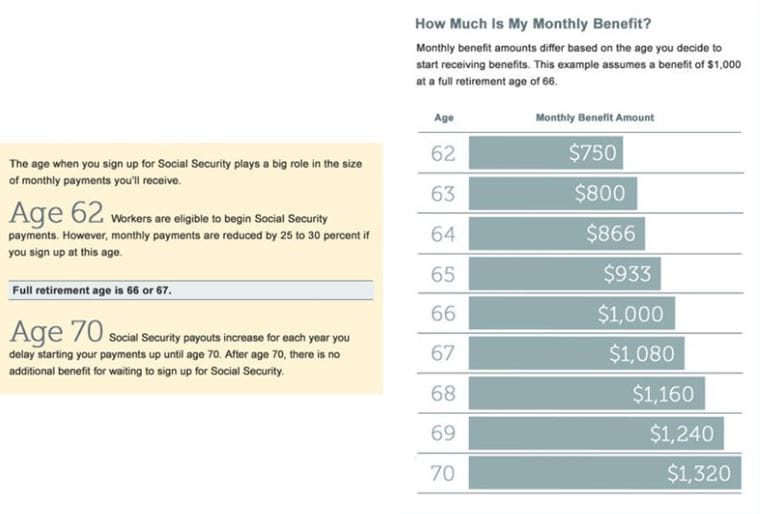
You can delay claiming benefits beyond your FRA, up to age 70. For each month you delay past your FRA, your monthly benefit increases by a certain percentage, accumulating to 8% per year. This is known as Delayed Retirement Credits (DRCs). Delaying from FRA to age 70 can result in a permanent increase of 24% to 32% (depending on your FRA) in your monthly benefit. This is a powerful incentive for those who can afford to wait.
The Trade-Offs of Claiming Early: Permanent Reduction
You can claim Social Security benefits as early as age 62. However, doing so results in a permanent reduction in your monthly benefit. The reduction can be substantial, typically around 25% to 30% if you claim at age 62 compared to your FRA. While it provides income sooner, this early claim means receiving a smaller check for the rest of your life. This decision often hinges on health, immediate financial need, and other retirement income sources.
Other Influences: Cost-of-Living Adjustments (COLAs) and Taxation
Beyond your earnings and claiming age, two other factors play a role in the real value of your Social Security benefits over time.
How COLAs Protect Your Purchasing Power
Social Security benefits are subject to annual Cost-of-Living Adjustments (COLAs). These adjustments are designed to help your benefits keep pace with inflation. If the cost of living increases, your Social Security benefit will generally increase too, preserving your purchasing power over time. COLAs are determined by a specific inflation index (the CPI-W) and announced in October each year for the following year.
Understanding the Taxation of Social Security Benefits
It’s a common misconception that Social Security benefits are entirely tax-free. Depending on your “provisional income” (which includes adjusted gross income, tax-exempt interest, and half of your Social Security benefits), a portion of your Social Security benefits may be subject to federal income tax. Up to 50% of your benefits may be taxable if your provisional income is between $25,000 and $34,000 for individuals ($32,000 and $44,000 for married filing jointly). Up to 85% of your benefits may be taxable if your provisional income exceeds these thresholds. Some states also tax Social Security benefits, so it’s important to check your local tax laws.
Strategies for Optimizing Your Social Security Benefits
Knowing your potential benefits is the first step; optimizing them is the next. There are several strategies you can employ to potentially increase the amount you and your family receive.
Boosting Your Earnings: Maximizing Your 35 Highest-Paid Years
Since your benefit is based on your 35 highest-earning years, one of the most direct ways to increase your benefit is to ensure you have 35 years of strong earnings. If you have fewer than 35 years of work, or if some of your earlier earning years were low, working longer or increasing your income in your later career years can replace those lower-earning or zero-earning years with higher ones, boosting your overall AIME. Even a few extra years of high earnings late in your career can make a significant difference.
Strategic Claiming for Couples: Coordinated Approaches
For married couples, the decision of when to claim benefits becomes more complex and offers more opportunities for optimization. Coordinated claiming strategies can significantly increase the total lifetime benefits received by both spouses.
Spousal Benefits: Leveraging Your Partner’s Record
If your spouse has a higher earnings record, you might be eligible to claim a spousal benefit. This benefit can be up to 50% of your spouse’s Full Retirement Age (FRA) benefit. You can claim a spousal benefit even if you haven’t worked or have a minimal work history, provided your own benefit (based on your work record) is less than the spousal benefit. You can only claim spousal benefits once your spouse has claimed their own benefits.
Survivor Benefits: Protecting Your Loved Ones
Survivor benefits are a crucial safety net. If your spouse passes away, you may be eligible to receive survivor benefits based on their work record. The amount depends on your age, whether you have dependent children, and when your deceased spouse claimed benefits. If you are eligible for both your own retirement benefit and a survivor benefit, you can typically claim one first and switch to the other later if it results in a higher payment. Strategic timing here is vital.
Working While Receiving Benefits: Income Limits and Adjustments
If you claim Social Security benefits before your Full Retirement Age and continue to work, your benefits may be reduced if your earnings exceed certain annual limits. For example, for 2024, if you are under your FRA, the SSA will deduct $1 from your benefits for every $2 you earn above $22,320. In the year you reach your FRA, a different, higher earnings limit applies, and the reduction is $1 for every $3 earned above $59,520 (for 2024). Once you reach your FRA, there are no limits on how much you can earn, and your benefits are no longer reduced. Any benefits withheld due to these earnings limits are not lost; they are added back into your monthly benefit calculation once you reach your FRA, effectively increasing your future payments.
Integrating Social Security into Your Broader Financial Ecosystem
Social Security is a robust program, but it’s designed to provide a floor of protection, not to be the sole source of retirement income for most people.
Social Security: A Component, Not the Entire Solution
For the average worker, Social Security typically replaces about 40% of pre-retirement income. While this is substantial, it means the other 60% must come from alternative sources to maintain your pre-retirement lifestyle. This fundamental truth underscores the need for a multi-faceted approach to retirement planning. Expecting Social Security to cover all your expenses can lead to significant financial shortfalls later in life.
The Interplay with Personal Savings, Investments, and Pensions
Your personal savings (e.g., in traditional or Roth IRAs, 401(k)s, 403(b)s), investment portfolios, and any employer-sponsored pension plans are critical partners to Social Security. These accounts allow you to accumulate wealth beyond what Social Security can provide, giving you greater control, flexibility, and the potential for a more affluent retirement. Developing a strong savings habit and a well-diversified investment strategy are paramount to creating a comprehensive retirement income stream. Understanding how your Social Security benefits will integrate with these other income sources allows you to draw down your various assets strategically in retirement, potentially minimizing taxes and maximizing your longevity of funds.
The Value of Professional Financial Planning
Navigating the complexities of Social Security, integrating it with your personal finances, and planning for a secure retirement can be overwhelming. This is where the expertise of a professional financial planner becomes invaluable. A planner can help you:
- Analyze your specific Social Security statement and options.
- Develop a personalized claiming strategy, especially for couples.
- Integrate your Social Security benefits into your overall retirement income plan.
- Model different scenarios (e.g., early vs. late retirement, spending rates).
- Optimize your investment strategies to complement your Social Security income.
- Address other financial planning needs like estate planning and long-term care.
In conclusion, understanding “how much do I have in Social Security” is a fundamental step toward achieving financial peace of mind in retirement. By actively engaging with your Social Security information, understanding the factors that influence your benefits, and strategically integrating this knowledge into your broader financial plan, you are empowering yourself to build a more secure and prosperous future.
aViewFromTheCave is a participant in the Amazon Services LLC Associates Program, an affiliate advertising program designed to provide a means for sites to earn advertising fees by advertising and linking to Amazon.com. Amazon, the Amazon logo, AmazonSupply, and the AmazonSupply logo are trademarks of Amazon.com, Inc. or its affiliates. As an Amazon Associate we earn affiliate commissions from qualifying purchases.