
Social Security stands as a cornerstone of financial security for millions of Americans, providing vital income in retirement, during disability, and for survivors. Understanding how your benefits are calculated and the factors that influence your eventual payout is crucial for effective retirement planning. The amount you receive from Social Security is not arbitrary; it’s the result of a complex formula that considers your entire working history, your age at claiming, and several other personal circumstances. Delving into these specifics allows you to project your future income and make informed decisions about your financial future.
Understanding the Foundation: What is Social Security?
At its core, Social Security is a federal insurance program designed to provide a safety net for workers and their families. It is funded primarily through payroll taxes, commonly known as FICA (Federal Insurance Contributions Act) contributions, which are deducted from most workers’ paychecks. Employers also contribute an equal share. These taxes flow into trust funds that are then used to pay benefits to current retirees, individuals with disabilities, and the surviving family members of deceased workers.
The program’s primary objective is to replace a portion of a worker’s pre-retirement income. While it’s often viewed as a retirement income source, Social Security offers three main types of benefits:
- Retirement Benefits: The most widely recognized, providing monthly income to eligible workers and their spouses/dependents in retirement.
- Disability Benefits: Provides income to workers who are unable to engage in substantial gainful activity due to a severe medical impairment that is expected to last for at least a year or result in death.
- Survivor Benefits: Offers financial support to eligible family members (e.g., spouses, minor children, dependent parents) of a deceased worker.
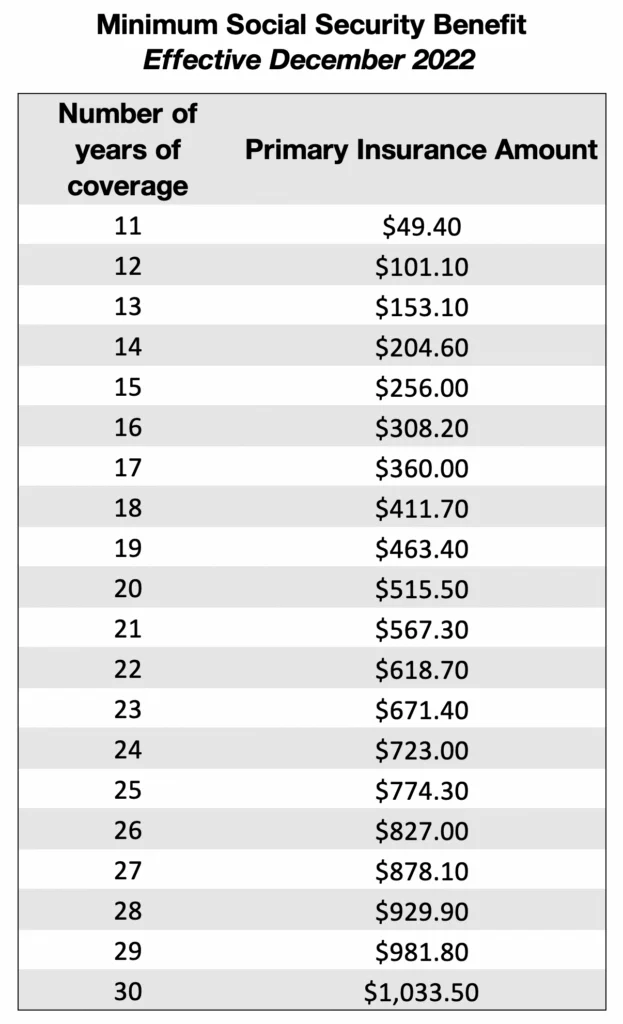
To qualify for Social Security benefits, you must accumulate “credits” through your work and earnings. In 2024, you earn one credit for each $1,730 of earnings, up to a maximum of four credits per year. Most people need 40 credits (10 years of work) to be eligible for retirement benefits, though fewer may be required for disability or survivor benefits depending on age.
Key Factors Influencing Your Benefit Amount
Your Social Security benefit isn’t a one-size-fits-all figure. Several critical factors converge to determine the precise amount you’ll receive each month. Understanding these elements is essential for forecasting your future income and strategizing your claim.
Your Earning History
The most significant determinant of your Social Security benefit is your lifetime earnings history. The Social Security Administration (SSA) calculates your primary insurance amount (PIA) based on your average indexed monthly earnings (AIME). This calculation involves looking at your earnings from all years you worked, up to the annual Social Security earnings limit.
Specifically, the SSA takes your 35 highest-earning years, adjusting (indexing) those past earnings to account for changes in the average wage level in the economy since the year the earnings were paid. This indexing helps ensure that benefits reflect the general increase in wages over time, providing a more accurate representation of your earning power. If you have fewer than 35 years of earnings, the missing years are recorded as zero, which will lower your average and, consequently, your benefit amount. Therefore, consistently working and earning a higher income over a longer period can substantially increase your Social Security payout.
Your Full Retirement Age (FRA)
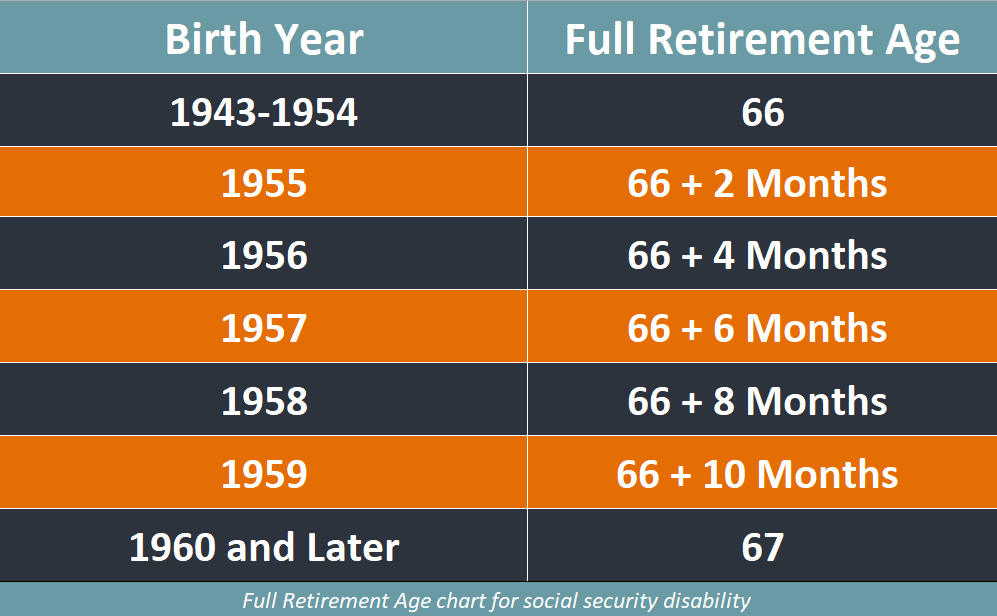
Your Full Retirement Age (FRA) is a pivotal concept in Social Security. It’s the age at which you are entitled to receive 100% of your primary insurance amount (PIA). Your FRA depends solely on your birth year:
- Born 1943-1954: FRA is 66
- Born 1955: FRA is 66 and 2 months
- Born 1956: FRA is 66 and 4 months
- Born 1957: FRA is 66 and 6 months
- Born 1958: FRA is 66 and 8 months
- Born 1959: FRA is 66 and 10 months
- Born 1960 or later: FRA is 67
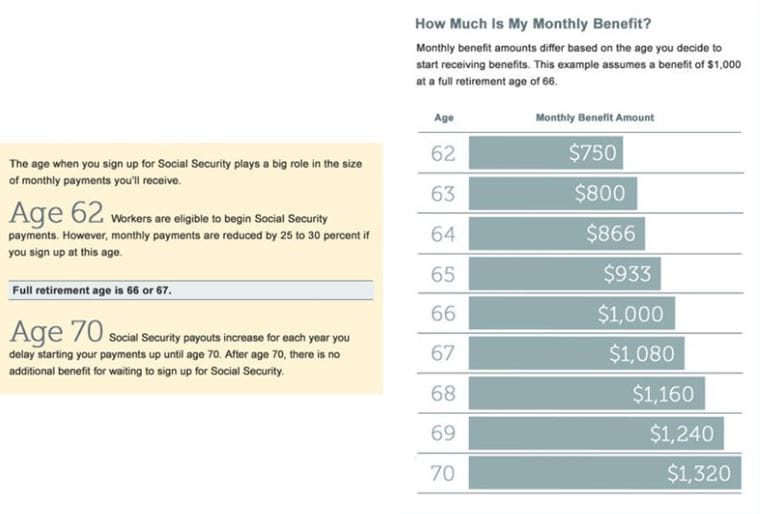
Claiming benefits before your FRA results in a permanent reduction of your monthly payment. Conversely, delaying benefits past your FRA, up to age 70, can significantly increase your monthly check through delayed retirement credits. Each year you delay beyond your FRA, your benefit typically increases by 8% per year, compounding until age 70.
Claiming Age Decisions
The age at which you choose to begin receiving your Social Security benefits is arguably the most impactful decision you’ll make, beyond your earning history itself. You can start collecting retirement benefits as early as age 62, or as late as age 70.
- Claiming at Age 62: If you claim at the earliest possible age of 62, your monthly benefit will be permanently reduced. The reduction can be substantial, often ranging from 25% to 30% depending on your FRA. While it provides earlier income, it means a smaller check for the rest of your life. This option might appeal to those who are no longer able to work, face health issues, or simply desire to retire early and have other sufficient income streams.
- Claiming at Full Retirement Age (FRA): By waiting until your FRA, you receive 100% of your calculated benefit. This is the benchmark against which early and delayed claims are measured. It offers a balance between receiving benefits at a reasonable age and getting your full entitlement.
- Claiming at Age 70: Delaying benefits until age 70 maximizes your monthly payout. For every year you wait past your FRA (up to age 70), your benefit amount increases by a certain percentage, known as delayed retirement credits. For those born in 1943 or later, this credit is 8% per year. This strategy can lead to a benefit that is 24% to 32% higher than your FRA amount. This option is often attractive to individuals who are in good health, continue working, or have other assets to bridge the income gap until age 70, aiming for the largest possible guaranteed monthly income for life.
The decision of when to claim requires careful consideration of your health, longevity expectations, current income, retirement savings, and spousal benefit coordination.
Spousal and Survivor Benefits
Social Security isn’t just for individual workers; it also provides benefits for eligible family members based on a worker’s earnings record.
- Spousal Benefits: If you are married, divorced (under certain conditions), or a parent caring for a child who is under age 16 or disabled, you may be eligible for benefits based on your spouse’s (or ex-spouse’s) earnings record. A spouse can receive up to 50% of the worker’s full retirement age (FRA) benefit. However, if the spouse claims their benefit before their own FRA, that spousal benefit will be reduced. A spouse can only claim spousal benefits once the primary worker has started receiving their own benefits, or has filed for benefits and suspended them (only applicable in limited scenarios for those born before 1954).
- Survivor Benefits: When a worker dies, certain family members may be eligible for survivor benefits. These can include a widow or widower (often able to claim as early as age 60, or 50 if disabled, or any age if caring for the deceased’s child under 16 or disabled), unmarried minor children (under 18, or 19 if in high school), or even dependent parents. The survivor benefit amount varies but can be up to 100% of the deceased worker’s benefit. For example, a widow or widower claiming at their own FRA can typically receive 100% of the deceased worker’s benefit.
These auxiliary benefits add another layer of complexity and opportunity to Social Security planning, particularly for couples aiming to maximize their household’s overall lifetime benefits.
How to Estimate Your Social Security Benefits
Estimating your future Social Security benefits is a fundamental step in retirement planning. Fortunately, the Social Security Administration (SSA) provides robust tools and resources to help you gain clarity on your potential income.
The Social Security Administration (SSA) Website
The most reliable source for personalized benefit estimates is the official Social Security Administration website, SSA.gov. Here, you can create a “my Social Security” account. This free online account is your gateway to your personal Social Security information.
Once logged in, you can access your Social Security Statement, review your earnings record, and get instant, personalized estimates of your future benefits. The website also features various benefit calculators that allow you to explore different claiming scenarios, such as how your benefit would change if you claimed at age 62, your full retirement age, or age 70. These calculators are dynamic and use your actual earnings history to provide realistic projections for retirement, disability, and survivor benefits. Regularly checking your account and statements ensures that your earnings record is accurate, which is critical for precise benefit calculations.
Interpreting Your Social Security Statement
Your annual Social Security Statement (or the digital version accessible via your online account) is a powerful document. It provides:
- Estimated Benefits: Clear estimates of your monthly retirement benefits at various ages (62, your FRA, and 70). It also includes estimates for disability and survivor benefits for your family.
- Earnings Record: A detailed listing of your reported earnings year-by-year. It is crucial to review this section carefully to ensure accuracy. Discrepancies, such as missing years of earnings or incorrect amounts, can impact your future benefits. If you find an error, you should contact the SSA to have it corrected, providing supporting documentation like W-2s or tax returns.
- Credits: Information on how many Social Security credits you’ve earned and how many you need to qualify for benefits.
Understanding how to read this statement empowers you to verify your information and project your Social Security income with confidence.
Professional Financial Advice
While the SSA’s tools are incredibly helpful, integrating Social Security into a comprehensive retirement strategy often benefits from professional guidance. A qualified financial advisor specializing in retirement planning can:
- Holistic Planning: Help you understand how your Social Security benefits fit into your overall financial picture, alongside pensions, 401(k)s, IRAs, and other investments.
- Optimized Claiming Strategy: Analyze your unique circumstances, including health, longevity, spousal benefits, and other income sources, to recommend an optimal claiming age that maximizes your household’s lifetime benefits. This is particularly complex for married couples who have multiple claiming strategies to consider.
- Tax Implications: Explain the potential taxability of your Social Security benefits based on your provisional income and advise on strategies to minimize these taxes.
- Future Projections: Provide insights into potential future changes to Social Security and how they might affect your plan.
For many, Social Security represents a significant portion of their guaranteed retirement income. Seeking professional advice ensures that you make the most informed decisions to secure your financial future.
Maximizing Your Social Security Benefits
Once you understand the basics of how Social Security benefits are calculated, you can explore strategies to maximize your payout. These strategies often involve decisions made long before retirement and critical choices around your claiming age.
Work Longer, Earn More
Since your Social Security benefit is based on your 35 highest-earning years, one of the most direct ways to increase your benefit is to ensure you have 35 years of substantial earnings. If you currently have fewer than 35 years of earnings, or if some of your earlier earning years were low, continuing to work can replace those low-earning or zero-earning years with higher ones, thereby increasing your average indexed monthly earnings (AIME). Even working a few extra years in your peak earning period can significantly boost your benefit. Additionally, if you continue to work past your Full Retirement Age (FRA) while delaying benefits, you not only replace lower-earning years but also accrue delayed retirement credits, providing a dual benefit boost.
Strategic Claiming
The age at which you claim your benefits is a critical decision. While claiming early at age 62 provides immediate income, it results in a permanent reduction of your monthly benefit, which can be as much as 30% for someone with an FRA of 67. Conversely, delaying your claim past your FRA, up to age 70, can increase your monthly benefit by 8% per year through delayed retirement credits. For someone with an FRA of 67, waiting until age 70 can result in a benefit that is 24% higher than their FRA amount, and potentially 76% higher than if they had claimed at age 62.
For married couples, strategic claiming often involves coordinating benefits. One common strategy, though largely phased out for those born after January 1, 1954, was “file and suspend,” where one spouse would file for benefits at FRA and immediately suspend them, allowing the other spouse to claim spousal benefits while the primary earner accrued delayed retirement credits. For those born before January 2, 1954, a “restricted application for spousal benefits” may still be an option, allowing them to claim only spousal benefits at their FRA, while their own worker benefit continues to grow until age 70. Understanding these nuanced rules, often with the help of a financial advisor, is vital for maximizing household benefits.
Monitoring Your Earnings Record
Regularly checking your Social Security earnings record through your “my Social Security” account is paramount. Errors in your earnings history, such as missing years of employment or incorrectly reported wages, can lead to a lower benefit calculation. The SSA receives earnings information from employers, and mistakes can happen. It’s your responsibility to verify that your record is accurate. If you find any discrepancies, you should contact the SSA immediately with supporting documentation (W-2 forms, tax returns, pay stubs) to correct your record. Correcting errors can ensure that your benefit calculation is based on your true lifetime earnings.
Understanding Tax Implications
It’s important to recognize that Social Security benefits can be taxable. If your “provisional income” (which includes your adjusted gross income, tax-exempt interest, and 50% of your Social Security benefits) exceeds certain thresholds, a portion of your Social Security benefits will be subject to federal income tax.
- Single filers: If your provisional income is between $25,000 and $34,000, up to 50% of your benefits may be taxable. Above $34,000, up to 85% may be taxable.
- Married filing jointly: If your provisional income is between $32,000 and $44,000, up to 50% of your benefits may be taxable. Above $44,000, up to 85% may be taxable.
Understanding these thresholds allows you to plan your other retirement income withdrawals strategically, potentially minimizing the amount of your Social Security benefits that are subject to taxation. Some states also tax Social Security benefits, so it’s important to research the rules in your state of residence.
Beyond the Basics: Important Considerations
While the core mechanics of Social Security benefits revolve around earnings and claiming age, a few other crucial aspects influence the real-world value and practical implications of your payments.
Cost-of-Living Adjustments (COLAs)
Social Security benefits are designed to maintain their purchasing power over time through annual Cost-of-Living Adjustments (COLAs). Each year, the Social Security Administration (SSA) reviews inflation data, specifically the Consumer Price Index for Urban Wage Earners and Clerical Workers (CPI-W). If the CPI-W increases, benefits are typically adjusted upward to help beneficiaries keep pace with rising costs of living. These COLAs are usually announced in October for the following year and are applied to all existing benefit payments. While not always guaranteed to fully offset inflation, COLAs are a vital mechanism that protects retirees and other beneficiaries from the erosion of their fixed incomes.
Working While Receiving Benefits
If you claim Social Security retirement benefits before your Full Retirement Age (FRA) and continue to work, your benefits may be temporarily reduced if your earnings exceed certain annual limits. For 2024, if you are under FRA for the entire year, the SSA deducts $1 from your benefits for every $2 you earn above $22,320. In the year you reach your FRA, a different rule applies: the SSA deducts $1 for every $3 you earn above a higher limit ($59,520 in 2024) until the month you reach your FRA. Once you reach your FRA, there are no longer any earnings limits, and you can earn as much as you want without any reduction to your Social Security benefits.
It’s important to note that any benefits withheld due to these earnings limits are not lost permanently. When you reach your FRA, your monthly benefit will be recalculated to account for the additional earnings and the months during which benefits were withheld, often resulting in a higher monthly payment for the remainder of your life.
Future of Social Security
The long-term solvency of the Social Security program is a frequent topic of discussion. Projections from the Social Security Trustees indicate that, under current law, the trust funds are projected to be able to pay 100% of scheduled benefits until the mid-2030s. After that point, unless Congress acts, the program would be able to pay about 80% of scheduled benefits. It is crucial to understand that even if no legislative changes are made, Social Security would still be able to pay a significant portion of promised benefits from ongoing payroll tax collections.
Numerous proposals exist to address the projected shortfall, including adjustments to the full retirement age, changes to the COLA calculation, modifications to the earnings limit for taxes, or increases in the payroll tax rate. While uncertainty about the program’s long-term future can be a concern for retirement planning, Social Security has demonstrated remarkable resilience throughout its history. It remains a fundamental and stable source of income for millions, and most financial advisors recommend incorporating its current projected benefits into your retirement planning while staying informed about potential future reforms.
aViewFromTheCave is a participant in the Amazon Services LLC Associates Program, an affiliate advertising program designed to provide a means for sites to earn advertising fees by advertising and linking to Amazon.com. Amazon, the Amazon logo, AmazonSupply, and the AmazonSupply logo are trademarks of Amazon.com, Inc. or its affiliates. As an Amazon Associate we earn affiliate commissions from qualifying purchases.