
For decades, Social Security has served as the bedrock of retirement planning for millions of Americans. Yet, despite its ubiquity, the question “How much do I get from Social Security?” remains one of the most complex queries in personal finance. The answer is rarely a single, static figure; rather, it is a dynamic calculation based on your work history, your lifetime earnings, and, perhaps most importantly, the timing of your claim. Understanding these mechanics is essential for anyone looking to build a secure financial future.
The Mechanics of Social Security Calculation
To understand your future benefit, you must first understand the formula the Social Security Administration (SSA) uses to determine your “Primary Insurance Amount” (PIA). Unlike a private pension that might be based on your final salary, Social Security looks at the broad arc of your career.
The Importance of Your Work Credits
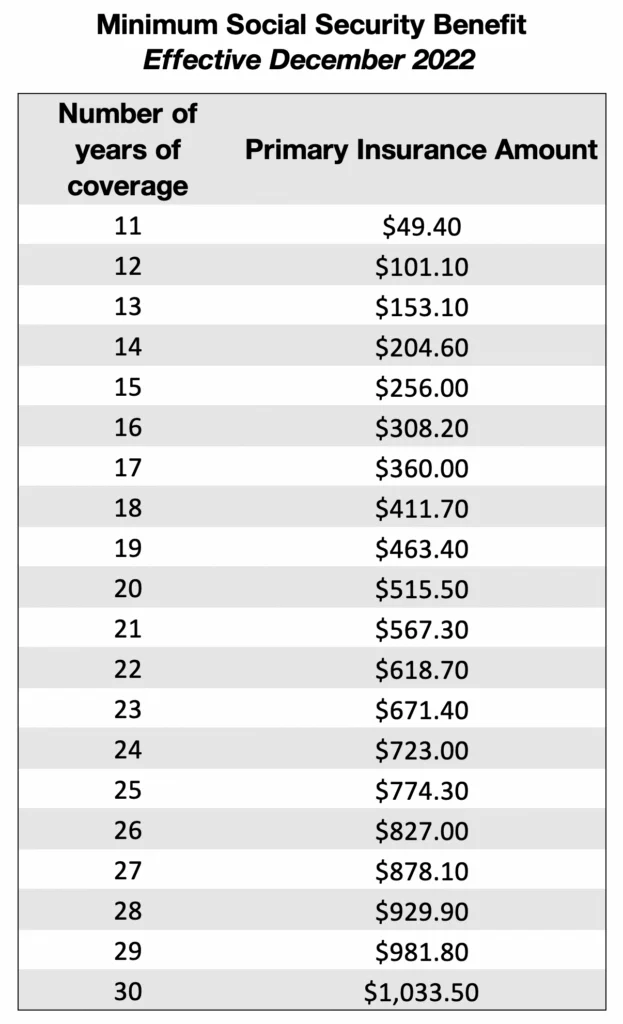
Before you can even qualify for a check, you must earn enough “credits.” As of the current regulations, most workers need 40 credits to qualify for retirement benefits, which typically equates to ten years of work. You can earn up to four credits per year based on your total annual wages or self-employment income. While these credits determine eligibility, they do not determine the amount of the benefit.
How the SSA Uses Your AIME (Average Indexed Monthly Earnings)
The actual dollar amount starts with your Average Indexed Monthly Earnings (AIME). The SSA looks at your entire work history and selects the 35 years in which you earned the most, adjusted for inflation (indexing). If you worked fewer than 35 years, the SSA averages in “zeros” for the remaining years, which can significantly drag down your monthly benefit. This is why financial advisors often suggest working at least 35 years to maximize the calculation.
Understanding the PIA (Primary Insurance Amount)
Once the AIME is calculated, the SSA applies a formula to determine your Primary Insurance Amount (PIA). This formula is “progressive,” meaning it is designed to replace a larger percentage of income for lower earners than for higher earners. The formula uses “bend points”—specific dollar thresholds that change annually—to calculate how much of your AIME becomes your monthly benefit. For example, you might get 90% of the first few hundred dollars of your AIME, but only 15% of the AIME above the highest bend point.
Factors That Influence Your Final Benefit Amount
While the PIA sets the baseline, several external factors can increase or decrease the actual check you receive each month. Personal finance is often a game of trade-offs, and Social Security is no different.
The Impact of Retirement Age: Early, Full, or Delayed
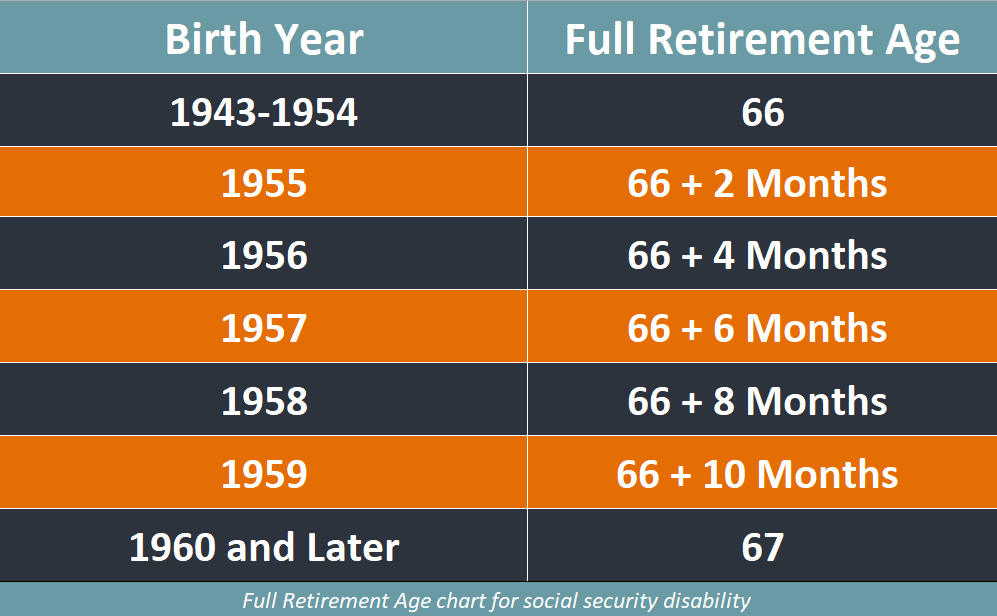
The most significant variable under your control is when you choose to file for benefits. Your “Full Retirement Age” (FRA) is the age at which you are entitled to 100% of your PIA. For those born in 1960 or later, the FRA is 67.
- Early Filing: You can claim as early as age 62, but your benefit will be permanently reduced—sometimes by as much as 30%—to account for the longer duration you will receive payments.
- Delayed Filing: If you wait past your FRA, your benefit increases by 8% for every year you delay, up until age 70. This results in a maximum benefit that is roughly 24% higher than it would have been at age 67.
High-Earning Years vs. Low-Earning Years
Because the SSA uses a 35-year average, your earnings in your 50s and 60s often have a disproportionate impact on your check. Typically, professionals earn more later in their careers. By replacing a low-earning year from your 20s with a high-earning year from your 50s, you can incrementally boost your AIME and, consequently, your PIA. This is a powerful strategy for those who find themselves with a “gap” in their work history.
The Effect of Inflation and Cost-of-Living Adjustments (COLA)
Social Security is one of the few retirement income sources that includes an automatic hedge against inflation. Each year, the SSA evaluates the Consumer Price Index for Urban Wage Earners and Clerical Workers (CPI-W). If inflation has risen, the SSA issues a Cost-of-Living Adjustment (COLA). This ensures that your purchasing power does not erode as the cost of groceries, housing, and healthcare increases over time.
Estimating Your Benefits: Tools and Strategies
You do not have to wait until retirement to find out what your benefit might look like. Modern financial tools and the SSA’s digital infrastructure provide several ways to project your future income.
Using the “my Social Security” Account
The most accurate way to see your projected benefit is to create a “my Social Security” account on the official SSA website. This portal provides a personalized Social Security Statement. It lists your year-by-year earnings history—which you should verify for accuracy—and provides estimates for your benefit at age 62, at your FRA, and at age 70. Seeing these numbers in black and white often changes a person’s entire retirement strategy.
The Online Calculator vs. Manual Estimates
For those who want to run “what-if” scenarios, the SSA offers various online calculators. These tools allow you to input hypothetical future earnings. For instance, if you plan to take a lower-paying, less stressful job for the last five years of your career, the calculator can show you exactly how much that move will impact your monthly check. This transparency is vital for making informed lifestyle choices in your pre-retirement years.
Spousal and Survivor Benefits: How They Factor In
Estimating benefits is not just an individual endeavor; it is often a household one. Spouses may be eligible for a benefit based on their partner’s earnings record, even if they have little to no work history of their own. A spousal benefit can be up to 50% of the worker’s PIA. Additionally, survivor benefits allow a widow or widower to “step into the shoes” of their deceased spouse and receive their higher benefit amount. Proper planning involves looking at the combined “household” Social Security income rather than just individual checks.
Maximizing Your Social Security Check
Getting the “most” out of the system requires a blend of career longevity and strategic timing. It is not just about receiving a check; it is about maximizing the total lifetime value of those payments.
The Power of the 35-Year Rule
As mentioned earlier, the SSA always uses a 35-year denominator. If you have only worked 30 years, five years of $0 earnings are averaged into your calculation. By working just five more years—even in a part-time capacity—you replace those zeros with actual dollar amounts. This is often the simplest way to increase a benefit for those who took time off for caregiving or education earlier in life.
Delaying Benefits Until Age 70
From a purely mathematical standpoint, delaying benefits until age 70 is one of the best “investments” available. A guaranteed 8% annual increase (plus COLA) is a return that is difficult to find in the stock or bond markets without taking on significant risk. For those in good health with other assets to draw from, waiting until 70 acts as a form of longevity insurance, providing the highest possible monthly floor for the rest of their lives.
Tax Implications of Social Security Income
Many retirees are surprised to find that their Social Security benefits may be taxable. If your “combined income” (adjusted gross income + tax-exempt interest + half of your Social Security benefits) exceeds certain thresholds ($25,000 for individuals, $32,000 for couples), up to 50% or 85% of your benefits could be subject to federal income tax. High-net-worth individuals must factor this into their withdrawal strategies, perhaps drawing from Roth IRAs to keep their taxable income below these “tax torpedo” thresholds.
Future Outlook: The Sustainability of Social Security
No discussion of Social Security amounts is complete without addressing the elephant in the room: the long-term solvency of the trust funds.
Trust Fund Projections and Potential Adjustments
The Social Security Trustees issue annual reports regarding the health of the Old-Age and Survivors Insurance (OASI) Trust Fund. Current projections often suggest that the fund may be depleted by the mid-2030s. However, “depletion” does not mean the system goes bankrupt; it means the system can only pay out what it collects in payroll taxes, which is currently estimated at roughly 77-80% of scheduled benefits. Historically, Congress has stepped in to adjust tax rates or retirement ages to ensure full payments continue.

Why Social Security Is Just One Piece of the Retirement Puzzle
Regardless of the exact dollar amount you receive, the most important takeaway is that Social Security was designed to be a “safety net,” not a total replacement for your pre-retirement income. On average, it replaces about 40% of a worker’s previous earnings. To maintain a comfortable lifestyle, individuals must supplement these benefits with personal savings, such as 401(k)s, IRAs, and other investments.
In conclusion, “how much you get” is a result of a lifelong financial journey. By monitoring your earnings record, understanding the impact of your filing age, and accounting for taxes and inflation, you can transform Social Security from a mysterious government program into a predictable and powerful component of your financial portfolio. Planning early and staying informed is the only way to ensure that when the time comes to claim, you are leaving nothing on the table.
aViewFromTheCave is a participant in the Amazon Services LLC Associates Program, an affiliate advertising program designed to provide a means for sites to earn advertising fees by advertising and linking to Amazon.com. Amazon, the Amazon logo, AmazonSupply, and the AmazonSupply logo are trademarks of Amazon.com, Inc. or its affiliates. As an Amazon Associate we earn affiliate commissions from qualifying purchases.