
In the landscape of American retail banking, PNC Financial Services Group stands as one of the largest and most influential institutions. For those looking to enter the world of finance, the role of a bank teller at PNC is often the primary point of entry. However, in an economy defined by fluctuating inflation and a competitive labor market, the question of “how much” goes beyond a simple hourly figure. Understanding the compensation for a PNC bank teller requires a deep dive into base pay, regional variations, comprehensive benefit packages, and the long-term financial trajectory that the role provides.
For personal finance enthusiasts and job seekers alike, analyzing these figures offers a glimpse into how major financial institutions are valuing “front-line” talent and what a career in banking can offer in terms of immediate income and future wealth-building potential.
Average Salary and Hourly Compensation at PNC
When evaluating the salary of a PNC bank teller, the most critical figure to consider is the bank’s internal minimum wage policy. In recent years, PNC has made significant strides in raising its floor for hourly workers, positioning itself as a competitive employer in the retail banking space.
Base Hourly Rates and Entry-Level Pay
As of recent corporate updates, PNC has established a minimum base pay of $18 per hour for its employees across the United States. This move was part of a broader industry trend where major financial institutions sought to attract and retain talent by offering wages significantly higher than the federal or state minimums.
For an entry-level teller, the starting rate typically hovers around this $18 to $20 range. On an annual basis, a full-time teller working 40 hours per week can expect a base salary between $37,440 and $41,600. While this serves as the baseline, individuals with prior experience in cash handling, customer service, or retail sales may negotiate a slightly higher starting point.
The Impact of Seniority and Specialized Roles
Not all teller positions are created equal. Within the PNC ecosystem, there are tiers that reflect increasing levels of responsibility and, consequently, higher pay.
-
Teller II / Senior Teller: These individuals often handle more complex transactions and assist with the oversight of the vault or ATM balancing. Their pay typically ranges from $20 to $23 per hour.
-
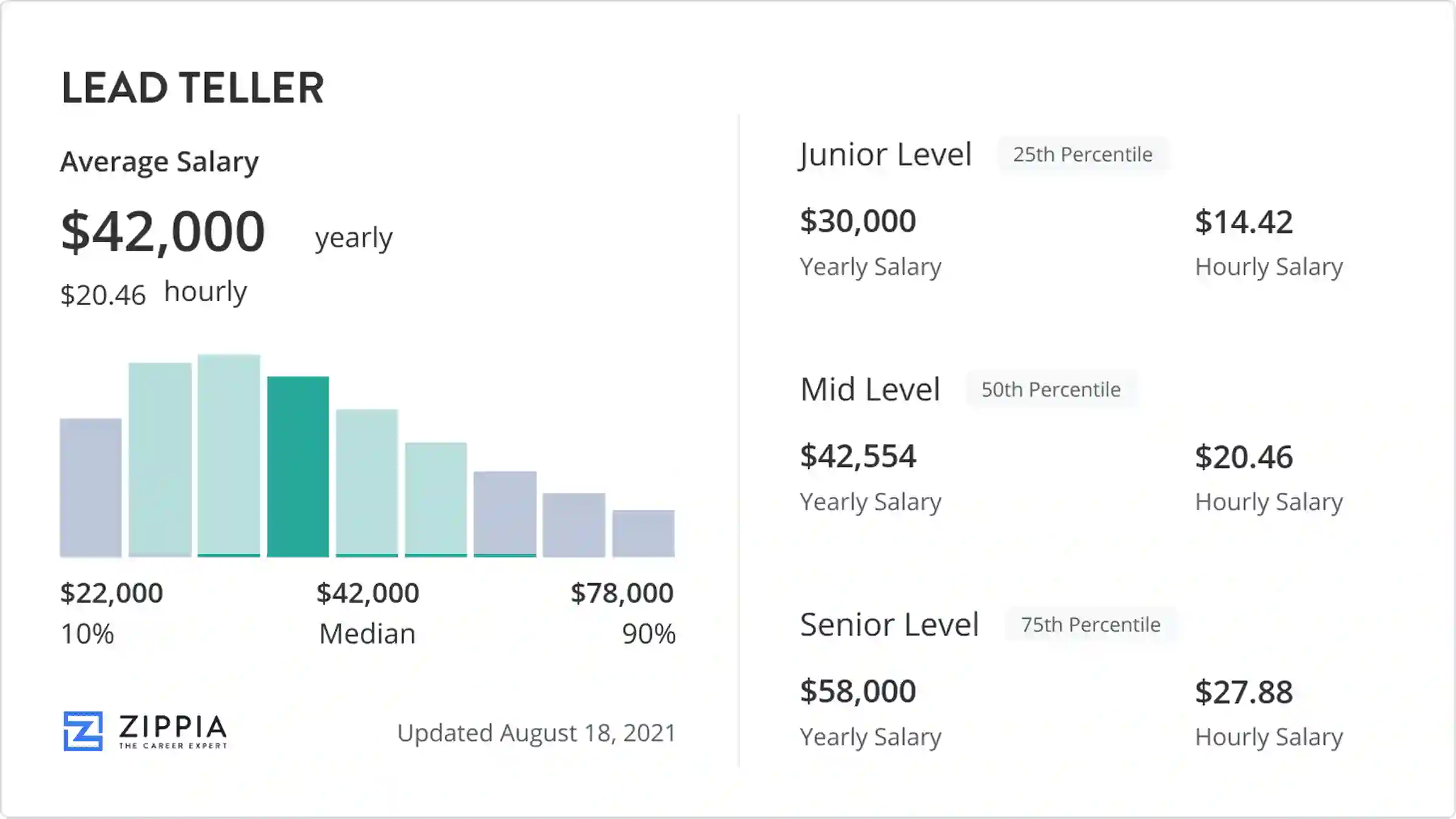
Lead Teller / Head Teller: A Lead Teller takes on supervisory duties, managing the teller line and ensuring compliance with federal regulations and internal policies. These roles can command hourly rates between $23 and $26, pushing annual base earnings closer to $50,000.
Geographic Pay Differentials
One of the most significant factors influencing a PNC teller’s paycheck is their location. PNC operates in dozens of states, and the cost of living in a metropolitan hub like Philadelphia, Washington D.C., or Chicago is vastly different from that in a smaller town in the Midwest or the South.
In high-cost-of-living (HCOL) areas, PNC often provides a geographic differential. Tellers in these regions might see starting rates closer to $21 or $22 per hour to remain competitive with local market rates. Conversely, in regions where the cost of living is lower, the $18 minimum remains the standard, which often provides a higher “real” value in terms of purchasing power.
The Total Rewards Package: Benefits and Hidden Compensation
In the world of personal finance, a salary is only one part of the equation. To truly understand what a bank teller makes at PNC, one must account for the “Total Rewards” package. These benefits often provide thousands of dollars in annual value that do not appear on a standard pay stub but significantly impact an individual’s net worth and financial security.
Healthcare and Wellness
PNC offers a robust suite of insurance options, including medical, dental, and vision coverage. For a teller, the bank often subsidizes a significant portion of the premiums. Furthermore, PNC frequently provides access to Health Savings Accounts (HSAs) with employer contributions. For an employee, an annual employer contribution to an HSA is essentially “free money” that can be invested or used for medical expenses, providing a tax-advantaged boost to their overall compensation.
Retirement and 401(k) Matching
One of the most powerful wealth-building tools for a PNC employee is the 401(k) Savings Plan. PNC is known for offering a competitive matching program. Typically, the bank matches employee contributions dollar-for-dollar up to a certain percentage of their salary (often 4% or more) and may provide an additional non-elective contribution based on the bank’s performance or the employee’s years of service. For a teller making $40,000, a 4% match adds an immediate $1,600 to their retirement portfolio annually, not accounting for market growth.
Tuition Assistance and Education
For many, the teller role is a stepping stone. PNC supports this by offering tuition reimbursement programs. This benefit is a massive financial asset; it allows employees to pursue degrees in finance, business administration, or accounting while working. By utilizing this benefit, a teller can effectively “earn” an additional $5,000 to $10,000 per year in educational value, significantly increasing their future earning potential without taking on student debt.
Factors That Influence Bonus Potential and Extra Income

While tellers are primarily hourly employees, there are avenues for increasing take-home pay through performance-based incentives and overtime.
Incentive Programs and Referral Bonuses
Banking is, at its core, a sales and service industry. While tellers are not “salespeople” in the traditional sense, they are responsible for identifying customer needs and referring them to specialized bankers for products like mortgages, credit cards, or investment accounts.
PNC often implements incentive programs where tellers can earn bonuses for meeting specific referral targets. These bonuses might be paid out monthly or quarterly. While they vary by branch and region, a high-performing teller can potentially add several hundred dollars to their monthly income through these “soft sales” and customer service excellence metrics.
Overtime and Holiday Pay
Standard retail banking hours are often cited as a benefit (the “banker’s hours” of 9-to-5), but there are opportunities for overtime. During busy seasons, end-of-quarter pushes, or when staffing is lean, tellers may have the opportunity to work beyond 40 hours. Under federal law, these hours are paid at time-and-a-half. Additionally, as a major financial institution, PNC observes all federal holidays. Working during peak seasonal times or helping with branch transitions can provide a modest but welcome bump in annual earnings.
The Financial ROI of the Teller Role: A Career Perspective
When discussing how much a bank teller makes, it is essential to view the position through the lens of career investment. In the finance industry, the teller role is frequently described as the “Gateway to the Middle Class” or the “Front Door to Corporate Finance.”
Skill Acquisition as Equity
The skills learned as a PNC teller—cash management, regulatory compliance (including Anti-Money Laundering and Bank Secrecy Act protocols), and financial software proficiency—are highly transferable. In the labor market, these skills have a specific dollar value. An individual who spends two years as a teller is often qualified for roles in back-office operations, fraud prevention, or loan processing, all of which command higher salaries.
Internal Promotion Tracks
PNC has a strong culture of “hiring from within.” A successful teller can quickly move into a role as a Personal Banker or Universal Banker. In these roles, the compensation structure shifts toward a higher base salary and a more aggressive commission or bonus structure. From there, the path leads to Branch Management, where salaries can exceed $70,000 to $100,000, or into specialized corporate tracks like Private Banking or Wealth Management.
Networking and Professional Exposure
Working at a major institution like PNC provides employees with access to a massive internal network. Tellers interact with managers, area directors, and commercial clients daily. The value of this professional network is difficult to quantify but is a vital component of long-term financial success. Many tellers leverage these connections to move into corporate roles in departments like Risk Management, HR, or Marketing, where the pay scales are significantly higher than the retail branch level.
How PNC Compares to the Broader Banking Industry
To determine if the pay at PNC is “good,” it must be benchmarked against its peers such as Bank of America, Chase, and Wells Fargo.
Market Positioning
PNC generally remains in the top tier of retail banking pay. While some smaller credit unions may offer slightly higher starting rates in specific niche markets, the “Big Four” and regional powerhouses like PNC lead the way in terms of comprehensive benefits and structured raises.
PNC’s commitment to an $18 minimum wage puts it ahead of many local and regional banks that may still be hovering around the $15 or $16 mark. For a job seeker, this difference of $2 to $3 per hour translates to an extra $4,000 to $6,000 per year, which is a significant margin in the entry-level finance space.
Stability and Longevity
Another financial factor to consider is the stability of the institution. PNC is a “Systemically Important” bank with a diverse revenue stream. For an employee, this means a lower risk of sudden branch closures compared to smaller, struggling banks. Financial stability for an employer translates to job security for the employee, which is a critical component of a person’s overall financial health.

Conclusion: Evaluating the Full Value of the PNC Teller Role
Ultimately, the question of how much a bank teller makes at PNC is answered by more than just an hourly rate. While the $18 to $20 base pay is a strong starting point that beats many retail and service industry alternatives, the true financial value lies in the “Total Rewards.”
When you factor in the 401(k) matching, the low-cost health insurance, the tuition reimbursement, and the potential for performance bonuses, the effective compensation for a PNC teller often exceeds $50,000 in total value per year. For an entry-level position that does not strictly require a four-year degree, this represents a high return on investment for the employee’s time.
Furthermore, the role serves as a launchpad. In the world of business and finance, the teller line is where the fundamentals are mastered. For those who utilize the role to learn the inner workings of the financial system, the “pay” received as a teller is just the beginning of a much larger, more lucrative journey within the financial services industry. Whether used as a stable career or a stepping stone to higher-level corporate finance, the role of a bank teller at PNC offers a competitive and comprehensive financial package designed to foster both immediate stability and long-term growth.
aViewFromTheCave is a participant in the Amazon Services LLC Associates Program, an affiliate advertising program designed to provide a means for sites to earn advertising fees by advertising and linking to Amazon.com. Amazon, the Amazon logo, AmazonSupply, and the AmazonSupply logo are trademarks of Amazon.com, Inc. or its affiliates. As an Amazon Associate we earn affiliate commissions from qualifying purchases.