
The year 2008 stands as a stark reminder of the volatility inherent in financial markets and the profound impact of systemic risk. For investors, businesses, and policymakers alike, it was a period of intense uncertainty, unprecedented government intervention, and widespread panic. The question of “how much did the market drop in 2008” doesn’t just refer to a simple percentage; it encapsulates a complex narrative of economic failure, human error, and the resilience required for recovery. This article delves into the specifics of the market’s dramatic decline, exploring its causes, its breadth, and the enduring lessons it imparted to the world of finance.
The Unfolding of the 2008 Financial Crisis
To understand the market drop, one must first grasp the crisis that precipitated it. What began as a localized issue in the U.S. housing market rapidly metastasized into a global financial contagion, marking the most severe economic downturn since the Great Depression.
Roots of the Crisis: Subprime Mortgages and the Housing Bubble
The genesis of the 2008 crisis can be traced back to the early 2000s, characterized by a prolonged period of low interest rates and a pervasive belief in ever-increasing housing prices. Lenders, driven by competition and the promise of lucrative returns, increasingly loosened underwriting standards, extending mortgages to borrowers with poor credit histories—known as subprime mortgages. These loans often featured adjustable rates, meaning payments would spike after an initial low-interest period.
Investment banks eagerly packaged these mortgages into complex financial instruments called Mortgage-Backed Securities (MBS) and Collateralized Debt Obligations (CDOs). Rating agencies, often incentivized by the very institutions issuing these products, assigned them high credit ratings, misleading investors into believing they were safe. This created a massive, opaque market for these derivatives, widely dispersed across the global financial system. The housing market became an unsustainable bubble, fueled by speculative buying and easy credit.
The Domino Effect: From Housing to Global Markets
When the U.S. Federal Reserve began raising interest rates in 2004, the housing bubble started to deflate. Adjustable-rate mortgages reset to higher rates, pushing many subprime borrowers into foreclosure. As defaults mounted, the value of the MBS and CDOs plummeted. Financial institutions, holding vast quantities of these now toxic assets, faced massive write-downs and liquidity crises.
The first major casualty was Bear Stearns, acquired by JPMorgan Chase with government backing in March 2008. This signaled the depth of the problem. However, the true panic erupted in September 2008, following the collapse of Lehman Brothers, a 158-year-old investment bank, which the government opted not to bail out. This decision sent shockwaves through the financial system, freezing credit markets as banks, unsure of each other’s solvency, stopped lending. Major institutions like AIG, Fannie Mae, and Freddie Mac required massive government bailouts to prevent their collapse, underscoring the systemic risk inherent in the interconnected global economy. This cascade of failures and near-failures directly translated into plummeting stock market values.
Quantifying the Market Downturn
The financial crisis translated into one of the most severe stock market corrections in history. The numbers tell a story of immense value destruction, impacting nearly every investor from institutional funds to individual retirement accounts.
The S&P 500’s Steep Decline
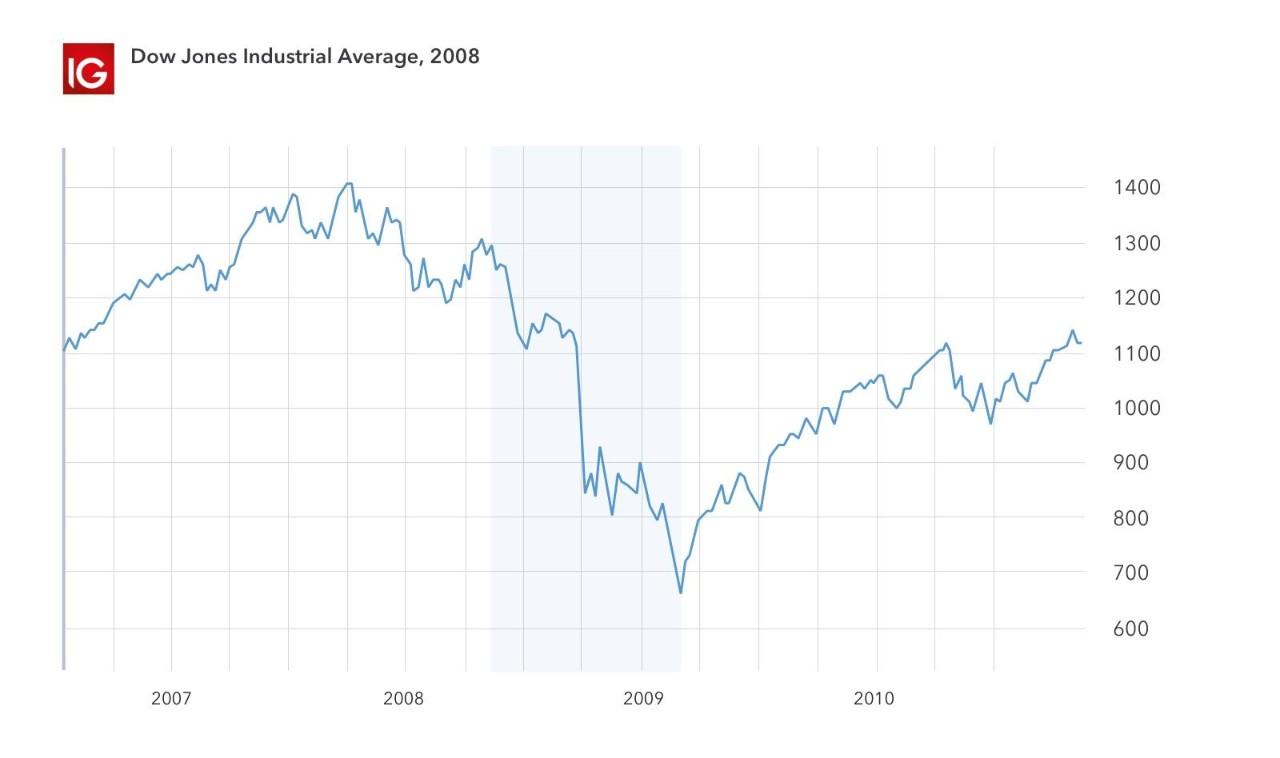
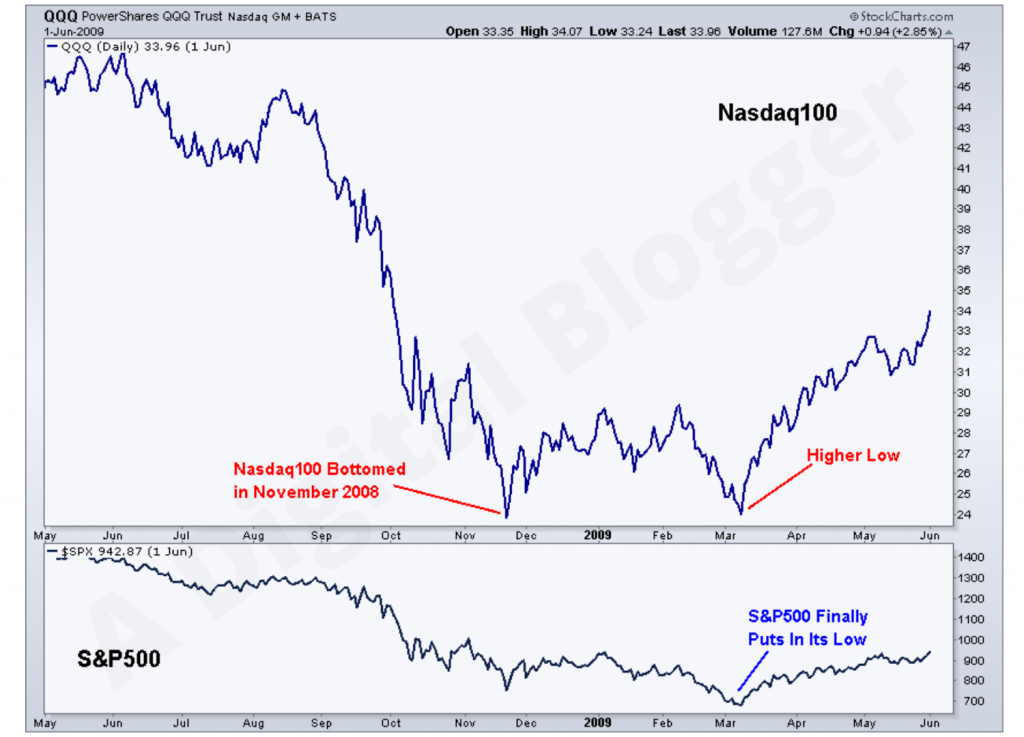
The Standard & Poor’s 500 (S&P 500), a broad measure of the U.S. stock market’s health, experienced a catastrophic decline. From its peak on October 9, 2007, at 1,565.15 points, to its trough on March 9, 2009, at 676.53 points, the index plummeted by approximately 56.8%. This peak-to-trough decline represents the total erosion of value over the entire bear market.
Focusing specifically on the calendar year 2008, the S&P 500 closed the year down an astonishing 38.49%. This figure makes 2008 the worst year for the S&P 500 since 1937, during the Great Depression. The bulk of this decline occurred in the latter half of the year, particularly after the Lehman Brothers collapse, as investor confidence evaporated and fear gripped the markets. Daily swings of several percentage points, both up and down, became commonplace, indicative of extreme volatility.
Other Major Indices and Asset Classes
While the S&P 500 provides a comprehensive overview, other major indices also suffered dramatically:
- Dow Jones Industrial Average (DJIA): The Dow, representing 30 large U.S. companies, fell by 33.8% in 2008. From its October 2007 peak to its March 2009 low, it lost roughly 54% of its value.
- NASDAQ Composite: Heavily weighted towards technology stocks, the NASDAQ saw a decline of 40.54% in 2008, reflecting the broad-based nature of the downturn across different sectors.
The impact wasn’t limited to equities. While U.S. Treasury bonds, considered safe-haven assets, saw increased demand, the broader corporate bond market experienced significant stress as credit risk surged. Commodities also faced headwinds; for example, crude oil prices, after hitting an all-time high above $147 a barrel in July 2008, plunged to below $40 by year-end as global demand expectations collapsed. Real estate, the initial trigger, saw home prices continue to fall, extending the pain beyond financial assets to tangible wealth.
The Broader Economic Impact and Investor Psychology
The market collapse was not an isolated event but a stark reflection of, and contributor to, a much broader economic contraction known as the Great Recession. This period had profound effects on employment, consumer behavior, and the psychological landscape of investors.
Recessionary Pressures and Unemployment
The decline in asset values, combined with the freezing of credit markets, had a swift and devastating effect on the real economy. Businesses found it difficult to obtain financing, leading to cutbacks in investment, production, and hiring. Consumer spending, a major driver of economic activity, plummeted as households faced job insecurity, declining wealth from falling home values and stock portfolios, and tighter credit conditions.
Unemployment rates soared, rising from 4.9% in February 2008 to a peak of 10% in October 2009. Millions of jobs were lost, and many families faced foreclosures and bankruptcies. The U.S. economy officially entered a recession in December 2007, which lasted until June 2009, making it the longest and deepest recession since World War II. The market drop was both a symptom and an accelerant of this economic devastation.
Panic, Fear, and the Search for Safety
For investors, 2008 was characterized by extreme fear and panic. The rapid loss of wealth, coupled with the daily drumbeat of negative news about financial institutions on the brink of collapse, led to widespread disillusionment and a flight to safety. Many retail investors, witnessing their portfolios shrink by half or more, made emotional decisions, selling off investments at their lows, thereby locking in significant losses.
The VIX index, often called the “fear gauge,” which measures expected market volatility, hit an all-time high above 80 during the crisis, dwarfing levels seen during other significant market corrections. This reflected the overwhelming uncertainty and anxiety among market participants. The only perceived safe haven was often government bonds, particularly U.S. Treasuries, which saw yields drop to historic lows as investors flocked to them. This collective psychological shift exacerbated the market downturn, as selling begot more selling.
Policy Responses and the Road to Recovery
The unprecedented nature of the crisis demanded an equally unprecedented response from governments and central banks worldwide. Their coordinated efforts were crucial in stabilizing the financial system and laying the groundwork for recovery.
Government Interventions and Monetary Policy
In the U.S., the government initiated several bold measures. The Troubled Asset Relief Program (TARP), signed into law in October 2008, authorized $700 billion (later reduced to $475 billion) to purchase troubled assets and inject capital into struggling banks and auto manufacturers. This injection of capital was critical in recapitalizing banks and restoring confidence.
Simultaneously, the Federal Reserve, under Chairman Ben Bernanke, embarked on aggressive monetary policy. Interest rates were slashed to near zero, and the Fed implemented several rounds of Quantitative Easing (QE), purchasing vast quantities of government bonds and mortgage-backed securities. The goal of QE was to lower long-term interest rates, stimulate lending, and pump liquidity into the financial system, effectively pushing investors into riskier assets like stocks to spur economic activity. These actions, while controversial at the time, are largely credited with preventing a complete meltdown of the financial system.
Market Rebound and Lessons Learned
The coordinated policy responses, combined with signs of stabilization in the financial system, marked a turning point. The market bottomed out on March 9, 2009, and began a slow but steady recovery. The subsequent bull market, one of the longest in history, saw the S&P 500 regain its pre-crisis highs within a few years.
The 2008 crisis forced a critical reassessment of financial regulation. It underscored the interconnectedness of global finance, the dangers of excessive leverage, the need for stringent oversight of complex financial instruments, and the importance of stress testing for financial institutions. The crisis also highlighted the limitations of existing regulatory frameworks and the potential for moral hazard when government bailouts are necessary.
Enduring Lessons for Modern Investors
The tumultuous events of 2008, while painful, etched indelible lessons into the collective consciousness of investors and policymakers. These insights continue to shape investment strategies and regulatory frameworks today.
The Importance of Diversification and Long-Term Perspective
Perhaps the most crucial lesson for individual investors is the enduring power of diversification and the importance of maintaining a long-term perspective. While almost all asset classes suffered in 2008, a well-diversified portfolio, including a mix of equities, bonds, and perhaps some alternative assets, would have softened the blow compared to one heavily concentrated in a single sector or asset class.
More importantly, the crisis reinforced that market crashes, while terrifying, are an inherent part of the economic cycle. Investors who panicked and sold their holdings at the market’s low locked in their losses. Those who held steady, or even had the foresight and capital to invest during the downturn, ultimately participated in the subsequent, powerful recovery. This underscores the wisdom of “time in the market, not timing the market” and the emotional discipline required to stick to an investment plan during periods of extreme stress.
Understanding Systemic Risk and Regulatory Oversight
For the broader financial system, 2008 illuminated the concept of systemic risk—the risk of collapse of an entire financial system or market, as opposed to the collapse of a single entity, which can be contained without affecting the whole. The “too big to fail” dilemma of major financial institutions became a central concern.
In response, the Dodd-Frank Wall Street Reform and Consumer Protection Act was signed into law in 2010 in the U.S., aiming to prevent a recurrence of such a crisis. It introduced stricter regulations for financial institutions, established the Financial Stability Oversight Council to identify and address systemic risks, and created the Consumer Financial Protection Bureau (CFPB) to protect consumers from predatory financial products. While the effectiveness and scope of these regulations remain a subject of ongoing debate, they represent a significant effort to build a more resilient financial system.

Crisis as Opportunity (for some)
While the vast majority experienced losses and hardship, the 2008 crisis also presented extraordinary opportunities for those with capital, courage, and a strong understanding of market cycles. Value investors who were able to identify fundamentally sound companies trading at distressed prices, or those who had cash reserves to deploy when the market was at its nadir, were able to acquire assets at generational lows. This highlights that while fear dominates during a crisis, opportunities for significant long-term gains often emerge for disciplined and patient investors.
The market drop in 2008 was a defining moment in modern financial history, characterized by an unprecedented decline in asset values, widespread economic pain, and a profound reevaluation of financial practices. The S&P 500’s nearly 39% calendar year decline, and its deeper peak-to-trough drop of 57%, serve as a stark reminder of the market’s capacity for both immense growth and devastating contraction. While the immediate scars were deep, the crisis ultimately reinforced fundamental investment principles: the power of diversification, the necessity of a long-term perspective, and the critical role of robust financial regulation in safeguarding global economic stability. For current and future investors, understanding 2008 is not just a historical exercise but a vital lesson in managing risk and navigating the inherent uncertainties of the financial world.
aViewFromTheCave is a participant in the Amazon Services LLC Associates Program, an affiliate advertising program designed to provide a means for sites to earn advertising fees by advertising and linking to Amazon.com. Amazon, the Amazon logo, AmazonSupply, and the AmazonSupply logo are trademarks of Amazon.com, Inc. or its affiliates. As an Amazon Associate we earn affiliate commissions from qualifying purchases.