
In the dynamic world of business, understanding a company’s financial structure is paramount for investors, analysts, and stakeholders. Among the many financial indicators, corporate debt stands out as a critical metric, offering insights into a company’s leverage, risk profile, and growth strategy. When we ask, “How much debt does Tesla have?”, we’re not merely seeking a simple figure; we’re embarking on an exploration of business finance that reveals the intricate balance between growth ambition and financial prudence. For a trailblazing company like Tesla, known for its rapid expansion, technological innovation, and ambitious projects, its debt profile is particularly compelling.
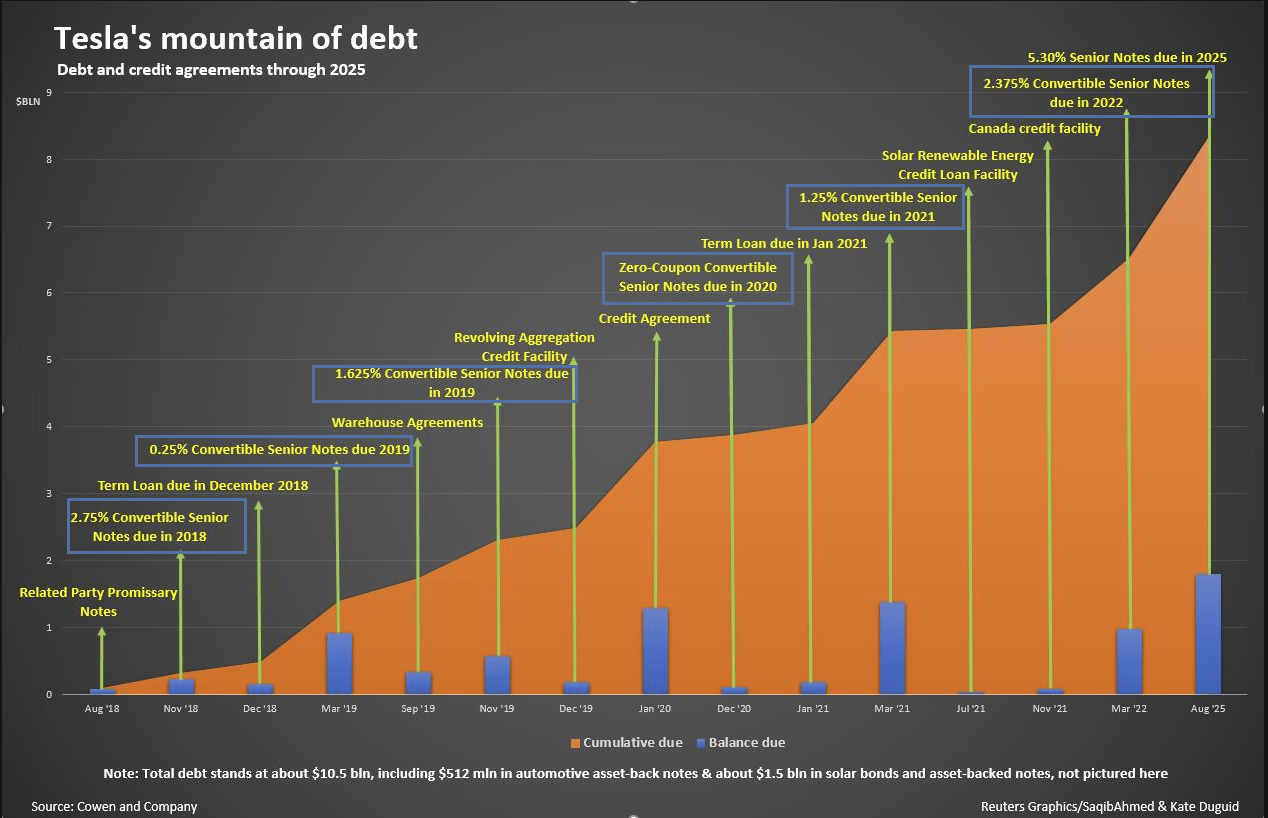
Debt, in its essence, is a financial instrument that companies use to fund operations, expansion, acquisitions, and research and development. It can come in various forms, from short-term loans to long-term bonds, and its management is a cornerstone of sound financial strategy. For a company like Tesla, which operates in capital-intensive sectors such as automotive manufacturing, battery technology, and renewable energy, strategic debt utilization is often necessary to fuel its prodigious growth trajectory and bring revolutionary products to market. This article will delve into the financial intricacies of Tesla’s debt, examining its composition, its impact on the company’s financial health, and what it signifies for its future.
Understanding Corporate Debt: More Than Just a Number
To truly grasp Tesla’s debt situation, it’s essential to first establish a foundational understanding of corporate debt. It’s not just about the total amount borrowed; it’s about the context, the terms, and the company’s capacity to service that debt.
The Role of Debt in Business Growth
Debt plays a multifaceted role in business finance. For many companies, especially those in high-growth or capital-intensive industries, debt is a crucial funding source. Unlike equity financing, which involves selling ownership stakes, debt allows companies to retain ownership while accessing significant capital. This capital can be deployed to build new factories, invest in cutting-edge research, acquire other businesses, or simply cover operational costs during periods of rapid expansion.
For a company like Tesla, which has consistently pushed the boundaries of automotive engineering and sustainable energy, accessing substantial capital is non-negotiable. Building Gigafactories, developing new battery technologies, and expanding charging infrastructure requires billions of dollars in investment. Debt has historically provided a flexible and often cheaper alternative to equity for funding these monumental projects, especially when a company’s stock might be undervalued or when management wishes to avoid diluting existing shareholders. However, the allure of debt comes with the responsibility of repayment and interest servicing, which can become a burden if not managed effectively.
Differentiating Short-Term and Long-Term Liabilities
Corporate debt is not monolithic; it’s typically categorized into short-term and long-term liabilities, each with different implications for a company’s liquidity and solvency.
-
Short-Term Liabilities (Current Liabilities): These are obligations that are due within one year. They include accounts payable (money owed to suppliers), short-term loans, the current portion of long-term debt (the part of a long-term loan due within the next 12 months), and accrued expenses. For Tesla, these might include payments for raw materials, short-term borrowings to manage working capital, or lease payments. A high proportion of short-term debt relative to current assets can signal liquidity issues, making it harder for a company to meet its immediate obligations.
-
Long-Term Liabilities (Non-Current Liabilities): These are obligations due in more than one year. They primarily consist of long-term bank loans, bonds payable (debt securities issued to investors), deferred tax liabilities, and long-term lease obligations. For Tesla, these typically fund major capital expenditures like factory construction, long-term R&D projects, and sustained operational expansion. The majority of a large corporation’s debt usually falls into this category, reflecting strategic, multi-year investment plans. Analyzing the maturity schedule of long-term debt is crucial, as a significant lump sum due in a single year could create refinancing risk.
Understanding this distinction helps financial analysts assess not just the total debt burden, but also the immediate financial pressures and the long-term financial commitments a company faces.
Key Financial Statements for Debt Analysis
To ascertain a company’s debt levels and its capacity to manage them, financial analysts primarily turn to three core financial statements:
-
Balance Sheet: This statement provides a snapshot of a company’s assets, liabilities, and equity at a specific point in time. The “Liabilities” section is where all forms of debt are listed, broken down into current and non-current categories. It’s the primary source for understanding the absolute amount of debt.
-
Income Statement: While it doesn’t list the principal debt amount, the income statement reveals the “interest expense” incurred on borrowed funds. This figure indicates the cost of carrying debt and directly impacts a company’s profitability. A rising interest expense, especially in relation to revenue, can be a red flag.
-
Cash Flow Statement: This statement is perhaps the most crucial for evaluating debt management. It shows how cash is generated and used across operating, investing, and financing activities. The “financing activities” section details cash inflows from new debt issuance and cash outflows for debt repayments. Crucially, a company’s ability to generate sufficient cash flow from operations to cover its debt service obligations (interest and principal) is a robust indicator of its financial health.
By scrutinizing these statements, one can piece together a comprehensive picture of Tesla’s debt structure, its cost, and its sustainability.
Tesla’s Debt Profile: A Strategic Perspective
Tesla, under Elon Musk’s leadership, has consistently pursued an aggressive growth strategy, pushing the boundaries of what’s possible in automotive and energy sectors. This ambition naturally necessitates substantial capital, and debt has played a significant role in funding this vision.
Historical Debt Accumulation and Reduction
Tesla’s journey has been characterized by phases of significant debt accumulation, particularly in its earlier years as it scaled production of models like the Model S, Model X, and later, the mass-market Model 3. Building Gigafactories in Nevada, New York, Shanghai, Berlin, and Texas, alongside developing cutting-edge battery technology and autonomous driving capabilities, required massive upfront investments. Initially, the company relied heavily on convertible notes, a form of debt that can be converted into equity under certain conditions, offering a blend of debt’s lower interest cost and equity’s upside potential to investors.
As Tesla’s operational efficiency improved and its vehicles gained wider acceptance, its financial position strengthened. Crucially, as the company achieved consistent profitability and generated positive free cash flow, its reliance on new debt issuance has tended to decrease. In fact, in recent years, Tesla has strategically focused on reducing its overall debt burden, paying down high-interest loans and simplifying its capital structure. This shift reflects a maturing company that is increasingly self-financing its growth through internally generated cash, rather than external borrowings. This move is often seen as a sign of financial strength and reduced risk by the market.
Funding Innovation and Expansion Through Debt
Tesla’s use of debt has been predominantly strategic, aimed at funding its core mission: accelerating the world’s transition to sustainable energy. This includes:
-
Manufacturing Expansion: Constructing multiple Gigafactories globally to scale vehicle and battery production. Each factory represents an investment of billions of dollars.
-
Research & Development: Pouring resources into R&D for next-generation battery technology, AI for autonomous driving, and new vehicle platforms (e.g., Cybertruck, Semi).
-
Infrastructure Development: Expanding its Supercharger network and energy storage solutions.
-
Acquisitions: While less frequent, debt can also fund strategic acquisitions that enhance technological capabilities or market reach.
The question isn’t just how much debt, but what it’s for. For Tesla, debt has been a tool to fuel innovation and expand its global footprint, rather than merely covering operational losses. This distinction is crucial for understanding the qualitative aspect of its debt.
Comparative Analysis within the Automotive and Tech Sectors
To put Tesla’s debt into perspective, it’s beneficial to compare it with peers in both the traditional automotive and the broader technology sectors. Traditional automakers, often with decades of established infrastructure and operations, typically carry substantial debt loads. This debt finances their vast manufacturing facilities, supply chains, and extensive R&D cycles for new models.
Tesla, while a “tech company” at heart, also operates in the capital-intensive automotive sector. Its debt profile might historically have been higher relative to some software-centric tech giants, but potentially lower or managed differently than legacy automakers, which often have pension liabilities and a more complex web of financial obligations. Tesla’s ability to innovate quickly and often achieve higher margins (or at least better unit economics than many expected) has allowed it to service debt more efficiently once production scaled. The trend towards reducing debt while maintaining growth is a strong indicator, differentiating it from companies that consistently rely on new debt to merely stay afloat.
The Impact of Debt on Tesla’s Financial Health and Investor Confidence

The amount and structure of a company’s debt directly influence its financial stability, its profitability, and how investors perceive its risk and potential.
Debt-to-Equity Ratios and Solvency Metrics
Financial ratios are indispensable tools for analyzing debt. Key among them are:
-
Debt-to-Equity Ratio: This ratio compares a company’s total debt to its shareholder equity. A lower ratio generally indicates a more financially stable company, as less of its assets are funded by debt. For Tesla, this ratio has fluctuated significantly over its history, reflecting periods of heavy investment and subsequent deleveraging. A declining trend in this ratio, especially as the company matures and generates consistent profits, signals improved financial health.
-
Debt-to-Asset Ratio: This metric indicates the proportion of a company’s assets financed by debt. A lower percentage suggests less reliance on external financing and greater financial independence.
-
Interest Coverage Ratio: This ratio measures a company’s ability to meet its interest payments. It’s calculated by dividing Earnings Before Interest and Taxes (EBIT) by interest expense. A higher ratio indicates that the company can comfortably cover its interest obligations, reducing the risk of default. As Tesla’s profitability has solidified, its interest coverage has improved, signifying a stronger capacity to service its debt.
These ratios collectively provide a quantitative measure of Tesla’s solvency—its long-term ability to meet its financial obligations.
Interest Expense and Profitability
Interest expense is a direct cost of carrying debt and has a direct impact on a company’s net income. High levels of debt, especially when coupled with rising interest rates, can significantly erode profitability. For a growth company like Tesla, managing this balance is crucial. In its earlier, less profitable years, interest expense was a more noticeable drain on earnings. However, as production scaled and unit economics improved, the impact of interest expense relative to Tesla’s robust revenues and growing operating profits has diminished.
Moreover, the type of debt matters. Low-interest debt, or debt secured during periods of favorable interest rates, is less burdensome. Tesla’s ability to access capital markets for favorable terms, a testament to its market appeal and perceived future potential, has been an important factor in managing its interest burden effectively.
Market Perception and Credit Ratings
A company’s debt profile heavily influences how it is perceived by credit rating agencies and the broader investment community. Credit rating agencies (e.g., S&P, Moody’s, Fitch) assess a company’s financial health and its ability to meet its debt obligations, assigning ratings that influence borrowing costs. A strong credit rating means a company can borrow at lower interest rates, reducing its cost of capital.
For Tesla, improving financial performance and a disciplined approach to debt management have contributed to upgrades in its credit ratings over time. This, in turn, enhances investor confidence, signals stability, and makes it easier and cheaper for Tesla to access capital markets in the future, whether for new debt or equity offerings. A company with a manageable debt load and a clear path to profitability is generally viewed more favorably by investors, translating into a more stable stock price and greater access to funding.
Managing and Mitigating Debt Risks at Tesla
Even with a strong financial position, effective debt management is an ongoing process, especially for a company with Tesla’s growth ambitions.
Cash Flow Generation and Debt Servicing Capacity
The most critical factor in managing debt is a company’s ability to generate strong, consistent cash flow from its operations. Operational cash flow is the lifeblood that covers interest payments and principal repayments. Tesla’s journey to consistent positive free cash flow has been a game-changer, transforming it from a capital-hungry startup into a financially self-sufficient enterprise. This strong cash flow allows Tesla to service its existing debt obligations without distress, providing a robust buffer against economic downturns or unexpected capital needs. When a company can finance its growth primarily through internally generated cash, its reliance on external debt decreases, significantly lowering its financial risk.
Diversifying Funding Sources
While debt is important, a well-rounded financial strategy includes diversifying funding sources. Tesla has historically used a mix of debt (bonds, convertible notes), equity offerings, and even government incentives or partnerships. Relying too heavily on a single source of capital can expose a company to specific market risks. For example, if equity markets are volatile, having access to debt markets provides an alternative. Conversely, if interest rates rise sharply, having strong equity backing reduces the pressure to take on high-cost debt. This diversification ensures financial flexibility and resilience.
Strategic Debt Refinancing and Maturity Management
Debt management isn’t just about paying back; it’s also about strategically managing the maturity profile of existing debt. This involves:
-
Refinancing: Replacing existing debt with new debt, often at more favorable terms (e.g., lower interest rates, longer maturity periods). Tesla has engaged in refinancing activities to optimize its debt portfolio.
-
Maturity Laddering: Spreading out debt maturities over several years rather than having large chunks of debt due in a single year. This avoids potential “wall of debt” scenarios where the company faces a massive repayment obligation all at once, which could be challenging to refinance or pay off if market conditions are unfavorable.
Proactive management of these aspects minimizes the risk associated with debt and ensures financial stability over the long term.
The Future Outlook: Tesla’s Debt Trajectory and Market Dynamics
Looking ahead, Tesla’s debt strategy will continue to evolve, influenced by its growth objectives, the macroeconomic environment, and its ability to generate cash.
Anticipated Capital Expenditures and Funding Needs
Tesla has ambitious plans, including further factory expansion, the launch of new vehicle models like the Cybertruck and the next-generation platform, continued investment in AI and robotics, and scaling its energy storage and services divisions. These ventures will require significant capital. While Tesla’s operating cash flow is robust, truly massive undertakings might still necessitate strategic debt financing or equity raises. The key will be ensuring that any new debt taken on is for high-return projects that contribute positively to future cash flows, further solidifying the company’s ability to service its obligations.
Macroeconomic Factors and Interest Rate Environment
The broader economic landscape plays a crucial role in debt management. Periods of high interest rates increase the cost of new debt and can make refinancing more expensive. Economic downturns can impact consumer demand, affecting revenue and cash flow, thereby increasing the risk associated with existing debt. Tesla, as a global company, is exposed to these macroeconomic shifts. Its financial strategy must account for potential fluctuations in interest rates, inflation, and global economic growth, ensuring that its debt structure remains resilient.
Balancing Growth Ambition with Financial Prudence
Ultimately, Tesla’s debt strategy embodies the constant tension between aggressive growth and financial prudence. The company’s history shows a willingness to use debt to fund audacious projects. However, its recent trend of strengthening its balance sheet and reducing its overall debt burden signifies a maturation in its financial management. For investors, monitoring Tesla’s debt levels and its capacity to service that debt will remain a critical part of assessing its long-term viability and investment appeal. As Tesla continues its mission to transform the automotive and energy sectors, its financial discipline in managing its debt will be as important as its technological prowess.
In conclusion, “how much debt does Tesla have?” is a question that opens the door to a comprehensive financial analysis. It highlights the strategic use of capital, the complexities of corporate finance, and the critical balance a company like Tesla must strike to achieve its visionary goals while maintaining robust financial health. While the exact figures fluctuate with quarterly reports, the underlying principles of debt management and its implications for growth, profitability, and investor confidence remain steadfast.
aViewFromTheCave is a participant in the Amazon Services LLC Associates Program, an affiliate advertising program designed to provide a means for sites to earn advertising fees by advertising and linking to Amazon.com. Amazon, the Amazon logo, AmazonSupply, and the AmazonSupply logo are trademarks of Amazon.com, Inc. or its affiliates. As an Amazon Associate we earn affiliate commissions from qualifying purchases.