
In the fast-paced world of technology and automotive innovation, few companies capture the global imagination quite like Tesla. Beyond the sleek designs, groundbreaking electric vehicles, and ambitious AI initiatives, there’s a fundamental question that underpins its operational stability, growth trajectory, and investment appeal: “How much cash does Tesla have?” For a company that consistently pushes the boundaries, understanding its financial reserves is not merely an academic exercise; it’s crucial for investors, analysts, competitors, and even consumers to gauge its resilience, capacity for future investment, and overall strategic flexibility.
Cash, in the corporate world, is often referred to as “king.” It represents the lifeblood of a business, providing the immediate liquidity needed to meet obligations, fund ambitious projects, and weather economic storms. For a company like Tesla, which operates on a global scale, invests heavily in research and development, and builds massive manufacturing facilities (Gigafactories), a substantial cash position is not just a luxury—it’s a strategic imperative. This article will delve into Tesla’s financial reserves, exploring the strategic importance of its cash pile, dissecting where these numbers come from, analyzing the drivers of its cash flow, and placing its financial strength in a broader industry context.
The Strategic Importance of Tesla’s Cash Pile
Tesla’s journey from a niche electric vehicle manufacturer to a global automotive and energy behemoth has been characterized by aggressive growth, substantial capital expenditure, and pioneering innovation. A robust cash position is not just a reflection of past success but a vital enabler for its future ambitions.
Funding Ambitious Growth and Expansion
Tesla’s vision extends far beyond selling cars. It envisions a future powered by sustainable energy, autonomous driving, and advanced robotics. Each of these endeavors requires immense capital investment. A healthy cash reserve allows Tesla to confidently fund the construction of new Gigafactories across continents, expand its Supercharger network, develop cutting-edge battery technology, and bring new products like the Cybertruck, Robotaxis, and Optimus humanoid robot from concept to reality. Without substantial internal funding, the pace of innovation and global market penetration would be severely hampered, forcing greater reliance on external financing, which can be costly and dilutive to existing shareholders.
Navigating Economic Volatility and Market Cycles
The global economy is inherently cyclical, characterized by periods of growth and contraction, supply chain disruptions, and fluctuating consumer demand. For a manufacturing-intensive company like Tesla, these external factors can have profound impacts. A significant cash buffer provides a crucial safety net, allowing the company to absorb shocks such as rising raw material costs, semiconductor shortages, or a temporary dip in demand without resorting to drastic measures like mass layoffs or halting critical projects. This financial resilience ensures operational continuity and preserves strategic optionality even in uncertain times, giving Tesla a distinct advantage over less liquid competitors.
Driving Innovation and Competitive Advantage
Tesla prides itself on its technological leadership, particularly in areas like battery chemistry, AI for autonomous driving (Full Self-Driving, or FSD), and advanced manufacturing processes. Sustained innovation requires continuous, massive investment in research and development (R&D). A strong cash position grants Tesla the freedom to fund long-term, high-risk, high-reward R&D projects that might not yield immediate returns but are essential for maintaining its competitive edge. It also provides the flexibility to pursue strategic acquisitions, though Tesla has historically preferred organic growth, if a compelling opportunity were to arise that aligns with its mission and accelerates its technological roadmap.
Unpacking Tesla’s Cash and Equivalents
To understand “how much cash Tesla has,” one must look beyond a single number and appreciate the nuances of financial reporting. The figures reported in financial statements are a snapshot, but they offer deep insights into a company’s liquidity.
Differentiating Cash, Cash Equivalents, and Marketable Securities
When financial analysts refer to a company’s cash position, they typically include more than just physical cash in a vault or checking accounts.
-
Cash refers to actual currency and demand deposits.
-
Cash Equivalents are highly liquid investments that can be readily converted to a known amount of cash, typically within 90 days of purchase, and present an insignificant risk of changes in value. Examples include money market funds, commercial paper, and short-term government bonds.
-
Marketable Securities are short-term, liquid investments that are generally debt or equity securities, like corporate bonds or stocks of other companies, that can be quickly bought or sold on a public exchange. They are typically held for longer than cash equivalents but still provide liquidity.
Together, these categories represent a company’s total readily accessible financial reserves, critical for meeting short-term obligations and funding immediate strategic needs.
Tracing Historical Trends in Tesla’s Cash Position
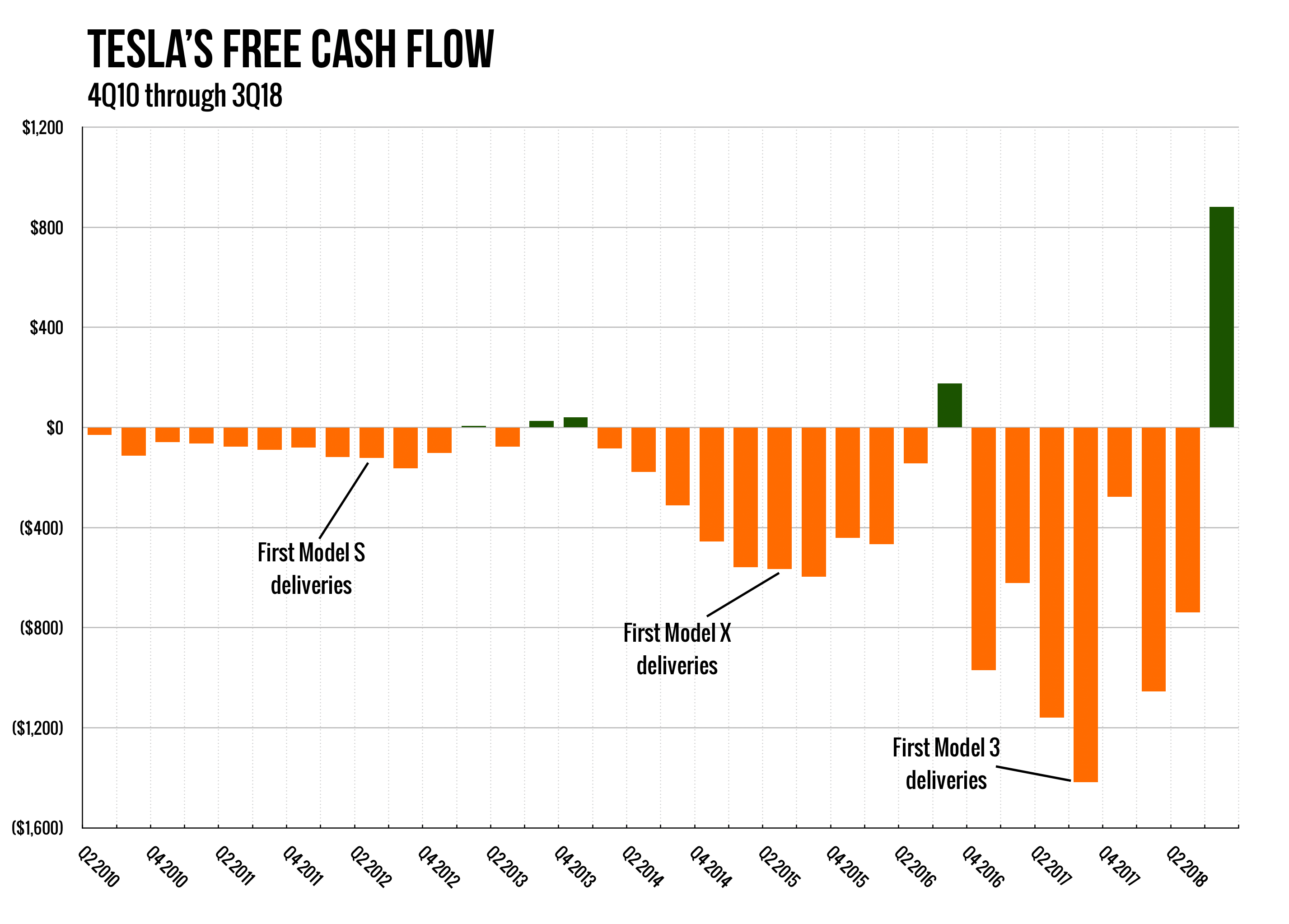
Tesla’s cash journey has been a testament to its dramatic evolution. In its earlier years, the company frequently relied on capital raises through stock offerings and convertible debt to fund its ambitious projects, leading to periods where its cash balances swelled significantly following these events, only to be drawn down by heavy capital expenditures and operating losses. However, as Tesla achieved consistent profitability, particularly from Q3 2019 onwards, its operational cash flow became a powerful engine for building its reserves. This shift marked a crucial turning point, transforming Tesla from a capital-intensive startup perpetually seeking external funding into a self-sustaining enterprise capable of generating substantial cash internally. The trend has generally been towards a robust and growing cash position, reflecting increased vehicle deliveries, enhanced manufacturing efficiency, and diversified revenue streams from its energy and service segments.
Where to Find the Numbers: Financial Statements
The definitive source for Tesla’s financial reserves, or any public company, is its publicly filed financial statements. Specifically, investors and analysts turn to:
-
The Balance Sheet: This statement presents a company’s assets, liabilities, and equity at a specific point in time. Cash and cash equivalents are typically listed as current assets, often along with short-term marketable securities.
-
The Cash Flow Statement: This statement provides a detailed breakdown of the cash generated and used by a company over a period (e.g., a quarter or a year). It segregates cash flows into operating, investing, and financing activities, offering insights into how the cash balance changed.
Tesla files these reports quarterly (10-Q) and annually (10-K) with the U.S. Securities and Exchange Commission (SEC), providing transparent, audited data for public scrutiny.
What Drives Tesla’s Cash Generation and Usage?

Understanding the absolute dollar amount of cash is only one part of the equation. Equally important is comprehending the dynamic forces that continuously fill and deplete Tesla’s financial coffers.
Operational Cash Flow: The Lifeblood of the Business
The most sustainable source of cash for any mature business is its operations. For Tesla, operational cash flow is primarily driven by:
-
Vehicle Sales: The core business of designing, manufacturing, and selling electric vehicles remains the largest contributor. As production scales and efficiency improves, the margins per vehicle contribute significantly to cash generation.
-
Energy Generation and Storage: Tesla Energy, with its solar panels, Powerwall battery storage, and Megapack utility-scale batteries, represents a growing and increasingly profitable segment that adds to operational cash.
-
Services and Other: Revenue from Supercharging, vehicle service, software upgrades (like FSD subscriptions), and merchandise also contribute to the overall operational cash flow.
Effective cost management across manufacturing, supply chain, and administrative functions directly enhances the amount of cash generated from operations. Tesla’s journey to consistent positive operational cash flow has been a key indicator of its business model’s viability and maturity.
Capital Expenditures: Fueling Future Growth
While operational cash flow brings money in, capital expenditures (CapEx) represent significant outflows necessary for future growth. These are investments in long-term assets, which for Tesla include:
-
New Manufacturing Facilities: Building Gigafactories in places like Berlin, Texas, and Shanghai requires multi-billion dollar investments in land, buildings, and advanced robotics.
-
Equipment and Infrastructure: Investment in production machinery, tooling, and the expansion of the Supercharger network globally are ongoing CapEx items.
-
Research and Development: Although some R&D expenses are expensed on the income statement, capital expenditures can also include investments in R&D facilities or specific long-term research assets.
Balancing the need for aggressive expansion with responsible cash preservation is a delicate act. Tesla’s ability to fund these massive CapEx requirements primarily through its internally generated cash, rather than constant external borrowing, speaks volumes about its financial strength.
Debt Management and Equity Financing
Historically, Tesla has utilized both debt and equity markets to finance its growth, especially in its earlier, pre-profitability stages.
-
Equity Financing: Issuing new shares of stock to investors generates cash, albeit at the cost of diluting existing shareholders’ ownership. Tesla has successfully raised billions through this method when needed, leveraging its strong brand and growth prospects.
-
Debt Management: Issuing bonds or securing loans also brings cash into the company, which must then be repaid with interest. Tesla has strategically used debt to finance various projects, and managing this debt effectively, including timely repayments, is crucial for maintaining a healthy balance sheet.
As Tesla’s operational cash flow has matured, its reliance on external financing has generally decreased, allowing it to fund a greater proportion of its growth internally. This shift signals greater financial independence and a more robust capital structure.
Analyzing Tesla’s Cash Position in Context
Understanding Tesla’s cash reserves gains further clarity when viewed through the lens of industry comparisons and its implications for future performance and investor confidence.
Comparing Tesla to Industry Peers
When assessing Tesla’s cash position, it’s insightful to compare it with both traditional automotive giants and leading technology companies. Traditional automakers like Toyota, Volkswagen, Ford, and GM often hold vast sums of cash and marketable securities, reflecting their established, large-scale operations and the need for significant buffers in a capital-intensive, cyclical industry. Similarly, tech behemoths like Apple, Microsoft, and Google are notorious for their enormous cash piles, which are often in the hundreds of billions, underscoring their highly profitable software and service models.
While Tesla’s absolute cash amount might be less than the largest of these established titans, its growth rate in cash generation and its free cash flow trajectory are often more telling. Direct comparisons can be tricky due to differing business models, stages of growth, and capital allocation strategies. Tesla, as a high-growth company still in aggressive expansion mode, strategically reinvests a significant portion of its cash back into the business, unlike some mature companies that might return more cash to shareholders via dividends or share buybacks. The key is that Tesla’s cash position is robust enough to support its ambitious growth plans without excessive external dependency.
Implications for Investors and Future Outlook
For investors, Tesla’s cash position is a critical indicator of financial health and future potential. A strong cash balance signals:
-
Financial Stability: It provides assurance that the company can weather downturns, unexpected expenses, and meet its debt obligations.
-
Capacity for Investment: It indicates the ability to continue funding R&D, manufacturing expansion, and new product development, which are vital for sustained long-term growth.
-
Strategic Flexibility: A large cash pile offers options, such as opportunistic acquisitions, accelerated project timelines, or even share buybacks (though Tesla has historically prioritized reinvestment).
While Tesla has not traditionally paid dividends, its substantial cash flow and reserves provide the option to do so in the future, should its growth needs moderate and shareholder return strategies evolve. The overall outlook is one of a financially empowered company with significant means to execute its long-term vision.
The Role of Free Cash Flow (FCF)
While cash and cash equivalents represent a snapshot of liquid assets, Free Cash Flow (FCF) is arguably a more dynamic and insightful metric, especially for a growth company like Tesla. FCF is the cash a company generates after accounting for cash outflows to support operations and maintain its capital assets (CapEx). Simply put, it’s the cash left over that can be used for things like paying down debt, issuing dividends, buying back shares, or pursuing new growth opportunities without external financing.
Tesla’s journey to consistently positive and growing FCF has been a significant milestone. It demonstrates that the company is not only profitable but also generates more cash from its operations than it spends on sustaining and expanding its business. This sustained positive FCF is a powerful validation of its business model and a clear signal of its financial self-sufficiency, indicating that the company is effectively funding its immense growth from within.

Conclusion
The question “how much cash does Tesla have?” leads us to a deeper understanding of its financial prowess and strategic capabilities. While the exact figure fluctuates with each passing quarter due to continuous operational activities, capital investments, and market dynamics, the overarching trend points to a financially robust and increasingly self-sufficient enterprise. Tesla’s significant and growing cash reserves are not merely passive assets; they are active enablers of its ambitious mission.
This strong financial footing provides the critical liquidity to fund the colossal capital expenditures required for its global Gigafactory expansion, fuel its relentless pursuit of innovation in EV technology, AI, and robotics, and act as a formidable buffer against economic uncertainties. For investors, it signifies a company with the stability and means to execute its long-term vision, driving sustained growth and potentially creating significant shareholder value without undue reliance on external capital. In an industry defined by rapid change and intense competition, Tesla’s healthy cash position stands as a testament to its operational efficiency and a powerful asset ensuring its continued leadership in the future of energy and transportation.
aViewFromTheCave is a participant in the Amazon Services LLC Associates Program, an affiliate advertising program designed to provide a means for sites to earn advertising fees by advertising and linking to Amazon.com. Amazon, the Amazon logo, AmazonSupply, and the AmazonSupply logo are trademarks of Amazon.com, Inc. or its affiliates. As an Amazon Associate we earn affiliate commissions from qualifying purchases.