
The question of how much one can save is often met with a simplistic numerical answer—a percentage of income or a specific dollar amount. However, the true answer is far more nuanced, rooted in the intersection of mathematical potential, lifestyle choices, and the strategic utilization of financial vehicles. Saving is not merely the act of hoarding currency; it is the process of deferred consumption intended to purchase future freedom. To understand how much you can save, you must evaluate your current financial architecture, identify the leaks in your cash flow, and understand the compounding power of the capital you preserve.
The Mathematics of Potential: Beyond the 50/30/20 Rule
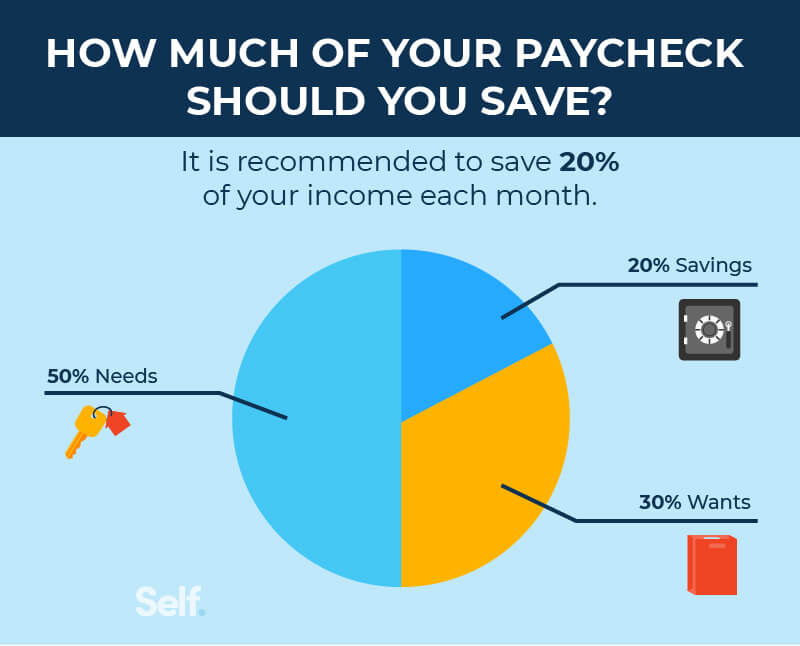
The most common framework for personal finance is the 50/30/20 rule: 50% of income for needs, 30% for wants, and 20% for savings. While this serves as an excellent baseline for those beginning their financial journey, it often underestimates the true saving potential of high-earners or those committed to aggressive financial independence.
Analyzing the Ceiling of Your Savings Rate
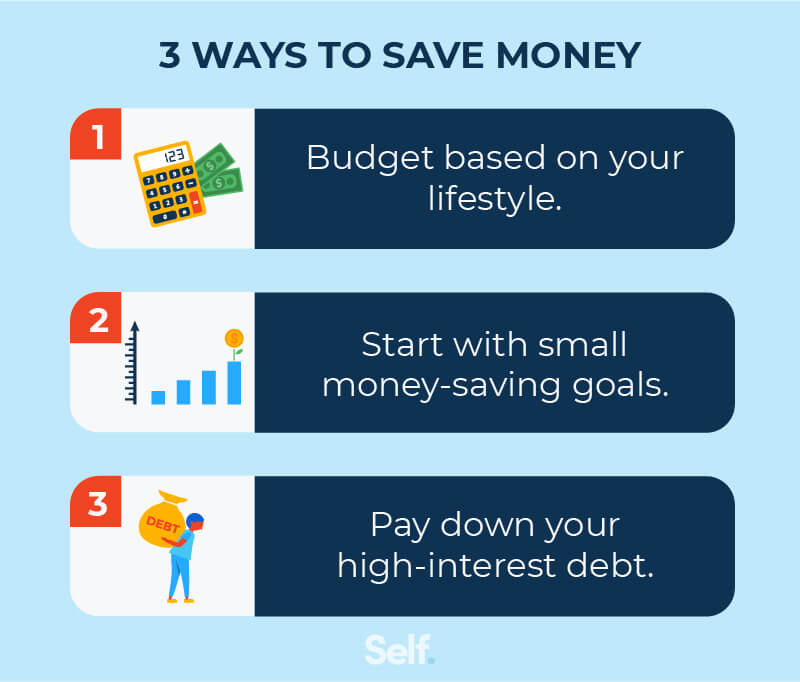
Your savings rate is the single most important variable in your financial trajectory. Unlike market returns, which are largely outside of your control, your savings rate is a metric you can actively manipulate. To find your maximum savings capacity, you must first distinguish between “fixed” and “variable” expenses. Many people categorize lifestyle choices—such as a specific neighborhood or a premium vehicle lease—as fixed needs. By reclassifying these as flexible variables, the ceiling for how much you can save rises significantly.
In high-income brackets, a 20% savings rate may actually be underachieving. For those looking to accelerate their timeline to retirement or major capital purchases, savings rates of 40% or 50% are achievable through “stealth wealth” practices and the avoidance of lifestyle inflation. The goal is to widen the gap between your rising income and your stagnant (or decreasing) cost of living.
The Impact of Compounding on Small Increments
The question “how much can you save” should also be viewed through the lens of “what will this saving become?” Saving an extra $100 a month might seem inconsequential in the short term. However, when redirected into a low-cost index fund with an average 7% annual return, that $100 a month grows to approximately $52,000 over 20 years and nearly $262,000 over 40 years. This perspective shifts the focus from the sacrifice of saving to the opportunity cost of spending. Every dollar spent today is not just one dollar lost; it is several dollars of future wealth surrendered.
Strategic Allocation: Where Your Savings Should Live
Determining how much you can save is only half the battle; the efficacy of those savings is determined by where they are parked. Not all savings are created equal, and the “yield” on your saved capital determines your long-term success.
The Emergency Fund: The Foundation of Financial Security
Before looking at aggressive investment, you must determine how much you can save toward a liquidity buffer. The standard recommendation is three to six months of expenses. However, in a volatile economy, or for those in specialized industries with longer hiring cycles, this may need to be twelve months. This “save” is different from others because its purpose is not growth, but insurance. It prevents you from having to liquidate long-term investments during a market downturn, thereby protecting your overall wealth strategy.
Tax-Advantaged Vehicles and Modern Arbitrage
To maximize the actual value of what you save, you must account for the “tax drag.” Saving $10,000 in a traditional 401(k) or a Health Savings Account (HSA) is fundamentally more powerful than saving $10,000 in a standard brokerage account because of the immediate tax deduction.
The HSA, in particular, is often overlooked as a savings tool. It offers a triple tax advantage: contributions are tax-deductible, growth is tax-free, and withdrawals for qualified medical expenses are tax-free. By maxing out these vehicles first, you are effectively “saving” the money that would otherwise have gone to the government, thereby increasing your net worth more efficiently.
Debt Recast vs. Capital Investment
A critical component of “how much you can save” involves debt. If you have high-interest credit card debt at 20%, paying that down is the equivalent of a guaranteed 20% return on your investment. In this scenario, your capacity to save should be entirely redirected toward debt elimination. Once high-interest liabilities are cleared, the “savings” that were previously servicing interest can be redirected toward wealth-building assets.
The Psychology of Saving: Overcoming Behavioral Barriers
The primary obstacle to saving is rarely a lack of income; it is the psychological pressure of lifestyle creep and hedonic adaptation. As we earn more, we tend to increase our standard of living to match, which keeps the net savings rate stagnant regardless of career progression.
The Invisible Nature of True Wealth
One of the most profound realizations in personal finance is that wealth is the money you don’t see. It is the car you didn’t buy, the expensive dinner you skipped, and the first-class upgrade you declined. To maximize how much you can save, you must decouple your self-worth from your visible consumption. Professional success often comes with the temptation to signal that success through material goods. Resisting this urge is the most effective way to increase your savings capacity.
The Power of Automation
Willpower is a finite resource. Those who successfully save large portions of their income do not rely on daily decisions to do so. They utilize automation. By setting up automatic transfers that trigger the moment a paycheck hits, you treat your savings as a mandatory bill that must be paid. This “Pay Yourself First” mentality ensures that you are living on the remainder, rather than trying to save what is left at the end of the month—which, for most people, is zero.
Redefining Frugality as Efficiency
Frugality is often misinterpreted as deprivation. In a professional financial context, frugality should be viewed as efficiency. It is the optimization of resources to get the maximum value for every dollar spent. By auditing recurring subscriptions, negotiating service contracts, and practicing mindful consumption, you can often “find” 5% to 10% of your income that was being wasted on low-value items. This recovered capital can then be moved into high-yield savings or investment accounts without any perceptible change in your quality of life.
Advanced Strategies for Maximizing Savings
For those who have mastered the basics, the question of how much can you save moves into more complex territory involving tax strategy and income diversification.
Tax-Loss Harvesting and Portfolio Optimization
Once your savings reach a certain threshold, the management of those savings becomes a way to save even more. Tax-loss harvesting involves selling investments that are at a loss to offset capital gains taxes on your winners. This strategy doesn’t just manage your portfolio; it actively reduces your tax liability, effectively “saving” you money on your annual tax bill that can then be reinvested.
The Side Hustle as a Savings Engine
In the modern economy, the ceiling on how much you can save is often dictated by your primary salary. However, many successful savers treat their primary income as the source for their living expenses and their secondary “side hustle” income as a pure savings engine. If you can generate $1,000 a month through consulting, freelancing, or e-commerce and commit 100% of that after-tax income to savings, you bypass the limitations of your standard budget. This creates a dual-track financial life where your lifestyle is sustained by one source and your wealth is built by another.
Real Estate and Principal Paydown
For homeowners, a portion of every mortgage payment is essentially a “forced savings” mechanism in the form of home equity. By making extra payments toward the principal, you are not only saving on future interest costs—which can total hundreds of thousands of dollars over thirty years—but you are also accelerating the build-up of a tangible asset. While equity is not liquid, it represents a significant portion of a household’s potential savings.
Conclusion: The Infinite Variable
Ultimately, how much you can save is not a static number. It is a dynamic target that evolves with your career, your family needs, and your personal goals. The most successful savers are those who view money not as a tool for status, but as a tool for security and autonomy.
By applying a rigorous, professional approach to your finances—optimizing your tax situation, automating your contributions, and ruthlessly eliminating low-value expenses—you will find that your capacity to save is significantly higher than you previously imagined. Whether your goal is a comfortable retirement, the capital to start a business, or the peace of mind that comes with a robust emergency fund, the path begins with a deep, honest audit of your current financial flow and a commitment to the long-term rewards of disciplined capital preservation.
aViewFromTheCave is a participant in the Amazon Services LLC Associates Program, an affiliate advertising program designed to provide a means for sites to earn advertising fees by advertising and linking to Amazon.com. Amazon, the Amazon logo, AmazonSupply, and the AmazonSupply logo are trademarks of Amazon.com, Inc. or its affiliates. As an Amazon Associate we earn affiliate commissions from qualifying purchases.