
Social Security stands as a cornerstone of retirement planning for millions of Americans, providing a crucial safety net and a significant portion of income in later life. However, the question of “how much can you make” from this vital program is far from simple. It’s not a fixed sum, nor is it a one-size-fits-all calculation. Your eventual Social Security benefit is the culmination of decades of work, financial decisions, and even legislative adjustments. Understanding the intricate factors that determine your payout is essential for effective retirement planning, enabling you to make informed choices that could significantly impact your financial well-being in your golden years. This article will demystify the complexities of Social Security benefits, exploring the key variables that influence your monthly check, strategies to maximize your entitlement, and what the realistic limits are.

Understanding the Fundamentals of Social Security Benefits
Before diving into the specifics of how much you can receive, it’s crucial to grasp the foundational principles that govern the Social Security system. It’s a pay-as-you-go system, meaning current workers’ contributions fund current retirees’ benefits, with reserves held in trust funds.
What is Social Security and How is it Funded?
Social Security is a federal insurance program primarily funded through dedicated payroll taxes, known as Federal Insurance Contributions Act (FICA) taxes. Both employees and employers contribute a percentage of earnings up to a certain annual limit. Self-employed individuals pay both portions. These contributions, plus interest earned on trust fund investments, are used to pay retirement, disability, and survivor benefits. It’s designed to provide a baseline income that workers and their families can rely on, reducing poverty among the elderly and disabled.
The Importance of Work Credits
Eligibility for Social Security benefits is determined by “work credits.” To qualify for retirement benefits, you generally need 40 work credits. You can earn up to four credits each year. The amount of earnings required for a credit changes annually, increasing with the national average wage index. For instance, in 2024, you earn one credit for every $1,730 in earnings, up to the maximum of four credits for earning $6,920 or more. This means most people who have worked consistently for at least 10 years will accumulate the necessary 40 credits to be eligible for benefits. Without these credits, regardless of how much you earned, you wouldn’t qualify for your own retirement benefits.
Average Indexed Monthly Earnings (AIME)
Your Social Security benefit amount is primarily based on your Average Indexed Monthly Earnings (AIME). The Social Security Administration (SSA) doesn’t just look at your raw earnings; it “indexes” your past earnings to account for changes in the national average wage level over time. This ensures that your past earnings reflect their relative value compared to what people earn today. The SSA takes your highest 35 years of indexed earnings, totals them, and then divides by 420 (the number of months in 35 years) to arrive at your AIME. If you have fewer than 35 years of earnings, the missing years are counted as zero, which can significantly lower your AIME and, consequently, your benefit. This calculation is a critical step towards determining your Primary Insurance Amount (PIA), which is the benefit you receive if you claim exactly at your Full Retirement Age (FRA).
Key Factors Influencing Your Social Security Payouts
The journey from your AIME to your actual monthly benefit involves several crucial determinants, each offering a lever you can potentially use to influence your final payout.
Your Earning History: The 35-Year Rule
As mentioned, your benefit is calculated based on your highest 35 years of indexed earnings. This rule has profound implications. If you work for more than 35 years, your lowest earning years will be replaced by higher earning years, increasing your overall average. Conversely, if you work for fewer than 35 years, zeros will be factored into the calculation, reducing your AIME. This underscores the importance of a long and consistent work history, ideally with increasing earnings over time. Even a few extra years of high earnings late in your career can make a noticeable difference if they replace years where you earned less or had no earnings.
Your Full Retirement Age (FRA)
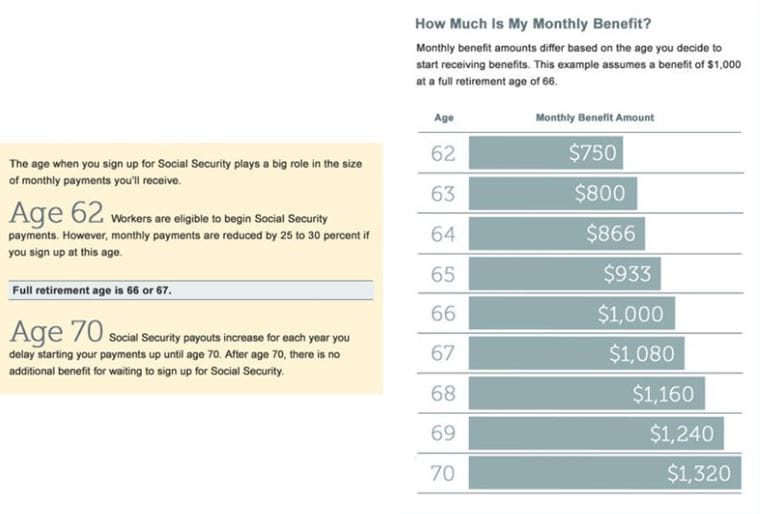
Your Full Retirement Age (FRA) is a pivotal concept in Social Security. It’s the age at which you are entitled to receive 100% of your Primary Insurance Amount (PIA). FRA is not the same for everyone; it depends on your birth year. For those born in 1937 or earlier, FRA was 65. For those born between 1943 and 1954, it is 66. For those born in 1960 or later, FRA is 67. Claiming benefits before your FRA results in a permanent reduction in your monthly benefit, while waiting beyond your FRA can lead to larger benefits. Understanding your specific FRA is fundamental to making an informed claiming decision.
When You Choose to Claim: Early vs. Delayed Benefits
This is arguably the most significant factor you have direct control over. You can start receiving Social Security retirement benefits as early as age 62, but doing so comes with a permanent reduction in your monthly payment. For example, if your FRA is 67, claiming at age 62 would result in a benefit reduction of approximately 30%. This reduction is applied because you will be receiving benefits for a longer period.
Conversely, if you delay claiming beyond your FRA, your monthly benefit will increase. For each year you delay, up to age 70, you earn “Delayed Retirement Credits” (DRCs), which permanently boost your benefit by 8% per year (for those with an FRA of 66 or 67). This means someone with an FRA of 67 who waits until age 70 to claim would receive 124% of their PIA. This strategy is a powerful tool for maximizing your lifetime benefits, especially if you expect to live a long life.
Cost-of-Living Adjustments (COLAs)
Once you start receiving Social Security benefits, your payments are generally adjusted annually to keep pace with inflation. These Cost-of-Living Adjustments (COLAs) are based on the Consumer Price Index for Urban Wage Earners and Clerical Workers (CPI-W). When the cost of living increases, benefits increase, helping to preserve your purchasing power over time. While not a factor in your initial calculation, COLAs are crucial for understanding the long-term value of your Social Security income.
Maximizing Your Social Security Benefits
With a solid understanding of the contributing factors, you can now strategize to get the most out of your Social Security. Proactive planning can lead to significantly higher lifetime benefits.
Working Longer and Earning More
One of the most straightforward ways to increase your Social Security benefit is to extend your working career, particularly into years where you can earn more. Remember the 35-year rule: if you work 36 years, your lowest-earning year drops out. If you work 40 years, your five lowest-earning years are replaced by potentially higher-earning years. This directly boosts your AIME. Additionally, ensuring you earn at or above the annual maximum taxable earnings limit for as many years as possible will also help maximize your benefit, as these are the earnings that count most towards the highest possible PIA.
Strategizing Your Claiming Age
Choosing when to claim is a deeply personal decision, balancing immediate income needs against long-term benefit maximization.
- Waiting until Full Retirement Age (FRA): This ensures you receive 100% of your PIA. It’s a balanced approach if you can afford to wait and need a solid base benefit.
- Waiting until Age 70: This is the strategy for maximum individual monthly benefits. Each year you delay past your FRA, up to age 70, adds 8% in Delayed Retirement Credits. This strategy is particularly appealing for those in good health with a family history of longevity, as the cumulative extra benefits can be substantial over a longer retirement.
- Considering Early Claiming: While it results in a reduced benefit, claiming at age 62 might be necessary due to health issues, job loss, or if you have other substantial retirement income and want to enjoy your benefits sooner. It’s crucial to understand the permanent reduction before making this choice. Tools like break-even analysis can help estimate when the cumulative benefits of early claiming might outweigh those of delayed claiming, though this is inherently speculative given life expectancy unknowns.
Coordinating Spousal and Survivor Benefits
For married couples, divorced spouses, and surviving spouses, Social Security offers additional complexities and opportunities for optimization. Spousal benefits allow a spouse to claim up to 50% of their partner’s PIA (if higher than their own benefit), generally after their partner has filed for their own benefits. Survivor benefits provide income to a surviving spouse or dependent children after a worker’s death. Strategic claiming within a couple can involve one spouse delaying to age 70 to maximize their benefit, which then becomes a higher survivor benefit for the remaining spouse. Divorced individuals may also be eligible for benefits based on an ex-spouse’s earnings record, provided certain conditions are met. Consulting with a financial advisor specializing in Social Security can help couples navigate these intricate rules to maximize their combined lifetime benefits.
Understanding the Earnings Test Before FRA
If you claim Social Security benefits before your Full Retirement Age (FRA) and continue to work, your benefits might be temporarily reduced if your earnings exceed a certain limit. This is known as the “earnings test.” For example, in 2024, if you are under FRA, the SSA will deduct $1 from your benefits for every $2 you earn above $22,320. In the year you reach FRA, the reduction is $1 for every $3 earned above a higher limit ($59,520 in 2024), only counting earnings before the month you reach FRA. Once you reach your FRA, the earnings test no longer applies, and you can earn any amount without it affecting your Social Security benefits. It’s important to note that any benefits withheld due to the earnings test are not lost; they are factored into a recalculation at your FRA, often resulting in a slightly higher monthly benefit going forward.
What’s the Maximum You Can Actually Make?
While strategies can significantly boost your Social Security income, there are inherent limits to how much you can receive from the program.
Understanding the Annual Earnings Limit (Taxable Maximum)
Each year, there’s a maximum amount of earnings subject to Social Security taxes. For example, in 2024, earnings above $168,600 are not subject to Social Security tax, nor are they counted towards your AIME calculation. This “taxable maximum” means that even if you earn millions of dollars annually, only your earnings up to this limit are considered when calculating your Social Security benefits. This cap inherently limits the highest possible AIME and, consequently, the maximum benefit amount.
The Highest Possible Monthly Benefit
To receive the absolute maximum Social Security benefit, an individual must have consistently earned at or above the Social Security taxable maximum for at least 35 years and must delay claiming their benefits until age 70. For someone turning 70 in 2024, the maximum possible monthly Social Security benefit is approximately $4,873. This figure serves as an illustrative benchmark, highlighting that Social Security, while substantial for some, is designed as a foundational income stream rather than a full replacement for high pre-retirement earnings. Very few individuals meet the stringent criteria to achieve this maximum benefit.
The Role of Personal Financial Planning Beyond Social Security
Given the caps on Social Security benefits, it’s crucial to recognize that for many, especially high earners, Social Security will only replace a fraction of their pre-retirement income. The program is not intended to be your sole source of retirement income. Therefore, comprehensive personal financial planning—including savings in 401(k)s, IRAs, other investment accounts, and pensions—is indispensable. Social Security should be viewed as one leg of a multi-legged stool that supports your financial independence in retirement, complementing your personal savings and investments.
In conclusion, “how much you can make in Social Security” is a complex equation influenced by your earnings history, work longevity, and the critical decision of when to claim your benefits. By understanding these dynamics and strategically planning your retirement, you can significantly optimize your Social Security income. However, it is equally important to integrate this into a broader financial strategy that ensures a comfortable and secure retirement well beyond what Social Security alone can provide.
aViewFromTheCave is a participant in the Amazon Services LLC Associates Program, an affiliate advertising program designed to provide a means for sites to earn advertising fees by advertising and linking to Amazon.com. Amazon, the Amazon logo, AmazonSupply, and the AmazonSupply logo are trademarks of Amazon.com, Inc. or its affiliates. As an Amazon Associate we earn affiliate commissions from qualifying purchases.