
For many Americans, the transition into retirement is no longer a binary switch from full-time work to total leisure. Instead, it has become a “glide path” where individuals choose to consult, take on part-time roles, or pursue side hustles while beginning to collect their Social Security benefits. However, a common concern haunts this transition: the fear that earning “too much” money will result in a loss of Social Security checks.
Understanding the relationship between your earned income and your retirement benefits is essential for effective financial planning. The Social Security Administration (SSA) employs what is known as the “Retirement Earnings Test.” This guide explores the nuances of these limits, what counts as income, and how to strategically manage your professional life alongside your retirement draws.
Understanding the Social Security Earnings Test
The Social Security Earnings Test is a set of rules that limits how much an individual can earn from work while receiving benefits if they have not yet reached their Full Retirement Age (FRA). Your FRA depends on the year you were born; for those born in 1960 or later, the FRA is 67.
The primary takeaway is that the earnings test is not a permanent “tax” on your benefits, nor is it a permanent loss of funds. Rather, it is a withholding mechanism. If you exceed the annual limits, the SSA temporarily withholds a portion of your benefits, which are later credited back to you once you reach your FRA.
The Earnings Limit Before Your Full Retirement Age Year
If you are under your Full Retirement Age for the entire year, the SSA applies a strict threshold. For 2024, that limit is $22,320. If your annual earnings exceed this amount, the SSA will deduct $1 from your benefit payments for every $2 you earn above the limit.
For example, if you earn $32,320 in a year (which is $10,000 over the limit), the SSA would withhold $5,000 of your Social Security benefits. This withholding usually occurs by stopping your monthly checks entirely until the “debt” created by your excess earnings is satisfied.
The Special Rule for the Year You Reach Full Retirement Age
The rules become significantly more lenient during the specific year you reach your Full Retirement Age. In this calendar year, the earnings limit is much higher—$59,520 for 2024—and the penalty is less severe. The SSA will deduct $1 in benefits for every $3 you earn above the limit, but they only count the earnings you made in the months before you reached your FRA.
Once you reach the actual month of your Full Retirement Age birthday, the earnings test vanishes completely. From that point forward, you can earn an unlimited amount of money from any source without any reduction in your Social Security benefits.
What Counts as Income? Defining “Earnings” for the SSA
A frequent point of confusion for retirees is what exactly constitutes “income” in the eyes of the Social Security Administration. Not all money coming into your household is treated the same. The Earnings Test applies specifically to “earned income”—essentially, money generated from active labor.
Wages and Self-Employment Income
For the vast majority of people, income is measured via W-2 wages or net earnings from self-employment. If you are an employee, the SSA looks at your gross wages (not your take-home pay). If you are self-employed, they look at your net profit—your business income minus allowable business expenses.
It is important to note that the SSA counts your earnings for the entire calendar year, regardless of when you started receiving benefits. However, there is a “first year of retirement” exception known as the Monthly Earnings Test. This allows people who retire mid-year to receive a full check for any month they are considered retired, regardless of how much they earned in the months prior to retirement.
Passive Income and Investment Gains
One of the most beneficial aspects of the Social Security rules is what the SSA ignores. The following types of income do not count toward the earnings limit:
- Pensions and Annuities: Monthly payments from a former employer or a private annuity.
- Investment Income: Interest, dividends from stocks, and capital gains.
- IRA and 401(k) Distributions: Withdrawals from your retirement accounts.
- Inheritances and Gifts: One-time windfalls.
- Rental Income: Provided you are not a real estate professional whose primary work is managing the properties.

By understanding these distinctions, a retiree can potentially draw a high total “income” through a combination of Social Security and investment withdrawals without ever triggering a benefit reduction.
The Financial Impact of Withheld Benefits
While the idea of having benefits withheld can be frustrating, it is vital to understand the long-term math. The Social Security Administration does not simply pocket the withheld money. Instead, they use it to “recalculate” your benefit amount once you hit your Full Retirement Age.
Is the Money Gone Forever? The Recalculation Process
When you reach FRA, the SSA looks back at all the months your benefits were withheld because of excess earnings. They then treat those months as if you had not actually “claimed” Social Security during that time.
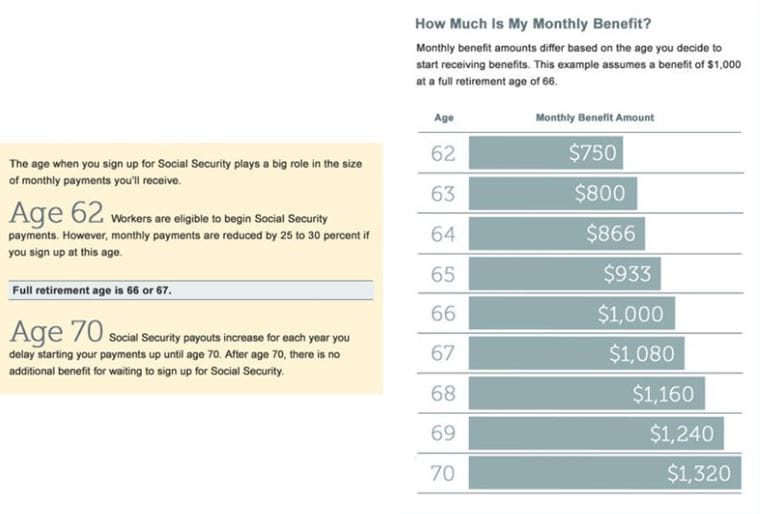
For instance, if you claimed benefits at 62 but had 12 months of benefits withheld over the next five years due to work, when you turn 67, the SSA will recalculate your monthly check as if you had started benefits at 63 instead of 62. This results in a permanent increase in your monthly benefit for the rest of your life. In many cases, if a retiree lives into their 80s, they will eventually recover all the withheld funds through these higher monthly payments.
Tax Implications of Working While Collecting Benefits
While the Earnings Test is a withholding issue, there is another “money” factor to consider: taxes. Working while drawing Social Security can push you into a higher tax bracket and trigger the “Tax Torpedo.”
If your “combined income” (adjusted gross income + non-taxable interest + half of your Social Security benefits) exceeds certain thresholds, you may have to pay federal income tax on up to 85% of your Social Security benefits. For individuals, this threshold starts at $25,000; for couples filing jointly, it starts at $32,000. Working a side job can easily push a retiree over these modest limits, meaning that even if the Earnings Test doesn’t take your check, the IRS might take a larger slice of it.
Strategic Considerations for Working Retirees
Deciding whether to work and draw Social Security simultaneously requires a strategic look at your overall financial ecosystem. It is not just about the monthly check; it is about maximizing your total wealth over a 20- to 30-year retirement horizon.
When Does It Make Sense to Delay Benefits?
If you plan to earn significantly more than the $22,320 limit, it often makes more financial sense to delay claiming Social Security. By waiting, you avoid the administrative headache of withheld checks and, more importantly, you take advantage of “Delayed Retirement Credits.”
For every year you delay claiming Social Security past your FRA (up until age 70), your benefit increases by approximately 8%. This is a guaranteed, inflation-adjusted return that is difficult to match in the private market. If you are healthy and able to work, using your salary to fund your life while letting your Social Security “pool” grow is often the most lucrative long-term strategy.
Balancing a Side Hustle with Retirement Goals
For those who want the best of both worlds—the engagement of work and the security of a Social Security check—the goal is to stay just below the threshold. In 2024, this means aiming for a part-time income of roughly $1,860 per month.
This “sweet spot” allows you to supplement your retirement lifestyle, keep your professional skills sharp, and receive 100% of your Social Security benefit without any withholding or complicated recalculations later. This strategy is particularly effective for those who have moved into consulting or freelance work, where they have more control over their billable hours and annual revenue.
Conclusion
The question of “how much can you make and draw Social Security” is less about a hard cap and more about a sliding scale of financial trade-offs. While the earnings test may temporarily reduce the size of your checks if you are working under the Full Retirement Age, the system is designed to eventually return that value to you.
Ultimately, the decision to work while drawing benefits should be based on your immediate cash flow needs, your life expectancy, and your tax situation. By understanding the thresholds—$22,320 for those under FRA and $59,520 for the year you hit FRA—you can navigate your retirement years with financial confidence, ensuring that your hard-earned wages and your government benefits work in harmony rather than at cross-purposes.
aViewFromTheCave is a participant in the Amazon Services LLC Associates Program, an affiliate advertising program designed to provide a means for sites to earn advertising fees by advertising and linking to Amazon.com. Amazon, the Amazon logo, AmazonSupply, and the AmazonSupply logo are trademarks of Amazon.com, Inc. or its affiliates. As an Amazon Associate we earn affiliate commissions from qualifying purchases.