
Social Security represents a cornerstone of financial security for millions of Americans, providing a vital source of income during retirement, disability, or for survivors. Yet, despite its widespread importance, many individuals harbor significant questions about how their benefits are calculated and, crucially, “how much they can make” from this essential government program. Understanding the intricacies of Social Security is not just a matter of curiosity; it’s a critical component of effective personal financial planning, allowing you to strategically integrate these benefits into your broader retirement strategy.
This comprehensive guide aims to demystify Social Security, breaking down the factors that determine your potential benefits and exploring strategies to maximize your payouts. From understanding the core calculation mechanisms to navigating claiming ages and the implications of working while receiving benefits, we will equip you with the knowledge needed to make informed decisions about your financial future.

Understanding Social Security Benefits: The Core Components
At its heart, Social Security is an earned benefit, funded by payroll taxes throughout your working life. The amount you ultimately receive is not arbitrary; it’s the result of a precise calculation influenced by your earnings history and the age at which you choose to claim.
Primary Insurance Amount (PIA) Explained
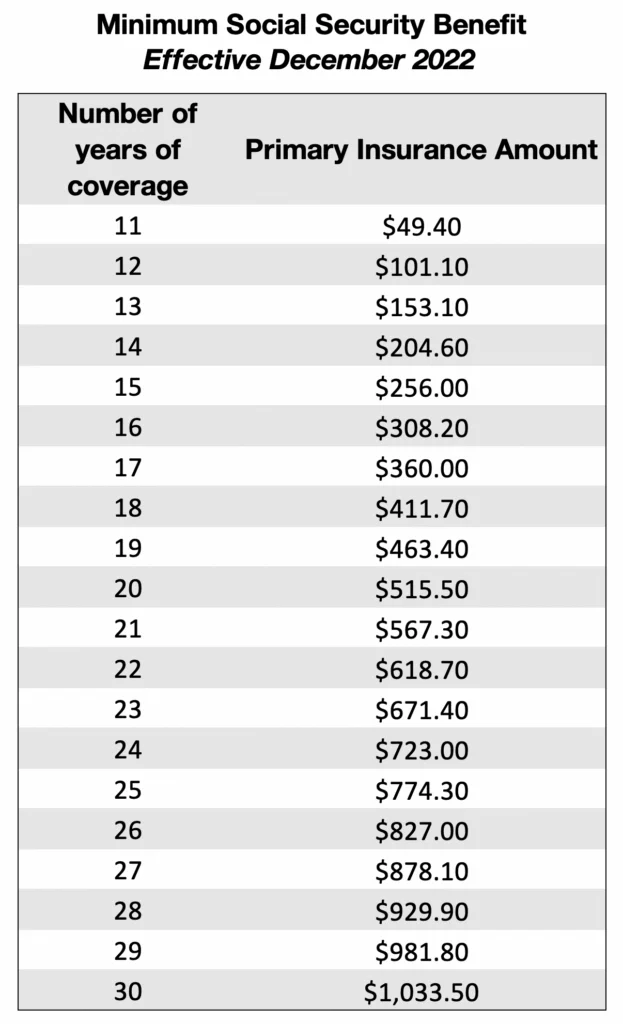
Your Primary Insurance Amount (PIA) is the monthly benefit you would receive if you start collecting benefits exactly at your Full Retirement Age (FRA). It’s the base figure from which all other benefit amounts (early, delayed, spousal, survivor) are derived. The Social Security Administration (SSA) uses a progressive formula to calculate your PIA, meaning lower earners receive a higher percentage return on their contributions compared to higher earners, although higher earners will still receive a larger dollar amount.
Factors Influencing Your Benefit Calculation (Earnings History, AIME)
The PIA calculation is primarily based on your Average Indexed Monthly Earnings (AIME). Here’s how it works:
-
Earnings History: The SSA considers your highest 35 years of indexed earnings. “Indexed” means your past earnings are adjusted to reflect changes in general wage levels over time. This adjustment ensures that your earnings from earlier in your career are given similar weight to more recent earnings, accounting for inflation and wage growth. If you have fewer than 35 years of earnings, the missing years will be counted as zeros, which can significantly reduce your AIME.
-
Average Indexed Monthly Earnings (AIME): Once your earnings are indexed, the SSA totals your highest 35 years of indexed earnings and divides that sum by 420 (the number of months in 35 years) to arrive at your AIME.
-
The Importance of Your “Bend Points”: The AIME is then run through a formula that applies “bend points.” These are specific dollar amounts that determine the percentage of your AIME that will count towards your PIA. For instance, a certain percentage of your AIME up to the first bend point is counted, a different (lower) percentage for the AIME between the first and second bend points, and an even lower percentage for the AIME above the second bend point. These bend points change annually based on the national average wage index. This progressive formula is what makes the system more beneficial for lower-income workers.
The higher your AIME, the higher your PIA will generally be, up to the annual maximum benefit. For those who consistently earned above the Social Security taxable wage base throughout their careers, they will eventually hit the maximum PIA for their birth year.
Optimizing Your Claiming Strategy: When to Start Benefits
Perhaps the most critical decision influencing “how much you can make on Social Security” is when you choose to begin receiving benefits. This choice can significantly alter your monthly payout for the rest of your life.
Full Retirement Age (FRA): The Benchmark
Your Full Retirement Age (FRA) is the age at which you are entitled to receive 100% of your PIA. For those born in 1943 through 1954, FRA is 66. For those born between 1955 and 1959, FRA gradually increases. For anyone born in 1960 or later, FRA is 67. Understanding your specific FRA is fundamental to planning your claiming strategy.
Claiming Early: The Trade-offs of Reduced Benefits
You can start receiving Social Security benefits as early as age 62. However, choosing to claim before your FRA results in a permanent reduction of your monthly benefit. The reduction is calculated based on the number of months you claim early. For instance, if your FRA is 67 and you claim at 62, your benefit will be reduced by approximately 30%. While claiming early provides income sooner, it means a smaller check every month for the rest of your life. This strategy might be suitable for individuals who need the income due to health issues, job loss, or simply prefer to enjoy their retirement earlier despite the reduction.
Delaying Benefits: Boosting Your Monthly Payout
Conversely, you can delay claiming Social Security benefits beyond your FRA, up to age 70. For each year you delay past your FRA, your monthly benefit increases by a certain percentage, known as “Delayed Retirement Credits” (DRCs). These credits amount to 8% per year for those born in 1943 or later. This means if your FRA is 67 and you delay claiming until 70, you could increase your monthly benefit by 24% (3 years x 8%). This is a powerful way to significantly boost your monthly income, particularly appealing to those who expect to live a long life and have other financial resources to support themselves until age 70. After age 70, there are no additional credits for delaying, so there’s no financial incentive to wait beyond that point.
Spousal and Survivor Benefits: Maximizing Household Income
Social Security also offers benefits to spouses and survivors, which can be crucial for maximizing household income.
-
Spousal Benefits: If you are married, you might be eligible for spousal benefits based on your spouse’s work record. This is typically up to 50% of your spouse’s FRA benefit. You can claim spousal benefits if your own benefit is lower than your spousal benefit, and it’s possible to claim spousal benefits while letting your own benefit grow (if born before a certain date, this strategy is more limited now).
-
Survivor Benefits: After a spouse’s death, the surviving spouse or eligible children may receive survivor benefits. A surviving spouse can receive up to 100% of the deceased worker’s benefit if claimed at their own FRA, or a reduced amount if claimed earlier. Understanding these rules is vital for couples to plan for potential future scenarios.
The Impact of Working While Receiving Benefits
Many people choose to continue working part-time or full-time even after claiming Social Security benefits. It’s important to understand how earned income can affect your benefit payments, especially before you reach your FRA.
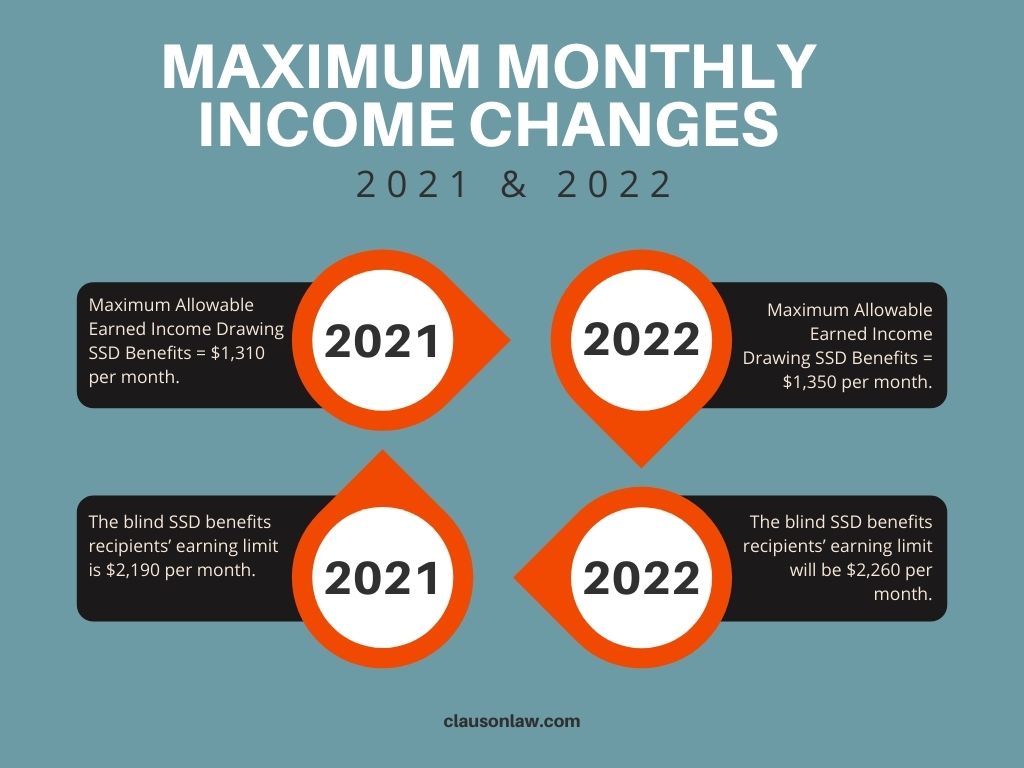
Earnings Limits Before Full Retirement Age
If you are below your FRA and receiving Social Security benefits, there are annual earnings limits. If your earnings exceed these limits, the SSA will temporarily withhold a portion of your benefits.
-
Before the year you reach FRA: For every $2 you earn above the annual limit, $1 of your benefits will be withheld.
-
In the year you reach FRA (but before your birthday month): For every $3 you earn above a higher annual limit, $1 of your benefits will be withheld.
These withheld benefits are not permanently lost; they can increase your monthly benefit amount once you reach your FRA. The SSA will recalculate your benefit to account for the additional earnings and any withheld months.
What Happens After FRA?
Once you reach your Full Retirement Age, the earnings test disappears. You can earn as much as you want without any of your Social Security benefits being withheld. This is a significant advantage for those who wish to continue working without impacting their Social Security income.
Taxability of Social Security Benefits
It’s also crucial to consider the tax implications of your Social Security income. Depending on your “provisional income” (which includes your adjusted gross income, tax-exempt interest, and half of your Social Security benefits), a portion of your Social Security benefits may be subject to federal income tax.
-
Up to 50% of your benefits may be taxable if your provisional income is between $25,000 and $34,000 for an individual, or between $32,000 and $44,000 for a married couple filing jointly.
-
Up to 85% of your benefits may be taxable if your provisional income exceeds $34,000 for an individual, or $44,000 for a married couple filing jointly.
Some states also tax Social Security benefits, so it’s important to check your state’s specific rules.
Beyond the Basics: Planning for a Secure Retirement
While Social Security provides a valuable income stream, it is rarely sufficient to cover all retirement expenses for most individuals. To truly understand “how much you can make” in retirement, you must look beyond Social Security alone.
Don’t Rely Solely on Social Security
Financial experts generally recommend that Social Security should account for no more than 40-50% of your pre-retirement income, though this percentage can be higher for lower-income individuals. For many, Social Security will cover only a fraction of their desired retirement lifestyle. This underscores the critical need for additional retirement savings and income sources.
Integrating Social Security with Other Retirement Savings (401(k), IRA)
A robust retirement plan integrates Social Security benefits with personal savings vehicles such as 401(k)s, IRAs (Traditional and Roth), and taxable investment accounts. Understanding your estimated Social Security benefits helps you determine how much more you need to save to bridge the gap between your desired retirement income and what Social Security will provide. For example, if you plan to delay Social Security until age 70 to maximize your benefit, you’ll need to ensure you have sufficient savings to cover your living expenses from your retirement date until age 70.
Utilizing Financial Planning Tools and Professional Advice
The Social Security Administration offers online tools, such as the “my Social Security” account, which allows you to view your earnings record, get personalized benefit estimates, and apply for benefits. These tools are invaluable for planning. Furthermore, consulting with a qualified financial advisor can provide tailored guidance. They can help you project your lifetime benefits, model different claiming strategies, and integrate Social Security into a holistic financial plan that considers your other assets, liabilities, and goals.
Key Considerations and Future Outlook
Understanding how much you can make on Social Security also requires an awareness of the program’s long-term health and potential future changes.
The Program’s Long-Term Solvency
Social Security faces long-term financial challenges due to demographic shifts, specifically lower birth rates and increased longevity. The Social Security and Medicare Boards of Trustees project that the program can pay 100% of promised benefits until the mid-2030s. After that, without Congressional action, it would be able to pay about 80% of scheduled benefits. While these projections raise concerns, Congress has historically acted to address such shortfalls, typically through a combination of measures such as increasing the full retirement age, adjusting the taxable wage base, or modifying benefit formulas.
Staying Informed About Policy Changes
Given the program’s vital role, potential future adjustments are always a possibility. It is crucial for individuals to stay informed about legislative proposals and policy changes that could affect their benefits. While the core principles discussed here are generally stable, being aware of ongoing discussions will empower you to adapt your financial planning as needed.
In conclusion, “how much you can make on Social Security” is a dynamic figure, influenced by your earnings, claiming age, and various other factors. By thoroughly understanding the calculation mechanics, strategically choosing your claiming age, considering the implications of working in retirement, and integrating these benefits into a broader financial plan, you can effectively maximize your Social Security income and build a more secure financial future.
aViewFromTheCave is a participant in the Amazon Services LLC Associates Program, an affiliate advertising program designed to provide a means for sites to earn advertising fees by advertising and linking to Amazon.com. Amazon, the Amazon logo, AmazonSupply, and the AmazonSupply logo are trademarks of Amazon.com, Inc. or its affiliates. As an Amazon Associate we earn affiliate commissions from qualifying purchases.