
The journey to homeownership is often fueled by aspirations of stability, community, and equity. However, before the first open house or the final signature on a deed, every prospective buyer must confront the fundamental question: “How much can I qualify for a home loan?” Understanding your borrowing capacity is the cornerstone of a successful real estate strategy. It prevents the heartbreak of falling in love with an unattainable property and ensures that your long-term financial health remains intact.
Qualifying for a mortgage is not a singular event but a multifaceted assessment performed by lenders to determine risk. They look beyond your bank balance, examining the intricate relationship between your income, your debts, and your history of financial responsibility. This guide provides an in-depth exploration of the factors that dictate your loan eligibility and offers strategies to optimize your financial profile for the best possible terms.
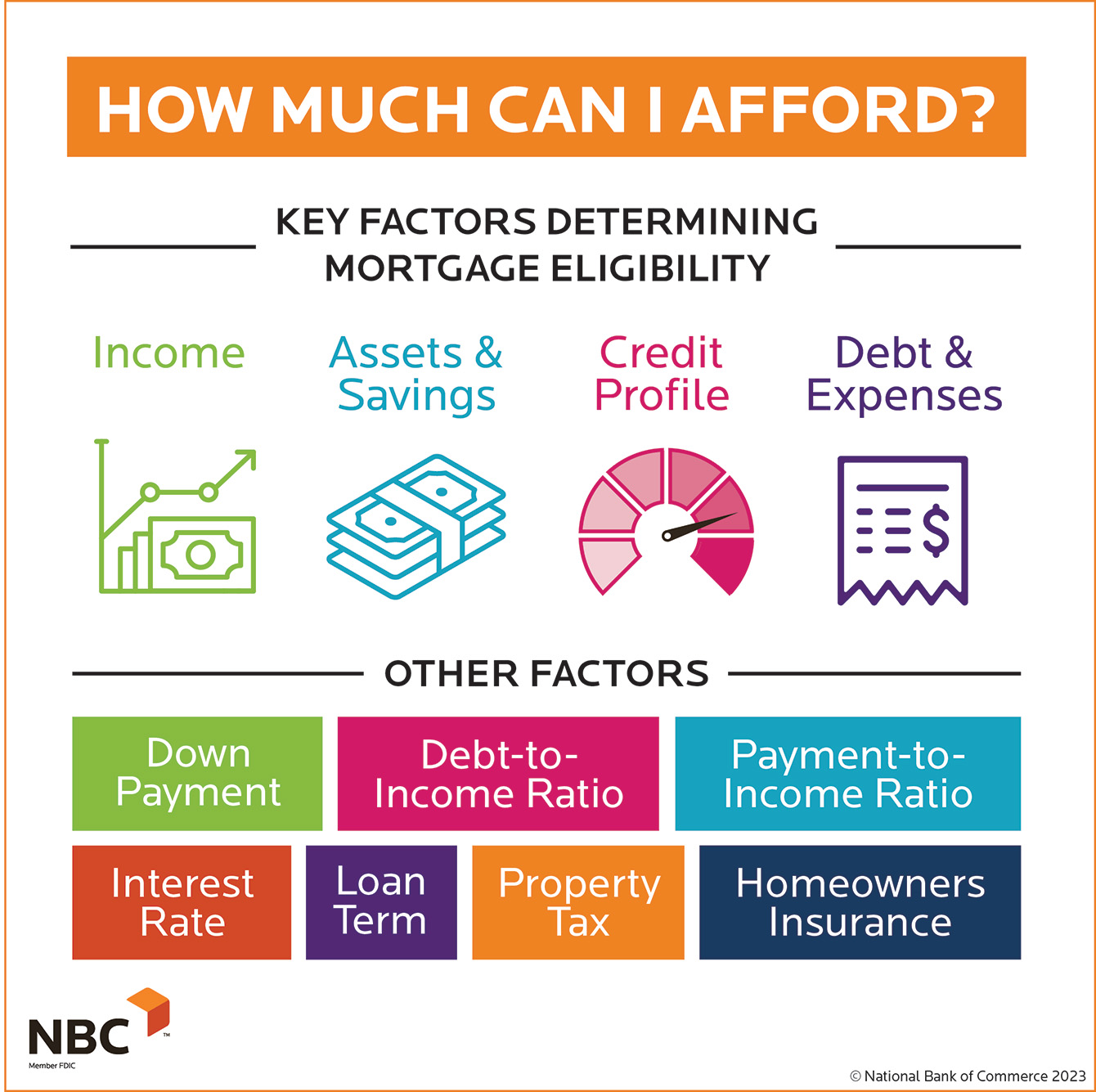
The Core Determinants of Loan Eligibility
Lenders utilize a standardized set of metrics to evaluate how much money they can safely lend to a borrower. These “Big Three”—credit score, debt-to-income ratio, and income stability—form the foundation of your qualification profile.
Credit Score: Your Financial Reputation
Your credit score is arguably the most influential number in the mortgage process. It serves as a shorthand for your reliability as a borrower. Most conventional lenders prefer a FICO score of 620 or higher, but the “best” rates and highest loan amounts are typically reserved for those with scores above 740.
A higher credit score does more than just secure an approval; it directly impacts the interest rate you are offered. Because interest represents the cost of borrowing, a lower rate means a lower monthly payment, which in turn allows you to qualify for a larger principal amount. If your score is on the lower end, you might still qualify for government-backed programs like FHA loans, which accept scores as low as 580, but these often come with additional costs like mandatory mortgage insurance.
Debt-to-Income (DTI) Ratio: The Magic Number
While your income tells a lender how much you earn, your Debt-to-Income (DTI) ratio tells them how much you have left over. To calculate your DTI, lenders add up all your monthly debt obligations—including car payments, student loans, credit card minimums, and the projected mortgage payment—and divide that by your gross monthly income (before taxes).
The “golden rule” in the industry is often the 28/36 rule. This suggests that no more than 28% of your gross income should go toward housing costs, and no more than 36% should go toward total debt. However, many modern loan programs allow for a total DTI of up to 43%, and in some specific cases, even 50%. The lower your DTI, the more “room” you have in your budget for a higher loan amount.
Employment History and Income Stability
Lenders are looking for consistency. A high salary is excellent, but a high salary earned consistently over the last two years is what truly qualifies you for a loan. Lenders typically require two years of steady employment in the same field.
For W-2 employees, this verification is straightforward. However, for entrepreneurs, freelancers, or commission-based workers, the process is more rigorous. Lenders will look at tax returns from the previous two years to find a stable average. If your income fluctuates significantly year-over-year, they may use the lower figure to be conservative, which could limit the amount you qualify for.
Evaluating Assets and Down Payments
The amount you can qualify for is intrinsically linked to the amount of “skin in the game” you have. Your assets—the cash and investments you currently hold—serve as a buffer for the lender and a primary component of your purchasing power.
The Impact of Down Payment Size on Loan Limits
There is a common misconception that a 20% down payment is mandatory. While 20% is the threshold to avoid Private Mortgage Insurance (PMI), many programs allow for 3% or 3.5% down.
However, the size of your down payment directly affects your loan-to-value (LTV) ratio. A larger down payment reduces the lender’s risk, which can lead to higher qualification limits and better interest rates. For example, if you are looking at a $500,000 home and you have $100,000 (20%) to put down, you only need to qualify for a $400,000 loan. If you only have $15,000 (3%) to put down, you must qualify for a $485,000 loan, which requires a significantly higher income and lower debt profile.
Liquid Assets vs. Total Net Worth
When determining your qualification, lenders differentiate between liquid assets (cash, savings, money market accounts) and non-liquid assets (401ks, IRAs, or other real estate). While your total net worth is a positive indicator of financial health, lenders are primarily concerned with “reserves.”
Reserves are the liquid funds you have left over after the down payment and closing costs are paid. Lenders often like to see two to six months’ worth of mortgage payments sitting in a liquid account. Having significant reserves can sometimes “compensate” for a slightly higher DTI ratio, allowing you to qualify for a larger loan.

Sourcing Funds: Gifts and Savings
If you are using a gift from a family member to bolster your down payment, it must be properly documented. Lenders require a “gift letter” stating that the funds are not a loan and do not need to be repaid. If the funds are considered a loan, they must be factored into your DTI ratio, which could lower the total amount you qualify for.
Understanding Loan Types and Their Specific Limits
Not all mortgages are created equal. The specific loan program you choose will have its own set of rules and limits that define your maximum qualification.
Conventional Loans and Conforming Limits
Conventional loans are those not insured by the federal government. They follow guidelines set by Fannie Mae and Freddie Mac. Every year, the Federal Housing Finance Agency (FHFA) sets “conforming loan limits.” If you are looking to buy in a standard market, the limit is generally consistent across the country, but it is higher in “high-cost” areas. If you need a loan that exceeds these limits, you are moving into the territory of Jumbo Loans.
FHA, VA, and USDA Loans: Government-Backed Options
Government-backed loans are designed to make homeownership more accessible, often allowing for lower credit scores and smaller down payments.
- FHA Loans: Ideal for first-time buyers, these allow for a 3.5% down payment. However, FHA loan limits vary significantly by county.
- VA Loans: Available to veterans and active-duty service members, these often require $0 down and have no private mortgage insurance. Because of the favorable terms, veterans can often qualify for more “house” for the same monthly payment compared to conventional borrowers.
- USDA Loans: Targeted at rural and suburban buyers with low-to-moderate incomes, these also offer $0 down options but have strict geographical and income eligibility requirements.
Jumbo Loans: For High-End Markets
In luxury markets or high-cost-of-living areas, a standard conforming loan may not be enough. Jumbo loans are used for amounts that exceed conforming limits. Because these loans cannot be sold to Fannie Mae or Freddie Mac, they represent higher risk for lenders. To qualify for a Jumbo loan, you typically need a credit score above 700, a DTI below 36%, and significantly higher cash reserves.
The Hidden Costs That Influence Qualification
Qualification isn’t just about the price of the house; it’s about the total monthly cost of the loan. Lenders look at the “PITI” acronym: Principal, Interest, Taxes, and Insurance.
Interest Rates and Market Volatility
Interest rates are the most volatile factor in mortgage qualification. When rates rise, your purchasing power falls. For every 1% increase in interest rates, your purchasing power can drop by approximately 10%. If you qualified for a $400,000 loan when rates were at 4%, you might only qualify for $360,000 if rates jump to 5%, assuming your income remains the same. This is why “locking in” a rate during the application process is a critical financial move.
Property Taxes and Insurance Premiums
Lenders calculate your qualification based on the total monthly payment, which includes property taxes and homeowners insurance. These costs vary wildly by location. A $400,000 home in a state with 2% property taxes will have a much higher monthly payment than the same priced home in a state with 0.5% taxes. Similarly, if you are buying in a flood zone or an area prone to wildfires, your insurance premiums will be higher, effectively reducing the amount of principal loan you can afford.
Private Mortgage Insurance (PMI)
If your down payment is less than 20%, you will likely have to pay PMI. This is an insurance policy that protects the lender, not you. It adds a monthly cost to your mortgage payment, which must be factored into your DTI. For many borrowers, PMI can add $100 to $300 to a monthly payment, which could be the difference between qualifying for a house and being turned away.
Strategies to Increase Your Borrowing Power
If your current qualification amount falls short of your goals, there are several strategic moves you can make to improve your standing in the eyes of a lender.
Aggressive Debt Reduction
Because DTI is so central to qualification, paying off a high-interest credit card or a car loan can have a massive impact. For every $100 of monthly debt you eliminate, you could potentially qualify for roughly $15,000 to $20,000 more in mortgage principal (depending on current interest rates). Focusing on “small balance, high payment” debts is the fastest way to clear up DTI space.
Correcting Credit Report Inaccuracies
It is estimated that one in four credit reports contains errors that could lower a score. Before applying for a loan, pull your reports from all three bureaus (Equifax, Experian, and TransUnion). Disputing an incorrect late payment or an outdated collection item can boost your score by dozens of points in a matter of weeks, potentially qualifying you for a better interest rate and a higher loan amount.

Increasing Your Income Documentation
If you have a side hustle or freelance income, ensure you have been reporting it on your taxes for at least two years. Lenders cannot count “under the table” or unverified income. If you are expecting a raise or a promotion, it may be worth waiting until that new salary is reflected on several pay stubs before applying, as this provides a higher baseline for your qualification calculation.
In conclusion, determining how much you can qualify for is a blend of mathematical precision and market timing. By understanding the interplay between your debt, your income, and the prevailing interest rates, you can position yourself as a low-risk borrower. Homeownership is a marathon, not a sprint; taking the time to optimize your financial profile before seeking a pre-approval ensures that when you do find your dream home, you have the financial power to secure it.
aViewFromTheCave is a participant in the Amazon Services LLC Associates Program, an affiliate advertising program designed to provide a means for sites to earn advertising fees by advertising and linking to Amazon.com. Amazon, the Amazon logo, AmazonSupply, and the AmazonSupply logo are trademarks of Amazon.com, Inc. or its affiliates. As an Amazon Associate we earn affiliate commissions from qualifying purchases.